
spec sheet13 rows
Monolaurin (glycerol monolaurate, GML) is the monoglyceride of lauric acid, a medium-chain fatty acid abundant in coconut oil and human breast milk. It's a surfactant-type molecule that disrupts the lipid membranes of enveloped viruses and gram-positive bacteria, and it also blunts toxin production in Staphylococcus aureus. It's sold as a dietary supplement, often as sn-1 monolaurin pellets, for antimicrobial and immune support; the bulk of the evidence is still in vitro.
- The monoglyceride of lauric acid from coconut oil
- In vitro activity against herpes, influenza and other enveloped viruses
- Bactericidal against Staphylococcus and Streptococcus in laboratory work
- Suppresses Staphylococcus aureus exotoxin production in vitro
- Also present naturally in human breast milk
- Worth keeping a jar around for cold and flu season
- GI upset; nausea, cramping, loose stools, especially at higher doses
Overview
Monolaurin, also known as glycerol monolaurate (GML), is the monoglyceride of lauric acid, a medium-chain fatty acid abundant in coconut oil and present in human breast milk. Structurally it is an amphipathic molecule; a hydrophilic glycerol head attached to a twelve-carbon lauric acid tail. That surfactant-like architecture is the basis of its biological activity, allowing it to insert into and destabilize lipid membranes. It is sold as a dietary supplement, most commonly as pelletized sn-1 monolaurin marketed under the name Lauricidin, and its use is oriented toward antimicrobial and immune support. It should be distinguished from coconut oil itself; although coconut oil is roughly half lauric acid, the body converts only a small fraction of dietary lauric acid into the more potent monoglyceride form.
Mechanistically, monolaurin acts largely by disrupting lipid bilayers. Against lipid-enveloped viruses it can dissolve the envelope required for infection, and against gram-positive bacteria such as Staphylococcus and Streptococcus it collapses the membrane potential and causes leakage of cellular contents. It is notably more potent than free lauric acid on a molar basis. Beyond direct membrane damage, GML interferes with bacterial signal transduction; in Staphylococcus aureus it suppresses transcription of exotoxins including toxic shock syndrome toxin-1 and beta-lactamase, lowering toxin burden even at concentrations below those that are frankly bactericidal [3]. Most gram-negative bacteria are shielded by their outer membrane, and several beneficial lactobacilli and bifidobacteria are relatively spared. GML is also a documented antimicrobial and anti-inflammatory constituent of human milk, where it is present at far higher concentrations than in cow's milk and where it can suppress superantigen-driven inflammatory signaling [2].
The empirical record is uneven and heavily weighted toward in vitro and animal work. Studies in cell culture and animal models have shown antiviral activity, including against Seneca Valley virus both in vitro and in vivo [1], and the antibacterial and antitoxin effects against S. aureus have been characterized in vitro and in vivo as well [3]. Human data are sparse; one prospective observational cohort reported that higher serum monolaurin was associated with a lower risk of COVID-19, though this is correlational rather than a controlled trial of supplementation [4]. The central pharmacokinetic caveat is that absorbed monolaurin is rapidly hydrolyzed by plasma and gut lipases back into lauric acid and glycerol, so much of the antimicrobial action likely occurs in the gut lumen rather than systemically, and a proven oral systemic antiviral effect in humans is lacking. There are essentially no controlled human trials at supplement doses, so claims of clinical benefit rest on mechanistic plausibility and tradition rather than rigorous evidence.
In terms of status and tolerability, monolaurin is on the FDA's GRAS list as a food emulsifier and was used as a food-industry additive well before its adoption by the supplement world, which is the source of both its regulatory standing and much of the reassurance about its safety. It is generally well tolerated; the most common complaints are gastrointestinal, including nausea, cramping, and loose stools, mostly when intake is started high or ramped quickly, and some users report transient Herxheimer-like symptoms early on. Because it is a surfactant, there is a theoretical concern about disrupting the gut microbiome or intestinal barrier with high chronic use. Mainstream medicine regards it as promising in vitro but largely unproven in humans, while it retains a loyal following in natural-health and functional-medicine circles for cold-and-flu season and gut protocols.

- Human breast milk carries roughly 3000 µg/ml of glycerol monolaurate; far more than cow's milk (~150 µg/ml) and none in infant formula, and it's a real part of why breast milk is antimicrobial.
- GML is bactericidal against Staphylococcus aureus at concentrations around 200-fold lower than free lauric acid.
- It suppresses staph toxin production even at doses below what's needed to kill the bacteria, by jamming the bug's signal transduction rather than just its membrane.
- Monolaurin was a food-industry emulsifier long before the supplement world adopted it, which is where its GRAS status comes from.
Mechanism
Monolaurin is an amphipathic molecule; a hydrophilic glycerol head on a 12-carbon lauric acid tail. That surfactant structure lets it insert into and destabilize lipid bilayers. Against lipid-enveloped viruses it can dissolve the envelope they need to infect cells; against gram-positive bacteria like Staphylococcus and Streptococcus it disrupts the plasma membrane, collapsing the membrane potential and causing leakage of cellular contents. Beyond brute membrane damage, GML interferes with bacterial signal transduction; in S. aureus it shuts down transcription of exotoxins including toxic shock syndrome toxin-1 (TSST-1) and beta-lactamase, so it lowers toxin burden even below frankly bactericidal concentrations.
It is notably more potent than free lauric acid on a molar basis. Most gram-negative bacteria are protected by their outer membrane, and several beneficial lactobacilli and bifidobacteria are relatively spared, which is part of the appeal. The big pharmacokinetic caveat: absorbed monolaurin is rapidly hydrolyzed by plasma and gut lipases into lauric acid and glycerol, so much of the antimicrobial action likely happens in the gut lumen rather than systemically.
receptor fingerprint
Gram-positive bacterial membrane (S. aureus, Streptococcus)Disrupts the plasma membrane, collapsing potential and causing leakage
Lipid-enveloped viral membraneInserts into and destabilizes the viral envelope
S. aureus exotoxin signal transductionBlocks transcription of TSST-1, beta-lactamase and other exoproteins
Candida / fungal membraneSurfactant-mediated membrane disruption
Gut epithelium & immune signalingSuppresses superantigen-driven IL-8 production (shown for GML in human milk)
Dosingtypical ranges, not medical advice
interested in protocols and clinical dosages? make an account to see them! ^_^
Safetyrisks and cautions, not medical advice
Monolaurin is on the FDA's GRAS list as a food emulsifier and is generally regarded as well tolerated. The most common complaints are gastrointestinal; nausea, cramping, and loose stools, mostly when people start high or ramp fast. Some users report Herxheimer-like "die-off" symptoms (fatigue, headache, malaise) early on, which is anecdotal and self-limiting; titrating up slowly avoids most of it.
Because GML is a surfactant/emulsifier, there is a theoretical concern about disrupting the gut microbiome or intestinal barrier with high chronic intake, and some rodent emulsifier studies feed that worry, so continuous year-round use is best avoided. The honest bottom line on safety: there are essentially no human clinical trials at supplement doses, so the reassurance comes from long food-additive use and a clean anecdotal record, not from rigorous trial data. Pregnant or breastfeeding people and anyone on antibiotics for a serious infection should talk to a clinician rather than self-treat.
History
Lauric acid and its monoglyceride were studied as food antimicrobials and emulsifiers through the mid-20th century, earning GRAS status as a food additive. The compound's antimicrobial and antiviral properties were characterized largely by Jon Kabara from the 1960s onward, and by Patrick Schlievert's group, which detailed its suppression of staphylococcal toxins. It entered the supplement world as "Lauricidin," a pelletized sn-1 monolaurin marketed for immune and antimicrobial support.
Reputation
Popular in the natural-health and functional-medicine communities as a gentle antimicrobial for cold/flu season and gut protocols, with a loyal following around the pelletized Lauricidin form. Mainstream medicine views it as promising in vitro but largely unproven in humans; the recurring critique is the near-total absence of oral clinical trials at supplement doses.
Subjective profileweighing the evidence above
Worth keeping a jar of the pelletized monolaurin around for cold-and-flu season and the occasional gut/candida protocol, not as a daily forever supplement. the in vitro data is genuinely impressive against enveloped viruses and staph, and the human-milk work is a nice tell that biology already uses this molecule as a defense. the honest catch: there are basically no human oral trials showing that translates once plasma lipases chop it back into lauric acid, so it is best treated as a low-risk, mostly gut-luminal antimicrobial with plausible upside, not a proven systemic antiviral. ramp it up slowly or the GI and die-off feeling will put you off it.
Where to buy
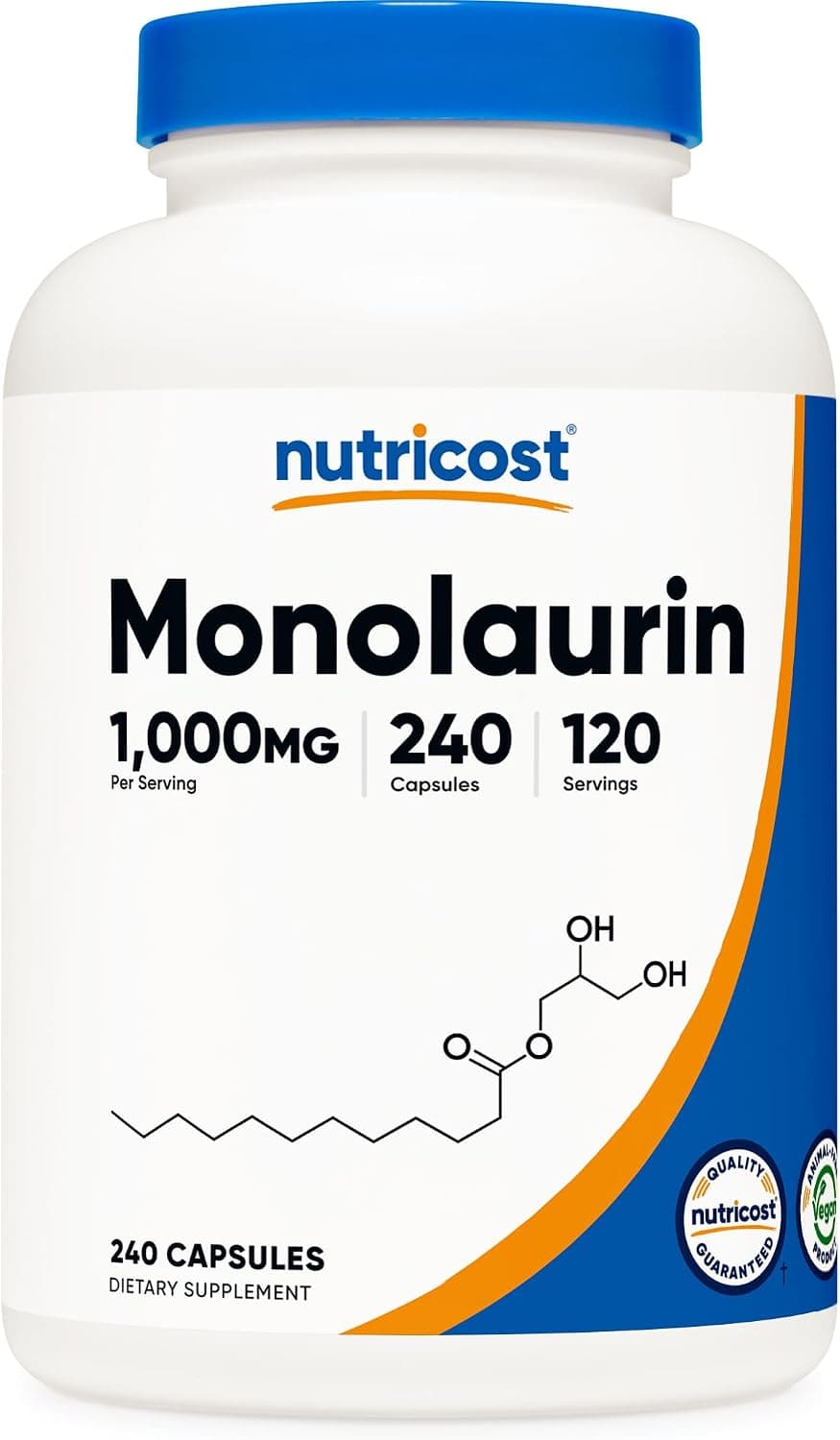
Suppliers
Vendors carrying Monolaurin, with live product details and codes. Links are affiliate links that support the wiki at no cost to you.
Amazon
Monolaurin
Research
- 2009first citedGlycerol monolaurate and dodecylglycerol effects on Staphylococcus aureus and toxic shock syndr…
- 2025most recentHigher Serum Monolaurin Is Associated with a Lower Risk of COVID-19: Results from a Prospective…
- 1.In vitro and in vivo antiviral activity of monolaurin against Seneca Valley virus.
- 2.Glycerol Monolaurate Contributes to the Antimicrobial and Anti-inflammatory Activity of Human Milk.
- 3.Glycerol monolaurate and dodecylglycerol effects on Staphylococcus aureus and toxic shock syndrome toxin-1 in vitro and in vivo.
- 4.Higher Serum Monolaurin Is Associated with a Lower Risk of COVID-19: Results from a Prospective Observational Cohort Study.
4 listed here; entry last updated August 2026
Reviews
My notesprivate to this device
FAQ
Is this just coconut oil?
No. Coconut oil is roughly half lauric acid, but monolaurin is the glycerol monoester of that fatty acid, which is the more potent antimicrobial form. Your body only converts a small fraction of dietary lauric acid into monolaurin, so eating coconut oil is not the same as supplementing GML.
Does it actually work inside the body, or just in a test tube?
Most of the strong data is in vitro, plus animal work. The honest gap is that plasma lipases rapidly cleave absorbed monolaurin back into lauric acid, so a systemic antiviral effect in humans isn't proven. Much of the plausible action is in the gut, which is why it shows up in gut/candida protocols.
Will it wipe out my good gut bacteria?
It mainly hits gram-positive bugs and enveloped viruses, and it relatively spares many beneficial lactobacilli and bifidobacteria. That said, it's a surfactant, so high doses are not for indefinite use; better in bouts and taken with food.
Why do I feel worse when I start it?
Some people get a Herxheimer-like 'die-off' feeling (fatigue, headache, GI upset) in the first days. It's anecdotal and passes; the fix is to start low, around 750mg, and titrate up slowly instead of jumping to grams.
Limitations of the evidence
- Little to no human clinical safety data at supplement doses
Adverse effects
- GI upset; nausea, cramping, loose stools, especially at higher doses
Notes and cautions
- Herxheimer-like 'die-off' symptoms when ramping up too fast
- Theoretical gut-microbiome or barrier disruption with high chronic use (surfactant effect)