
spec sheet7 rows
Tilorone is a low molecular weight oral interferon inducer sold in Russia as Amixin for influenza and other viral infections; it has never been approved or independently trialled to Western standards.
- Oral inducer of the body's own interferon
- Sold in Russia as Amixin for influenza
- A rare low molecular weight interferon inducer
- Preclinical repurposing interest as a broad spectrum antiviral
- Decades on the Russian market behind it
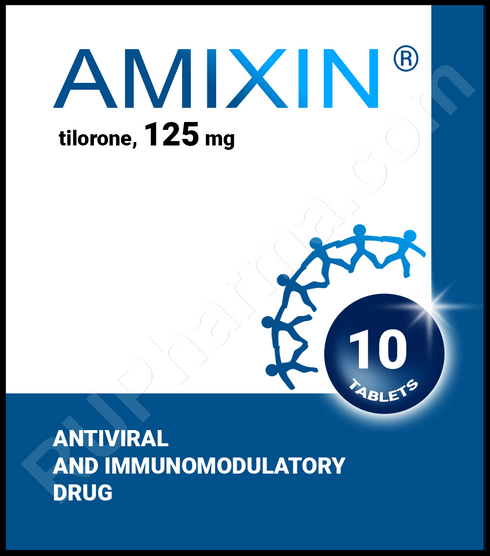
- Tilorone was first synthesised in the USA in the late 1960s as the first orally active interferon inducer, but it was never approved by any Western regulator; it is registered and widely sold only in Russia, Ukraine and neighbouring states as Amixin or Lavomax.
- The entire Western literature on tilorone is preclinical. There is no Cochrane review, no FDA or EMA assessment, and no Western-conducted randomised controlled trial of tilorone for influenza, respiratory viral infection or any other indication.
- The only quantified modern pharmacology comes from drug-repurposing work: tilorone inhibits SARS-CoV-2 in A549-ACE2 cells with an IC50 of 180 nM, with the authors attributing the effect to a lysosomotropic mechanism rather than a specific viral target [1].
- In the Ebola programme, tilorone was efficacious in mouse-adapted Ebola virus but in vitro metabolism work showed significant species differences that the authors used to explain why it failed to carry into the guinea pig model [2].
- The Russian clinical literature that supports its marketing is small, largely unblinded and published in Russian-language journals; the representative study enrolled 60 heart failure patients, 30 per arm, with no placebo and no blinding [5]. This should be stated plainly rather than presented as trial evidence.
- No retraction or expression of concern was found on any of the tilorone records retrieved.
Mechanism
Tilorone is a cationic amphiphilic fluorenone that triggers endogenous type I and type II interferon production from intestinal epithelium, hepatocytes and leukocytes rather than supplying interferon directly. That same physicochemical class accumulates in lysosomes and causes phospholipidosis, which is the basis of the corneal and retinal findings reported after prolonged dosing. Separately, tilorone has drawn preclinical interest as a repurposed broad-spectrum antiviral including against Ebola, which is a different context from the influenza indication sold here.
receptor fingerprint
SARS-CoV-2 replication in A549-ACE2 cellsInhibition, mechanism reported as lysosomotropic rather than target-specific
Ebola virus and Marburg virus replicationInhibition (drug-repurposing screen)
alpha7 receptor signallingModulation; suppresses Ca2+-stimulated cytochrome c release and blocks the effect of the alpha7 agonist PNU-282987
Type I interferon induction (IFN-alpha / IFN-beta)Oral small-molecule inducer
Safetyrisks and cautions, not medical advice
an oral interferon inducer registered only in Russia and neighbouring markets with no Western regulatory review; tilorone is a cationic amphiphile that causes drug-induced phospholipidosis with corneal and retinal deposits in animals
Subjective profileweighing the evidence above
Tilorone accumulates in lysosomes, and the corneal and retinal deposits that follow end the conversation before efficacy is even reached. Carrying that liability for a self-limiting winter virus is a bad trade at any level of benefit, and decades on the Russian market have produced no independent evidence that pushing the body to make its own interferon shortens an influenza. Whatever genuine scientific interest the molecule now has is as a repurposing candidate against far more serious viruses, which says nothing at all about the pharmacy box sold for colds.
Where to buy

Suppliers
Vendors carrying Tilorone, with live product details and codes. Links are affiliate links that support the wiki at no cost to you.
RUPharma🌐
Tilorone
Research
- 2007first citedPharmacokinetics of a synthetic interferon inducer amixin in mice
- 2021most recentRepurposing the Ebola and Marburg Virus Inhibitors Tilorone, Quinacrine, and Pyronaridine: In V…
- 1.Repurposing the Ebola and Marburg Virus Inhibitors Tilorone, Quinacrine, and Pyronaridine: In Vitro Activity against SARS-CoV-2 and Potential Mechanisms.
- 2.Pyronaridine tetraphosphate efficacy against Ebola virus infection in guinea pig
- 3.Pharmacokinetics of a synthetic interferon inducer amixin in mice
- 4.The effect of amixin and agmatine on cytochrome C release from isolated mitochondria
- 5.Clinical efficacy of acute respiratory viral infections prevention in patients with chronic heart failure
5 listed here; entry last updated August 2026
Reviews
My notesprivate to this device
Notes and cautions
- There is no Western regulatory safety review of tilorone and therefore no boxed warning, which is a fact about the absence of scrutiny rather than evidence of safety.
- Tilorone is a cationic amphiphilic DNA-intercalating agent and the modern mechanistic work identifies it as lysosomotropic [1]; drugs in this class are the classical inducers of generalised phospholipidosis and of corneal and retinal deposits in animals, so ophthalmic and lysosomal toxicity is a mechanistically predicted risk that has not been excluded in humans.
- The published mouse pharmacokinetics show a low elimination rate and long tissue retention [3], which compounds that concern.
- Any efficacy claim for the Russian marketed product should be presented as unverified by Western evidence.