
spec sheet7 rows
Ribavirin is a broad spectrum nucleoside analogue that was the backbone of hepatitis C treatment before direct acting antivirals replaced it, and now survives mainly in a few viral haemorrhagic fevers and in severe respiratory syncytial virus infection.
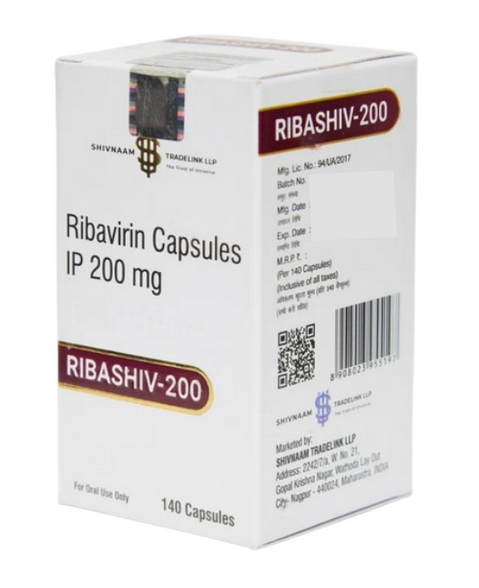
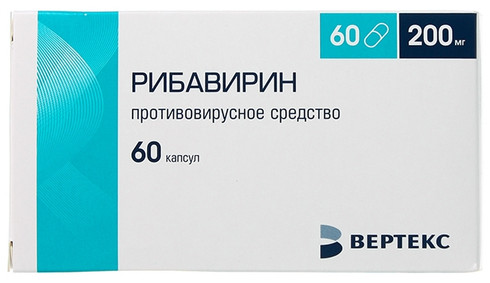
- Ribavirin is a guanosine nucleoside analogue first synthesised in 1972 and FDA-approved in 1986 as an aerosol for RSV; its historic role was as the indispensable partner to interferon in chronic hepatitis C, an indication now largely obsolete since direct-acting antivirals.
- The pivotal Fried trial established peginterferon alfa-2a plus ribavirin as the standard of care: sustained virologic response 56% overall versus 44% for standard interferon plus ribavirin and 29% for peginterferon alone, though only 46% in genotype 1 [1].
- Ribavirin monotherapy does not achieve sustained clearance of hepatitis C; the Cochrane review confirmed the benefit is only in combination with interferon [3]. This is stated explicitly in the boxed warning.
- For RSV, pooled meta-analysis found no overall mortality benefit (risk ratio 0.63, 95% CI 0.28 to 1.42) but a significant reduction in haematological patients (0.32, 0.14 to 0.71) and no benefit in lung transplant recipients [4].
- The dominant in vitro mechanism against flaviviruses and paramyxoviruses is IMPDH inhibition and GTP depletion rather than lethal mutagenesis [7], though the mutagenesis mechanism is better supported for some other RNA viruses [8].
- Meta-analysis of Crimean-Congo haemorrhagic fever data found the evidence base too weak and too observational to support a firm recommendation [6].
Mechanism
It acts by several routes at once: inhibition of inosine monophosphate dehydrogenase, which depletes the GTP pool; direct interference with viral RNA polymerase; and incorporation into viral RNA in a way that raises the mutation rate past the point the virus can sustain. Its accumulation inside red cells, which cannot dephosphorylate it, is what causes the haemolysis.
receptor fingerprint
Inosine monophosphate dehydrogenase (IMPDH1/IMPDH2)Ribavirin monophosphate competitively inhibits IMPDH, depleting the intracellular GTP pool available for viral RNA synthesis
Erythrocyte kinase / nucleotide phosphatase-poor red cellsRibavirin triphosphate accumulates in erythrocytes, which lack the phosphatases to dephosphorylate it, causing oxidative membrane damage and extravascular haemolysis
Viral RNA-dependent RNA polymerase (e.g. HCV NS5B)Ribavirin triphosphate is misincorporated as a purine analogue, pairing ambiguously with both cytidine and uridine and raising the viral mutation rate past the error threshold
Th1/Th2 balance in host lymphocytesShifts the host response toward a Th1 phenotype, augmenting interferon-mediated clearance
RNA guanylyltransferase and mRNA (guanine-N7)-methyltransferase (viral capping enzymes)Ribavirin triphosphate interferes with 5' cap formation on viral mRNA
Safetyrisks and cautions, not medical advice
a proven human teratogen with a six month contraception requirement for both sexes after the last dose, plus dose limiting haemolytic anaemia that needs regular haemoglobin monitoring; it is a specialist supervised drug, not a self managed one
Subjective profileweighing the evidence above
Not sourced here, and teratogenicity is the reason: it causes birth defects across animal species at almost every dose tested, and both sexes need contraception for six months after the last dose. Its clinical era is largely over in any case, since direct acting antivirals cured hepatitis C better and without the haemolysis, leaving it to a few haemorrhagic fevers and severe respiratory syncytial virus where a specialist is making the call. The anaemia is not a side effect to keep half an eye on; it needs scheduled haemoglobin checks and dose changes made by somebody reading them.
Resources
No suppliers are provided for compounds like this. This entry is here for reference.
Research
- 2001first citedPeginterferon alfa-2b plus ribavirin compared with interferon alfa-2b plus ribavirin for initia…
- 2002meta-analysisRibavirin with or without alpha interferon for chronic hepatitis C
- 2023most recentRibavirin treatment for respiratory syncytial virus infection in patients with haematologic mal…
- 1.Peginterferon alfa-2a plus ribavirin for chronic hepatitis C virus infection
- 2.Peginterferon alfa-2b plus ribavirin compared with interferon alfa-2b plus ribavirin for initial treatment of chronic hepatitis C: a randomised trial
- 3.Ribavirin with or without alpha interferon for chronic hepatitis C
- 4.Ribavirin for Treatment of Subjects with Respiratory Syncytial Virus-Related Infection: A Systematic Review and Meta-Analysis
- 5.Ribavirin treatment for respiratory syncytial virus infection in patients with haematologic malignancy and haematopoietic stem cell transplant recipients: a systematic review and meta-analysis
- 6.Ribavirin for Crimean-Congo hemorrhagic fever: systematic review and meta-analysis
- 7.The predominant mechanism by which ribavirin exerts its antiviral activity in vitro against flaviviruses and paramyxoviruses is mediated by inhibition of IMP dehydrogenase
- 8.Ribavirin's antiviral mechanism of action: lethal mutagenesis?
8 listed here; entry last updated August 2026
Reviews
My notesprivate to this device
Notes and cautions
- Ribavirin carries a boxed warning with three components: haemolytic anaemia (the principal toxicity, which can precipitate myocardial infarction in patients with coronary disease), the fact that monotherapy is not effective for chronic hepatitis C, and significant teratogenic and embryocidal effects demonstrated in all animal species tested.
- It is pregnancy category X, and both female patients and female partners of male patients must avoid pregnancy during therapy and for six months afterward, with monthly pregnancy testing.
- The long red-cell half-life means anaemia develops over the first four to eight weeks and requires haemoglobin monitoring at weeks 2 and 4 and periodically thereafter.
- Ribavirin is contraindicated in creatinine clearance below 50 mL/min and in haemoglobinopathies such as thalassaemia major and sickle cell anaemia.