
spec sheet13 rows
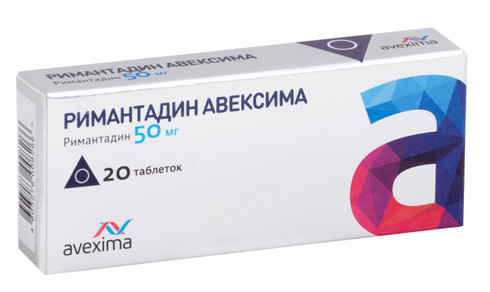
Rimantadine is an aminoadamantane antiviral, the alpha-methyl cousin of amantadine, that was used to prevent and treat influenza A. It works by plugging the influenza A M2 proton channel, a tiny pore the virus needs to acidify its interior and release its genome inside the cell. It tends to cause fewer central nervous system side effects than amantadine and is generally the more potent M2 blocker of the two. Its clinical usefulness has collapsed in recent decades because most circulating influenza A strains now carry M2 mutations that make the whole adamantane class ineffective.
- Historically used to prevent and treat influenza A
- Plugs the influenza A M2 proton channel precisely
- The more potent M2 blocker of the classic adamantanes
- Fewer central nervous system side effects than amantadine
- A clean textbook example of a viral ion-channel drug
- Long half-life keeps dosing simple
- Gastrointestinal upset (nausea)
- Occasional insomnia, dizziness, or difficulty concentrating (less than amantadine)
- Effectively obsolete against current flu strains due to resistance
Overview
Rimantadine is a synthetic adamantane antiviral, the alpha-methyl analog of amantadine, marketed in the United States under the brand name Flumadine. Like amantadine it belongs to the M2 ion-channel inhibitor class and is active exclusively against influenza A, working by plugging the viral M2 proton channel and thereby blocking uncoating. It was approved by the US Food and Drug Administration in 1993 for the prophylaxis and treatment of influenza A in adults and for prophylaxis in children, and it saw substantial earlier clinical use in the Soviet Union.
Clinically, rimantadine occupied a niche defined largely by comparison with its parent. Randomized trials established prophylactic efficacy in the range of 70 to 90 percent against laboratory-confirmed influenza A and modest treatment benefit when started within the first day or two of illness, broadly comparable to amantadine [2]. Its principal advantage was tolerability: extensive hepatic metabolism, lower central nervous system penetration, and a long half-life permitting simple dosing made it the preferred adamantane for elderly patients and those prone to amantadine's neurologic side effects [3][4]. Its principal limitations were the same as amantadine's, namely no activity against influenza B and the rapid emergence of resistant virus during treatment.
Rimantadine is today effectively obsolete for seasonal influenza. Following the near-universal spread of the S31N M2 mutation, the US Centers for Disease Control and Prevention recommended against the use of adamantanes for influenza beginning in the 2005 to 2006 season, and the neuraminidase inhibitors and later baloxavir supplanted the class [5]. The drug retains value chiefly as a pharmacological reference point, illustrating how a small structural change to a scaffold can improve tolerability without changing the antiviral target, and as a probe compound in structural studies of the M2 channel and its resistance mutations.
- Rimantadine is simply amantadine with an added alpha-methyl group; that single modification lowers its penetration into the brain and roughly halves the rate of central-nervous-system side effects while keeping antiviral potency essentially unchanged [2][4].
- Unlike amantadine, which the kidneys excrete almost entirely unchanged, more than three-quarters of a rimantadine dose is broken down by the liver, giving it a long 24-to-36-hour half-life and making it safer to use in mild renal impairment [3].
- Both adamantanes were rendered clinically useless by a single amino-acid change: by the 2005 to 2006 US influenza season more than 90 percent of circulating influenza A(H3N2) viruses carried the S31N mutation, prompting the CDC to advise against the class [5].
- The drugs only ever worked against influenza A; influenza B lacks an amantadine-sensitive M2 proton channel, so rimantadine has never had any useful activity against it [1].
Mechanism
Rimantadine (alpha-methyl-1-adamantanemethylamine) is the alpha-methyl analog of amantadine and shares its parent's single, well-defined antiviral target: the M2 protein of influenza A virus. M2 is a tetrameric transmembrane proton channel that conducts protons into the interior of the virion after endosomal uptake, acidifying the particle and triggering the conformational changes that release the viral ribonucleoprotein into the host cytoplasm. Rimantadine and amantadine occlude this channel, halting proton flux, blocking viral uncoating, and arresting replication early in the cycle. Solid-state NMR of M2 reconstituted in phospholipid bilayers localized a single high-affinity adamantane molecule within the N-terminal lumen of the pore, ringed by the very residues that mutate in drug-resistant strains, establishing that the adamantane cage physically plugs the channel rather than acting purely allosterically [1]. Because the channel is unique to influenza A, the adamantanes have no useful activity against influenza B, which lacks an equivalent amantadine-sensitive M2.
The pharmacologically interesting feature of rimantadine is not a difference in antiviral target but a difference in disposition. Rimantadine is far more extensively metabolized than amantadine: over roughly three-quarters of a dose is hydroxylated in the liver, and parent drug plus metabolites are then cleared renally, whereas amantadine is excreted largely unchanged by the kidneys [3]. This gives rimantadine a long elimination of roughly 24 to 36 hours, allows once-daily dosing despite its twice-daily label, and makes it comparatively forgiving of mild to moderate renal impairment. Rimantadine also concentrates in respiratory secretions; nasal fluid concentrations at steady state run about 1.5 times plasma levels, which helps explain its clinical effectiveness at relatively low systemic exposures [3].
The added alpha-methyl group and the resulting metabolic profile also reduce central nervous system penetration relative to amantadine, and this is the basis of rimantadine's tolerability advantage. In head-to-head prophylaxis, rimantadine produces roughly half the rate of -related withdrawals seen with amantadine [2], and in frail elderly nursing-home patients the contrast is stark: sequential-therapy data showed adverse events in about 19 percent of amantadine courses versus roughly 2 percent of rimantadine courses, with amantadine use carrying an odds ratio above 12 for confusion and other neurologic effects [4]. Unlike amantadine, rimantadine has essentially no clinically exploited dopaminergic or -receptor activity in humans and was never developed as a neurological agent.
Rimantadine's Achilles heel is shared with amantadine and is genetic. A single amino-acid substitution in the M2 transmembrane domain, most commonly serine-to-asparagine at position 31 (S31N), abolishes drug binding while leaving channel function intact, and this mutation confers cross-resistance to the entire adamantane class. S31N-bearing viruses transmit without a fitness cost and spread globally in the mid-2000s; by the 2005 to 2006 season more than 90 percent of circulating influenza A(H3N2) isolates in the United States carried the mutation [5]. Structural studies show that in the S31N channel the adamantane cage is displaced into a hydrophobic pocket and the polar amine reorients away from the proton-selective histidine, explaining the loss of inhibition and guiding efforts to design successor channel blockers that can re-engage the mutant pore [6].
receptor fingerprint
Influenza A M2 proton channelpore blocker (closed-state stabilizer)
Endosomal proton conduction into virionelectrostatic hindrance by charged amino group
M2 in trans-Golgi (viral maturation)channel block
Mutant M2 (S31N / V27A)binds but no longer blocks
Safetyrisks and cautions, not medical advice
Rimantadine is a prescription antiviral with a long human track record; when it still worked, it was generally better tolerated than amantadine, with fewer central nervous system effects such as insomnia, jitteriness, or trouble concentrating, though gastrointestinal upset can occur. Its bigger problem today is futility rather than toxicity: widespread M2 resistance means it will not reliably treat modern influenza A, so neuraminidase inhibitors or newer agents are preferred. It is cleared partly by the kidneys and liver, so dosing is adjusted in older adults and in kidney or liver impairment. Do not treat this as medical advice or self-prescribe an antiviral.
Interactionsdocumented pairs only, not exhaustive
Rimantadine has notably few drug interactions, and those that have been measured are small. Coadministration with acetaminophen reduced rimantadine peak concentration and AUC by roughly 11%, and aspirin by roughly 10%; neither change is large enough to have shown a clinical effect. Cimetidine, a broad enzyme inhibitor that raises the levels of many drugs, produced no statistically significant change in rimantadine exposure in a single-dose study.
The interaction that does carry practical weight is not pharmacokinetic at all. Live attenuated intranasal influenza vaccine and rimantadine interfere with each other, because an active antiviral suppresses replication of the vaccine strain and blunts the immune response the vaccine is meant to provoke. Labeling separates the two, by 48 hours after rimantadine stops and by two weeks after vaccination.
Rimantadine is extensively hydroxylated and conjugated before renal excretion, and no clinically significant cytochrome P450 interactions have been established for it.
Checking a whole stack? Run it through interactions + stacks.
History
Rimantadine emerged from adamantane chemistry in the 1960s as a close structural relative of amantadine, the first M2 inhibitor. It was studied and deployed extensively in the Soviet Union for influenza prophylaxis and treatment well before it reached Western markets, with controlled outbreak studies in the 1970s reporting therapeutic and prophylactic benefit in family and community settings. In the United States a landmark placebo-controlled trial published in the New England Journal of Medicine in 1982 compared rimantadine and amantadine directly and concluded that rimantadine, with efficacy comparable to amantadine but fewer central nervous system side effects, appeared to be the drug of choice for influenza A prophylaxis [2]; the drug was ultimately approved by the FDA as Flumadine in 1993.
Reputation
Rimantadine is generally regarded as the better-tolerated of the two adamantanes: about as effective as amantadine against influenza A but far less likely to cause the confusion, insomnia, and other neurologic effects that limit amantadine, especially in the elderly and in patients with renal impairment [2][4]. That favorable safety profile, however, is now largely academic. Because it shares amantadine's M2 target, rimantadine also shares its fatal weakness, cross-resistance conferred by the S31N mutation that swept through circulating influenza A strains, and it has no activity against influenza B. It is consequently viewed as clinically obsolete for seasonal influenza and is no longer recommended, remembered mainly as a well-designed drug defeated by viral evolution [5].
Subjective profileweighing the evidence above
Effectively obsolete. Widespread M2 resistance means it will not reliably treat circulating influenza A, so the problem is futility rather than toxicity. Its value now is as a clean textbook example of a viral ion-channel drug, not as something worth taking.
Where to buy
Suppliers
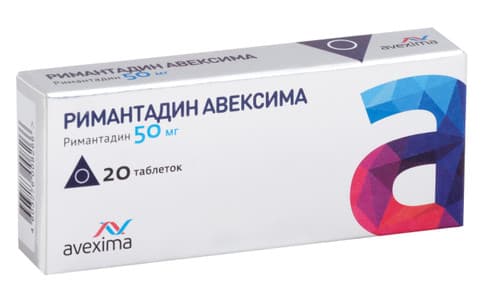
Vendors carrying Rimantadine, with live product details and codes. Links are affiliate links that support the wiki at no cost to you.
RUPharma🌐
Rimantadine
Research
- 1982first citedA controlled trial of amantadine and rimantadine in the prophylaxis of influenza A infection.
- 2011most active year3 papers
- 2020most recentX-ray Crystal Structures of the Influenza M2 Proton Channel Drug-Resistant V27A Mutant Bound to…
- 1.Structure and mechanism of the M2 proton channel of influenza A virus.
- 2.X-ray Crystal Structures of the Influenza M2 Proton Channel Drug-Resistant V27A Mutant Bound to a Spiro-Adamantyl Amine Inhibitor Reveal the Mechanism of Adamantane Resistance.
- 3.Influenza M2 proton channels.
- 4.Research/review: Structure and linkage disequilibrium analysis of adamantane resistant mutations in influenza virus m2 proton channel.
- 5.Quantitative analysis of influenza M2 channel blockers.
- 6.Designing inhibitors of M2 proton channel against H1N1 swine influenza virus.
- 7.How do aminoadamantanes block the influenza M2 channel, and how does resistance develop?
- 8.Structure of the amantadine binding site of influenza M2 proton channels in lipid bilayers.
- 9.A controlled trial of amantadine and rimantadine in the prophylaxis of influenza A infection.
- 10.Rimantadine: a clinical perspective.
- 11.Comparison of central nervous system adverse effects of amantadine and rimantadine used as sequential prophylaxis of influenza A in elderly nursing home patients.
- 12.Adamantane resistance among influenza A viruses isolated early during the 2005-2006 influenza season in the United States.
15 listed here; entry last updated August 2026
Reviews
My notesprivate to this device
FAQ
Does rimantadine still work against the flu?
Mostly no. The great majority of circulating influenza A now carries M2 mutations (like S31N) that make rimantadine and amantadine ineffective, so guidelines no longer recommend them for seasonal flu.
How is it different from amantadine?
Same adamantane cage, but rimantadine adds a methyl group. In practice it is usually the stronger M2 blocker and tends to cause fewer central nervous system side effects, though it is handled somewhat differently by the body.
Does it help against influenza B or COVID?
No. It targets the influenza A M2 protein specifically; influenza B's equivalent channel differs, and it has no role against coronaviruses.
Is it a nootropic?
Not really. Unlike its relatives amantadine and memantine, rimantadine is an antiviral with little central action; it is included here as the antiviral member of the adamantane family.
Adverse effects
- Gastrointestinal upset (nausea)
- Occasional insomnia, dizziness, or difficulty concentrating (less than amantadine)
- Effectively obsolete against current flu strains due to resistance
- Requires dose adjustment in kidney or liver impairment