
spec sheet13 rows
Omeprazole, introduced in the late 1980s as the first proton pump inhibitor, suppresses gastric acid by irreversibly binding the H+/K+-ATPase (the proton pump) on parietal cells, an elegant covalent mechanism that made it a foundation therapy for reflux, peptic ulcer, and Helicobacter pylori eradication. Research has since uncovered striking off-target biology: omeprazole is a ligand of the aryl hydrocarbon receptor, a property implicated both in protection against hyperoxic lung injury and in unwanted renal effects. By neutralizing the acidic tumor microenvironment and impairing lysosomal function, it and related proton pump inhibitors can chemosensitize resistant cancers, while the drug class also interferes with mycobacterial drug efflux, hinting at antitubercular potential. It appears on the World Health Organization Model List of Essential Medicines; long-term use warrants attention to nutrient absorption, the gut microbiome, and CYP2C19-mediated drug interactions.
- Powerful, lasting acid suppression from one daily capsule
- Foundation therapy for reflux and peptic ulcer
- Part of Helicobacter pylori eradication regimens
- Heals erosive esophagitis; effective and cheap
- Locks the proton pump shut, irreversibly
- Surprising off target biology under active research
- Headache, abdominal pain, nausea, diarrhea, or flatulence are the most commonly reported effects
- Long-term use has been linked to low magnesium and reduced absorption of vitamin B12 and calcium
- May modestly increase the risk of certain gut infections, including Clostridioides difficile
Overview
Omeprazole belongs to the proton-pump inhibitor class, the most potent group of acid-suppressing medicines and among the most widely prescribed drugs in the world [1][2]. Chemically it is a substituted benzimidazole, and it works at the very last step of acid production in the stomach, which is why it lowers acid more completely than earlier drugs such as the H2 blockers [2]. It is a prodrug that becomes active only within the acidic environment of the stomach's acid-secreting cells.
The drug was first synthesized in 1979 by researchers at the Swedish firm AB Hassle, part of Astra, now AstraZeneca, and it became the first proton-pump inhibitor to enter clinical use, reaching the market in the late 1980s [2]. It was originally sold as Losec and later renamed Prilosec in the United States to avoid confusion with the diuretic furosemide (Lasix). Many related PPIs followed, and omeprazole itself is now generic and inexpensive.
Omeprazole is used for a range of acid-related disorders. Its central role is in gastroesophageal reflux disease, where suppressing acid heals inflammation of the esophagus and relieves heartburn, and clinical guidance treats PPIs as the mainstay for troublesome or complicated reflux [1]. It is also used to treat and prevent peptic ulcers, including those caused by nonsteroidal anti-inflammatory drugs, to manage acid hypersecretory states such as Zollinger-Ellison syndrome, and, alongside antibiotics, to clear Helicobacter pylori, a bacterium linked to ulcers [1]. Because the various PPIs differ in potency, clinicians sometimes convert between them using estimates of relative strength [2].
Omeprazole comes in several forms, including capsules, tablets, and preparations for people who cannot swallow, and in many countries lower-strength versions are sold over the counter for frequent heartburn while higher strengths remain prescription-only [1]. It is included on the World Health Organization's list of essential medicines. Short-term use is generally well tolerated, but long-term or high-dose therapy has been linked in observational studies to concerns such as reduced absorption of certain nutrients, low magnesium, an increased risk of some infections, and a possible association with bone fractures, prompting advice to use the lowest effective dose for the shortest necessary time [3].

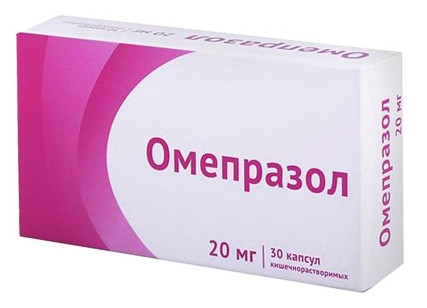
- Omeprazole is a prodrug that is essentially inert until it reaches the extreme acidity inside the stomach's parietal cells, which is why it targets acid production so selectively.
- Beyond the gut, omeprazole binds the aryl hydrocarbon receptor and has been shown in the laboratory to inhibit invasion of aggressive pancreatic cancer cells.
- It appears on the World Health Organization Model List of Essential Medicines as the prototype of the entire proton pump inhibitor class.
Mechanism
Omeprazole reduces stomach acid by shutting down the gastric proton pump, the enzyme H+/K+-ATPase that sits on the surface of the acid-secreting parietal cells lining the stomach [2]. This pump carries out the final step of acid production, exchanging hydrogen ions into the stomach for potassium ions; by binding to it irreversibly, omeprazole blocks acid secretion regardless of what triggered it, whether food, , or nerve signals [2].
The drug is a that stays inactive until it reaches the highly acidic space of the parietal cell, where it is chemically converted into the form that attaches to the pump, which is why it acts selectively at the site of acid production [1][2]. Because the effect depends on switching off pumps that are actively working and the cell must make new pumps to restore acid output, a single dose suppresses acid for many hours, and the full effect builds over the first few days of regular dosing [2].
receptor fingerprint
Gastric H+/K+ ATPase (proton pump)inhibits
CYP2C19 enzymeinhibits
Serum gastrin (feedback loop)modulates
CYP3A4 enzymemodulates
Aryl hydrocarbon receptoractivates
Dosingtypical ranges, not medical advice
interested in protocols and clinical dosages? make an account to see them! ^_^
Safetyrisks and cautions, not medical advice
Omeprazole is available over the counter and by prescription and is generally well tolerated. Short-term effects include headache, diarrhea or constipation, nausea, and abdominal pain. Longer or higher-dose use has been linked to low magnesium, vitamin B12 and iron shortfalls, a higher chance of certain gut infections such as Clostridioides difficile, bone fractures, and a rebound surge of acid once stopped. It inhibits CYP2C19 and can blunt the activation of clopidogrel, and by removing stomach acid it lowers absorption of drugs that need an acidic gut such as atazanavir and some antifungals. People are usually advised to use the lowest effective dose for the shortest time that controls symptoms.
Interactionsdocumented pairs only, not exhaustive
Omeprazole is both an inhibitor and a substrate of CYP2C19, and that enzyme is where its most consequential interaction sits. Clopidogrel is a prodrug that CYP2C19 must activate; omeprazole blocks that step, lowers the active metabolite and measurably weakens platelet inhibition, which is why the pairing carries a regulatory warning. Pantoprazole is a much weaker CYP2C19 inhibitor and is the usual alternative discussed.
The second class of interaction is simply gastric pH. Raising stomach pH cuts absorption of drugs that need an acid environment to dissolve: atazanavir and rilpivirine, ketoconazole and itraconazole, and the tyrosine kinase inhibitors erlotinib, dasatinib and nilotinib can all lose enough exposure to lose efficacy. A few drugs, digoxin among them, go the other way and are absorbed more completely.
Omeprazole also slows clearance of diazepam, phenytoin, high dose methotrexate and tacrolimus, while rifampin and St John's wort induce CYP2C19 and blunt omeprazole's own acid suppression.
Checking a whole stack? Run it through interactions + stacks.
History
Omeprazole was created by the Swedish company Astra, now AstraZeneca, whose researchers spent the 1970s pursuing a new way to suppress stomach acid after earlier candidate compounds such as timoprazole and picoprazole revealed both the promise and the toxicity hurdles of the benzimidazole class. The team, including scientists such as Per Lindberg and colleagues, refined the chemistry into omeprazole, the first of an entirely new drug class, the proton pump inhibitors, which block the parietal-cell enzyme responsible for the final step of acid secretion.
It was launched in the late 1980s, reaching Europe in 1988 and the United States in 1989 under the names Losec and Prilosec, and it rapidly transformed the treatment of reflux disease and peptic ulcers. The discovery that acid suppression aids eradication of Helicobacter pylori further cemented its role. Omeprazole now appears on the World Health Organization Model List of Essential Medicines, and its success spawned an entire family of successor proton pump inhibitors.
Reputation
Omeprazole is one of the genuine landmark drugs of modern medicine, the first proton pump inhibitor and the template for an entire class that made severe reflux, peptic ulcers, and H. pylori-related disease routinely treatable. Its mechanism is elegant: an inactive prodrug that stays dormant until it reaches the acidic interior of the acid-secreting cell, where it is converted into the form that covalently locks onto the proton pump, giving long-lasting suppression from a single daily dose.
Beyond the clinic it has become a fascinating research subject, acting as a ligand of the aryl hydrocarbon receptor, showing the ability to chemosensitize resistant cancer cells by neutralizing their acidic microenvironment, and interfering with drug efflux in mycobacteria. A fair account also notes real cautions with long-term use, including effects on magnesium, vitamin B12, and calcium absorption, changes to the gut microbiome, and CYP2C19-mediated interactions with drugs such as clopidogrel, which is why guidelines favor using the lowest effective dose for the needed duration.
Subjective profileweighing the evidence above
Effective and cheap for reflux and ulcer healing, and a short course is easy to justify. The trouble is that people stay on it for years by default; long use is linked to low magnesium and B12, more gut infections, and a rebound acid surge on stopping, so it deserves a periodic review.
Where to buy

1 other outlet

Suppliers
Vendors carrying Omeprazole, with live product details and codes. Links are affiliate links that support the wiki at no cost to you.
PCT.Zone
Omeprazole
RUPharma🌐
Omeprazole
Research
- 1981first citedSubstituted benzimidazoles inhibit gastric acid secretion by blocking (H+ + K+)ATPase.
- 2015most active year3 papers
- 2024most recentProton Pump Inhibitors and Cancer Risk: A Comprehensive Review of Epidemiological and Mechanist…
- 1.Gastroesophageal Reflux Disease: A Review.
- 2.Interchangeable Use of Proton Pump Inhibitors Based on Relative Potency.
- 3.Proton Pump Inhibitors and Bone Health: An Update Narrative Review.
- 4.Substituted benzimidazoles inhibit gastric acid secretion by blocking (H+ + K+)ATPase.
- 5.The mechanism for inhibition of gastric (H+ + K+)-ATPase by omeprazole.
- 6.Omeprazole Inhibits Pancreatic Cancer Cell Invasion through a Nongenomic Aryl Hydrocarbon Receptor Pathway.
- 7.Omeprazole attenuates hyperoxic lung injury in mice via aryl hydrocarbon receptor activation and is associated with increased expression of cytochrome P4501A enzymes.
- 8.Blockade of aryl hydrocarbon receptor restricts omeprazole-induced chronic kidney disease.
- 9.Untargeted metabolomics analysis of omeprazole-enhanced chemosensitivity to cisplatin in mice with non-small cell lung cancer.
- 10.Proton pump inhibitors enhance the effects of cytotoxic agents in chemoresistant epithelial ovarian carcinoma.
- 11.Proton pump inhibitor chemosensitization in human osteosarcoma: from the bench to the patients' bed.
- 12.The human proton pump inhibitors inhibit Mycobacterium tuberculosis rifampicin efflux and macrophage-induced rifampicin tolerance.
18 listed here; entry last updated August 2026
Reviews
My notesprivate to this device
FAQ
Why does it take a few days to work fully?
It only blocks pumps that are active, so several doses over a few days are needed to bring acid to its lowest, steadiest level.
Can I take it with clopidogrel?
Omeprazole can reduce how well clopidogrel is activated, so many doctors prefer pantoprazole in that situation; check with your prescriber.
Is long-term use safe?
It can be, but extended use is linked to low magnesium and B12, fracture risk, and gut infections, so use the lowest dose that works and review the need.
Morning or night?
Usually about 30 to 60 minutes before breakfast, since the pumps are most active after the overnight fast.
Can I stop suddenly?
Stopping after long use can cause a rebound surge of acid, so stepping down to an antacid or H2 blocker can ease the transition.
Adverse effects
- Headache, abdominal pain, nausea, diarrhea, or flatulence are the most commonly reported effects
- Long-term use has been linked to low magnesium and reduced absorption of vitamin B12 and calcium
- May modestly increase the risk of certain gut infections, including Clostridioides difficile
- Observational studies associate prolonged high-dose use with a possible increase in bone fracture risk
- Can interact with other medicines processed by the same liver enzymes, such as clopidogrel
Notes and cautions
- Generally advised at the lowest effective dose for the shortest necessary time