
spec sheet13 rows
Ondansetron is a selective serotonin 5-HT3 receptor antagonist introduced in 1991 that blocks serotonin signaling in the gut and the brainstem vomiting center, making it a mainstay for chemotherapy, radiation, and postoperative nausea. Beyond antiemesis, its modulation of 5-HT3-gated neurotransmission has driven repurposing research; controlled trials found it reduced drinking in early-onset alcohol use disorder, with response predicted by serotonin transporter and 5-HT3 receptor genotype, positioning it as an early example of pharmacogenetically guided addiction treatment. It has also shown benefit in diarrhea-predominant irritable bowel syndrome by slowing colonic transit, and as an adjunct in schizophrenia it has been studied for effects on negative symptoms and cognition. Its principal safety consideration is dose-dependent QT-interval prolongation.
- The gold standard for chemotherapy and post surgery nausea
- Blocks the 5-HT3 signal that triggers vomiting at the source
- Generally non sedating, unlike the older sickness drugs
- Melt in the mouth tablets for anyone who cannot swallow
- Intravenous form works fast when speed matters
- Trials found it cut drinking in early onset alcohol use disorder
- Headache is among the most common effects
- Constipation, and sometimes diarrhea, since 5-HT3 receptors also affect gut movement
- Fatigue or a feeling of warmth or flushing
Overview
Ondansetron is an antiemetic, a drug that prevents nausea and vomiting, and it belongs to the class of selective serotonin 5-HT3 receptor antagonists, sometimes called setrons [1]. It was among the first agents developed to block this specific serotonin receptor for controlling vomiting, and its arrival marked a substantial advance in managing chemotherapy-induced sickness [2]. The drug is well absorbed when taken by mouth, is broken down in the liver, and has a duration of action that allows dosing a few times a day [1].
Ondansetron was developed by researchers at Glaxo, later GlaxoSmithKline, during the 1980s and received United States approval in 1991, marketed as Zofran [2]. For years it was a leading branded medicine, and after its patents expired it became broadly available as an inexpensive generic. Related 5-HT3 antagonists, such as granisetron and palonosetron, were introduced later and share the same basic mechanism.
The drug is used to prevent and treat nausea and vomiting from several causes. Its best-established roles are in sickness caused by cancer chemotherapy and radiation therapy and in postoperative nausea and vomiting after anesthesia [3][4]. Network meta-analyses comparing antiemetics place 5-HT3 antagonists among the effective options in both the surgical and chemotherapy settings, often used together with other classes of drug for stronger protection [3][4]. It is also given off-label for nausea from other causes, such as gastroenteritis, and a clearer understanding of the nausea and vomiting pathways has helped explain where these drugs act [2].
Ondansetron is a prescription medicine available as ordinary tablets, orally dissolving tablets, oral liquid, and solutions for injection into a muscle or vein [1]. It is generally well tolerated, with headache, constipation, and fatigue among the more common effects [1]. A notable safety consideration is that it can prolong the heart's QT interval, an effect on cardiac electrical timing that in rare cases can lead to dangerous rhythms; because of this, a very high single intravenous dose was withdrawn from use, and the drug is given with care to people with certain heart conditions or electrolyte disturbances [1].


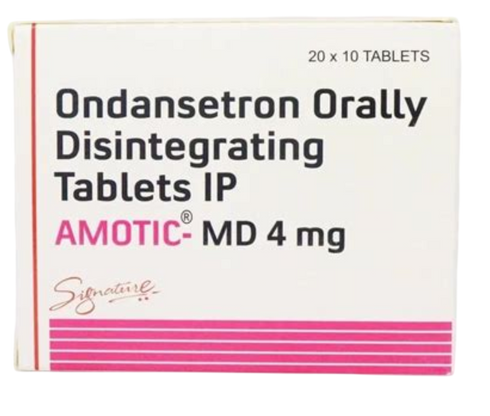
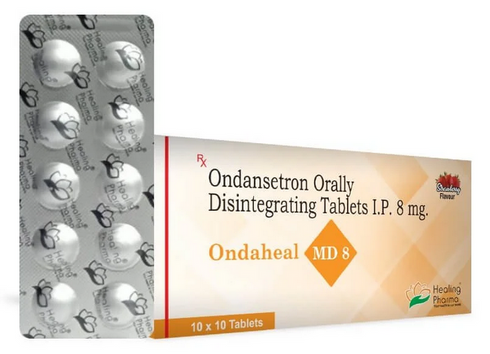
- In a randomized trial, alcohol-dependent patients with a particular serotonin-transporter genotype drank significantly less on ondansetron than on placebo, an early proof of concept for genotype-guided addiction treatment.
- Ondansetron's selective 5-HT3 blockade slows colonic transit, which is why it has been studied as a treatment for diarrhea-predominant irritable bowel syndrome.
- Its chief safety concern, prolongation of the heart's QT interval, comes from a side effect at the hERG potassium channel rather than its intended serotonin target.
Mechanism
Ondansetron works by selectively blocking 5-HT3 receptors, a type of receptor found both on nerve endings in the gut and in the brainstem areas that coordinate vomiting [1][2]. Many triggers of nausea, including chemotherapy drugs and the tissue effects of radiation, cause cells in the lining of the intestine to release , which then activates 5-HT3 receptors on the nearby vagus nerve, sending a signal to the vomiting center and the chemoreceptor trigger zone in the brain [2].
By occupying these receptors, ondansetron interrupts that signal at both the peripheral and central ends of the pathway, keeping the reflex from being set off [1][2]. Because it targets this particular receptor rather than or receptors, it avoids some of the side effects of older antiemetics, though its action on 5-HT3 receptors elsewhere in the gut also explains why constipation is a common effect [1].
receptor fingerprint
5-HT3 receptor in the chemoreceptor trigger zoneantagonist
5-HT3 receptor on gut vagal afferentsantagonist
5-HT3 receptor in the nucleus tractus solitariusantagonist
hERG potassium channel (Kv11.1)blocks
Dosingtypical ranges, not medical advice
interested in protocols and clinical dosages? make an account to see them! ^_^
Safetyrisks and cautions, not medical advice
Ondansetron is generally very well tolerated and, unlike older anti-sickness drugs, is largely non-sedating. Common effects are headache, constipation, fatigue and dizziness. Its main safety issue is a dose-related prolongation of the QT interval, so single intravenous doses above 16 mg are avoided and care is needed in people with congenital long QT, low potassium or magnesium, or other QT-prolonging drugs. It should not be combined with apomorphine, which can cause severe low blood pressure, and there is a small serotonin syndrome risk when it is added to other serotonergic medicines. On that serotonin syndrome point: a clinical commentary argues the WHO, FDA and Health Canada warnings about 5-HT3 antagonists plus serotonergic drugs rest on an implausible mechanism, and that 5-HT3 antagonists like ondansetron are actually unlikely to cause serotonin toxicity.
Interactionsdocumented pairs only, not exhaustive
Ondansetron prolongs the QT interval, and the FAERS database identified ondansetron among the nine most frequently implicated drugs in fatal torsades de pointes cases [17]. High-risk combinations involving other QT-prolonging drugs include citalopram and escitalopram (both SSRI antidepressants that prolong QT), amiodarone (an antiarrhythmic), and ciprofloxacin (a fluoroquinolone antibiotic). The interaction is pharmacodynamic; both drugs independently prolong cardiac repolarization, and concurrent use compounds this effect. What is not well-studied: ondansetron with tricyclic antidepressants, first-generation antihistamines, or antipsychotics at typical doses in patients without underlying QT prolongation risk factors.
Checking a whole stack? Run it through interactions + stacks.
History
Ondansetron emerged from research at the British pharmaceutical company Glaxo during the 1980s, part of a deliberate effort to understand the newly appreciated role of serotonin 5-HT3 receptors in the vomiting reflex. Scientists recognized that cytotoxic chemotherapy triggered nausea partly by causing serotonin release in the gut, and that selectively blocking 5-HT3 receptors might interrupt that signal without the sedation and movement disorders of older antiemetics.
The resulting compound was approved in 1991 and marketed as Zofran, and it revolutionized supportive cancer care by making highly emetogenic chemotherapy far more tolerable, later extending to radiation-induced and postoperative nausea. An orally dissolving formulation and the film product Zuplenz broadened its convenience for patients unable to swallow tablets. In the decades since, its clean receptor selectivity has invited extensive repurposing research, and it remains a first-choice antiemetic on the World Health Organization Model List of Essential Medicines.
Reputation
Ondansetron is widely regarded as a breakthrough that changed the experience of cancer treatment, taming the debilitating nausea and vomiting of chemotherapy and doing so with far less sedation than the antiemetics that preceded it. Its selective action on 5-HT3 receptors gives it a clean, predictable profile that made it a mainstay in oncology, surgery, and emergency care, and its availability as a mouth-dissolving tablet is a genuine practical advantage for patients who cannot keep anything down.
The same specificity has fueled intriguing repurposing work: controlled trials found it reduced drinking in early-onset alcohol use disorder, with response predicted by serotonin transporter and 5-HT3 receptor genotypes, an early example of pharmacogenetically guided addiction treatment, and it has shown promise in diarrhea-predominant irritable bowel syndrome. In the interest of balance, its main safety consideration is a dose-dependent prolongation of the heart's QT interval, so single high intravenous doses are avoided and caution applies in patients with cardiac risk factors; constipation and headache are the common everyday effects.
Subjective profileweighing the evidence above
Excellent at its job and largely non-sedating, which is what set it apart from the older anti-sickness drugs; headache and constipation are the usual price. It is prescription, and dose-related QT prolongation is the caution that matters, especially alongside other QT-prolonging drugs.
Where to buy

Suppliers
Vendors carrying Ondansetron, with live product details and codes. Links are affiliate links that support the wiki at no cost to you.
| supplier | size | price | $/mg |
|---|---|---|---|
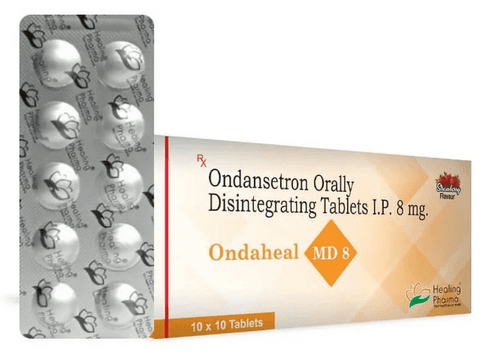
| PCT.Zonelowest | 4MG | $3.19 | $0.797/mg |
| PCT.Zonelowest | 4MG | $3.19 | $0.797/mg |
PCT.Zone
Ondansetron
PCT.Zone
Ondansetron
RUPharma🌐
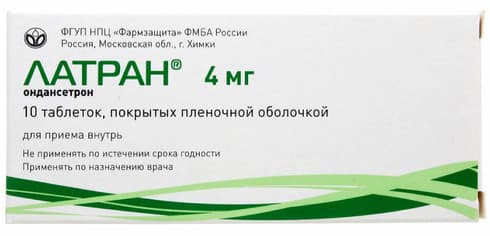
Ondansetron (Latran)

RUPharma🌐
Ondansetron
RUPharma🌐
Ondansetron
Research
- 1992first citedClinical pharmacology of ondansetron in postoperative nausea and vomiting.
- 2014most active year3 papers
- 2020meta-analysisDrugs for preventing postoperative nausea and vomiting in adults after general anaesthesia: a n…
- 2025most recentDetection of Clinically Significant Drug-Drug Interactions in Fatal Torsades de Pointes: Dispro…
- 1.Clinical pharmacology of ondansetron in postoperative nausea and vomiting.
- 2.Pathophysiological and neurochemical mechanisms of postoperative nausea and vomiting.
- 3.Drugs for preventing postoperative nausea and vomiting in adults after general anaesthesia: a network meta-analysis.
- 4.Antiemetics for adults for prevention of nausea and vomiting caused by moderately or highly emetogenic chemotherapy: a network meta-analysis.
- 5.Ondansetron for reduction of drinking among biologically predisposed alcoholic patients: A randomized controlled trial.
- 6.Pharmacogenetic approach at the serotonin transporter gene as a method of reducing the severity of alcohol drinking.
- 7.Serotonin transporter genomic biomarker for quantitative assessment of ondansetron treatment response in alcoholics.
- 8.Reductions in and relations between "craving" and drinking in a prospective, open-label trial of ondansetron in adolescents with alcohol dependence.
- 9.A randomised trial of ondansetron for the treatment of irritable bowel syndrome with diarrhoea.
- 10.Adjunctive ondansetron for schizophrenia: A systematic review and meta-analysis of randomized controlled trials.
- 11.The role of ondansetron in the treatment of schizophrenia.
- 12.Droperidol and ondansetron-induced QT interval prolongation: a clinical drug interaction study.
17 listed here; entry last updated August 2026
Reviews
My notesprivate to this device
FAQ
What is ondansetron used for?
Preventing and treating nausea and vomiting from chemotherapy, radiation and surgery, and it is also used for stomach bugs.
Does it make you drowsy?
Usually not; unlike some older anti-sickness drugs it is largely non-sedating, though it can cause headache or constipation.
Is it safe for my heart?
At normal doses it is generally fine, but it can prolong the QT interval, so high doses and use with other QT drugs or low potassium need caution.
How do the melt tablets work?
The orally disintegrating tablet dissolves on the tongue without water, which helps when swallowing or keeping water down is hard.
When should I take it?
Usually shortly before chemotherapy or surgery and then at regular intervals; for sudden nausea it can be taken as needed as directed.
Adverse effects
- Headache is among the most common effects
- Constipation, and sometimes diarrhea, since 5-HT3 receptors also affect gut movement
- Fatigue or a feeling of warmth or flushing
- Can prolong the heart's QT interval, which rarely may cause abnormal heart rhythms; used cautiously with other QT-prolonging drugs or with electrolyte imbalances
- Rarely, allergic reactions or, when combined with other serotonergic drugs, serotonin syndrome