
spec sheet11 rows
Ramosetron is a selective 5-HT3 receptor antagonist developed by Astellas Pharma and marketed mainly in Japan and parts of Asia. It is used to prevent nausea and vomiting and to treat diarrhea-predominant irritable bowel syndrome. By blocking serotonin at 5-HT3 receptors, it dampens signals involved in vomiting and in gut motility.
- Firms up loose stool in diarrhea predominant IBS
- Genuinely useful where older IBS options fall flat
- Eases lower belly pain and cuts urgency
- Blocks 5-HT3 signaling that drives vomiting and gut rush
- Prevents nausea and vomiting, its main licensed use
- One tablet a day; simple to run
- Constipation, which can be pronounced when used for IBS-D
- Abdominal discomfort
- Headache
Overview
Ramosetron is a serotonin 5-HT3 receptor antagonist, a class of drugs used as antiemetics and as treatments for certain functional gastrointestinal disorders. It was developed by the Japanese pharmaceutical company Astellas Pharma and is licensed chiefly in Japan and several Southeast Asian markets rather than in Europe or North America. It is given by mouth, including as an orally disintegrating tablet, and by injection.
Its principal uses are the prevention and treatment of nausea and vomiting and the management of diarrhea-predominant irritable bowel syndrome (IBS-D) [2]. Placebo-controlled research has reported that ramosetron relieves overall IBS-D symptoms and improves bowel habits; one randomized, double-blind trial found it eased IBS-D-like symptoms even in patients whose inflammatory bowel disease was in remission [2]. The drug has also been evaluated for the defecatory problems that can follow rectal cancer surgery, a condition called low anterior resection syndrome [3]. Systematic safety analyses of IBS treatments have examined how frequently patients stop ramosetron because of adverse effects, generally finding it comparatively well tolerated [1].
Because its approval is confined to particular countries, ramosetron is not a globally marketed medicine; it is a prescription product supplied in oral and intravenous forms. It is sold under trade names such as Irribow in Japan and Nasea in some other markets.
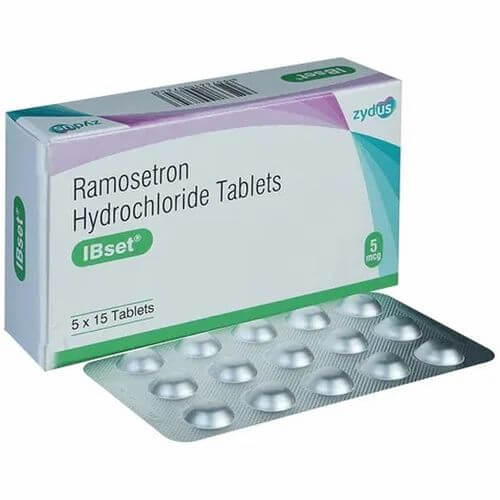
- Ramosetron is one of the more potent and long-acting drugs in the 5-HT3 antagonist family, the same class as ondansetron.
- In Japan it is sold under two different names for two different uses: Nasea for chemotherapy-related nausea and Irribow for diarrhea-predominant irritable bowel syndrome.
- It has been studied as a treatment for low anterior resection syndrome, the urgency and incontinence that can follow sphincter-preserving surgery for rectal cancer.
Mechanism
Ramosetron selectively blocks 5-HT3 receptors, the ion-channel receptors through which acts on nerves of the gut and on the vomiting centers of the brainstem [2]. By preventing from activating these receptors on vagal sensory nerves, it reduces the signaling that provokes nausea and vomiting. In diarrhea-predominant irritable bowel syndrome, the same 5-HT3 blockade is thought to slow colonic transit and lessen the heightened visceral sensitivity and fluid secretion that drive symptoms, which is consistent with the symptom relief seen in controlled trials [2].
receptor fingerprint
5-HT3 receptor on gut nervesantagonist
5-HT3 receptor in brainstem vomiting centerantagonist
Colonic motility and secretionmodulates
Enteric sensory neuronsblocks
Dosingtypical ranges, not medical advice
interested in protocols and clinical dosages? make an account to see them! ^_^
Safetyrisks and cautions, not medical advice
Ramosetron is prescription only. Its most common side effect is the flip side of its action, constipation, along with harder stools and sometimes abdominal discomfort. Rarely it has been linked to ischemic colitis, so new severe pain or bloody stool should be checked promptly. Headache and mild liver enzyme rises can occur. It should not be combined with apomorphine, since 5-HT3 blockers with that drug have caused severe low blood pressure and loss of consciousness. Doses are often lower in women, who tend to respond at smaller amounts than men.
History
Ramosetron is a selective 5-HT3 receptor antagonist developed by the Japanese pharmaceutical company Yamanouchi, which later merged to form Astellas Pharma. It was first approved in Japan in the mid 1990s, marketed as Nasea, for the prevention of nausea and vomiting caused by cancer chemotherapy, an application in which its potent and long-lasting blockade of serotonin at 5-HT3 receptors proved advantageous.
In 2008 a lower-dose formulation was approved in Japan under the name Irribow for diarrhea-predominant irritable bowel syndrome, initially in men and subsequently, after further trials, in women. Its use has remained concentrated in Japan and other parts of Asia rather than in Western markets. Over successive clinical studies ramosetron has been shown to relieve the abdominal discomfort, stool urgency, and loose stools of irritable bowel syndrome, and it has more recently been investigated for bowel dysfunction after rectal cancer surgery.
Reputation
Ramosetron is well regarded in the regions where it is available for two distinct strengths: reliable control of chemotherapy-induced nausea and vomiting, and a comparatively targeted benefit in diarrhea-predominant irritable bowel syndrome. Gastroenterologists value its high potency and long duration of action at the 5-HT3 receptor, which translate into meaningful reductions in stool urgency and abdominal discomfort in controlled trials.
For patients whose IBS is dominated by diarrhea and visceral hypersensitivity, it offers a mechanism-driven option that addresses both motility and pain signaling. Its favorable profile has even prompted study in low anterior resection syndrome, the troublesome bowel dysfunction that can follow rectal cancer surgery. As with other 5-HT3 antagonists, constipation is the expected trade-off and dosing is adjusted accordingly, and its availability is largely limited to Japan and neighboring markets; within that context, however, it enjoys a solid clinical reputation.
Subjective profileweighing the evidence above
A genuinely useful drug for diarrhea-predominant IBS if you are somewhere it is sold, which mostly means Japan and parts of Asia. The constipation is the mechanism working rather than a rare side effect, so start at the low end, and get new severe pain or bloody stool checked promptly given the rare ischemic colitis.
Where to buy

Suppliers
Vendors carrying Ramosetron, with live product details and codes. Links are affiliate links that support the wiki at no cost to you.
PCT.Zone
Ramosetron
Research
- 2022first citedEfficacy of Serotonin Type 3 Receptor Antagonist Ramosetron on Diarrhea-Predominant Irritable B…
- 2026most recentThe Safety of Pharmacotherapy for Irritable Bowel Syndrome: A Systematic Review and Meta-Analys…
- 1.The Safety of Pharmacotherapy for Irritable Bowel Syndrome: A Systematic Review and Meta-Analysis
- 2.Efficacy of Serotonin Type 3 Receptor Antagonist Ramosetron on Diarrhea-Predominant Irritable Bowel Syndrome (IBS-D)-Like Symptoms in Patients with Quiescent Inflammatory Bowel Disease: A Randomized, Double-Blind, Placebo-Controlled Trial.
- 3.Low anterior resection syndrome
3 listed here; entry last updated August 2026
Reviews
My notesprivate to this device
FAQ
What is ramosetron mainly used for?
In Asia it is a leading treatment for diarrhea-predominant IBS, and it is also used to prevent nausea and vomiting from chemotherapy.
How is it different from ondansetron?
It is a similar type of 5-HT3 blocker but binds more tightly and lasts longer, allowing once daily dosing for IBS.
Why might my dose be lower than someone else's?
Women often respond to smaller doses, so 5 mcg is a common starting point while men may need up to 10 mcg.
What should I watch for?
Constipation is the main issue; report severe abdominal pain or blood in the stool right away since ischemic colitis is a rare risk.
Can I take it every day long term?
Many people use it continuously for IBS under a doctor's care, adjusting the dose to keep stools comfortable.
Adverse effects
- Constipation, which can be pronounced when used for IBS-D
- Abdominal discomfort
- Headache
- Elevated liver enzymes in some people