
spec sheet7 rows
Hydroxyprogesterone caproate is a long acting injectable progestin suspended in oil, best known as Makena for preventing recurrent preterm birth, an indication the FDA withdrew in 2023.
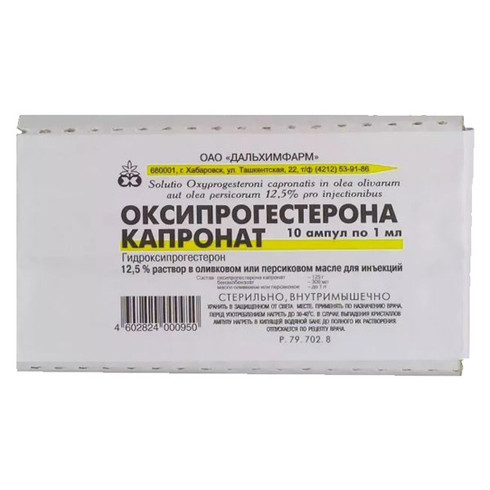
- The Meis trial (NEJM 2003, n=463) reported that weekly 250 mg intramuscular 17-alpha-hydroxyprogesterone caproate cut recurrent preterm birth before 37 weeks from 54.9% to 36.3% (RR 0.66) in women with a prior spontaneous preterm delivery, and was stopped early for benefit [1].
- On that single trial the FDA granted Makena accelerated approval in February 2011, conditional on a confirmatory trial.
- The confirmatory trial, PROLONG (n=1,708 across 93 centres, 41 in the US and 52 outside it), was fully negative: preterm birth before 35 weeks was 11.0% with 17-OHPC versus 11.5% with placebo (RR 0.95), and the neonatal morbidity composite was 5.6% versus 5.0% [3].
- The FDA proposed withdrawal in October 2020; the sponsor contested it; an advisory committee in October 2022 voted to withdraw; and the FDA Commissioner ordered Makena and its approved generics off the US market effective 6 April 2023; the defining fact about this drug (PMID 36480209, PMID 37061078).
- The withdrawal became a case study in the failure modes of the accelerated approval pathway, taking more than two years from the FDA's proposal to removal [4].
- The withdrawal applies to intramuscular 17-OHPC for preterm-birth prevention; it says nothing about vaginal progesterone for a short cervix, which is a separate intervention with its own evidence base [5].
Mechanism
It is a progesterone ester that releases slowly from an intramuscular oil depot over roughly a week, acting at the progesterone receptor to quieten uterine contractility. The withdrawal was not driven by a safety finding; the confirmatory trial simply failed to reproduce the benefit the accelerated approval had rested on.
receptor fingerprint
Progesterone receptor (PGR; nuclear isoforms PR-A and PR-B)Agonist (synthetic progestin ester)
CYP3A4 and CYP3A5Substrate
Glucocorticoid receptor (NR3C1)Weak cross-reactive binding
Myometrial contractility and gap-junction (connexin-43) formationSuppressed
Cervical remodelling and local inflammatory signallingModulated
Safetyrisks and cautions, not medical advice
an oil based intramuscular progestin whose main marketed use was preventing preterm birth in pregnancy, and the FDA withdrew Makena in April 2023 after the confirmatory PROLONG trial failed to show benefit; an injectable hormone self-administered in pregnancy for a retracted indication is not something to help anyone buy
Subjective profileweighing the evidence above
Sourcing help stops here, and the reason is specific rather than moral: this is an oil depot injection given during pregnancy for an indication the FDA withdrew in 2023 after the confirmatory trial failed to reproduce the benefit. The withdrawal followed an efficacy failure and not a new harm, which still leaves an intramuscular hormone with no demonstrated benefit being self-administered in the one situation where a wrong call involves two people. Documented here because the story is worth knowing; not something the site will help anyone buy.
Resources
No suppliers are provided for compounds like this. This entry is here for reference.
Research
- 2003first citedPrevention of recurrent preterm delivery by 17 alpha-hydroxyprogesterone caproate
- 2023most recentSociety for Maternal-Fetal Medicine Statement: Response to the Food and Drug Administration's w…
- 1.Prevention of recurrent preterm delivery by 17 alpha-hydroxyprogesterone caproate
- 2.Progesterone receptor polymorphisms and clinical response to 17-alpha-hydroxyprogesterone caproate
- 3.17-OHPC to Prevent Recurrent Preterm Birth in Singleton Gestations (PROLONG Study): A Multicenter, International, Randomized Double-Blind Trial
- 4.The FDA Struggle to Withdraw Makena: Problems With the Accelerated Approval Process
- 5.Society for Maternal-Fetal Medicine Statement: Response to the Food and Drug Administration's withdrawal of 17-alpha hydroxyprogesterone caproate
5 listed here; entry last updated August 2026
Reviews
My notesprivate to this device
Notes and cautions
- The single most important fact is regulatory rather than toxicological: hydroxyprogesterone caproate was withdrawn from the US market on 6 April 2023 after PROLONG failed to confirm the benefit that had supported its 2011 accelerated approval, so it is no longer an approved therapy for recurrent preterm birth in the United States.
- It never carried a boxed warning.
- Documented risks are injection-site pain, swelling and pruritus (the most common reason for discontinuation), urticaria, and a signal for gestational diabetes, thromboembolic events and hypertension.
- Reassuringly, PROLONG found no increase in fetal or early infant death (1.7% versus 1.9%), so the reason it was removed is absence of efficacy, not evidence of harm.
- Compounded 17-OHPC remains available in some settings and shares the same absent efficacy evidence without the manufacturing oversight.