
spec sheet10 rows
Fennel (Foeniculum vulgare) is an aromatic flowering plant in the carrot family (Apiaceae), valued both as a food and as a traditional medicine. Its bulb, feathery leaves and anise-scented seeds are used in cooking, while its seeds and essential oil have featured in folk remedies for digestive and women's health complaints. The characteristic licorice-like aroma comes largely from the compound anethole.
- eases bloating and gas
- mild antispasmodic for cramps
- pleasant aromatic tea
- antioxidant polyphenols
- Possible allergic reactions in people sensitive to carrot-family plants
Overview
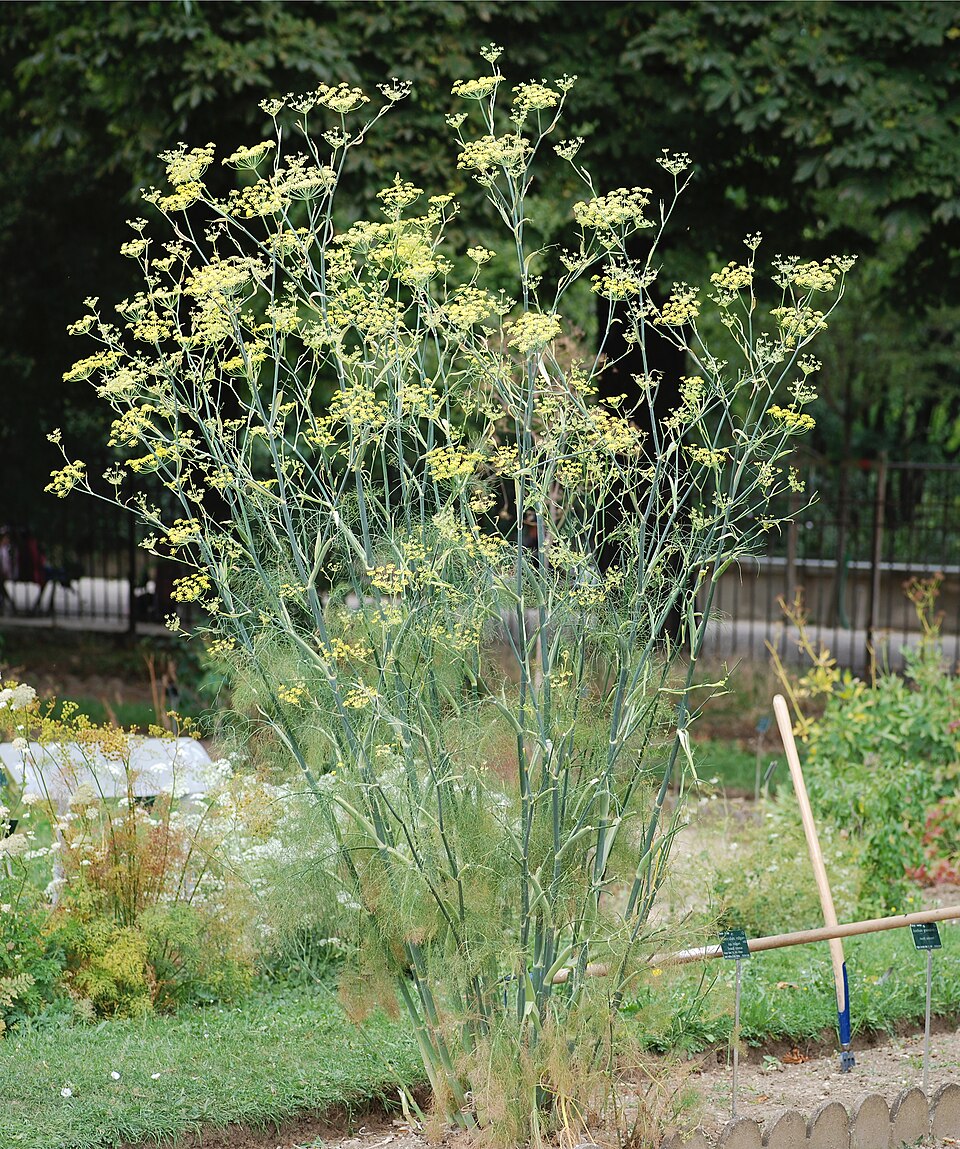
Fennel, botanically Foeniculum vulgare, is a hardy flowering plant of the carrot family (Apiaceae), originally native to the Mediterranean region but now grown and naturalized around the world [1]. It is a tall herb with hollow stems, finely divided feathery leaves and yellow flowers arranged in flat-topped clusters known as umbels [1]. Several parts of the plant are eaten: the swollen leaf base of Florence fennel is used as a crisp vegetable, the leaves serve as an herb, and the dried fruits, commonly called fennel seeds, are a familiar anise-flavored spice [1].
The plant's distinctive aroma and much of its biological activity are attributed to its volatile essential oil [1][3]. Analyses of fennel seed oil consistently identify trans-anethole as the dominant constituent, accompanied by fenchone, estragole and limonene among more than a dozen components [3]. Fennel also contains phenolic compounds and flavonoids such as rosmarinic acid and luteolin, which contribute to its antioxidant properties [1].
Fennel has a long history in traditional medicine across many cultures, where it has been used for digestive complaints such as bloating and colic, as a supposed aid to milk production in nursing mothers, and for menstrual and menopausal symptoms [1][2]. Laboratory and animal studies have reported a range of pharmacological actions for fennel extracts, including antioxidant, antimicrobial, anti-inflammatory and antispasmodic effects, and reviews have catalogued its traditional use for dozens of ailments [1]. Clinical evidence in humans is more limited; systematic reviews have examined fennel for women's health complaints such as painful menstruation and menopausal symptoms, reflecting continuing interest in testing its traditional uses more rigorously [2].
Fennel is generally treated as a food and culinary herb rather than a regulated drug, and it is widely consumed as a vegetable, spice and tea [1]. Its essential oil contains estragole, a compound that has prompted some safety discussion at high, concentrated intakes, but ordinary culinary use of fennel is regarded as safe [1].
Mechanism
Fennel does not have a single mechanism of action; instead its effects are attributed to a mixture of phytochemicals, chief among them the essential oil component anethole [1][3]. Anethole and related terpenoids are thought to relax smooth muscle in the gastrointestinal tract, which offers an explanation for fennel's traditional use as an antispasmodic and carminative that eases bloating and cramping [1]. The plant's phenolic acids and flavonoids, such as rosmarinic acid and luteolin, can neutralize free radicals, accounting for the antioxidant activity measured in laboratory tests [1][3]. Anethole is also structurally reminiscent of estrogenic compounds, and a mild -like activity has been proposed as one reason fennel has been studied for menstrual and menopausal complaints, although this remains an area of ongoing investigation rather than settled fact [1][2].
receptor fingerprint
GI smooth muscleantispasmodic
receptorsweak agonist
Inflammatory mediatorsinhibits
Dosingtypical ranges, not medical advice
interested in protocols and clinical dosages? make an account to see them! ^_^
Safetyrisks and cautions, not medical advice
Culinary amounts are very safe. Concentrated fennel oil should be used cautiously and avoided in large amounts during pregnancy because of the estrogen-like activity. Some people with allergies to carrots, celery, or mugwort may cross-react.
Subjective profileweighing the evidence above
Fine as a mild digestive aid and pleasant herb, but not something to count on for sleep or mood in any strong way.
Resources
This entry is here for reference.
Research
- 2014first citedFoeniculum vulgare Mill: a review of its botany, phytochemistry, pharmacology, contemporary app…
- 2023most recentBio-organic fertilizers promote yield, chemical composition, and antioxidant and antimicrobial…
- 1.Foeniculum vulgare Mill: a review of its botany, phytochemistry, pharmacology, contemporary application, and toxicology
- 2.Fennel (Foeniculum vulgare) on management of menopausal symptoms: a protocol for systematic review of randomized controlled trials
- 3.Bio-organic fertilizers promote yield, chemical composition, and antioxidant and antimicrobial activities of essential oil in fennel (Foeniculum vulgare) seeds.
3 listed here; entry last updated August 2026
Reviews
My notesprivate to this device
FAQ
Does fennel actually help you sleep?
There is not much real evidence for it as a sleep aid. Any effect is probably from relaxing after a warm tea and easing digestion.
Is fennel safe during pregnancy?
Culinary amounts in food are generally fine, but concentrated fennel oil or high-dose extracts should be avoided because of estrogen-like activity.
What is fennel best for?
Digestion. It has the most traditional and clinical support for bloating, gas, and mild menstrual cramps.
Can I take fennel every day?
As a food or tea, yes, most people tolerate it daily without issue.
Adverse effects
- Possible allergic reactions in people sensitive to carrot-family plants
Notes and cautions
- Generally well tolerated as a food and spice
- Concentrated essential oil contains estragole, discussed as a concern only at high intakes
- Culinary amounts are considered safe