
spec sheet11 rows
AHK (Tripeptide-3) is a copper-binding signal peptide, the alanine-histidine-lysine tripeptide prized in advanced hair and skin formulations. Its histidine and lysine residues grip copper to form the bioactive complex AHK-Cu, which has been shown to lengthen human hair follicles and energize the dermal papilla cells that drive hair growth. A close cousin of the celebrated copper peptide GHK, it is sought out as a next-level cosmetic peptide for hair density, skin renewal, and regeneration.
- Wakes sleeping hair follicles up
- Thicker, fuller hair is the whole point
- Lengthened human hair follicles in studies
- Energizes the dermal papilla cells
- Collagen and skin renewal support
- Close cousin of the celebrated GHK peptide
- Local skin irritation, redness, or itching at application sites
- Copper sensitivity or allergy in rare cases
- Possible local skin irritation or redness at application sites
Overview
AHK, known by its cosmetic ingredient name Tripeptide-3, is a short synthetic peptide made of three amino acids, L-alanine, L-histidine, and L-lysine (Ala-His-Lys). It belongs to the family of copper-binding signal peptides, small sequences whose histidine and lysine residues chelate copper(II) ions to form a biologically active metal-peptide complex. In this respect AHK is a close relative of the much-studied peptide GHK (glycyl-histidyl-lysine), differing by a single amino acid, and it shares GHK's central property of ferrying copper to cells and acting as a regenerative signal [2].
The copper-binding nature of AHK is central to how it is used. On its own the bare peptide is essentially a copper carrier; its documented bioactivity is realized as the copper complex AHK-Cu (L-alanyl-L-histidyl-L-lysine-Cu2+). In laboratory studies this complex stimulated the elongation of human hair follicles grown outside the body and promoted the proliferation of dermal papilla cells, the specialized cells at the base of the follicle that orchestrate hair growth [1]. Tripeptide-copper complexes as a class have long been recognized as growth-factor-like molecules that raise vascular endothelial growth factor, support collagen production, and accelerate the repair of skin and other tissues [2][3][4].
AHK (Tripeptide-3) is used primarily as a cosmetic and hair-care active rather than as a medicine. It appears in serums, hair tonics, and scalp treatments, typically supplied as a powder for formulation or already combined with copper. Regulatorily it is treated as a cosmetic ingredient, not an approved drug, and much of the human-relevant evidence comes from cell-culture and ex vivo follicle studies together with the broader literature on copper peptides in skin regeneration [1][2]. Its appeal lies in offering the well-regarded copper-peptide biology of GHK in a distinct, alanine-containing sequence.
- AHK-Cu stimulated human hair follicle growth at concentrations as low as the picomolar-to-nanomolar range in laboratory studies.
- It works partly by shifting dermal papilla cells away from programmed cell death, raising the pro-survival Bcl-2 to Bax ratio and lowering activated caspase-3.
Mechanism
AHK works as a copper-delivery signal , and understanding it means separating the peptide from the metal it carries. The Ala-His-Lys sequence has a high affinity for copper(II) ions; the histidine and lysine side chains coordinate the metal to form the complex AHK-Cu. It is this copper complex, rather than the naked peptide, that carries the biological activity, mirroring the way the related peptide GHK works [2]. Copper is an essential cofactor for enzymes that build connective tissue and blood vessels, and copper- complexes act as compact, cell-friendly vehicles that make copper available at the right place while also signaling directly to cells.
In the hair follicle, AHK-Cu targets the dermal papilla, the cluster of specialized fibroblasts that governs the hair growth cycle. In cultured human cells and in whole follicles grown ex vivo, AHK-Cu at very low concentrations, in the picomolar to nanomolar range, stimulated dermal papilla cell proliferation and lengthened the hair shaft [1]. At the molecular level it shifted the balance of survival proteins in favour of cell survival, raising the ratio of the anti-apoptotic protein Bcl-2 to the pro-apoptotic protein Bax and lowering the activated (cleaved) forms of the cell-death enzymes caspase-3 and PARP, which together means fewer follicle cells are pushed into programmed death [1].
More broadly, tripeptide-copper complexes behave like growth factors for connective tissue. They elevate vascular endothelial growth factor, which improves the blood supply that follicles and skin depend on [1], and they stimulate dermal fibroblasts to produce collagen; in cultured fibroblasts a copper-tripeptide at a concentration of about 100 nanomolar increased collagen expression [3], and in wound-healing models copper peptides increased type-I collagen and concentrated copper at the repair site [4][5]. Through these combined actions, promoting cell survival, angiogenesis, and matrix production, AHK is positioned as a regenerative signal for hair and skin.
receptor fingerprint
Dermal papilla cellsstimulates proliferation
Copper-dependent enzymescofactor delivery
VEGF and angiogenesispromotes
Collagen synthesissupports
Dosingtypical ranges, not medical advice
interested in protocols and clinical dosages? make an account to see them! ^_^
Safetyrisks and cautions, not medical advice
As a topical cosmetic peptide it is generally well tolerated, with possible local irritation, redness, or contact sensitivity. Copper peptides can occasionally irritate sensitive skin. There is little data on internal use, which is not the intended route.
Reconstitutionarithmetic only, not dosing advice
arithmetic only; not medical or dosing advice.
History
AHK-Cu is the copper complex of the tripeptide alanine-histidine-lysine, a member of the copper-peptide field that grew out of the discovery of the human plasma factor GHK and its copper complex in the 1970s. Its most cited scientific milestone is a 2007 study by Pyo and colleagues at Seoul National University, who showed that AHK-Cu, at picomolar-to-nanomolar concentrations, lengthened human hair follicles grown ex vivo and stimulated the dermal papilla cells at the root of the follicle while reducing markers of programmed cell death.
Beyond that specific hair work, its rationale draws on the broader, well-documented actions of copper tripeptides on collagen synthesis, angiogenesis and wound healing. Formal development history for AHK-Cu itself is limited; it is used chiefly as a cosmetic ingredient rather than as an approved drug, and much of what is claimed for it is extrapolated from the more heavily studied GHK-Cu.
Reputation
AHK-Cu is a favorite among copper peptides for hair density and scalp and skin renewal, often described as a potent cousin of the famous GHK-Cu, and its reputation rests on a genuinely appealing dual identity as both a cell-signaling peptide and a delivery vehicle for bioavailable copper. The laboratory evidence that it lengthens hair follicles and multiplies dermal papilla cells while shielding them from apoptosis gives it real scientific grounding for cosmetic use, and copper's established role as a cofactor for collagen-crosslinking and blood-vessel-forming enzymes reinforces the story.
It is fair to note that the direct human evidence is thin, resting largely on cell and ex vivo studies rather than controlled clinical trials, and that many benefits are inferred from related copper tripeptides. As a topical cosmetic ingredient with a plausible mechanism, it is popular and well-liked, if not clinically proven.
Subjective profileweighing the evidence above
A pleasant cosmetic peptide with plausible follicle biology behind it, but the evidence is limited and the effects are cosmetic, so treat it as a nice addition to a serum rather than a hair-loss treatment. Anyone actually losing hair should start with something that has real trial data.
Where to buy
1 other outlet

Suppliers
Vendors carrying AHK-Cu, with live product details and codes. Links are affiliate links that support the wiki at no cost to you.
| supplier | size | price | $/mg |
|---|---|---|---|
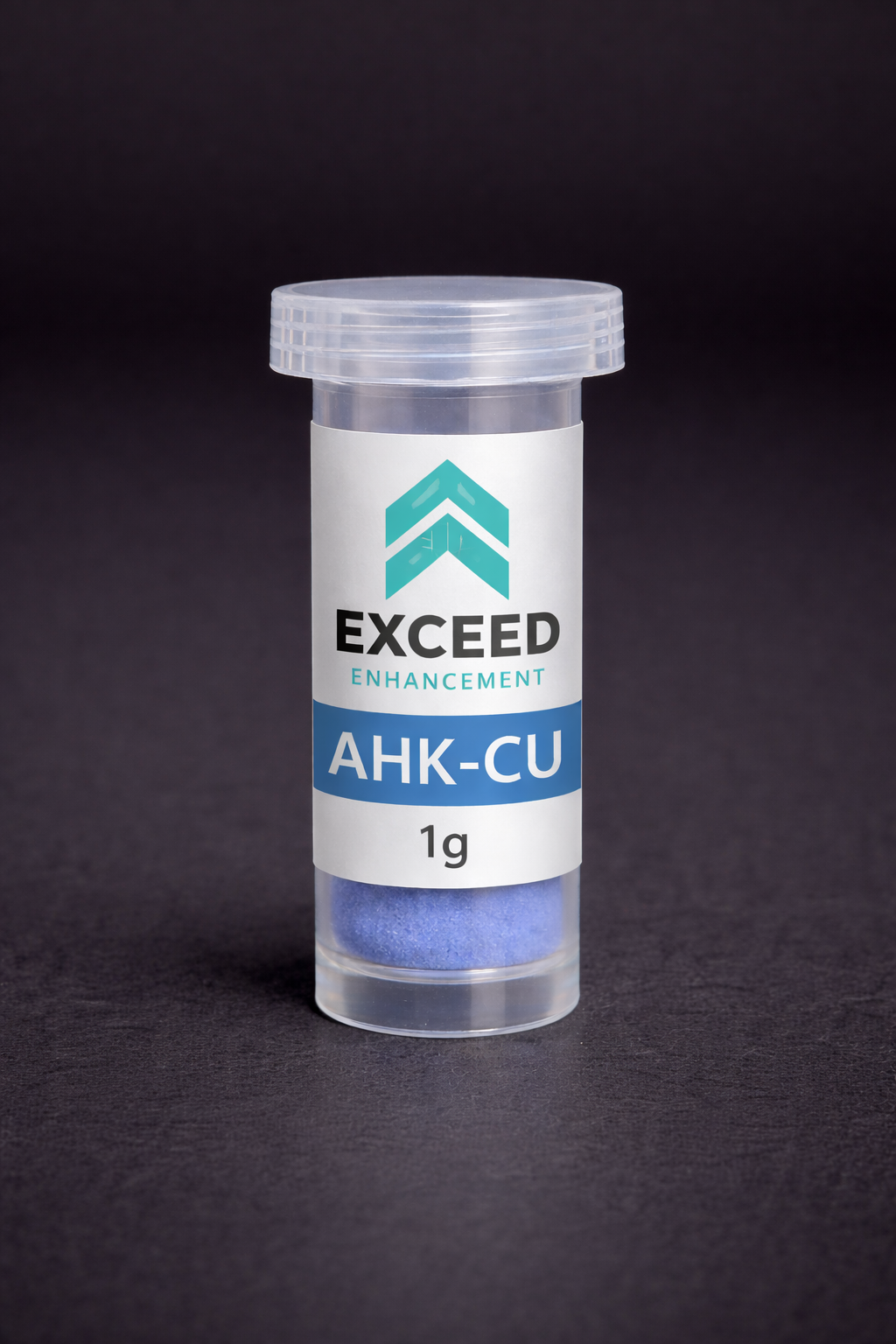
| Exceed Enhancementlowest | 1g | $55.00 | $0.055/mg |
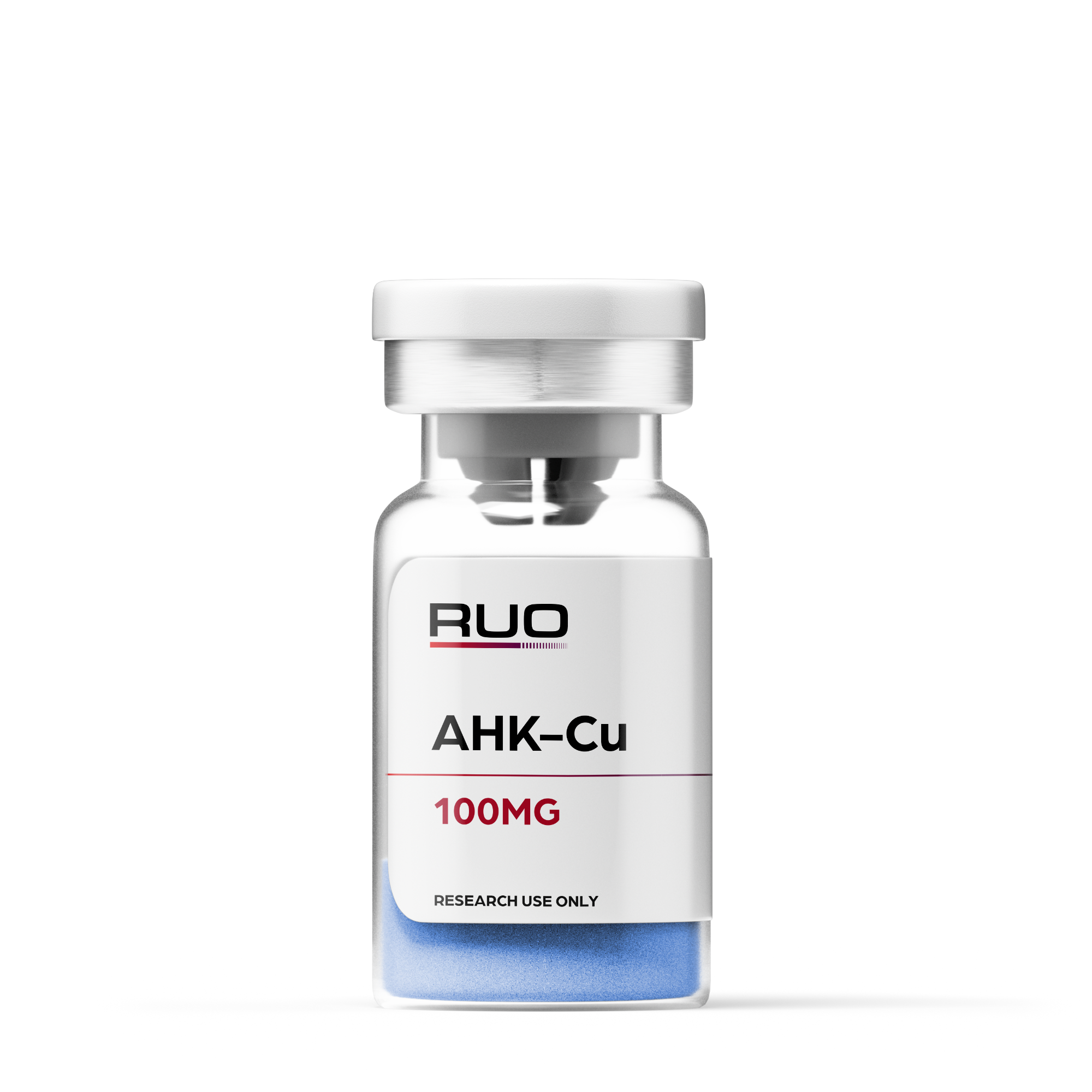
| RUO | 100mg | $38.00 | $0.380/mg |
RUO
AHK-Cu
Exceed Enhancement
AHK-Cu
Research
- 1995first citedEffect of tripeptide-copper complexes on the process of skin wound healing and on cultured fibr…
- 2015most recentGHK Peptide as a Natural Modulator of Multiple Cellular Pathways in Skin Regeneration
- 1.The effect of tripeptide-copper complex on human hair growth in vitro
- 2.GHK Peptide as a Natural Modulator of Multiple Cellular Pathways in Skin Regeneration
- 3.Effect of tripeptide-copper complexes on the process of skin wound healing and on cultured fibroblasts
- 4.Effect of locally injected medications on healing of pad wounds in dogs
- 5.Biotinylated GHK peptide incorporated collagenous matrix: A novel biomaterial for dermal wound healing in rats
5 listed here; entry last updated August 2026
Reviews
My notesprivate to this device
FAQ
What is AHK-Cu used for?
It is a copper peptide studied mainly for hair follicle stimulation, with some potential skin benefits.
How does AHK-Cu work?
As a copper-carrying peptide, it is thought to support follicle activity and skin remodeling.
Is AHK-Cu well-researched?
Evidence is limited and largely preliminary, so claims should be viewed cautiously.
What are the main side effects?
Topical use may cause local skin irritation or redness.
Is AHK the same as GHK?
They are related copper tripeptides; GHK-Cu is more studied for skin, while AHK-Cu is often highlighted for hair.
Do I take it orally?
No, it is a topical cosmetic peptide, typically found in serums.
Does it regrow hair?
It may support follicle cells, but the evidence is limited, so dramatic regrowth on its own is unlikely.
Can I use it with minoxidil?
People do layer cosmetic peptides with established hair treatments, but check for irritation.
How strong is the evidence?
It is thin and mostly from cell studies and cosmetic research, so keep expectations modest.
Adverse effects
- Local skin irritation, redness, or itching at application sites
- Copper sensitivity or allergy in rare cases
- Possible local skin irritation or redness at application sites
Notes and cautions
- Generally well tolerated as a topical copper peptide
- Human evidence is mainly from cell and ex vivo follicle studies
- A cosmetic ingredient, not an approved drug; formulation quality varies
- Generally well tolerated as a topical cosmetic peptide
- Human evidence is largely from cell and ex vivo follicle studies