
spec sheet11 rows
GLOW is a smartly built recovery blend that combines three of the best-known repair peptides, GHK-Cu, BPC-157, and TB-500, in a single vial. The logic is elegant; each covers a different slice of the healing process, so together they blanket far more ground than any one peptide could, from collagen and skin quality to tendon repair, blood-vessel growth, and cell migration. For all-around tissue support and recovery, GLOW is one of the most popular and well-reasoned peptide stacks around.
- Three elite repair peptides in one vial
- Tissue repair accelerates across the board
- Skin quality visibly improves
- Collagen support plus fresh blood supply
- Covers ground no single peptide can
- GHK-Cu, BPC-157 and TB-500 together
- Mild injection site redness
- Watch cumulative copper over the long term
- Rare flushing
Overview
GLOW is a combination peptide product that pairs three widely used repair peptides; the copper tripeptide GHK-Cu, the stable gastric pentadecapeptide BPC-157, and TB-500, the active fragment of thymosin beta-4. It is formulated as a recovery and skin-quality stack rather than a single molecule [1][4].
The rationale for the blend is complementary coverage of the tissue-repair cascade. GHK-Cu is the copper peptide tied to collagen, elastin, and skin remodeling [4][5]; BPC-157 is a synthetic peptide derived from a protein found in gastric juice, studied for rebuilding tendon, ligament, muscle, and gut tissue [1]; and TB-500 reflects thymosin beta-4, which supports cell migration and new blood-vessel formation [2][3].
Its research applications are drawn from each component's own literature. BPC-157 restored function at disabled myotendinous junctions in rats, healing the connection between muscle and tendon that otherwise fails to mend [1]. Thymosin beta-4 accelerated wound healing, increasing reepithelialization and collagen deposition and stimulating keratinocyte migration [2], and separately promoted angiogenesis, wound repair, and hair-follicle development in normal and aged rodents [3]. GHK-Cu drives collagen, elastin, and glycosaminoglycan synthesis and shifts gene expression toward a regenerative, anti-inflammatory profile [4][5].
GLOW is sold as a research peptide blend and is not an approved medicine; importantly, no clinical trial has tested these three peptides together, so the case for the combination rests on the individual evidence for each. It is supplied as a lyophilized multi-peptide vial for reconstitution.
- GLOW's three peptides were chosen to cover different stages of healing: collagen building, growth-factor and blood-vessel support, and cell migration.
- In a rat wound model, one of its components, thymosin beta-4, increased reepithelialization by as much as 61 percent by day seven.
Mechanism
GLOW is built on the idea that healing is not one process but several, so it recruits three peptides that each handle a different stage, then lets them overlap. The result people reach for is faster tissue repair, better skin quality, stronger collagen, and improved blood supply to injured areas.
GHK-Cu supplies collagen building and remodeling. As a copper-binding tripeptide it shuttles copper into cells and switches on synthesis of collagen, elastin, and glycosaminoglycans, chemoattracts repair cells, and shifts gene expression toward a regenerative, anti-inflammatory state [4][5]. BPC-157 supplies growth-factor and angiogenic support; it up-regulates growth-factor signaling and the VEGF and pathway, which is why it accelerates repair of tendon, ligament, and soft tissue, and in rats it restored otherwise non-healing myotendinous junctions while counteracting muscle atrophy [1]. TB-500 supplies cell migration; as the active region of thymosin beta-4 it sequesters actin, freeing cells to move into a wound, and it drives new blood-vessel formation and keratinocyte migration [2][3].
The component evidence carries real numbers. Thymosin beta-4 increased reepithelialization by 42 percent at day 4 and by as much as 61 percent at day 7 in a rat full-thickness wound model, with greater wound contraction, more collagen deposition, and increased angiogenesis [2], and it promoted angiogenesis, wound repair, and hair growth even in aged animals [3]. BPC-157 produced consistent macroscopic, biomechanical, and functional recovery of disabled myotendinous junctions [1], and GHK-Cu has repeatedly increased matrix synthesis and remodeling in skin studies [4][5]. The honest framing is that these strengths come from each individually; the exact three-way blend has not been tested in a controlled trial, so GLOW's promise is inferred from strong but separate bodies of research.
receptor fingerprint
Collagen / Elastin synthesisupregulates
VEGF / angiogenesispromotes
Actin (cell migration)modulates
Growth factor / NO signalingupregulates
Inflammatory cytokineslowers
Dosingtypical ranges, not medical advice
interested in protocols and clinical dosages? make an account to see them! ^_^
Safetyrisks and cautions, not medical advice
None of these three peptides is FDA approved, and they are sold as research chemicals, not for human use. Human safety data is thin and there is zero trial data on the blend itself, so everything here is extrapolated from animal work and community reports. GHK-Cu is generally well tolerated and even used topically, but injecting a copper peptide long term raises a theoretical question about copper load. BPC-157 and TB-500 look clean in animals but lack long-term human safety data; there is also an ongoing theoretical concern that anything promoting angiogenesis could feed an existing tumor, so people with active cancer should stay away. Injection sterility is non-negotiable; sloppy reconstitution or reused needles invite infection. Expect local redness or stinging at the injection site. If you are pregnant, breastfeeding, or on other meds, this is not for you.
History
GLOW is not a single discovered molecule but a modern compounded blend that brings together three separately developed repair peptides in one vial. Its oldest component, GHK-Cu, traces to work by Loren Pickart, who in the early 1970s identified the copper-binding tripeptide glycyl-L-histidyl-L-lysine in human plasma and later characterized its role in tissue remodeling.
BPC-157 is a synthetic fragment derived from a protein found in gastric juice, developed and studied extensively by Predrag Sikiric and colleagues in Zagreb for its effects on tendon, ligament, and soft-tissue repair. TB-500 corresponds to the active region of thymosin beta-4, a cell-migration and angiogenesis peptide first characterized in the early 1980s. The GLOW combination itself has no formal discovery record or dedicated clinical trial; it is a contemporary formulation whose rationale is inferred from the individual histories and research bodies of its three ingredients.
Reputation
GLOW is one of the most popular and well-reasoned peptide stacks in the recovery and regeneration space, admired for the logic of pairing three complementary healers that each cover a different stage of tissue repair. Users and researchers are drawn to the way GHK-Cu supplies collagen building, BPC-157 adds growth-factor and angiogenic support, and TB-500 drives cell migration, so together they blanket more of the healing process than any one peptide could alone. The component peptides carry genuinely strong individual evidence, with quantified gains in reepithelialization, collagen deposition, and angiogenesis in animal models. The honest framing, which reputable discussion emphasizes, is that these strengths belong to each peptide separately; the specific three-way blend has never been tested in a controlled trial, so its combined promise is reasoned rather than proven.
Subjective profileweighing the evidence above
GLOW is a convenient way to run three solid repair peptides at once, and the GHK-Cu makes it nicer for skin than a plain BPC and TB stack. Just know you are paying for convenience and betting on individual-compound research; there is no data on the blend itself.
Where to buy


Suppliers
Vendors carrying GLOW, with live product details and codes. Links are affiliate links that support the wiki at no cost to you.
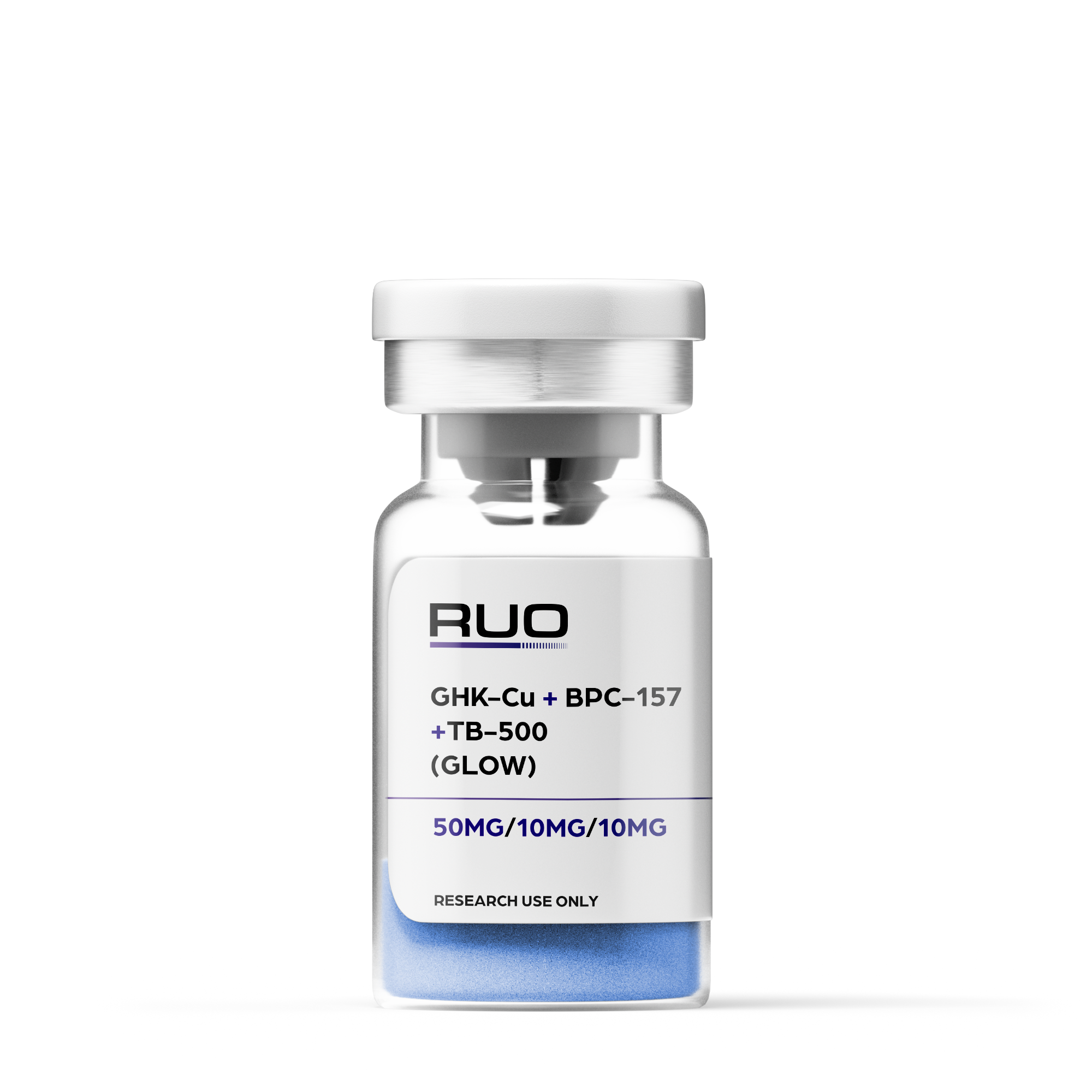
RUO
GLOW
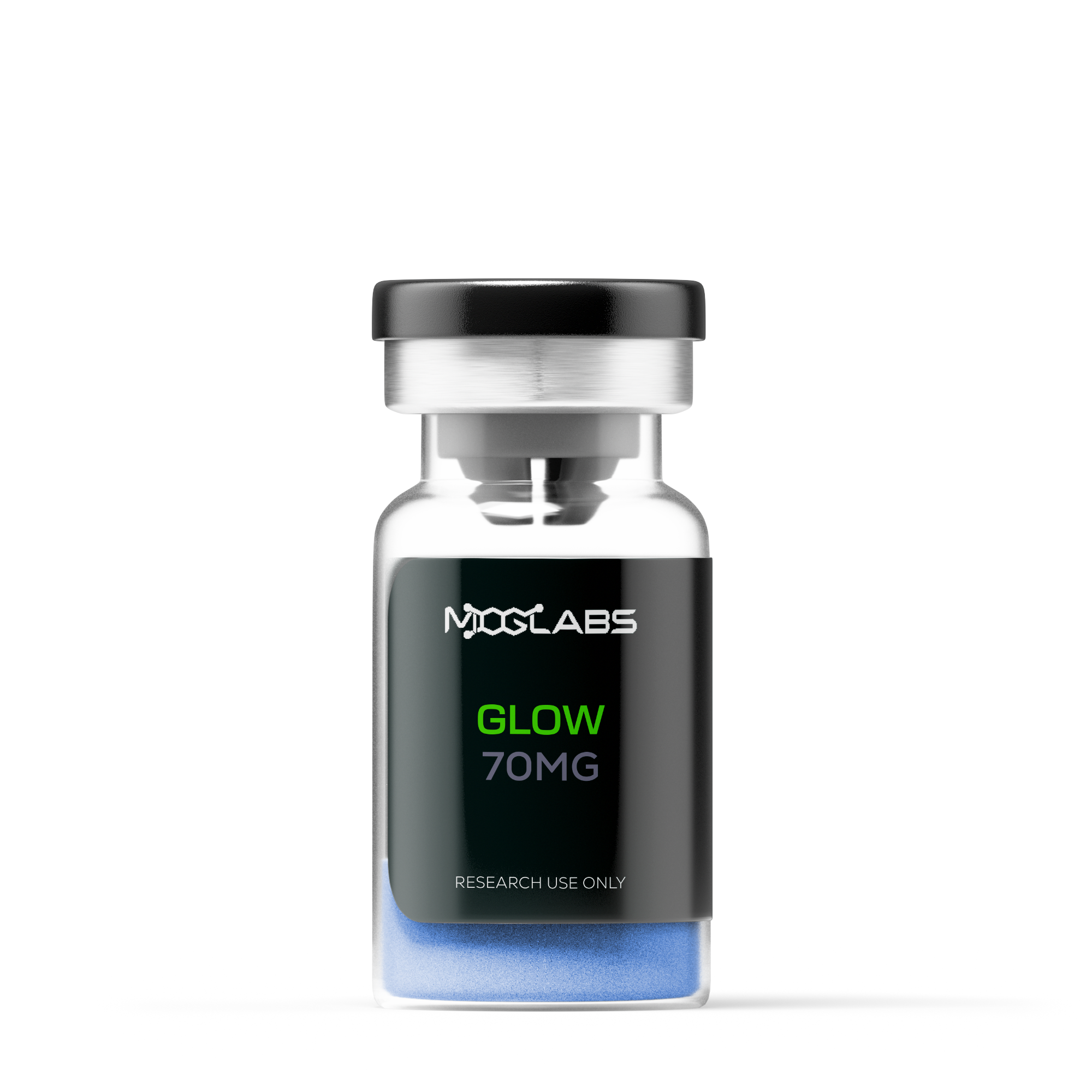
Moglabs
GLOW
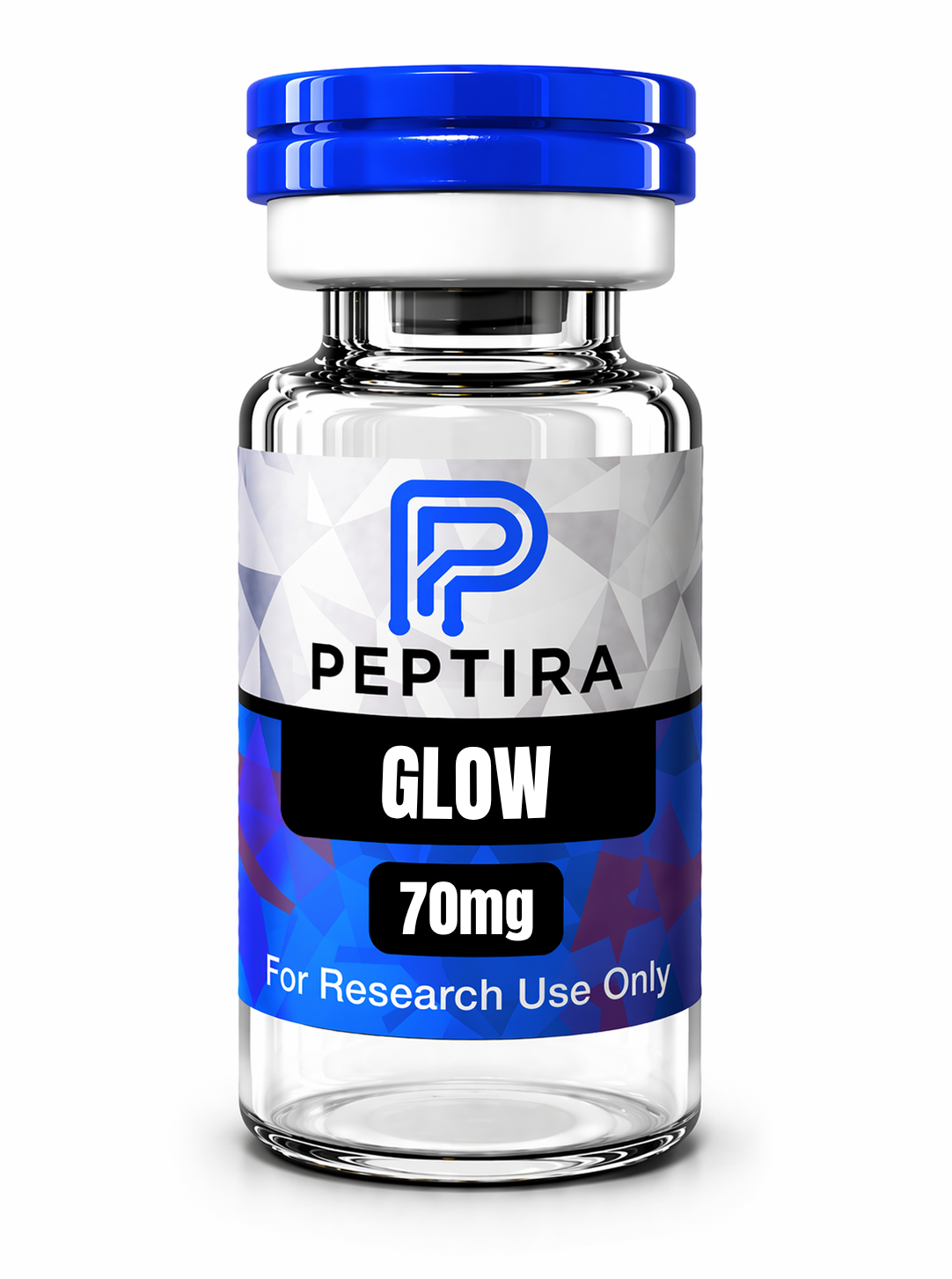
Peptira
GLOW
Kimera Chems
BPC-157 + TB-500 + GHK-Cu
Research
- 1999first citedThymosin beta4 accelerates wound healing
- 2021most recentStable Gastric Pentadecapeptide BPC 157 as a Therapy for the Disable Myotendinous Junctions in…
- 1.Stable Gastric Pentadecapeptide BPC 157 as a Therapy for the Disable Myotendinous Junctions in Rats
- 2.Thymosin beta4 accelerates wound healing
- 3.Thymosin beta4 promotes angiogenesis, wound healing, and hair follicle development
- 4.The human tri-peptide GHK and tissue remodeling
- 5.Regenerative and Protective Actions of the GHK-Cu Peptide in the Light of the New Gene Data
5 listed here; entry last updated August 2026
Reviews
My notesprivate to this device
FAQ
What is GLOW?
It is a pre-mixed research peptide blend of GHK-Cu, BPC-157, and TB-500, usually 70 mg per vial. People use it for tissue repair and skin quality.
How is it different from the Wolverine Stack?
The Wolverine Stack is just BPC-157 and TB-500. GLOW adds GHK-Cu, which pushes it toward skin, collagen, and cosmetic remodeling on top of injury recovery.
Is there human research on the blend?
No. No trial has tested these three together; the rationale comes from each peptide own animal and lab studies. Treat it as experimental.
How do people take it?
Reconstituted and injected subcutaneously, usually once a day for a few weeks, often near the area they want to heal.
Limitations of the evidence
- No human data on the exact blend yet
Adverse effects
- Mild injection site redness
- Watch cumulative copper over the long term
- Rare flushing