
spec sheet11 rows
Human placenta extract is a preparation derived from human placental tissue, typically processed into a hydrolysate that concentrates amino acids, peptides, growth factors, and other bioactive molecules. It has been used mainly in parts of East Asia, particularly Korea and Japan, where injectable forms are prescribed for indications such as menopausal symptoms, fatigue, and liver complaints. Its use elsewhere is limited, and much of the clinical research is small in scale.
- Concentrated amino acids, peptides and growth factors
- Prescribed in Korean and Japanese clinics for fatigue and menopause
- Reported to speed wound and ulcer healing
- Studied for liver recovery and better skin tone
- Builds granulation tissue and improves local blood flow
- Clinic administered; human evidence is small studies so far
- Injection site reactions with injectable forms
- Allergic or hypersensitivity reactions
- Theoretical infection risk from human-derived material
Overview
Human placenta extract, sometimes abbreviated HPE, is a biological preparation made from human placental tissue collected after childbirth [1]. The placenta is processed, commonly by enzymatic hydrolysis, into an extract that concentrates small molecules such as amino acids, peptides, nucleic acids, and a variety of growth factors and cytokines while removing cells and larger structures [5]. Related preparations are made from the placentas of other species, and porcine placental extract in particular is widely used as an oral alternative [2].
The therapeutic use of placental extract carries a long history in East Asian medicine, and injectable human placenta hydrolysates have been marketed for decades in countries such as Korea and Japan under regulated brand names [2]. In these settings the extract has been applied to a broad set of complaints, including menopausal symptoms, chronic fatigue, chronic liver disease, and disorders of skin pigmentation [1]. Outside these regions its medical use is far less common, and placenta-derived materials appear more often in cosmetics than in approved medicines.
Interest in placental extract stems from the placenta's natural role as a tissue rich in signaling molecules that support growth and repair during pregnancy [5]. Analyses of placental and related amniotic preparations have identified numerous growth factors and cytokines involved in inflammation and wound healing, which is the biological rationale offered for effects on tissue regeneration and recovery [5]. The precise composition varies with the source tissue and the method of processing.
Clinical research on human placenta extract is limited and consists mostly of small trials. A randomized, placebo-controlled study in middle-aged Korean women reported that injections of human placental extract reduced menopausal symptoms and fatigue and raised estradiol levels over the course of treatment, without changing cardiovascular risk factors [1]. Because human placental extract is invasive to administer, later trials have often tested oral porcine placental extract as a substitute, with several randomized studies reporting modest improvements in menopausal symptom scores, particularly within certain subgroups [2][3][4]. Investigators generally describe the evidence base as preliminary and call for larger, better-controlled studies [1].
Regulatory status varies widely by country. In parts of East Asia, injectable human placenta hydrolysate is a regulated prescription product, whereas in many other jurisdictions placenta-derived extracts are treated as cosmetic ingredients or unapproved supplements rather than licensed drugs [2]. Because the material is of human origin, considerations around sourcing, screening for infectious agents, and processing are important to its safety profile. Placental extracts are encountered as injectable ampoules, oral capsules, and topical cosmetic preparations.

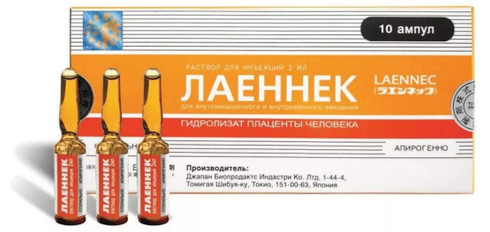
- The injectable extract Laennec is named after Rene Laennec, the French physician who invented the stethoscope.
- In a randomized placebo-controlled trial, human placenta extract lowered menopausal Kupperman Index scores by about 12 points versus roughly 7 for placebo over four weeks.
- The concept behind placental therapy dates to 1930s Soviet "tissue therapy" and its idea of biogenic stimulators.
Mechanism
Human placenta extract is a complex mixture rather than a single active compound, and its proposed mechanisms reflect the many bioactive constituents concentrated during processing [5]. Placental and related amniotic tissues are naturally rich in growth factors and cytokines, including molecules such as fibroblast growth factor and other signaling proteins that regulate inflammation, cell proliferation, and wound healing, and these are thought to underlie the extract's reputed effects on tissue repair and recovery [5].
In the context of menopausal symptoms, a randomized trial of human placental extract observed an increase in circulating estradiol alongside symptom relief, suggesting an influence on hormonal measures, although a comparable study of the porcine extract improved symptoms without changing estradiol or follicle-stimulating hormone, implying that at least part of the benefit may be independent of direct hormonal action [1][3]. The amino acids, peptides, and nucleic acids present are also proposed to support metabolic and antioxidant processes [1]. Overall the mechanisms remain incompletely defined, and much of the reasoning is inferred from the extract's composition rather than established through targeted studies.
receptor fingerprint
Dermal fibroblastsactivates
Collagen synthesisactivates
Angiogenesis and microcirculationactivates
Inflammatory cytokinesmodulates
Hepatocyte regenerationactivates
Oxidative free radicalsblocks
Dosingtypical ranges, not medical advice
interested in protocols and clinical dosages? make an account to see them! ^_^
Safetyrisks and cautions, not medical advice
Human placenta extract is a prescription, clinic administered product and is not approved as a drug by the US FDA. Because it comes from human tissue, there is a theoretical risk of transmitting infection, and in Japan people who have received Laennec or Melsmon are permanently barred from donating blood as a precaution against prion disease. Real world side effects are usually mild and local; injection site pain, redness, swelling and occasional allergic or hypersensitivity reactions. It should be avoided in pregnancy and breastfeeding and in anyone with a known allergy to the preparation. Quality and sterility depend heavily on the manufacturer.
History
The therapeutic use of placental tissue traces to the tissue therapy pioneered by the Soviet ophthalmologist Vladimir Filatov in the 1930s, who proposed that preserved biological tissues released "biogenic stimulators" capable of aiding recovery. Modern standardized human placenta extracts emerged principally in Japan, where hydrolyzed preparations were developed and approved for specific medical indications; the injectable product Laennec, named in honor of the French physician Rene Laennec, has long been marketed for chronic liver disease, while Melsmon has been used for menopausal and climacteric complaints.
Manufacturing concentrates the amino acids, peptides, nucleic acids, and growth factors naturally present in placental tissue through enzymatic hydrolysis and rigorous viral-inactivation steps. Clinical use has remained concentrated in Korea and Japan, where prescribing traditions and regulatory acceptance differ substantially from those in Western countries. Rigorous controlled research is comparatively limited, though a small number of randomized trials have examined menopausal symptom relief. Its status thus reflects a long empirical history combined with a still-developing evidence base.
Reputation
Human placenta extract enjoys a durable reputation in parts of East Asia as a restorative preparation, valued for its rich concentration of naturally occurring peptides and growth factors. It is best known for menopausal symptom relief, and a randomized, double-blind, placebo-controlled trial in 108 women found that it reduced Kupperman Index scores significantly more than placebo, with a favorable safety and tolerability profile. A 2025 systematic review of placental extract trials likewise concluded that both human and porcine preparations appear to offer genuine benefit for menopausal symptoms while being well tolerated.
Enthusiasts also value its reputed roles in fatigue, skin quality, and tissue recovery, reflecting the broad biological activity of its constituents. It is important to note honestly that much of the clinical literature involves small studies and that mechanisms remain incompletely defined. For those drawn to a biologically complex, traditionally esteemed preparation, it remains an intriguing option best approached with realistic expectations.
Subjective profileweighing the evidence above
A clinic-administered injectable in Korea and Japan, not a supplement, and the evidence is small studies rather than solid trials. Being human tissue derived, it carries allergy and theoretical infection risk, enough that Japan permanently bars recipients from donating blood. Hard to justify outside those settings.
Where to buy

1 other outlet
Suppliers
Vendors carrying Human Placenta Extract, with live product details and codes. Links are affiliate links that support the wiki at no cost to you.
PCT.Zone
Human Placenta Extract
RUPharma🌐
Laennec
Research
- 2008first citedEffect of human placental extract on menopausal symptoms, fatigue, and risk factors for cardiov…
- 2025most recentEfficacy and Safety of Placental Extract on Menopausal Symptoms: A Systematic Review
- 1.Effect of human placental extract on menopausal symptoms, fatigue, and risk factors for cardiovascular disease in middle-aged Korean women
- 2.Efficacy of porcine placental extract on climacteric symptoms in peri- and postmenopausal women
- 3.Effect of porcine placental extract on the mild menopausal symptoms of climacteric women
- 4.Effect of porcine placental extract on menopausal symptoms in postmenopausal women: A prospective, randomized, double-blind, placebo-controlled trial
- 5.Properties of dehydrated human amnion/chorion composite grafts: Implications for wound repair and soft tissue regeneration
- 6.Efficacy and safety of human placenta extract in alleviating climacteric symptoms: prospective, randomized, double-blind, placebo-controlled trial
- 7.Efficacy and Safety of Placental Extract on Menopausal Symptoms: A Systematic Review
7 listed here; entry last updated August 2026
Reviews
My notesprivate to this device
FAQ
Is human placenta extract FDA approved?
No; it is not approved as a drug in the United States, though it is used clinically in some countries such as Japan and Korea.
Can I donate blood after receiving it?
In Japan recipients of these products are permanently deferred from blood donation as a prion disease precaution, so check local rules.
What is it actually used for?
Most commonly slow healing wounds, chronic liver support and cosmetic skin rejuvenation.
How is it given?
By injection under the skin or into muscle by a clinician; it is not an oral supplement.
Is it the same as animal placenta products?
No; this is derived from human placenta, while many cosmetic products use bovine or plant sources with different profiles.
Limitations of the evidence
- Limited long-term safety data
Adverse effects
- Injection site reactions with injectable forms
- Allergic or hypersensitivity reactions
- Theoretical infection risk from human-derived material