
spec sheet13 rows
Tretinoin, also known as all-trans retinoic acid, is a retinoid and derivative of vitamin A used both on the skin, for acne and photoaging, and by mouth to treat a form of blood cancer called acute promyelocytic leukemia. It works by binding nuclear receptors that regulate gene activity; in leukemia this drives the malignant promyelocytes to mature into normal neutrophils rather than killing them directly, an approach known as differentiation therapy that greatly improved the prognosis of the disease, while in photoaged skin it restores the type I collagen degraded by ultraviolet exposure. Marketed under names such as Retin-A and Vesanoid, it is a prescription medicine on the World Health Organization's List of Essential Medicines.
- Speeds skin cell turnover
- Rebuilds collagen lost to sun damage
- Built for clear, calm, even skin
- Smooths texture; softens the aging signals
- Prescription strength vitamin A retinoid
- Works at the gene level in skin
- Applied to skin it commonly causes redness, dryness, peeling, and irritation, often easing with continued use
- It increases sensitivity to sunlight, so sun protection is advised
- The oral form used for leukemia can cause a serious reaction called differentiation syndrome, along with high white cell counts and raised blood fats
Overview
Tretinoin is the pharmaceutical name for all-trans retinoic acid, a naturally occurring metabolite of vitamin A and the prototype of the retinoid class of drugs [1]. Its molecular formula is C20H28O2. First patented in the 1950s, it was developed for acne during the 1960s by dermatologists at the University of Pennsylvania and approved by the United States Food and Drug Administration for that use in 1971 [1]. A separate and dramatic chapter in its history came in the late 1980s, when researchers in Shanghai showed that the same molecule could drive leukemic cells to mature, reshaping the treatment of a once highly fatal cancer [2].
In dermatology, topical tretinoin is a mainstay treatment for acne, effective against both the inflamed pimples and the blackheads and whiteheads of comedonal acne, and it is the most thoroughly studied retinoid for reversing signs of sun-induced skin aging such as fine wrinkles and uneven pigmentation [1][3]. It has also been used to lighten post-inflammatory hyperpigmentation [3]. In oncology, an oral form is central to the treatment of acute promyelocytic leukemia, a subtype of acute myeloid leukemia defined by a specific chromosomal rearrangement; there tretinoin is used to induce remission, typically in combination with other agents rather than as long-term maintenance [2]. It is supplied as creams, gels, lotions, and microsphere gels for the skin and as capsules for leukemia, under brand names including Retin-A, Renova, and Vesanoid.
Tretinoin is prescription-only and available generically [1]. Topical use commonly causes skin irritation, redness, dryness, peeling, and increased sensitivity to sunlight, effects that often ease as treatment continues [1]. The oral form used in leukemia carries more serious risks, including a potentially life-threatening reaction known as differentiation syndrome, along with a rise in white blood cell counts and elevated blood fats [2]. A critical caution for all retinoids is pregnancy: tretinoin can cause birth defects, so its use during pregnancy is contraindicated, and the oral form in particular is strongly teratogenic.
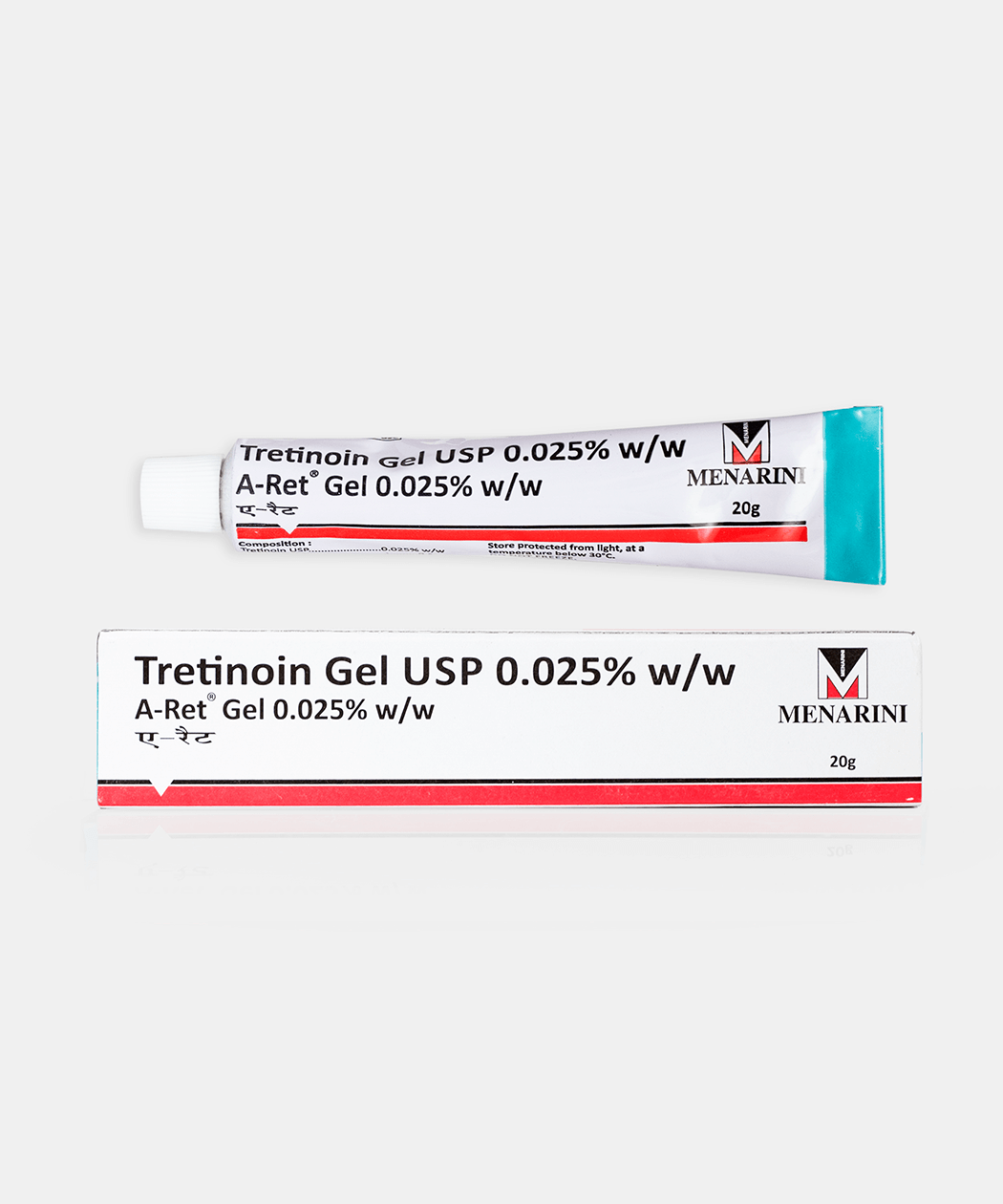
- The same molecule that smooths sun-damaged skin also revolutionized cancer care; in acute promyelocytic leukemia it coaxes malignant cells to grow up into normal neutrophils instead of destroying them, an approach called differentiation therapy.
- Tretinoin is simply the acid form of vitamin A that our own bodies make, which is why it engages the very same nuclear receptors that vitamin A uses to control genes.
- Its anti-wrinkle reputation traces back to the acne clinic; patients using Retin-A for pimples were noticed to also have smoother, less wrinkled skin.
Mechanism
Tretinoin acts on the same molecular machinery that vitamin A uses to regulate gene activity [1]. Inside the cell it binds to nuclear retinoic acid receptors (RARs), which pair with retinoid X receptors (RXRs) to form complexes that attach to specific sites on DNA and switch large numbers of genes on or off [1]. In skin, this reshapes the behavior of keratinocytes: it normalizes the shedding of cells lining the hair follicle, loosens the sticky plugs that form comedones, and dampens inflammatory signaling, for example by interfering with the AP-1 transcription pathway and reducing toll-like receptor activity, which together clear and prevent acne lesions [1].
Over longer periods the same receptor signaling stimulates the production of collagen and remodels the epidermis, which underlies its benefits for photoaged skin [1][3]. In acute promyelocytic leukemia the mechanism is strikingly different in outcome: the cancer is driven by an abnormal fusion protein, PML-RARalpha, that jams the retinoic acid receptor and freezes white blood cell precursors in an immature, dividing state [2].
High concentrations of tretinoin overcome this block and promote degradation of the fusion protein, allowing the leukemic promyelocytes to resume maturing into normal granulocytes rather than continuing to multiply, a strategy known as differentiation therapy [2]. Resistance can develop as the body accelerates tretinoin breakdown through enzymes such as CYP26 [2].
receptor fingerprint
Retinoic acid receptors (RAR)agonist
Collagen synthesisboosts
Matrix metalloproteinases (MMPs)reduces
Dosingtypical ranges, not medical advice
interested in protocols and clinical dosages? make an account to see them! ^_^
Safetyrisks and cautions, not medical advice
Topically, tretinoin commonly causes dryness, peeling, redness, and heightened sun sensitivity, so it is introduced gradually and paired with sun protection. It is teratogenic and must not be used in pregnancy; the oral form used in leukemia carries serious risks (including differentiation syndrome) and is managed in hospital. Prescription medicine.
Interactionsdocumented pairs only, not exhaustive
Tretinoin is used in acute promyelocytic leukemia (APL) as part of combination chemotherapy, most commonly with arsenic trioxide (ATO) as the standard induction regimen. The combination is synergistic for differentiation therapy; both all-trans retinoic acid (ATRA) and ATO modulate overlapping but distinct pathways in leukemic cell differentiation, and this rational combination achieves superior remission rates compared to either agent alone. [20] [21] Differentiation syndrome, a potentially life-threatening complication of ATRA and ATO therapy, occurs in approximately 10% of pediatric patients during induction and is predicted by female sex, non-chemotherapy treatment groups, specific BCR-ABL subtypes, and elevated peripheral promyelocyte burden; early recognition guided by these risk factors is essential to prevent mortality from pulmonary complications and coagulopathy. [22] Src family kinase inhibitors, particularly dasatinib, have shown promise in preclinical models as adjunctive agents that synergistically enhance ATRA-induced differentiation beyond the standard ATO combination, though this remains investigational.
Checking a whole stack? Run it through interactions + stacks.
History
Tretinoin, the all-trans form of retinoic acid, is a naturally occurring metabolite of vitamin A, and its therapeutic career began with dermatology. In the late 1960s the University of Pennsylvania dermatologist Albert Kligman studied it for acne, leading to United States approval of topical tretinoin, marketed as Retin-A, in 1971; over the following years Kligman and others documented that the same preparation improved the fine wrinkles, roughness, and mottling of sun-damaged skin, establishing it as a foundational anti-aging retinoid.
A very different chapter opened in the late 1980s, when researchers in Shanghai, including Wang Zhen-Yi and colleagues, showed that oral all-trans retinoic acid could drive the malignant cells of acute promyelocytic leukemia to mature into normal white blood cells rather than killing them outright, pioneering the concept of differentiation therapy and dramatically improving the prognosis of that once highly fatal cancer. The oral drug was later approved in the United States as Vesanoid in 1995. Tretinoin appears on the World Health Organization's List of Essential Medicines and is sold under numerous brand names for both skin and blood-cancer uses.
Reputation
Tretinoin holds an almost singular reputation as the gold-standard topical retinoid, the ingredient against which newer anti-aging and acne treatments are routinely measured. Decades of use and study support its ability to clear acne, smooth texture, fade uneven pigmentation, and rebuild the collagen degraded by ultraviolet light, making it one of the few topical agents with genuine evidence for reversing signs of photoaging.
In oncology its standing is nothing short of historic, having helped turn acute promyelocytic leukemia from one of the deadliest leukemias into one of the most curable, all without traditional cytotoxic chemotherapy in many regimens. Users should know that the skin benefits demand patience and consistency, since an initial phase of dryness, peeling, and irritation is common before tolerance develops, and diligent sun protection is essential. That early adjustment aside, few compounds combine such a strong evidence base with such transformative effects across two entirely different fields of medicine.
Subjective profileweighing the evidence above
Worth it, and close to the only topical with decades of evidence behind it for both acne and photoaging. The first weeks of redness and peeling are the price of entry, so start a couple of nights a week and build. Sunscreen daily, and never in pregnancy.
Where to buy
1 other outlet
Suppliers
Vendors carrying Tretinoin, with live product details and codes. Links are affiliate links that support the wiki at no cost to you.
PCT.Zone
Tretinoin
RUPharma🌐
Tretinoin
Research
- 1988first citedTopical tretinoin improves photoaged skin. A double-blind vehicle-controlled study
- 1993controlled trialTopical tretinoin (retinoic acid) therapy for hyperpigmented lesions caused by inflammation of…
- 2026most recentSrc Family Kinase Inhibitors Bosutinib and Dasatinib Enhance ATRA-induced Differentiation of NB…
- 1.50 Years of Topical Retinoids for Acne: Evolution of Treatment.
- 2.Use of all-trans retinoic acid in the treatment of acute promyelocytic leukemia.
- 3.Topical tretinoin (retinoic acid) therapy for hyperpigmented lesions caused by inflammation of the skin in black patients.
- 4.Retinoic acid and arsenic trioxide for acute promyelocytic leukemia
- 5.Differentiation therapy of acute promyelocytic leukemia with tretinoin (all-trans-retinoic acid)
- 6.Acute Promyelocytic Leukemia: A Paradigm for Oncoprotein-Targeted Cure
- 7.Acute promyelocytic leukaemia: novel insights into the mechanisms of cure
- 8.Synergy against PML-RARa: targeting transcription, proteolysis, differentiation, and self-renewal in acute promyelocytic leukemia
- 9.Autophagy contributes to therapy-induced degradation of the PML/RARA oncoprotein
- 10.Retinoic acid in acute promyelocytic leukemia: a model for differentiation therapy
- 11.History of Acute Promyelocytic Leukemia
- 12.Treatment of high-risk neuroblastoma with intensive chemotherapy, radiotherapy, autologous bone marrow transplantation, and 13-cis-retinoic acid. Children's Cancer Group
22 listed here; entry last updated August 2026
Reviews
My notesprivate to this device
FAQ
What is tretinoin?
It is a prescription-strength derivative of vitamin A used on the skin for acne and aging.
Why apply it at night?
It is sensitive to light and can be less stable in sunlight, so evening use is standard.
Why does it cause peeling?
It accelerates skin cell turnover, which can lead to flaking and irritation, especially early on.
Is sun protection important with it?
Yes, it increases sun sensitivity, so daytime sun protection is commonly recommended.
Adverse effects
- Applied to skin it commonly causes redness, dryness, peeling, and irritation, often easing with continued use
- It increases sensitivity to sunlight, so sun protection is advised
- The oral form used for leukemia can cause a serious reaction called differentiation syndrome, along with high white cell counts and raised blood fats
- It can cause birth defects, so it is contraindicated in pregnancy
- Headache and dryness of the lips are among the milder reported effects