
spec sheet14 rows
Isotretinoin is an oral retinoid, a derivative of vitamin A also known as 13-cis-retinoic acid, used chiefly for severe or treatment-resistant acne. It is regarded as the single most effective therapy for nodulocystic acne because it acts on every major factor that drives the disease, and a completed course can produce lasting remission rather than only temporary control; it is thought to shrink the sebaceous glands by increasing the transcription factor FOXO1 and reducing mTOR nutrient-sensing signaling, promoting programmed cell death of sebocytes. The same differentiating action underlies its use, at high dose, in the maintenance treatment of high-risk neuroblastoma. Owing to its potent teratogenicity it is tightly regulated in most countries and dispensed by prescription under pregnancy-prevention programs.
- Aimed at the most stubborn, severe breakouts
- Shrinks overactive oil glands at the root
- Hits every major driver at once
- One course; results known to last
- Powerful vitamin A retinoid, taken orally
- Tunes the FOXO1 and mTOR nutrient sensors
- Dryness of the lips, skin, and eyes is the most common effect
- Strongly teratogenic; it must be avoided in pregnancy
- Blood lipids and liver enzymes are usually monitored during a course
Overview
Isotretinoin is a retinoid, a class of compounds structurally and functionally related to vitamin A, and is known chemically as 13-cis-retinoic acid [1][2]. Small amounts of the molecule occur naturally in the body, and in purified form it is an orange crystalline powder [2]. Among dermatological agents it is considered the most powerful option for acne, and it remains the only treatment able to induce prolonged remission of moderate to severe disease [2].
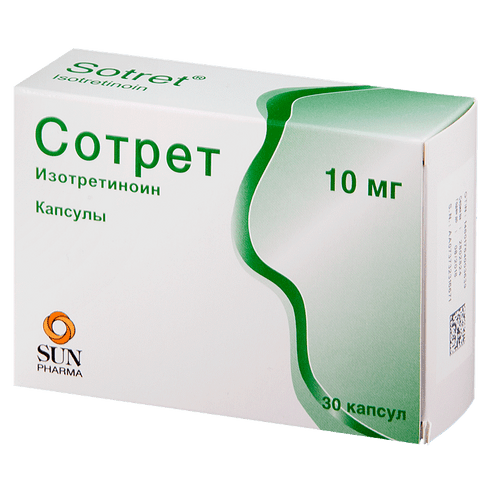
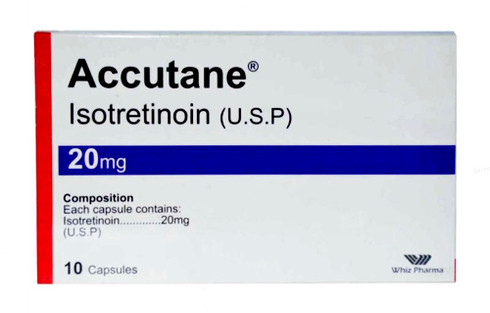
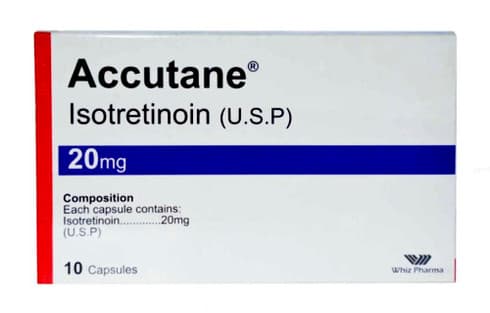
The compound was first investigated in the 1960s at Hoffmann-La Roche, where researchers examined retinoids as possible cancer therapies; the anticancer promise faded, but a benefit for acne became apparent [2][5]. Development was complicated by concern over birth defects in the shadow of the thalidomide era, and clinical work advanced through collaboration with investigators at the United States National Cancer Institute during the 1970s [2]. After reports of striking success against cystic acne, the drug received United States approval in 1982 under the brand name Accutane, and it has since been sold worldwide under many trade names such as Roaccutane, Amnesteem, Claravis, and Zenatane [2][5].
Its principal use is for severe nodular or cystic acne and for moderate acne that has failed to respond to antibiotics and other measures [1][5]. Beyond acne, clinicians have used it off-label for conditions including rosacea, hidradenitis suppurativa, and several disorders of keratinization, while related retinoid chemistry has been explored in oncology [2]. Treatment is usually given as a course spanning several months, after which many patients keep clear skin without further therapy [1][2].
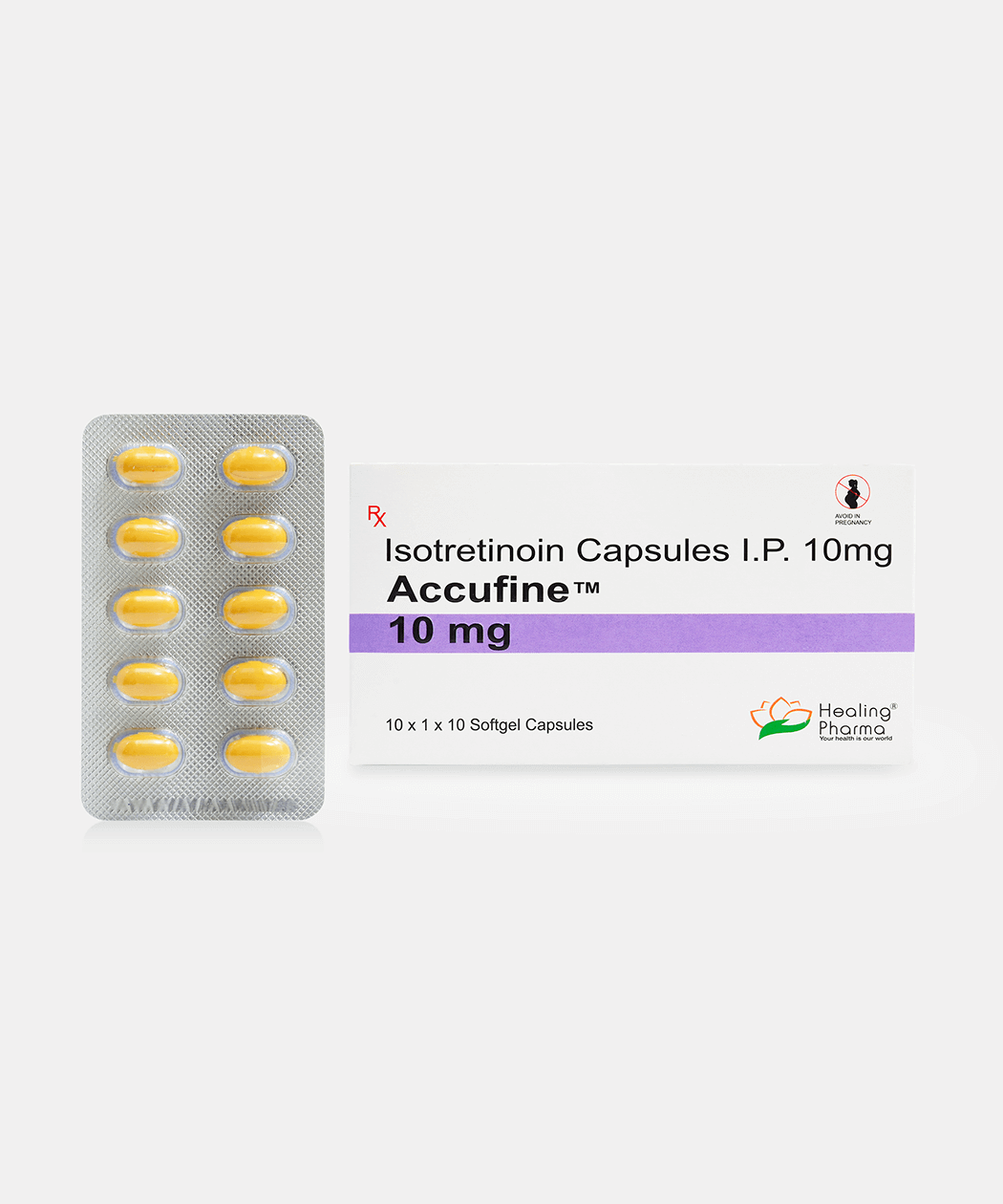
Because the drug is strongly teratogenic, carrying a substantial risk of serious congenital malformations if taken during pregnancy, its distribution is closely controlled [3]. In most jurisdictions it is available by prescription only, and in the United States it is dispensed through the iPLEDGE risk-management program, which requires pregnancy testing and contraception for patients who can become pregnant [3]. It is most often taken by mouth as capsules, and absorption improves substantially when the dose is taken with fatty food; a topical formulation also exists [2][5].
The best-known adverse effects are dose-dependent and reversible mucocutaneous complaints such as dryness of the lips, skin, and eyes [3]. Reduced meibomian gland secretion can leave lasting dry-eye symptoms in some people [4]. Laboratory monitoring is common because the drug can raise blood lipids and liver enzymes, and much attention has been paid to possible links with mood disturbance and inflammatory bowel disease, though data from prospective studies and meta-analyses have been broadly reassuring on these questions [3].

- A single completed course of isotretinoin can drive severe acne into long-term remission, a durability that sets it apart from nearly every other acne treatment.
- The same gland-shrinking action that clears acne also suppresses the meibomian glands of the eyelids, which is why dry eyes are a characteristic side effect.
- Beyond dermatology, high-dose isotretinoin is used as maintenance therapy in high-risk neuroblastoma, exploiting its ability to force cancer cells to differentiate.
Mechanism
Isotretinoin, chemically 13-cis-retinoic acid, is unusual among acne treatments in that it targets all four processes thought to drive the disease rather than a single one [2][5]. Its most prominent action is a marked, dose-related shrinkage of the sebaceous glands; by triggering apoptosis of the oil-producing sebocytes it sharply lowers sebum output, which in turn starves Cutibacterium acnes of the lipid-rich follicular environment it depends on [1][2]. The drug also normalizes the abnormal shedding of cells lining the hair follicle, easing the plugging that forms comedones, and it exerts direct anti-inflammatory and immunoregulatory effects within the skin [2].
One proposed molecular route involves induction of neutrophil gelatinase-associated lipocalin, also called lipocalin-2, a protein linked both to reduced sebum production and to antibacterial activity against C. acnes [1]. Because comparable secretory tissue exists elsewhere in the body, the compound similarly suppresses the meibomian glands of the eyelids, which accounts for the dry-eye complaints that can accompany treatment [4]. The combined reduction of sebum, keratinization, bacterial proliferation, and inflammation explains why a finished course can yield durable clearing rather than a short-lived response [1][5].
receptor fingerprint
Sebaceous glandsshrinks
Sebum productionreduces
Skin cell turnover (retinoid)normalizes
Dosingtypical ranges, not medical advice
interested in protocols and clinical dosages? make an account to see them! ^_^
Safetyrisks and cautions, not medical advice
Isotretinoin is a potent teratogen: exposure during pregnancy causes severe birth defects, so reliable pregnancy prevention is mandatory throughout treatment. Nearly all users experience dose-dependent mucocutaneous dryness of the lips, skin, and eyes, and it can raise triglycerides, cholesterol, and liver enzymes, warranting periodic blood monitoring. Rarer concerns include mood changes, and headache with visual disturbance from raised intracranial pressure, which is worsened by concurrent tetracyclines.
Interactionsdocumented pairs only, not exhaustive
Isotretinoin and its metabolites alter expression of multiple hepatic cytochrome P450 enzymes in vitro, potentially affecting drugs metabolized by CYP1A2, CYP2C9, CYP2D6, and CYP3A4; however, clinical studies have not consistently demonstrated significant drug-drug interactions despite these transcriptional changes [31]. In vitro protein binding studies show that isotretinoin competes for serum albumin binding sites with the blood pressure medications amlodipine and telmisartan, suggesting potential for displacement interactions, though clinical significance remains unclear [32].
Notably absent from published literature are well-documented interactions with warfarin, tetracyclines, or other commonly co-prescribed agents; most clinical guidance on isotretinoin interactions relies on theoretical predictions from enzyme inhibition rather than observed adverse events or pharmacokinetic studies in humans.
Checking a whole stack? Run it through interactions + stacks.
History
Isotretinoin, the 13-cis isomer of retinoic acid, was first synthesized in the mid-1950s during broad investigation of vitamin A derivatives, but its clinical potential emerged only decades later. In the late 1970s, dermatologist Gary Peck and colleagues at the United States National Institutes of Health reported striking, durable clearing of severe cystic acne in patients treated with the compound, a result that reframed the disease as something that could be pushed into lasting remission rather than merely suppressed.
Hoffmann-La Roche developed the molecule and brought it to market in the United States as Accutane in 1982, where it quickly became the reference therapy for nodulocystic and treatment-resistant acne. Recognition of its potent teratogenicity led, over the following decades, to increasingly formal pregnancy-prevention frameworks, culminating in the iPLEDGE program introduced in 2006. Separately, high-dose isotretinoin was established as maintenance therapy for high-risk neuroblastoma, reflecting the compound's general ability to promote cellular differentiation. It remains one of the most consequential dermatological drugs ever introduced.
Reputation
Isotretinoin holds a singular reputation as the most effective treatment available for severe acne, valued above all for its capacity to produce lasting remission after a finite course rather than open-ended maintenance. Because it acts on every principal driver of the disease at once, shrinking the sebaceous glands, normalizing follicular shedding, starving Cutibacterium acnes, and calming inflammation, it can clear disease that has resisted every other option.
Many patients describe the outcome as life-changing, both for their skin and for the psychological burden that severe acne imposes. Its effects are well documented and time-tested across more than four decades of use. The honest counterpoint is that it demands respect: it is strictly regulated for its teratogenic risk, requires monitoring, and commonly causes dryness of the skin, lips, and eyes during treatment. Used thoughtfully and under proper supervision, however, it remains a genuinely transformative therapy.
Subjective profileweighing the evidence above
For severe scarring acne this is the one treatment that can end the disease rather than manage it, and it is worth doing properly under a dermatologist. It is a potent teratogen, so pregnancy must be prevented throughout without exception, and dryness plus periodic lipid and liver checks are part of the deal.
Where to buy

Suppliers
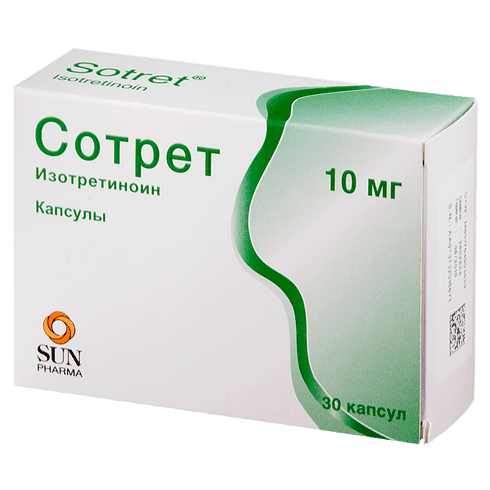
Vendors carrying Isotretinoin, with live product details and codes. Links are affiliate links that support the wiki at no cost to you.
| supplier | size | price | $/mg |
|---|---|---|---|
| PCT.Zonelowest | 40MG | $6.87 | $0.172/mg |
| PCT.Zone | 30MG | $5.32 | $0.177/mg |
| PCT.Zone | 20MG | $4.03 | $0.202/mg |
| PCT.Zone | 10MG | $3.15 | $0.315/mg |
| PCT.Zone | 5MG | $2.67 | $0.534/mg |
| PCT.Zone | 20MG | $15.00 | $0.750/mg |
| PCT.Zone | 8MG | $6.40 | $0.800/mg |
| PCT.Zone | 20MG | $35.00 | $1.75/mg |
PCT.Zone
Isotretinoin

PCT.Zone
Isotretinoin
PCT.Zone
Isotretinoin
PCT.Zone
Isotretinoin
PCT.Zone
Isotretinoin
PCT.Zone
Isotretinoin
RUPharma🌐
Isotretinoin
PCT.Zone
Isotretinoin
RUPharma🌐
Isotretinoin
PCT.Zone
Isotretinoin
Research
- 1979first citedComparative effects of ticrynafen and hydrochlorothiazide in the treatment of hypertension.
- 2022most active year5 papers
- 2023most recentIsotretinoin Exposure and Risk of Inflammatory Bowel Disease: A Systematic Review with Meta-Ana…
- 1.The use of isotretinoin in acne
- 2.The use of isotretinoin for acne: an update on optimal dosing, surveillance, and adverse effects
- 3.Isotretinoin for acne vulgaris: an update on adverse effects and laboratory monitoring
- 4.Effects of Isotretinoin on Meibomian Glands
- 5.Use of isotretinoin for acne vulgaris
- 6.Neutrophil gelatinase-associated lipocalin mediates 13-cis retinoic acid-induced apoptosis of human sebaceous gland cells
- 7.Isotretinoin revisited: pluripotent effects on human sebaceous gland cells
- 8.TRAIL contributes to the apoptotic effect of 13-cis retinoic acid in human sebaceous gland cells
- 9.Depression and suicidal behavior in acne patients treated with isotretinoin: a systematic review
- 10.Association of Isotretinoin With Depression and Suicide: A Review of Current Literature
- 11.No association found between patients receiving isotretinoin for acne and the development of depression in a Canadian prospective cohort
- 12.Is there an association between isotretinoin therapy and adverse mood changes? A prospective study in a cohort of acne patients
32 listed here; entry last updated August 2026
Reviews
My notesprivate to this device
FAQ
How does it clear acne?
It's a vitamin-A derivative that shrinks sebaceous (oil) glands and reduces the factors driving acne. This often produces lasting improvement.
Why is monitoring emphasized?
It can affect lipids and liver markers, so clinicians commonly track bloodwork. Ongoing supervision is standard.
Why is pregnancy a major concern?
It carries a serious risk of birth defects, so strict precautions apply for anyone who could become pregnant. This is a central safety issue.
Why take it with fatty food?
Its absorption improves significantly when taken with dietary fat. This is a common practical tip.
Adverse effects
- Dryness of the lips, skin, and eyes is the most common effect
- Strongly teratogenic; it must be avoided in pregnancy
- Blood lipids and liver enzymes are usually monitored during a course
- Reduced tear-gland function can cause lasting dry eye in some people