
spec sheet9 rows
RU-58841 is a potent non-steroidal topical antiandrogen developed for androgenetic alopecia, acne, and hirsutism. Applied directly to the scalp, it binds androgen receptors in the hair follicle and blocks dihydrotestosterone (DHT), the androgen that drives follicle miniaturization, while its rapid local metabolism limits hormonal effects elsewhere in the body. Decades of animal research show striking regression of androgen-dependent skin structures, making it one of the most studied local antiandrogens for hair loss.
- Blocks DHT right where hair is lost
- Targets the follicle, not your whole body
- Topical and simple to apply
- Breaks down fast, keeping the action local
- One of the most studied local antiandrogens
- A longtime community favorite for thinning hair
- Mild scalp irritation
- Some redness
- Some dryness
Overview
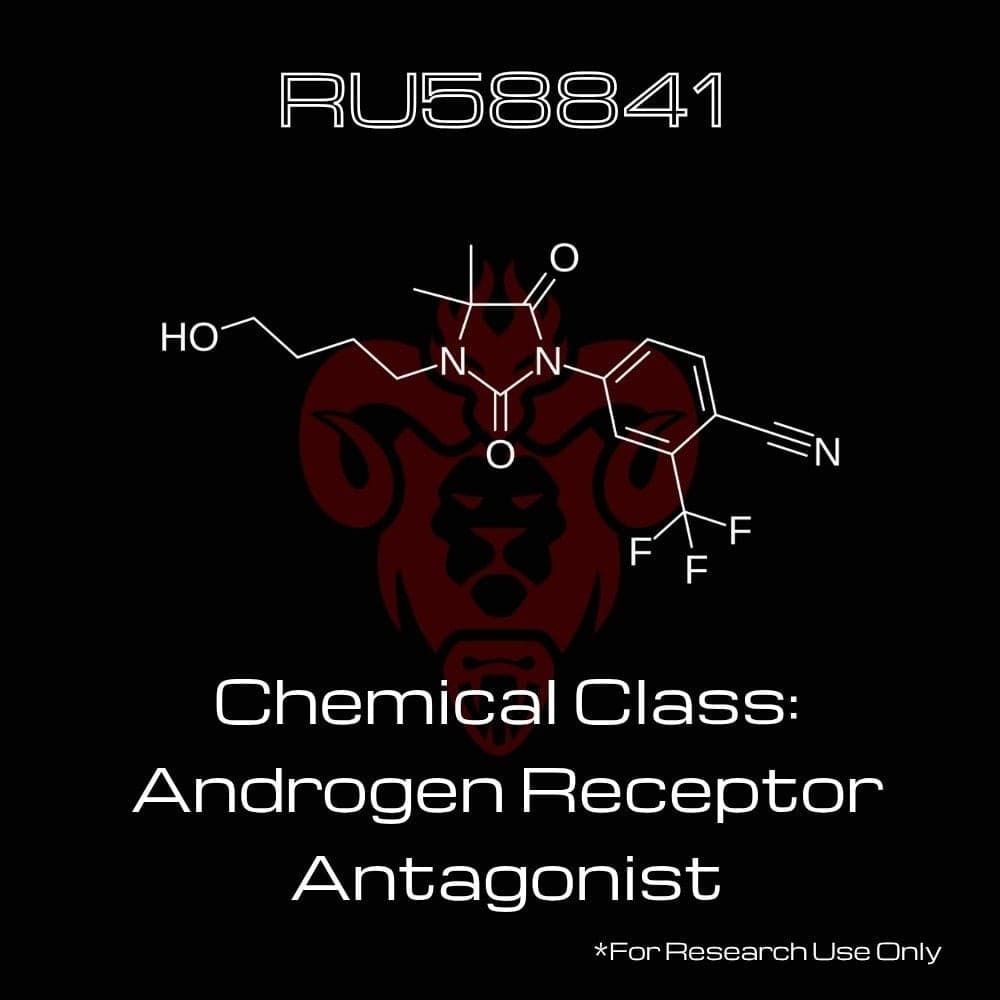
RU-58841 is a non-steroidal, purely antagonistic androgen receptor blocker built on an aryl-hydantoin scaffold, first synthesized at Roussel Uclaf in France [1]. It was engineered specifically for topical use, with high affinity for androgen receptors in skin appendages and a design intent that it act at the site of application while producing minimal systemic antiandrogenic activity [1][5]. In the scientific literature it is described as a candidate for the treatment of androgen-dependent skin disorders including acne, androgenetic alopecia, and hirsutism [1].
The compound has a long preclinical history. Classic studies used the hamster flank organ and Syrian hamster sebaceous gland models to show that topically applied RU-58841 causes dose-dependent regression of androgen-driven structures, with local potency exceeding older agents such as cyproterone acetate [3]. In a stumptailed macaque model of androgenetic alopecia, topical application increased hair density, thickness, and length without detectable systemic effects, while cell-based assays confirmed competitive antagonism of the wild-type androgen receptor comparable to hydroxyflutamide [2]. Formulation science has explored prodrugs such as RU 58841-myristate and lipid nanoparticle carriers to target the follicle and sebaceous gland pathway [4][6].
RU-58841 was never approved as a medicine and its clinical development was discontinued, so it exists today as a research chemical rather than a licensed drug; there is no formal regulatory approval, and human data are limited [1][2]. It is typically prepared as a topical solution for research use. Its enduring appeal rests on the pharmacological premise of a local antiandrogen that can address the hormonal driver of pattern hair loss at the scalp while sparing circulating hormone levels [1][5].
- In hamster studies, RU-58841 shrank sebaceous glands by up to about 60 percent on the treated side while leaving the untreated side and systemic sex organs unaffected.
- Despite being synthesized by a major pharmaceutical company in the early 1990s, RU-58841 was never commercialized and survives today mainly as a research chemical.
Mechanism
Pattern hair loss and androgen-linked skin conditions are driven by dihydrotestosterone binding the inside follicle and sebaceous cells, which progressively shrinks terminal follicles and enlarges oil glands. RU-58841 intervenes at that receptor; it is a pure that competes with DHT and testosterone for the androgen receptor without triggering the receptor's transcriptional activity, as shown in prostate PC3 cell cotransfection assays where it suppressed DHT-driven receptor activation with potency similar to hydroxyflutamide [2]. By occupying the receptor locally, it interrupts the androgen signal that causes miniaturization while leaving the follicle otherwise intact [1][2].
The defining feature of RU-58841 is site-restricted action. In hamster models, topical application produced potent regression of the flank organ and sebaceous glands at microgram doses, with maximal sebaceous gland size reductions on the order of 60 percent, yet without inhibition of the untreated contralateral side or systemic sex organs [1][3]. Pharmacokinetic work explained this profile; RU-58841 is cleared rapidly and forms only a small amount of the longer-lived systemically active , so meaningful antiandrogen activity stays concentrated where it is applied [5]. Its effects are also reversible, with treated glands returning to normal size after the compound is stopped [3].
In the macaque model of androgenetic alopecia, this local antagonism translated into visibly increased hair density, shaft thickness, and length over the treatment course, again without systemic hormonal disturbance [2]. Delivery research has reinforced the mechanism by showing that the sebaceous gland route is the principal pathway for cutaneous penetration and that liposomal and nanoparticle carriers can concentrate the drug in follicular structures, while strategies such as the myristate ester improve targeting and stability before conversion to active RU-58841 in skin cells [4][6].
receptor fingerprint
(scalp / skin, topical)antagonist
Sebaceous glandsshrinks
Systemic testosteronespares
Dosingtypical ranges, not medical advice
interested in protocols and clinical dosages? make an account to see them! ^_^
Safetyrisks and cautions, not medical advice
RU-58841 was never approved and never completed human trials, so its safety in people is uncharacterized, and research-grade purity varies. Systemic absorption could in principle suppress the androgen axis, and reported user effects range from scalp irritation to hormonal-type symptoms. Research use only.
History
RU-58841 was synthesized at the Centre de Recherches Roussel Uclaf in Romainville, France, and first described in the scientific literature by Battmann and colleagues in 1994 as a new non-steroidal, topically active antiandrogen intended for acne, androgenetic alopecia and hirsutism. Its defining feature from the outset was site-restricted action; in hamster models it produced potent local regression of androgen-dependent skin structures at microgram doses without disturbing systemic testosterone. After Roussel Uclaf was absorbed into successor pharmaceutical companies during the 1990s, the compound was never brought to market as an approved drug, and later work focused on delivery, including a myristate ester prodrug reported by Munster and colleagues in 2005. Having lapsed from formal development, it has persisted chiefly as a widely discussed research chemical for hair loss.
Reputation
RU-58841 is frequently cited as one of the most studied local antiandrogens for hair loss, and its appeal is easy to understand; decades of animal research show striking regression of androgen-dependent skin structures, and its rapid local metabolism is designed to keep hormonal effects concentrated at the scalp rather than throughout the body. That targeted-action concept is what draws people who want to block follicular DHT without the systemic side effects associated with oral antiandrogens. Honesty requires noting that the compelling data are almost entirely preclinical; it was never completed through human clinical trials, it has no regulatory approval, and long-term human safety is not established. It is best viewed as a promising but investigational topical agent rather than a proven therapy.
Subjective profileweighing the evidence above
Blocking DHT at the follicle while sparing the rest of the body is exactly what you would want from a hair loss drug, and the animal data is striking. It also never went through human trials, purity varies by vendor, and enough absorption would still reach your hormones. An informed gamble, not an established option.
Where to buy
Suppliers
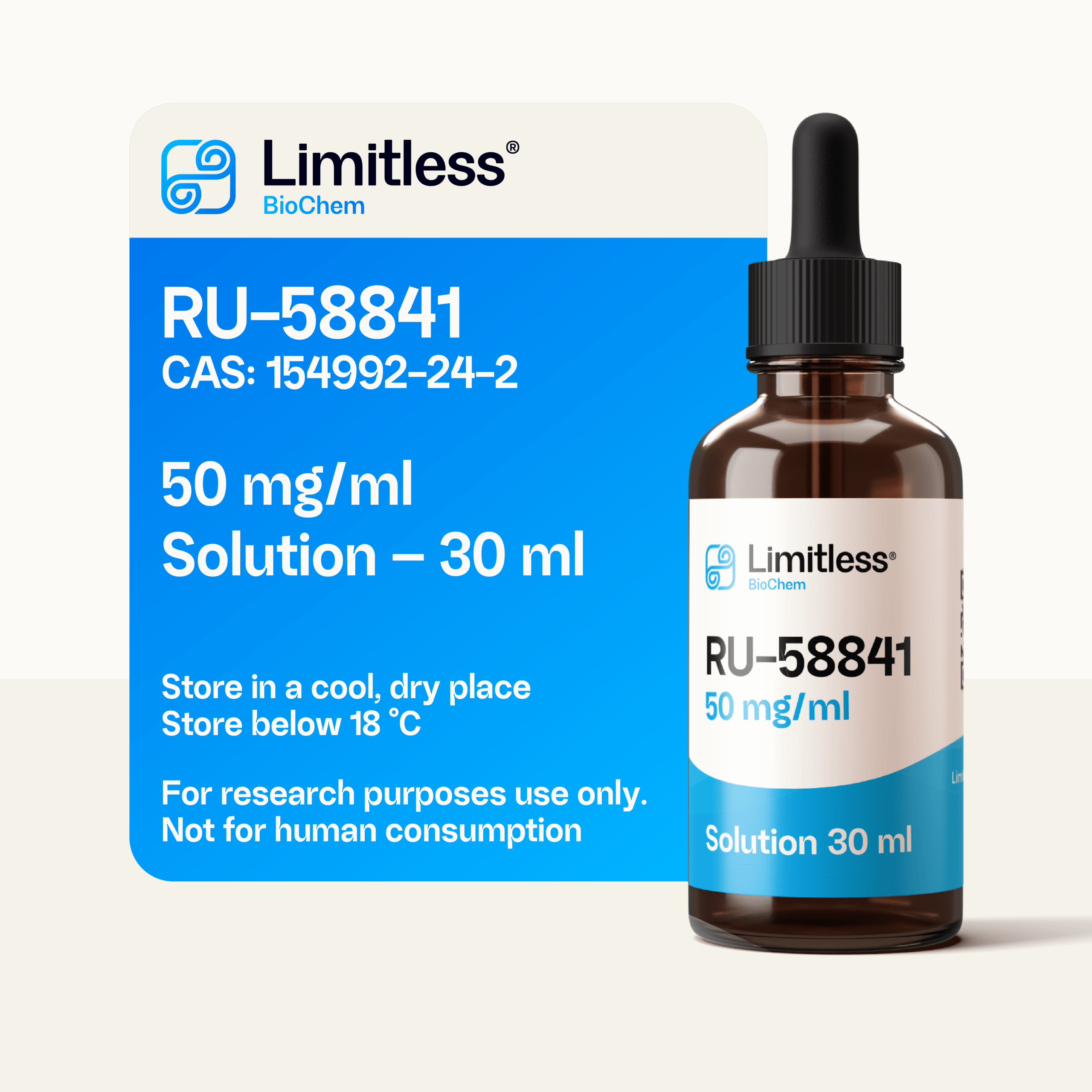
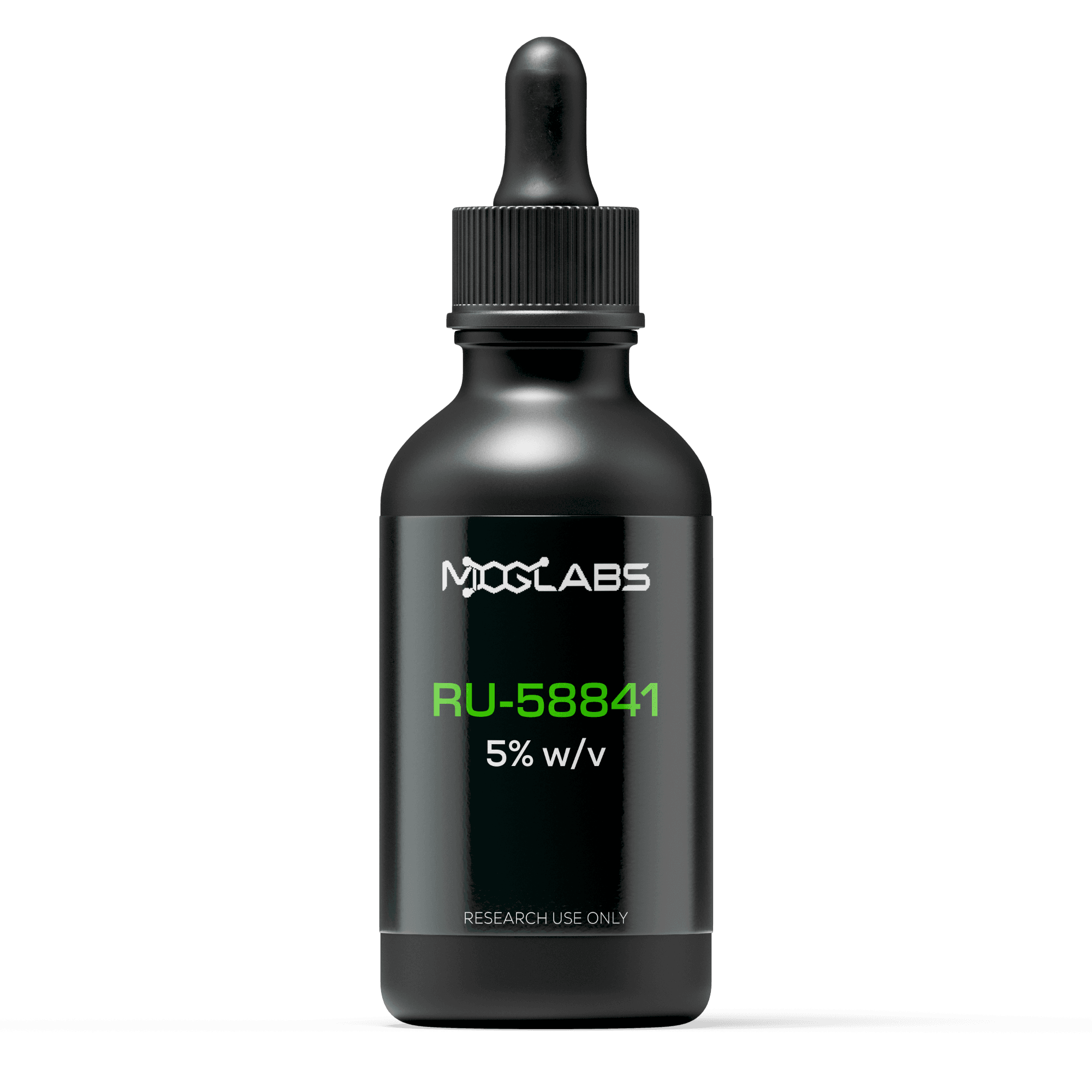
Vendors carrying RU-58841, with live product details and codes. Links are affiliate links that support the wiki at no cost to you.
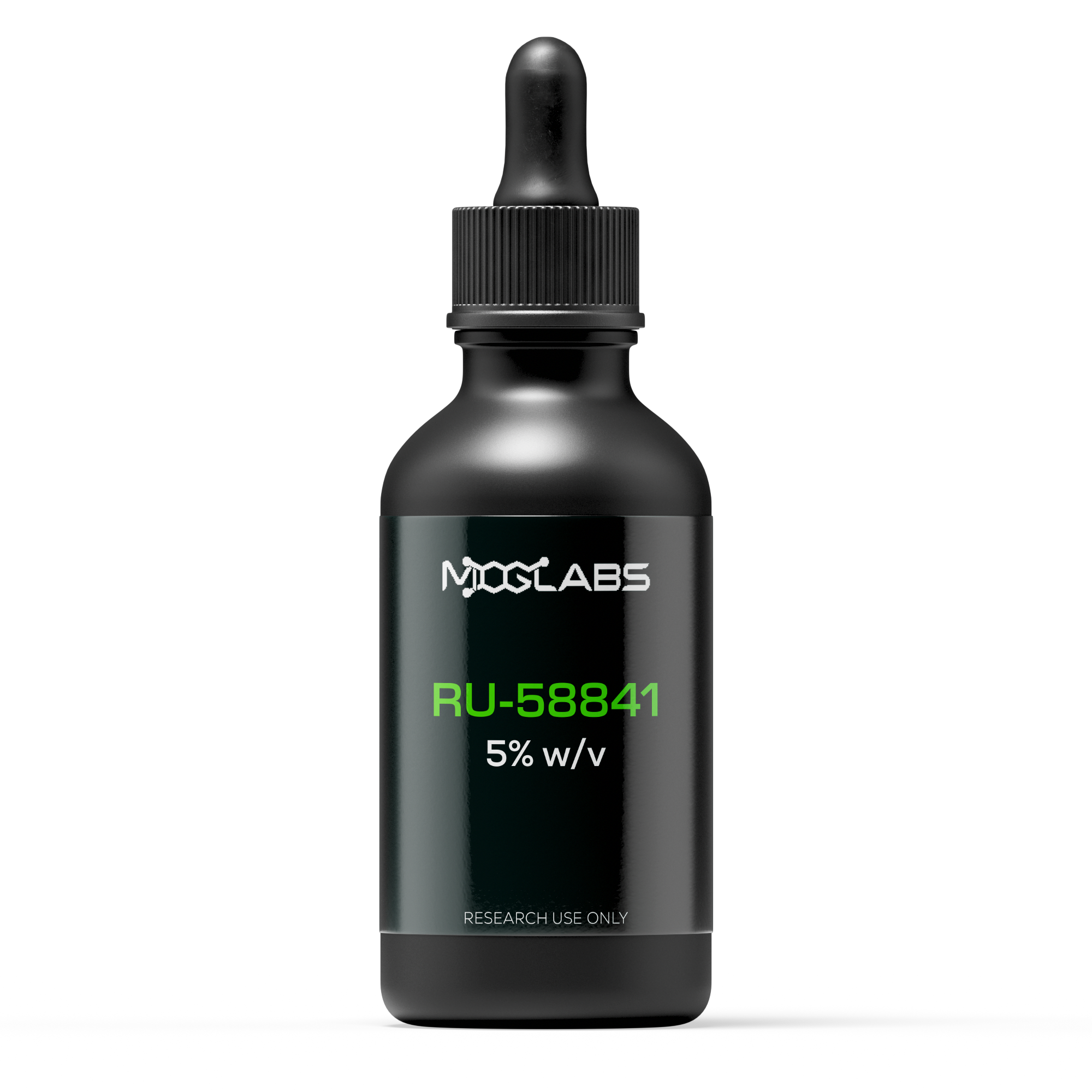
Moglabs
RU-58841
Kimera Chems
RU-58841
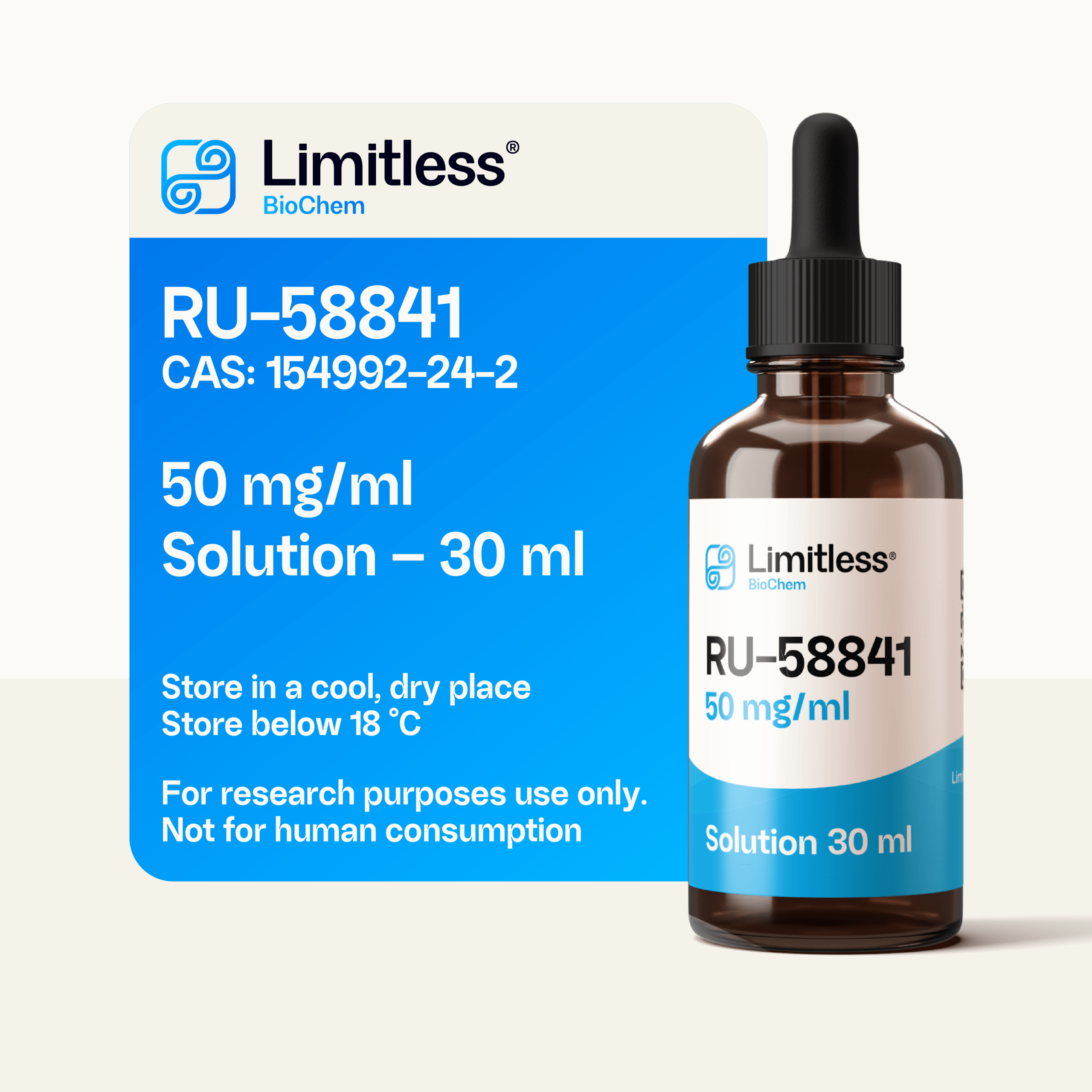
Limitless Biochem🌐
RU-58841
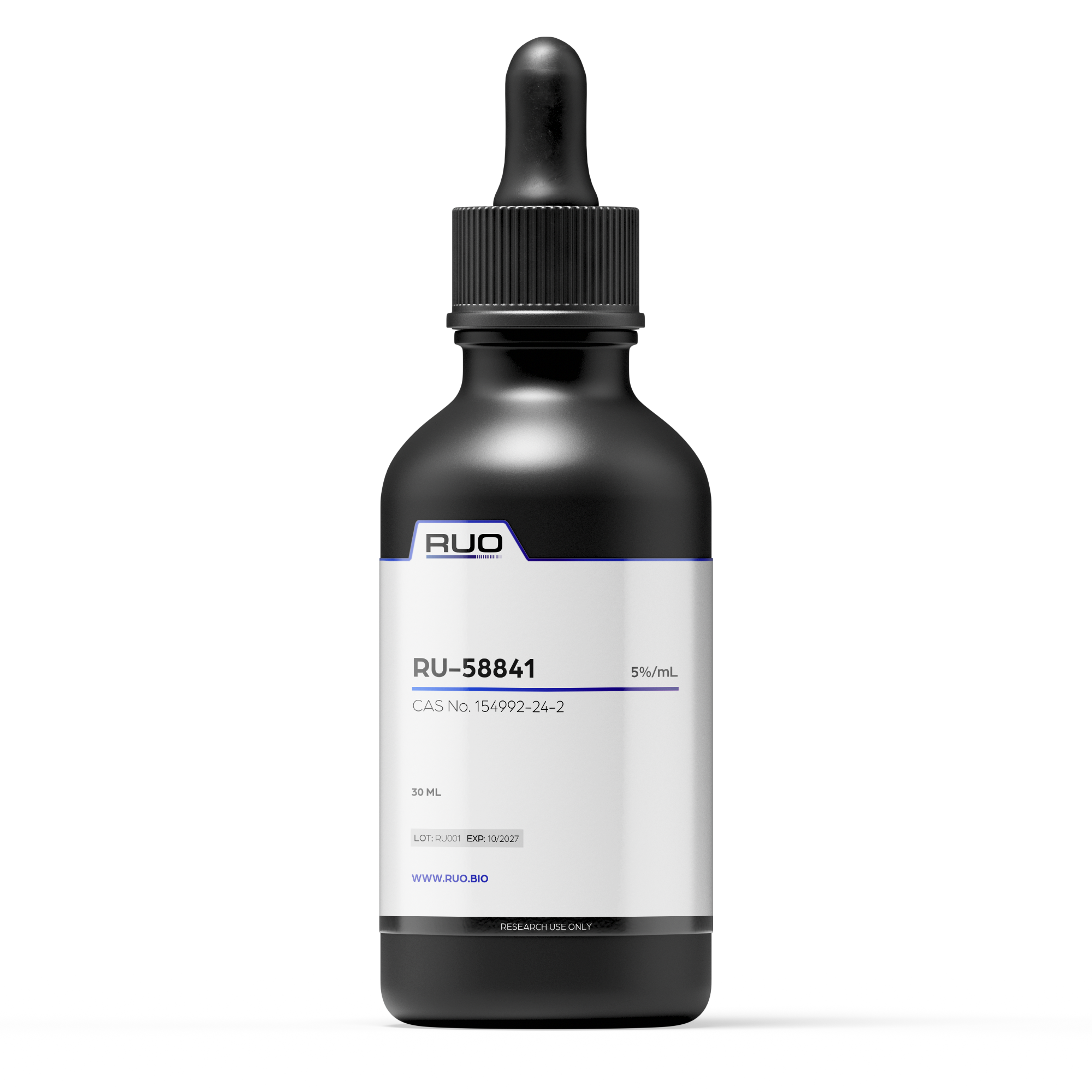
RUO
RU-58841
Research
- 1994first citedPreliminary pharmacokinetics and metabolism of novel non-steroidal antiandrogens in the rat: re…
- 1997most active year3 papers
- 2009most recentEffects of topical antiandrogen and 5-alpha-reductase inhibitors on sebaceous glands in male fu…
- 1.RU 58841, a new specific topical antiandrogen: a candidate of choice for the treatment of acne, androgenetic alopecia and hirsutism.
- 2.Evaluation of RU58841 as an anti-androgen in prostate PC3 cells and a topical anti-alopecia agent in the bald scalp of stumptailed macaques.
- 3.Local inhibition of sebaceous gland growth by topically applied RU 58841.
- 4.RU 58841-myristate, prodrug development for topical treatment of acne and androgenetic alopecia.
- 5.Preliminary pharmacokinetics and metabolism of novel non-steroidal antiandrogens in the rat: relation of their systemic activity to the formation of a common metabolite.
- 6.Importance of sebaceous glands in cutaneous penetration of an antiandrogen: target effect of liposomes.
- 7.A controlled study of the effects of RU58841, a non-steroidal antiandrogen, on human hair production by balding scalp grafts maintained on testosterone-conditioned nude mice
- 8.Inhibition of hair growth by testosterone in the presence of dermal papilla cells from the frontal bald scalp of the postpubertal stumptailed macaque
- 9.Roles of testosterone in the growth of keratinocytes through bald frontal dermal papilla cells
- 10.Effects of topical antiandrogen and 5-alpha-reductase inhibitors on sebaceous glands in male fuzzy rats
- 11.Promotion of agonist activity of antiandrogens by the androgen receptor coactivator, ARA70, in human prostate cancer DU145 cells
11 listed here; entry last updated August 2026
Reviews
My notesprivate to this device
FAQ
What is RU-58841?
It is a topical anti-androgen studied for hair loss that acts at the androgen receptor in the scalp. It is a research chemical, not an approved product.
Why do people prefer a topical anti-androgen?
The appeal is targeting the scalp while aiming to limit body-wide hormonal changes. In practice, some absorption can still occur.
Is it approved or tested in large trials?
It was investigated years ago but development was not completed, so robust human safety data is limited. It remains experimental.
What side effects are reported?
Local scalp irritation is most common, and systemic hormonal effects are theoretically possible with greater absorption. Data on long-term use is sparse.
Adverse effects
- Mild scalp irritation
- Some redness
- Some dryness
- Possible hormonal effects at high exposure
Notes and cautions
- Research grade material, so purity is worth verifying