
spec sheet10 rows
CB-03-01, known as clascoterone, is a first-in-class topical androgen receptor inhibitor and the first genuinely new mechanism approved for acne in decades. Applied directly to the skin, it blocks androgen signaling in the sebaceous gland without the systemic hormonal effects of oral antiandrogens. For those seeking targeted, well-tolerated hormonal control of acne, clascoterone is a landmark advance.
- First genuinely new acne mechanism in decades
- Blocks androgen signaling right where it counts
- Hair grew longer and thicker in trials
- Targets androgen driven acne at the gland
- Local action leaves body hormones alone
- Dual duty across hair and skin
- Mild local skin reactions at the application site
- Occasional dryness, scaling, or itching
Overview
CB-03-01, developed and marketed under the name clascoterone (brand name Winlevi), is the development code for cortexolone 17alpha-propionate, a topical androgen receptor inhibitor [1][2]. Structurally it is a steroidal ester closely related to cortexolone (11-deoxycortisol), engineered so that when applied to skin it competes with androgens such as dihydrotestosterone for binding to androgen receptors in the sebaceous gland and hair follicle while being rapidly metabolized to limit systemic activity [2][5].
Clascoterone was developed by Cassiopea, a company spun out of Cosmo Pharmaceuticals, as a treatment for androgen-dependent skin disorders including acne vulgaris and androgenetic alopecia [2]. In August 2020 the United States Food and Drug Administration approved clascoterone cream 1% for the topical treatment of acne vulgaris in patients twelve years of age and older, making it the first topical antiandrogen approved for acne and the first drug with a new mechanism of action for the condition in many years [2].
Its primary research and clinical application is acne, where altered sebum production, androgen signaling, inflammation, and bacterial proliferation all contribute to disease; a higher-concentration solution has also been studied for androgenetic alopecia [1][2]. Because systemic antiandrogens carry hormonal side effects and are generally avoided in male patients and during pregnancy, a locally acting topical antiandrogen fills a distinct therapeutic niche [4]. Clascoterone is an approved prescription drug supplied as a 1% cream [2][3].
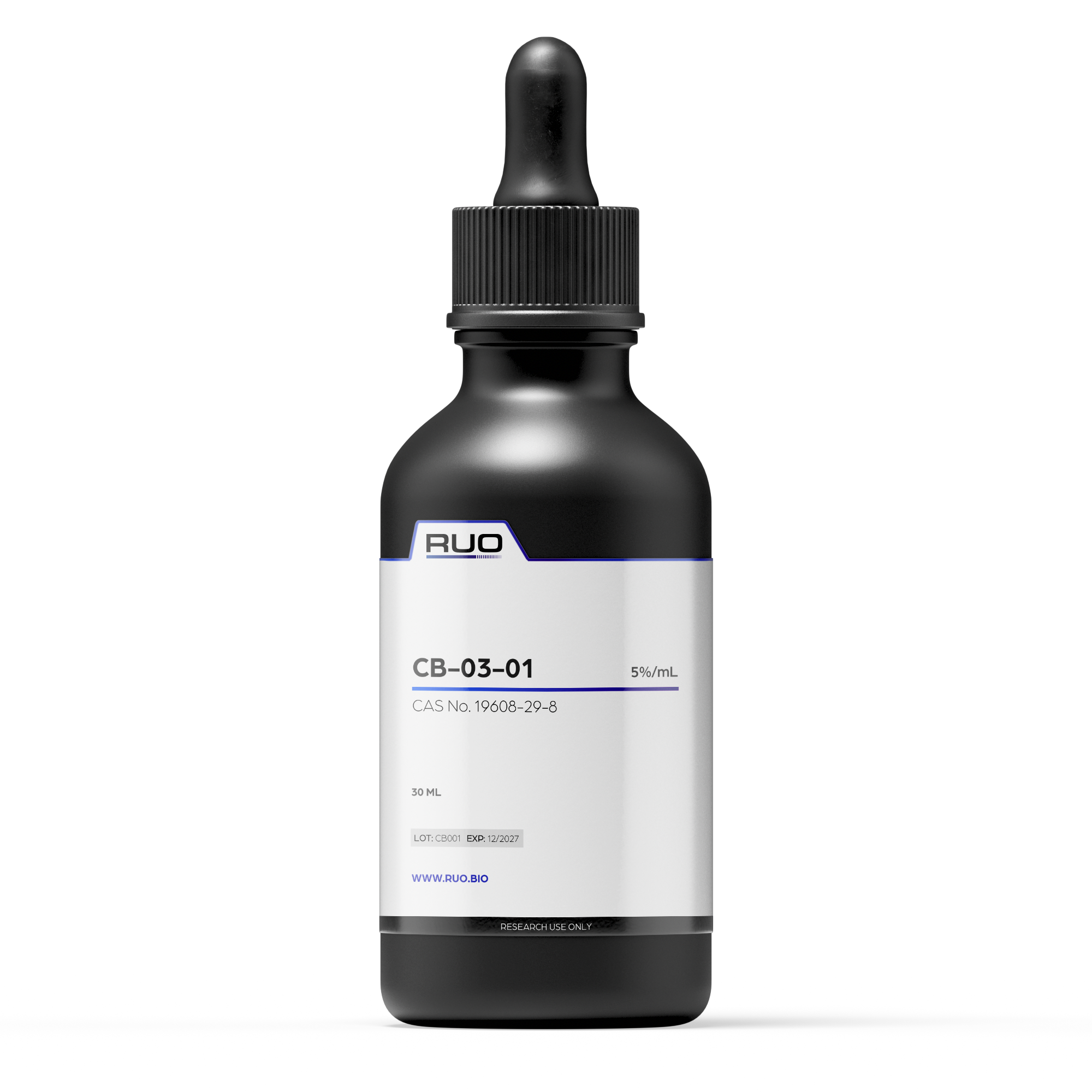
- Clascoterone was the first acne medication with a genuinely new mechanism of action to reach the United States market in roughly forty years.
- It is chemically an ester of cortexolone (11-deoxycortisol), and is rapidly broken down to that inactive metabolite once absorbed, which keeps its action largely confined to the skin.
Mechanism
Clascoterone's benefit is a direct, local reduction in the drivers of acne: excess sebum, androgen-fueled sebocyte activity, and inflammatory signaling, achieved without meaningful systemic hormonal disruption. Mechanistically it acts as an . In vitro work showed that clascoterone binds the androgen receptor with high affinity, inhibits androgen receptor-regulated gene transcription in a reporter cell line, and antagonizes androgen-driven lipid and inflammatory production in human primary sebocytes in a dose-dependent manner [1]. Notably, in a direct comparison it was significantly better than the antiandrogen spironolactone at inhibiting inflammatory synthesis from sebocytes [1].
At the skin, clascoterone competes with dihydrotestosterone for androgen receptors in the sebaceous gland and hair follicle, blunting the downstream signaling that increases sebum lipids and inflammatory mediators central to acne pathogenesis [5]. Because it is rapidly converted to the inactive cortexolone after absorption, its action stays largely confined to the skin, which is why long-term studies have shown an absence of systemic antiandrogenic effects such as reduced libido or feminization in male users [4][5].
The clinical magnitude is well established. In two identical phase 3 randomized, vehicle-controlled trials enrolling 1440 patients with facial acne, treatment success at week 12 reached 18.4% and 20.3% with clascoterone cream 1% versus 9.0% and 6.5% with vehicle, alongside significant reductions in both inflammatory and noninflammatory lesion counts [3]. Adverse events were low and mostly limited to mild local skin reactions, predominantly trace or mild erythema [3]. The result is a targeted, effective, and well-tolerated approach to hormonally driven acne.
receptor fingerprint
(scalp / skin)antagonist
Sebum / inflammation genesdownregulates
Dosingtypical ranges, not medical advice
interested in protocols and clinical dosages? make an account to see them! ^_^
Safetyrisks and cautions, not medical advice
Clascoterone (CB-03-01) is a topical androgen-receptor antagonist approved for acne, and the most common effects are local skin reactions such as irritation, redness, dryness and itching. Clinical study observed possible reversible suppression of the HPA (adrenal) axis with extended or large-area application, and its longer-term systemic safety when used off-label, for example on the scalp for hair loss, is less well characterized.
History
Clascoterone (development code CB-03-01) is the 17-alpha-propionate ester of cortexolone, developed by the Italian pharmaceutical company Cassiopea S.p.A., a spin-off of Cosmo Pharmaceuticals. It was designed to deliver androgen receptor blockade directly to the skin while being rapidly hydrolyzed to the inactive metabolite cortexolone after absorption, thereby avoiding the systemic hormonal effects of oral antiandrogens. The United States Food and Drug Administration approved clascoterone cream 1% under the brand name Winlevi in August 2020 for the treatment of acne vulgaris in patients twelve years of age and older, making it the first genuinely new mechanism of action approved for acne in roughly four decades. A higher-strength solution, under the proposed name Breezula, has been investigated separately for androgenetic alopecia.
Reputation
Clascoterone is widely regarded as a landmark in acne pharmacology because it introduced the first topical androgen receptor inhibitor, addressing the hormonal driver of acne without the systemic risks that limit spironolactone or oral antiandrogens. Dermatologists have received it favorably for its strong tolerability profile, with most local skin reactions in trials reported as absent, trace, or mild, and it is now being studied in combination with retinoids such as adapalene to target multiple pathways at once.
Discussion often notes that it is one of the few acne treatments considered suitable for both male and female patients on hormonal grounds. Honest appraisal acknowledges that absolute treatment-success rates in the pivotal trials, while significantly better than vehicle, left many patients short of clear skin, and that twice-daily application over months is required. Long-term real-world data continue to accumulate.
Subjective profileweighing the evidence above
Genuinely good, and the first new acne mechanism in decades: it blocks androgen right in the skin without the systemic hormonal effects of oral antiandrogens. Local irritation and dryness are the main cost. The scalp use for hair loss is more promising than proven, and less well characterized.
Where to buy

1 other outlet
Suppliers
Vendors carrying CB-03-01, with live product details and codes. Links are affiliate links that support the wiki at no cost to you.
RUO
CB-03-01
Kimera Chems
CB-03-01
Research
- 2019first citedA Phase 2b, Randomized, Double-Blind Vehicle Controlled, Dose Escalation Study Evaluating Clasc…
- 2024meta-analysisComparison of the Efficacy of Clascoterone, Trifarotene, and Tazarotene for the Treatment of Ac…
- 2026most recentOverview of the Efficacy and Safety of Topical Hormonal Therapies for the Treatment of Acne Vul…
- 1.Cortexolone 17α-propionate (Clascoterone) Is a Novel Androgen Receptor Antagonist that Inhibits Production of Lipids and Inflammatory Cytokines from Sebocytes In Vitro.
- 2.Clascoterone: First Approval
- 3.Efficacy and Safety of Topical Clascoterone Cream, 1%, for Treatment in Patients With Facial Acne: Two Phase 3 Randomized Clinical Trials
- 4.Clascoterone: A Novel Topical Androgen Receptor Inhibitor for the Treatment of Acne
- 5.Clascoterone: a new topical anti-androgen for acne management
- 6.Cortexolone 17α-Propionate (Clascoterone) is an Androgen Receptor Antagonist in Dermal Papilla Cells In Vitro
- 7.A Phase 2b, Randomized, Double-Blind Vehicle Controlled, Dose Escalation Study Evaluating Clascoterone 0.1%, 0.5%, and 1% Topical Cream in Subjects With Facial Acne
- 8.Pharmacokinetic Profile, Safety, and Tolerability of Clascoterone (Cortexolone 17-alpha propionate, CB-03-01) Topical Cream, 1% in Subjects With Acne Vulgaris: An Open-Label Phase 2a Study
- 9.Efficacy and Safety of 1% Clascoterone Cream in Patients Aged > 12 Years With Acne Vulgaris
- 10.Integrated Short-Term and Long-Term Efficacy of Topical Clascoterone Cream 1% in Patients Aged 12 Years or Older With Acne Vulgaris
- 11.Efficacy and Safety of Clascoterone Cream 1% for Acne Are Independent of Age and Sex
- 12.Hypothalamic-Pituitary-Adrenal Axis Response in Patients With Acne Vulgaris Treated With Clascoterone
18 listed here; entry last updated August 2026
Reviews
My notesprivate to this device
FAQ
What is clascoterone?
It is a topical anti-androgen, also known as CB-03-01, studied for acne and hair loss.
Why apply it topically?
Local application aims to block androgen effects at the skin or scalp while limiting whole-body exposure.
What conditions is it studied for?
It has been researched for both scalp hair loss and acne, since both involve androgen activity in the skin.
Is it a systemic drug?
It is designed to act locally and break down quickly, which helps reduce systemic hormonal effects.
Adverse effects
- Mild local skin reactions at the application site
- Occasional dryness, scaling, or itching
Notes and cautions
- Trace or mild erythema is the most common effect
- Systemic hormonal effects are not expected with topical use