
spec sheet10 rows
Topilutamide, better known as fluridil, is a topical antiandrogen purpose-built to fight hair loss at the scalp without the systemic side effects of oral treatments. It blocks the androgen receptor locally in hair follicles, then breaks down before it can enter the bloodstream, sparing libido and hormones. In a placebo-controlled study it meaningfully boosted the proportion of actively growing hairs, making it a compelling, targeted option for androgenetic alopecia.
- Antiandrogen power aimed straight at the scalp
- Blocks the androgen receptor inside hair follicles
- Breaks down before it reaches the bloodstream
- Placebo controlled study raised actively growing hairs
- Spares libido and hormones; no systemic hit
- Cleaner profile than oral hair loss options
- Applied topically, so effects are mostly local; scalp irritation is uncommon but possible
Overview
Topilutamide, far more widely known by the name fluridil, is a topical nonsteroidal antiandrogen developed specifically for the treatment of male androgenetic alopecia (pattern hair loss) [1]. It belongs to the first-generation class of nonsteroidal antiandrogens, the same broad chemical family as flutamide, nilutamide, and bicalutamide, agents that act by blocking the androgen receptor [2]. Fluridil was rationally designed to work only where it is applied: the molecule is highly hydrophobic and hydrolytically degradable, breaking down into an inactive product and remaining systemically nonresorbable, so that it suppresses the androgen receptor in the skin without meaningful absorption into the bloodstream [1].
The rationale behind fluridil rests on the biology of androgenetic alopecia. In genetically susceptible follicles, the androgen dihydrotestosterone activates the androgen receptor, which drives dermal papilla cell damage, shortening of the growth (anagen) phase, and progressive miniaturization of the hair follicle [3][4]. By occupying the androgen receptor locally, a topical antiandrogen aims to interrupt this process directly at the follicle [4].
Fluridil was evaluated in a double-blind, placebo-controlled clinical study in men with androgenetic alopecia, where it increased the percentage of hairs in the growing phase and was found to be nonirritating, nonsensitizing, and free of systemic hormonal effects [1]. It is applied as a topical solution and is marketed in parts of Europe under the brand name Eucapil, though it is not approved by the U.S. Food and Drug Administration, where the approved pattern hair loss therapies remain topical minoxidil and oral finasteride [5]. Beyond hair loss, the topilutamide name also appears in the pharmaceutical literature within the nonsteroidal antiandrogen class studied in the context of prostate cancer [2].
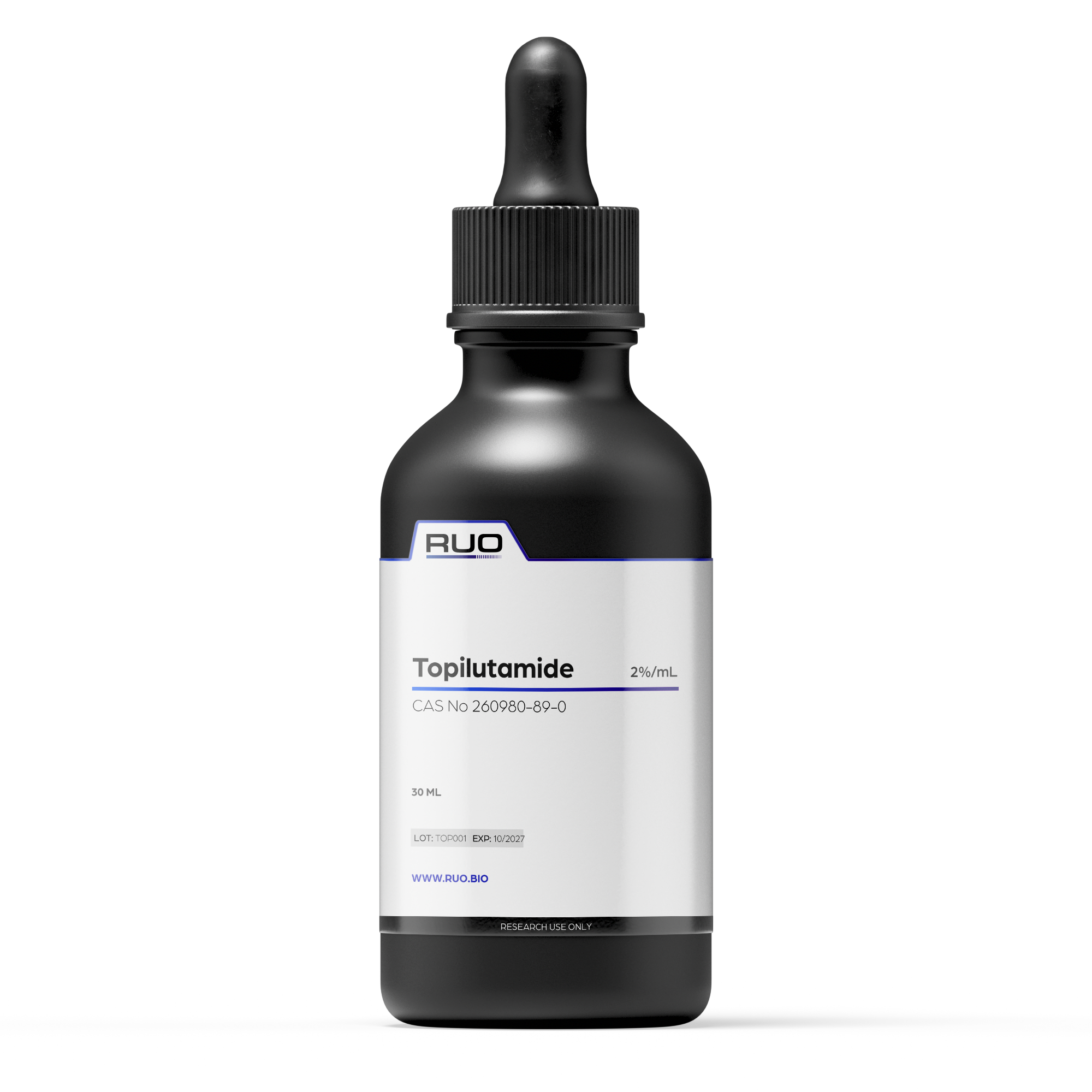
- Fluridil was purpose-built to self-destruct; it is strongly water-hating and readily hydrolyzed, so it degrades into an inactive product called BP-34 rather than accumulating in the body.
- In its pivotal trial, neither fluridil nor its breakdown product was detectable in the blood at any timepoint, and libido and hormone levels stayed normal throughout.
- The name topilutamide reflects its kinship with the nonsteroidal antiandrogen family that includes flutamide, though it was engineered specifically for topical use.
Mechanism
Fluridil produces its effects by antagonizing the in the skin. Androgenetic alopecia is driven by androgens acting on this receptor: dihydrotestosterone binds the androgen receptor in susceptible scalp follicles, triggering receptor activation and nuclear translocation that damages the dermal papilla cells at the base of the follicle, shortens the active growth phase, and progressively miniaturizes the hair until it produces only fine, short strands [3][4]. Fluridil binds and suppresses this receptor locally, blunting the androgen signal that shrinks the follicle and thereby favoring a return to normal hair growth [1][4].
What distinguishes fluridil mechanistically is its deliberate confinement to the site of application. Because the molecule is strongly hydrophobic and readily hydrolyzed, it degrades into an inactive breakdown product and does not accumulate in the circulation; in clinical testing neither fluridil nor its decomposition product was detectable in serum, and measures of sexual function, libido, blood chemistry, and hormone levels remained unaffected [1]. This design is intended to deliver the follicular benefit of androgen blockade while avoiding the systemic antiandrogen effects that can accompany oral agents [1][2].
The observed benefit is a shift of the hair cycle back toward growth. In a double-blind, placebo-controlled study in men with androgenetic alopecia, topical fluridil raised the average proportion of anagen (growing) hairs from about 76 percent at baseline to roughly 85 percent after three months, rising further to about 87 percent by nine months, whereas placebo produced no change; when former placebo users were switched to fluridil, their anagen percentage rose comparably [1]. This targeted androgen-receptor blockade places fluridil alongside the other antagonists explored for pattern hair loss, a strategy grounded in the central role of the androgen receptor in the disease [4][5]. Its principal appeal is combining a defensible antiandrogen mechanism with a favorable local tolerability and safety profile [1].
receptor fingerprint
(scalp hair follicles)Antagonist
(dermal papilla cells)Antagonist
(systemic / bloodstream)Negligible
Sebaceous gland (scalp)Antagonist (local)
Dosingtypical ranges, not medical advice
interested in protocols and clinical dosages? make an account to see them! ^_^
Safetyrisks and cautions, not medical advice
Topilutamide (fluridil) is a topical antiandrogen for scalp hair loss, designed to break down if it enters the bloodstream so that systemic exposure stays low. Reported adverse effects have been mainly local and mild, and in limited studies it did not alter systemic hormone levels. Large-scale and long-term safety data are limited, and it lacks broad regulatory approval.
History
Fluridil, later assigned the international nonproprietary name topilutamide, was conceived by the physician-scientist Milos Sovak and colleagues, working through the research group Biophysica and the radiology research program at the University of California, San Diego. The molecule was deliberately engineered rather than discovered by screening; the design goal was a potent androgen-receptor antagonist that would act within scalp hair follicles yet fall apart into inactive fragments before it could reach the bloodstream, thereby sidestepping the systemic hormonal effects that limit oral antiandrogens.
The first human results were published in 2002 in Dermatologic Surgery, reporting a double-blind, placebo-controlled study in men with androgenetic alopecia together with skin-tolerance testing. That work established that neither fluridil nor its breakdown product could be detected in serum, and that measures of libido, hormones, and blood chemistry were unaffected. The compound was subsequently brought to market in parts of Europe, notably as the branded topical product Eucapil, positioning it as an early example of a rationally designed, site-confined antiandrogen for pattern hair loss.
Reputation
Topilutamide enjoys a favorable reputation among people seeking a hormone-sparing approach to hair loss, precisely because its defining feature is what it avoids. By blocking the androgen receptor locally and then hydrolyzing into an inactive form, it is designed to deliver the follicular benefit of antiandrogen therapy without the systemic effects that concern some users of oral agents. The supporting clinical study is admired for its careful design, showing a meaningful rise in the proportion of actively growing hairs while confirming that the drug did not enter the circulation. It is fair to note that the human evidence base remains modest, resting largely on that early trial rather than the large, repeated studies behind first-line treatments. Still, for those who prioritize a topical, locally acting option, fluridil stands out as a thoughtfully engineered and well-tolerated choice.
Subjective profileweighing the evidence above
A sensible option if oral antiandrogens are off the table for you, since it is built to break down before reaching the bloodstream and did not shift systemic hormones in the studies that exist. Those studies are small and it is not FDA approved, so the evidence is thinner than the concept deserves.
Where to buy
Suppliers
Vendors carrying Topilutamide, with live product details and codes. Links are affiliate links that support the wiki at no cost to you.
RUO
Topilutamide
Research
- 2002first citedFluridil, a rationally designed topical agent for androgenetic alopecia: first clinical experie…
- 2025most recentAntiandrogen therapy for the treatment of female pattern hair loss: A clinical review of curren…
- 1.Fluridil, a rationally designed topical agent for androgenetic alopecia: first clinical experience
- 2.Review of HPLC and LC-MS/MS assays for the determination of various nonsteroidal anti-androgens used in the treatment of prostate cancer
- 3.Antiandrogen therapy for the treatment of female pattern hair loss: A clinical review of current and emerging therapies
- 4.Obacunone improves dihydrotestosterone-induced androgen alopecia by inhibiting androgen receptor dimerization
- 5.Emerging and traditional 5-α reductase inhibitors and androgen receptor antagonists for male androgenetic alopecia
5 listed here; entry last updated August 2026
Reviews
My notesprivate to this device
FAQ
What is topilutamide?
It is a topical antiandrogen, clinically known as Fluridil, developed for androgenetic hair loss.
How does it differ from RU-58841?
It is designed to break down quickly before systemic absorption, so its action stays largely local to the scalp.
Why is local action preferred?
Keeping the effect on the scalp aims to reduce body-wide antiandrogen side effects.
How is it applied?
It is used as a topical solution on the scalp rather than taken by mouth.
Limitations of the evidence
- Not FDA-approved, and most evidence comes from limited clinical study
Adverse effects
- Applied topically, so effects are mostly local; scalp irritation is uncommon but possible
Notes and cautions
- Designed to avoid systemic absorption, minimizing hormonal side effects
- As with any hair loss treatment, benefits require continued use and take months to appear
- Antiandrogen exposure is a theoretical concern around pregnancy, so careful handling is prudent