
spec sheet13 rows
Dutasteride is a dual 5-alpha-reductase inhibitor, and that word 'dual' is the whole story. Where finasteride mostly blocks the type 2 form of the enzyme that turns testosterone into dihydrotestosterone (DHT), dutasteride blocks both the type 1 and type 2 forms, so it knocks serum DHT down more completely, on the order of 90% or more versus roughly 70% for finasteride. It is sold as Avodart and is approved for benign prostatic hyperplasia (BPH); for hair loss it is used off-label in most of the world and is actually approved for androgenetic alopecia in South Korea and Japan. Its half-life is very long, around five weeks, so it accumulates slowly and washes out slowly. The catch is that stronger DHT suppression comes with the same catalog of androgen-related side effects finasteride carries, and the unsettled debate about symptoms that persist after stopping applies here too.
- Blocks both 5-alpha-reductase types, not just one
- Knocks DHT down far harder than finasteride
- Often beats finasteride on hair count head to head
- Approved for prostate enlargement in men
- Long half life keeps DHT suppressed
- Licensed for hair loss in South Korea and Japan
- Lower libido, erectile dysfunction, ejaculation problems
- Breast tenderness or enlargement (gynecomastia)
- Lowers PSA by about half, so flag it before any prostate test

Mechanism
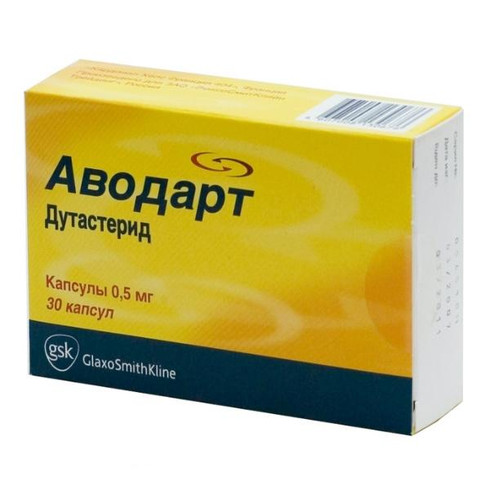
DHT is the high-potency androgen that drives prostate enlargement and, in genetically susceptible men, the follicle miniaturization of male-pattern hair loss. It is made from testosterone by the enzyme 5-alpha-reductase, which comes in two main isoenzymes, type 1 and type 2. Dutasteride is a synthetic 4-azasteroid that binds and inhibits both isoenzymes essentially irreversibly, which is the key structural difference from finasteride; it is approved as a once-daily 0.5 mg capsule (Avodart) to shrink the prostate, ease urinary symptoms, and lower the risk of acute urinary retention and BPH surgery [1].
Why does hitting both enzymes matter? Type 2 predominates in the prostate, which is why finasteride works there, but type 1 is important in skin, scalp, and liver, and both isoenzymes turn out to be active in benign prostate tissue. Blocking only type 2 leaves type 1 free to keep making DHT, so finasteride suppresses circulating DHT by roughly two-thirds, whereas dual inhibition with dutasteride produces a greater and more rapid drop, commonly cited around 90% or more [2][8]. That difference is not just academic: type 1 expression rises in prostatic intraepithelial neoplasia and prostate cancer, and both isoenzymes appear elevated in higher-grade disease, which is the rationale for expecting dual inhibition to matter in the prostate [3][4].
For hair, the evidence is genuinely favorable but mostly short-term. In a randomized dose-ranging study, dutasteride raised scalp hair count in a dose-dependent way and the 2.5 mg dose beat finasteride 5 mg at 12 and 24 weeks, alongside larger reductions in scalp and serum DHT [5]. A later phase III trial in over 900 men found dutasteride 0.5 mg significantly better than both finasteride 1 mg and placebo on hair count and photographic assessment at 24 weeks, with a similar adverse-event profile [6]. Reviews and meta-analyses reach the same broad conclusion, that dutasteride tends to edge out finasteride for AGA with comparable tolerability, which is part of why it earned an alopecia approval in South Korea and Japan even though it remains off-label elsewhere [7].
In BPH the case is well established: pooled two-year placebo-controlled phase III studies showed dutasteride improved symptoms and flow, cut prostate volume, and reduced acute urinary retention and surgery, with benefits durable out to four years [8][9]. The CombAT trial showed that combining dutasteride with the alpha-blocker tamsulosin beat either drug alone for symptom relief and progression [10]. The prostate-cancer story is the nuanced one. The four-year REDUCE trial found dutasteride cut biopsy-detected prostate cancer by about 23% versus placebo, but during years three and four there were more Gleason 8 to 10 tumors in the dutasteride arm (12 versus 1), the same kind of high-grade signal that dogged finasteride's PCPT, and its meaning is still argued [11][12]. A REDUCE analysis also found heavy alcohol intake erased the protective effect and raised high-grade risk, a reminder the picture is not simple [13]. Because 5-alpha-reductase inhibitors roughly halve PSA, any PSA reading in a man on dutasteride has to be doubled to stay meaningful.
receptor fingerprint
5-alpha-reductase, type 2near-irreversible inhibition
5-alpha-reductase, type 1near-irreversible inhibition
Serum dihydrotestosterone (DHT)suppresses ~90% or more
Prostate-specific antigen (PSA)halves it (~50%)
Serum testosteronemodest rise (substrate backs up)
Safetyrisks and cautions, not medical advice
The core side effects are androgenic and predictable: reduced libido, erectile dysfunction, ejaculation problems, and breast tenderness or enlargement (gynecomastia), all reported across the BPH and prostate-cancer trials [9][11]. Most men tolerate the drug, and in the trials these events were usually mild and most common early on, but they are real. The thornier issue is persistence.
A subset of men report sexual, mood, or cognitive symptoms that continue after stopping the drug, the same 'post-5ARI' or post-finasteride-type syndrome debate that surrounds finasteride, and reviews note that dutasteride is implicated in the same pattern, along with a signal for depression, anxiety, and suicidal ideation in some men; whether this is causal in the way patients describe is still contested, and it deserves an honest conversation rather than dismissal [14]. Two features make dutasteride distinct from finasteride on safety.
First, the very long half-life (about five weeks) means it clears slowly, so any decision to stop is not a quick reset and washout takes months; for the same reason men are told not to donate blood until at least six months after their last dose, to avoid exposing a pregnant transfusion recipient. Second, teratogenicity is a hard rule: DHT is essential for normal male genital development, so dutasteride can harm a male fetus.
Pregnant women and women who could become pregnant should not handle leaking capsules, since it can be absorbed through the skin, and the drug should never be used in pregnancy. Finally, remember the PSA effect: dutasteride cuts PSA by roughly half, so tell any clinician ordering a prostate test that you take it. Trials also noted a small imbalance in a composite category of cardiac failure in the dutasteride arms, which is worth being aware of even though the overall risk is low.
Interactionsdocumented pairs only, not exhaustive
Dutasteride is metabolized by CYP3A4, making it susceptible to inhibitor interactions. Ketoconazole, a potent CYP3A4 inhibitor, significantly increases dutasteride exposure; one study found that ketoconazole co-administration altered both dutasteride and its major metabolite 6-beta-hydroxydutasteride pharmacokinetics, with reduced clearance and increased plasma concentrations [16]. This is a pharmacokinetic interaction where ketoconazole impairs dutasteride's hepatic metabolism.
The interaction appears bidirectional in magnitude; ketoconazole prolongs dutasteride elimination more than dutasteride affects ketoconazole. Tamsulosin, an alpha-1 antagonist commonly co-prescribed for benign prostatic hyperplasia, does not interact with dutasteride pharmacokinetically [17]. Few studies have examined dutasteride with other CYP3A inhibitors like itraconazole, ritonavir, or diltiazem, so their magnitude of interaction remains poorly characterized.
Checking a whole stack? Run it through interactions + stacks.
Subjective profileweighing the evidence above
The stronger choice when finasteride is not doing enough; it suppresses DHT more completely and usually wins on hair count and prostate shrinkage. That extra suppression is the cost: sexual side effects are real, the five-week half-life means slow washout, and it halves PSA, so flag it before any prostate test.
Where to buy

Suppliers
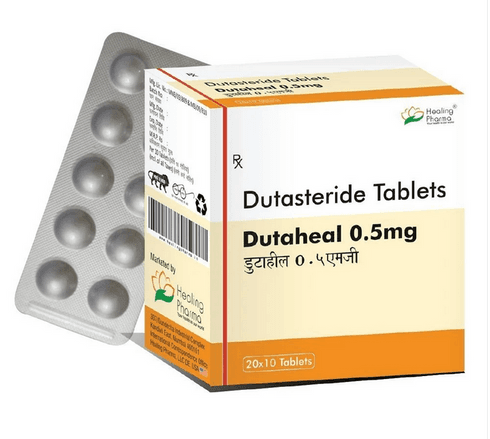
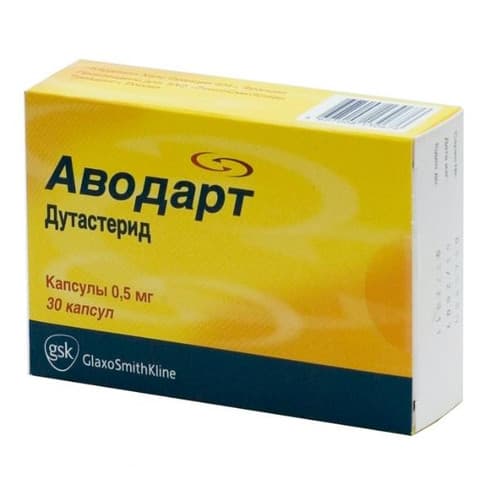
Vendors carrying Dutasteride, with live product details and codes. Links are affiliate links that support the wiki at no cost to you.
PCT.Zone
Dutasteride
RUPharma🌐
Dutasteride
RUPharma🌐
Dutasteride
Research
- 2003first cited5 alpha-reductase inhibitors: what's new?
- 2006controlled trialThe importance of dual 5alpha-reductase inhibition in the treatment of male pattern hair loss:…
- 2008most active year4 papers
- 2020most recentPost-finasteride syndrome: a surmountable challenge for clinicians
- 1.Dutasteride: a review of its use in the management of prostate disorders
- 2.5 alpha-reductase inhibitors: what's new?
- 3.Type 1 and type 2 5alpha-reductase expression in the development and progression of prostate cancer
- 4.The rationale for inhibiting 5alpha-reductase isoenzymes in the prevention and treatment of prostate cancer
- 5.The importance of dual 5alpha-reductase inhibition in the treatment of male pattern hair loss: results of a randomized placebo-controlled study of dutasteride versus finasteride
- 6.A randomized, active- and placebo-controlled study of the efficacy and safety of different doses of dutasteride versus placebo and finasteride in the treatment of male subjects with androgenetic alopecia
- 7.Dutasteride in Androgenetic Alopecia: An Update
- 8.Dutasteride: a potent dual inhibitor of 5-alpha-reductase for benign prostatic hyperplasia
- 9.Efficacy and safety of long-term treatment with the dual 5 alpha-reductase inhibitor dutasteride in men with symptomatic benign prostatic hyperplasia
- 10.The effects of combination therapy with dutasteride and tamsulosin on clinical outcomes in men with symptomatic benign prostatic hyperplasia: 4-year results from the CombAT study
- 11.Effect of dutasteride on the risk of prostate cancer
- 12.The REDUCE trial: chemoprevention in prostate cancer using a dual 5alpha-reductase inhibitor, dutasteride
17 listed here; entry last updated August 2026
Reviews
My notesprivate to this device
FAQ
How is dutasteride different from finasteride?
Both lower DHT by blocking 5-alpha-reductase, but finasteride mainly hits the type 2 enzyme while dutasteride hits both type 1 and type 2. The practical result is deeper DHT suppression: around 90% or more with dutasteride versus roughly 70% with finasteride.
Does it actually work better than finasteride for hair?
In head-to-head trials it tends to win on hair count over 24 weeks, and reviews lean the same way, with similar side effects. The honest caveat is that most of that data is short-term, so 'more DHT suppression' is not automatically proven to mean 'better hair for years.'
Is it approved for hair loss?
Only in some places. Dutasteride is approved for androgenetic alopecia in South Korea and Japan; almost everywhere else it is prescribed off-label for hair, while its on-label use is enlarged prostate (BPH).
Why does the long half-life matter?
It sticks around for about five weeks, so it takes months to reach steady state and months to clear after you stop. That is also why men are told not to donate blood for six months after the last dose, so it cannot reach a pregnant transfusion recipient.
What is the deal with prostate cancer?
In the REDUCE trial dutasteride cut overall biopsy-detected prostate cancer by about 23%, but there were slightly more high-grade (Gleason 8 to 10) tumors in the later years, the same debated signal seen with finasteride. It also halves PSA, so any prostate test has to account for that.
Adverse effects
- Lower libido, erectile dysfunction, ejaculation problems
- Breast tenderness or enlargement (gynecomastia)
- Lowers PSA by about half, so flag it before any prostate test
- Persistent sexual or mood symptoms reported by a subset (debated)
Notes and cautions
- Very long washout; effects can linger for months after stopping