
spec sheet13 rows
Finasteride is a medication that blocks the enzyme 5-alpha-reductase, lowering the body's production of the potent androgen dihydrotestosterone (DHT). It is used to treat enlarged prostate (benign prostatic hyperplasia) and male pattern hair loss, and is sold under the brand names Proscar and Propecia. By reducing DHT it shrinks the prostate and can slow or partly reverse androgen-driven hair loss.
- The standard, most studied hair loss pill
- Cuts DHT, the hormone behind male balding
- Slows and can partly reverse androgen driven loss
- Blocks 5-alpha-reductase right at the source
- Once daily tablet; nothing to apply
- Lower DHT also means a smaller prostate
- Reduced libido
- Erectile dysfunction
- Ejaculation problems
Overview
Finasteride is a 5-alpha-reductase inhibitor, a type of antiandrogen medication, developed by Merck and introduced as the first drug of its kind [1]. Chemically it is a synthetic 4-azasteroid, structurally related to testosterone and its derivative dihydrotestosterone (DHT) [1]. It received approval in the United States in 1992 for benign prostatic hyperplasia, marketed at a higher strength as Proscar, and in 1997 for male pattern hair loss at a lower strength as Propecia [1].
Its two main uses both follow from its ability to lower DHT [1]. In benign prostatic hyperplasia, an enlargement of the prostate that obstructs urine flow, finasteride shrinks the gland and can ease urinary symptoms over months of use [1]. In androgenetic alopecia, or male pattern baldness, the drug slows the progressive miniaturization of scalp hair follicles; a large placebo-controlled study found that daily finasteride increased scalp hair counts and slowed further loss over two years in affected men [2]. It is also used off-label for hirsutism and as part of hormone therapy in some transfeminine individuals [1].
Finasteride is generally well tolerated, but it is associated with sexual side effects, including reduced libido, erectile dysfunction and ejaculatory problems, in a minority of users [1][3]. Some men report that sexual, and sometimes mood-related, symptoms persist after stopping the drug, a contested cluster of complaints described as post-finasteride syndrome; whether it constitutes a distinct medical condition remains debated [3]. Analyses have also examined a possible association with depression and suicidal ideation, and prescribing information notes mood changes as a potential effect [4].
Finasteride is a prescription-only medicine available as a low-cost generic in the United States, the United Kingdom and elsewhere [1]. It is not approved for use in women who are or may become pregnant, because blocking DHT can interfere with the normal development of a male fetus [1].

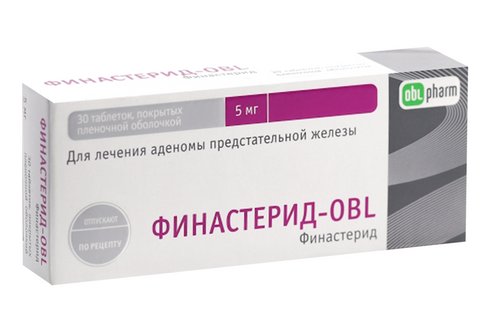
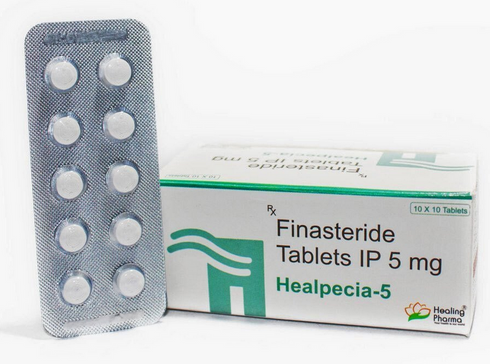
- The drug's rationale came from studying a Dominican Republic community with an inherited 5-alpha-reductase deficiency who did not develop baldness or enlarged prostates.
- The very same molecule is sold at two doses under two names; 5 mg as Proscar for the prostate and 1 mg as Propecia for hair.
- Finasteride typically lowers dihydrotestosterone levels by around two-thirds while leaving circulating testosterone largely untouched.
Mechanism
Finasteride selectively inhibits the enzyme 5-alpha-reductase, in particular the type II isoform that predominates in the prostate and hair follicles, which normally converts the hormone testosterone into the more potent androgen dihydrotestosterone (DHT) [1]. By blocking this conversion, the drug substantially lowers DHT levels in the blood and in target tissues while leaving testosterone itself largely intact [1].
Because DHT is the main androgen driving prostate growth, reducing it causes the enlarged prostate to shrink and relieves obstruction of urine flow [1]. In the scalp, DHT is responsible for the progressive shrinking of genetically susceptible hair follicles, so lowering DHT slows this miniaturization and can allow some regrowth [2]. Finasteride is a competitive inhibitor and does not itself bind the , so it reduces androgen signaling by cutting the supply of DHT rather than by blocking the receptor directly [1].
receptor fingerprint
5-alpha-reductase (type II)inhibits
DHTreduces
Dosingtypical ranges, not medical advice
interested in protocols and clinical dosages? make an account to see them! ^_^
Safetyrisks and cautions, not medical advice
A minority of users experience sexual side effects (reduced libido, erectile or ejaculatory difficulty); these usually resolve after stopping, though persistent post-discontinuation symptoms ("post-finasteride syndrome") are reported and remain debated. Mood changes have also been reported. It lowers PSA, which affects prostate-cancer screening, and must not be handled by women who are or may become pregnant (risk to a male fetus).
Interactionsdocumented pairs only, not exhaustive
Finasteride is metabolized by hepatic cytochrome P450 enzymes and excreted renally; however, its pharmacokinetics are not meaningfully altered by food or by most drugs. [22] Unlike alpha-1 adrenergic receptor antagonists commonly used in benign prostatic hyperplasia (such as tamsulosin or alfuzosin), finasteride does not interact with grapefruit juice or alcohol in clinically significant ways. Finasteride can be administered without regard to meals. Coadministration with other 5-alpha reductase inhibitors provides no additional therapeutic benefit and increases the risk of adverse effects; such combinations are not recommended. In elderly patients taking multiple medications, finasteride has a favorable interaction profile and does not require dose adjustment based on concomitant drug therapy.
Checking a whole stack? Run it through interactions + stacks.
History
Finasteride was developed by Merck & Co and became the first 5-alpha-reductase inhibitor brought to market. Its scientific rationale traced back to the pioneering studies of Julianne Imperato-McGinley, who investigated a population in the Dominican Republic with a congenital deficiency of 5-alpha-reductase type 2; these individuals produced little dihydrotestosterone and, tellingly, developed neither male-pattern baldness nor prostate enlargement. That natural experiment revealed DHT as the key androgen behind both conditions and pointed directly at the enzyme as a drug target. The Food and Drug Administration approved finasteride in 1992 at a 5 mg dose under the brand name Proscar for benign prostatic hyperplasia. In 1997 a lower 1 mg dose was approved as Propecia for male pattern hair loss, giving the same molecule two distinct therapeutic identities.
Reputation
Finasteride carries a strong, evidence-backed reputation as a foundational treatment for both benign prostatic hyperplasia and male pattern hair loss, with decades of clinical use behind it. Dermatologists and urologists value its targeted mechanism; by lowering DHT while leaving testosterone largely intact, it addresses the specific androgen driving follicle miniaturization and prostate growth. For men with early to moderate hair loss it remains one of the most effective oral options available, often slowing shedding and enabling partial regrowth. Its once-daily oral dosing and low cost as a generic add to its practicality, and a topical formulation is now being explored to concentrate its effect at the scalp. Candor requires acknowledging that a minority of users report sexual or mood-related side effects, so its powerful hormonal action deserves an informed and considered decision.
Subjective profileweighing the evidence above
The most effective and best-studied option for male pattern hair loss, and for most men a well-tolerated 1 mg pill. The sexual side effects are a minority experience but real, and reports of symptoms persisting after stopping remain unsettled, so it is a decision to make with that openly on the table.
Where to buy
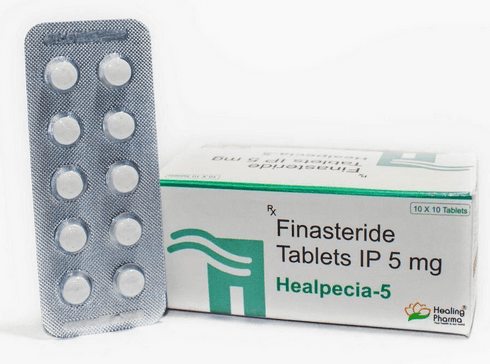

Suppliers
Vendors carrying Finasteride, with live product details and codes. Links are affiliate links that support the wiki at no cost to you.
| supplier | size | price | $/mg |
|---|---|---|---|
| PCT.Zonelowest | 5MG | $2.14 | $0.428/mg |
| PCT.Zone | 5MG | $4.15 | $0.830/mg |
| PCT.Zone | 1MG | $1.07 | $1.07/mg |
| PCT.Zone | 1MG | $2.32 | $2.32/mg |
| PCT.Zone | 5MG | $19.85 | $3.97/mg |
| PCT.Zone | 5MG | $20.00 | $4.00/mg |
PCT.Zone
Finasteride
PCT.Zone
Finasteride
PCT.Zone
Finasteride
PCT.Zone
Finasteride

RUPharma🌐
Finasteride
RUPharma🌐
Finasteride
PCT.Zone
Finasteride
PCT.Zone
Finasteride
Research
- 1993first citedFinasteride: the first 5 alpha-reductase inhibitor
- 2003most active year3 papers
- 2021meta-analysisRisk of Depression Associated With Finasteride Treatment
- 2023most recentTopical Finasteride: A Comprehensive Review of Androgenetic Alopecia Management for Men and Wom…
- 1.Finasteride: the first 5 alpha-reductase inhibitor
- 2.Finasteride in the treatment of men with androgenetic alopecia. Finasteride Male Pattern Hair Loss Study Group.
- 3.Post-finasteride syndrome: a surmountable challenge for clinicians
- 4.Risk of Depression Associated With Finasteride Treatment
- 5.Androgens and alopecia
- 6.Effects of finasteride, a type 2 5-alpha reductase inhibitor, on fetal development in the rhesus monkey (Macaca mulatta)
- 7.The influence of finasteride on the development of prostate cancer
- 8.The long-term effect of doxazosin, finasteride, and combination therapy on the clinical progression of benign prostatic hyperplasia
- 9.Long-term 6-year experience with finasteride in patients with benign prostatic hyperplasia
- 10.Long-term (5-year) multinational experience with finasteride 1 mg in the treatment of men with androgenetic alopecia
- 11.Long-term treatment with finasteride 1 mg decreases the likelihood of developing further visible hair loss in men with androgenetic alopecia (male pattern hair loss)
- 12.Efficacy and safety of finasteride therapy for androgenetic alopecia: a systematic review
22 listed here; entry last updated August 2026
Reviews
My notesprivate to this device
FAQ
How does finasteride work?
It blocks the 5-alpha-reductase enzyme that converts testosterone to DHT, lowering DHT levels.
What is it used for?
It is used for male pattern hair loss and for benign prostate enlargement.
How does it compare to dutasteride?
Dutasteride blocks both forms of the enzyme and is generally stronger at lowering DHT.
Are side effects reversible?
Most side effects resolve on stopping, though a small number of people report persistent effects.
Adverse effects
- Reduced libido
- Erectile dysfunction
- Ejaculation problems
- Breast tenderness or enlargement
- Mood changes, including depression in some users
- Persistent sexual or mood symptoms after stopping, reported in a minority