
spec sheet6 rows
Enzalutamide is a second generation androgen receptor blocker used in metastatic and high risk prostate cancer.
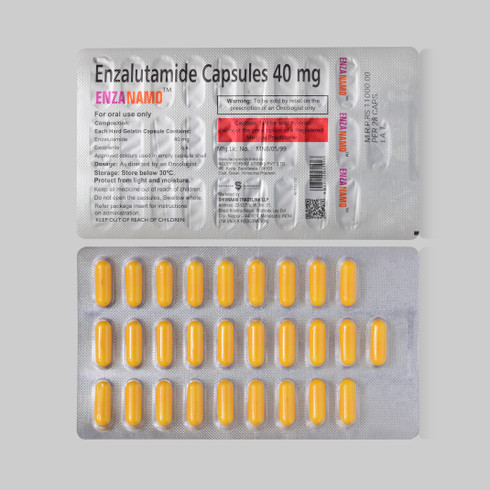
- Enzalutamide (Xtandi, formerly MDV3100) was FDA-approved in August 2012 on the strength of the AFFIRM trial and has since been extended through the full prostate-cancer disease spectrum from biochemical recurrence to post-chemotherapy mCRPC.
- AFFIRM: median overall survival 18.4 versus 13.6 months against placebo after docetaxel, hazard ratio for death 0.63 (95% CI 0.53 to 0.75), with the trial stopped early at a planned interim analysis [1].
- PREVAIL, in chemotherapy-naive mCRPC: 12-month radiographic progression-free survival 65% versus 14%, hazard ratio 0.19 (95% CI 0.15 to 0.23), and a 29% reduction in the risk of death, hazard ratio 0.71 [2].
- It is a triple mechanism antiandrogen, not simply a receptor blocker: it impairs AR binding, nuclear translocation and DNA binding/coactivator recruitment, which is why it retains activity when AR is overexpressed [7].
- Seizures were reported in 5 of 800 enzalutamide patients (0.6%) in AFFIRM, the observation that established the seizure warning [1].
- EMBARK extended benefit to high-risk biochemically recurrent non-metastatic disease [6], and ENZAMET and ARCHES established use in metastatic hormone-sensitive disease [4][5].
Mechanism
It binds the with far greater affinity than the first generation antiandrogens and additionally blocks the receptor's translocation into the nucleus and its binding to DNA, so it interrupts three steps rather than one. It crosses into the brain and lowers the seizure threshold, and fatigue and falls are the usual dose limiting problems.
receptor fingerprint
(AR, NR3C4) -binding domainCompetitive antagonist that binds with substantially greater affinity than bicalutamide and, unlike first-generation antiandrogens, has no agonist activity when AR is overexpressed
AR nuclear translocation machinery (importin-mediated shuttling)Reduces the efficiency of AR translocation from cytoplasm to nucleus
Androgen response elements (ARE) on chromatin and coactivator recruitmentImpairs AR-DNA binding and blocks recruitment of transcriptional coactivators
-A receptorOff-target antagonism reported in preclinical work, lowering seizure threshold
Safetyrisks and cautions, not medical advice
a hormonal antineoplastic that lowers the seizure threshold and is contraindicated with a seizure history, and it is a strong CYP3A4 inducer that quietly disables other medicines
Subjective profileweighing the evidence above
Prostate cancer is not a self-treated disease, and that is the whole of the refusal; this belongs inside an oncology plan with imaging, PSA tracking and a sequencing decision that only makes sense against the rest of the picture. Two hazards make unsupervised use worse than merely pointless: it crosses into the brain and lowers the seizure threshold, which rules it out with any seizure history, and it is a strong CYP3A4 inducer that quietly strips the effect out of other medicines somebody may be depending on. Fatigue and falls are the usual reasons the amount gets reduced, and that reduction is a clinical judgement rather than a personal one.
Resources
No suppliers are provided for compounds like this. This entry is here for reference.
Research
- 2009first citedDevelopment of a second-generation antiandrogen for treatment of advanced prostate cancer
- 2012controlled trialIncreased survival with enzalutamide in prostate cancer after chemotherapy
- 2023most recentImproved Outcomes with Enzalutamide in Biochemically Recurrent Prostate Cancer
- 1.Increased survival with enzalutamide in prostate cancer after chemotherapy
- 2.Enzalutamide in metastatic prostate cancer before chemotherapy
- 3.Enzalutamide in Men with Nonmetastatic, Castration-Resistant Prostate Cancer
- 4.Enzalutamide with Standard First-Line Therapy in Metastatic Prostate Cancer
- 5.ARCHES: A Randomized, Phase III Study of Androgen Deprivation Therapy With Enzalutamide or Placebo in Men With Metastatic Hormone-Sensitive Prostate Cancer
- 6.Improved Outcomes with Enzalutamide in Biochemically Recurrent Prostate Cancer
- 7.Development of a second-generation antiandrogen for treatment of advanced prostate cancer
7 listed here; entry last updated August 2026
Reviews
My notesprivate to this device
Notes and cautions
- There is no boxed warning, but seizure occurred in 0.6% of treated patients in AFFIRM and the drug should be avoided or used with great caution in men with a seizure history, brain metastases, or on drugs that lower seizure threshold [1].
- Posterior reversible encephalopathy syndrome has been reported and mandates immediate discontinuation.
- Falls and fractures are meaningfully increased, and hypertension, fatigue and asthenia are the most common clinically relevant adverse events.
- Enzalutamide is a strong CYP3A4 and moderate CYP2C9/CYP2C19 inducer, so it substantially lowers concentrations of many co-prescribed drugs including warfarin, direct oral anticoagulants and statins; the interaction burden is a routine cause of clinical harm.