
spec sheet13 rows
Doxycycline is a broad-spectrum antibiotic of the tetracycline family, used to treat a wide variety of bacterial infections and to prevent malaria. Introduced in the late 1960s, it is effective against organisms ranging from those causing respiratory and skin infections to chlamydia, Lyme disease, cholera, and several tick-borne illnesses. It works by blocking bacteria from making the proteins they need to grow, and at low doses it also has anti-inflammatory properties used in conditions such as acne and rosacea. Doxycycline is an inexpensive generic, prescription-only medicine that appears on the World Health Organization's list of essential medicines.
- One of the most versatile antibiotics in the cabinet
- Clears acne and rosacea at low anti inflammatory doses
- First choice for Lyme and tick borne rickettsial illness
- Prevents malaria and treats many bacterial infections
- Safe to use with impaired kidney function
- Inexpensive generic on the WHO essential medicines list
- Commonly causes stomach upset; taking it with water helps prevent throat irritation
- Avoided in pregnancy and young children because it can stain developing teeth
Overview
Doxycycline is a semi-synthetic member of the tetracycline class of antibiotics, a group of broad-spectrum agents active against a wide range of bacteria [2]. It was developed by the Pfizer company in the early 1960s and approved for medical use in the United States in 1967 [3]. Compared with earlier tetracyclines it is well absorbed and longer acting, and its absorption is little affected by food [3].
The drug is used to treat many bacterial infections, including respiratory tract infections, skin conditions such as acne and rosacea, sexually transmitted infections like chlamydia, and a variety of tick-borne and other illnesses, among them Lyme disease, rickettsial diseases, cholera, and brucellosis [3]. It is also taken to prevent malaria in travelers and is stockpiled as a treatment for exposure to agents such as anthrax [2]. More recently, taking a dose of doxycycline shortly after sex, an approach known as doxycycline postexposure prophylaxis, was shown in a randomized trial to substantially reduce the incidence of gonorrhea, chlamydia, and syphilis among men who have sex with men and transgender women, and it has been incorporated into public health guidance for certain groups [1].
Beyond its antibacterial action, doxycycline has anti-inflammatory and tissue-protective properties that are independent of its ability to kill bacteria [2][3]. It inhibits enzymes called matrix metalloproteinases, and at low, subantimicrobial doses it is used to reduce inflammation in skin conditions such as rosacea and in gum disease [2]. These additional effects have prompted research into tetracyclines for a range of non-infectious conditions [2].
Doxycycline is usually taken by mouth as tablets or capsules and is also available in an injectable form; it is generally taken with plenty of water to avoid irritation of the esophagus [3]. It is a prescription-only medicine, is available cheaply as a generic, and is on the World Health Organization's list of essential medicines. Common side effects include digestive upset and increased sensitivity of the skin to sunlight [3]. Because tetracyclines can permanently stain developing teeth and affect bone growth, doxycycline is generally avoided during pregnancy and in young children [3].
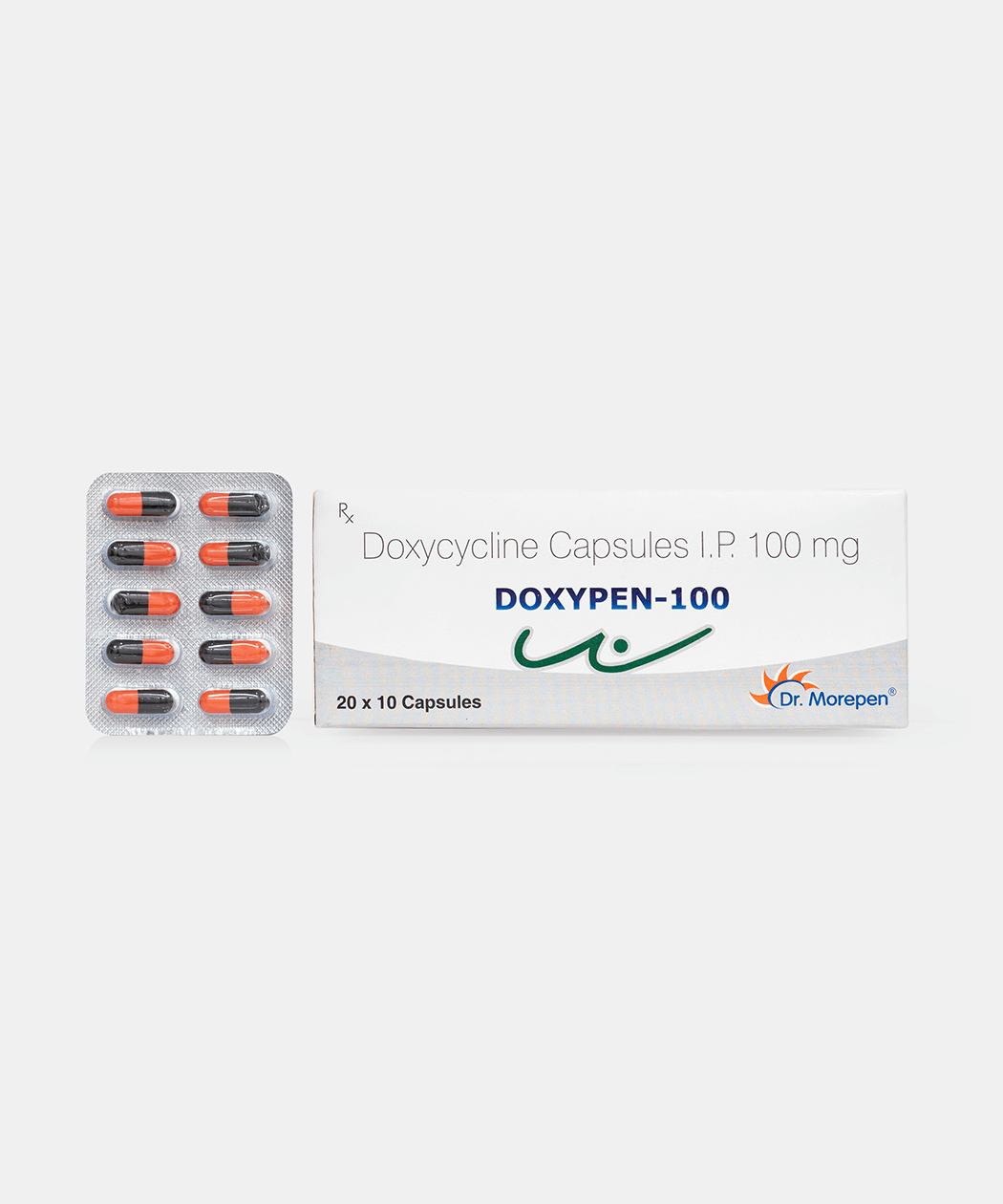
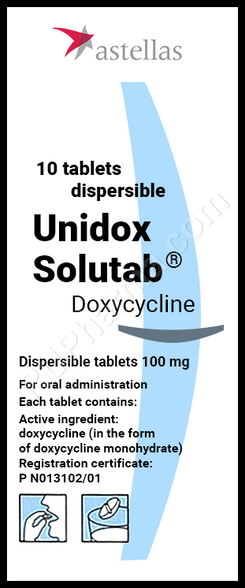

- A single low 40 mg dose of doxycycline is used purely for its anti-inflammatory effect in rosacea, at a level too small to act as a conventional antibiotic.
- Doxycycline is a first-line drug for both preventing and treating several tick-borne diseases, including Lyme disease.
- It appears on the World Health Organization's List of Essential Medicines.
Mechanism
Doxycycline stops bacteria from multiplying by interfering with their production of proteins [2]. It enters bacterial cells and binds to the 30S subunit of the ribosome, the cellular machine that assembles proteins, and by doing so it prevents transfer RNA from delivering amino acids to the growing protein chain [2]. This halts bacterial protein synthesis, giving the drug a bacteriostatic effect that holds the infection in check while the immune system clears it [2]. Separately from this antibacterial mechanism, doxycycline inhibits matrix metalloproteinases and scavenges reactive oxygen species, actions that underlie its anti-inflammatory use at low doses in conditions such as rosacea [2][3].
receptor fingerprint
30S ribosomal subunitinhibits
Bacterial protein synthesisblocks
Matrix metalloproteinases (MMPs)inhibits
Plasmodium falciparum apicoplastinhibits
Sebaceous and follicular inflammationmodulates
Dosingtypical ranges, not medical advice
interested in protocols and clinical dosages? make an account to see them! ^_^
Safetyrisks and cautions, not medical advice
Doxycycline is a prescription antibiotic with a few signature cautions. It makes skin much more sensitive to sunlight, so sunburn comes easily; it can irritate or ulcerate the esophagus, which is why you take it with a full glass of water and stay upright for a while. It should be avoided in pregnancy and in children under eight because it can permanently stain developing teeth and affect bone growth. Calcium, iron, magnesium, and antacids bind the drug and block its absorption, so separate them by a couple of hours. Nausea, diarrhea, and yeast infections can also occur.
Interactionsdocumented pairs only, not exhaustive
Doxycycline forms stable chelation complexes with divalent metal cations, particularly calcium and magnesium, which are pharmacokinetic interactions where the metal ions reduce doxycycline bioavailability. In blood plasma, more than 99% of doxycycline exists as either protein-bound or metal-bound species, with free drug comprising less than 1% [6]. Mixed complexes of both metals further reduce the fraction available for absorption [7].
Co-administration of doxycycline with calcium supplements, magnesium-containing antacids, or iron salts reduces doxycycline exposure and therapeutic efficacy. Additionally, doxycycline has been reported in rare cases to trigger antibiotic-induced manic episodes, though this pharmacodynamic effect is uncommon [8]. Interactions not well-studied include effects of simultaneous administration with zinc, aluminum-based antacids, and dairy products beyond simple chelation mechanisms.
Checking a whole stack? Run it through interactions + stacks.
History
Doxycycline is a semi-synthetic member of the tetracycline family, developed by Pfizer from the naturally occurring antibiotic oxytetracycline and patented in the late 1950s. It was introduced into clinical practice in 1967 under the brand name Vibramycin, offering improved oral absorption, a longer half-life allowing once- or twice-daily dosing, and better tolerability than earlier tetracyclines.
Over the decades its indications broadened well beyond ordinary bacterial infections to include malaria prophylaxis, tick-borne illnesses such as Lyme disease and anaplasmosis, cholera, and post-exposure prophylaxis for anthrax. A distinct chapter opened in 2006 when a low, sub-antimicrobial 40 mg formulation was approved for the inflammatory lesions of rosacea, exploiting the drug's anti-inflammatory rather than antibacterial properties. Now an inexpensive generic available for more than half a century, doxycycline appears on the World Health Organization's List of Essential Medicines.
Reputation
Doxycycline is widely regarded as one of the most versatile and reliable antibiotics in the modern formulary, valued for its broad spectrum, excellent oral bioavailability, and low cost. It is the treatment of choice for several tick-borne diseases, a mainstay of malaria prevention for travelers, and, at low doses, a well-established anti-inflammatory tool in dermatology. Physicians appreciate that it penetrates tissues well and can be taken by mouth even for serious infections that once required intravenous drugs. Balanced against this, it carries the usual cautions of its class: photosensitivity, the potential to stain developing teeth so that it is generally avoided in young children and pregnancy, and a contribution to antibiotic resistance when overused. Used appropriately, however, it remains a durable and highly effective medicine with a remarkable range of uses.
Subjective profileweighing the evidence above
One of the most versatile drugs in the cabinet, covering tick-borne illness, chlamydia, acne and rosacea and malaria prophylaxis, and safe in kidney impairment. Take it upright with a full glass of water, expect to burn easily in the sun, and keep it away from pregnancy and children under eight.
Where to buy

Suppliers
Vendors carrying Doxycycline, with live product details and codes. Links are affiliate links that support the wiki at no cost to you.
PCT.Zone
Doxycycline
RUPharma🌐
Doxycycline

RUPharma🌐
Doxycycline
Research
- 1983first citedMetal ion-tetracycline interactions in biological fluids. 2. Potentiometric study of magnesium…
- 2023controlled trialPostexposure Doxycycline to Prevent Bacterial Sexually Transmitted Infections.
- 2026most recentAntibiotic-Induced Manic Episodes: Clinical Recognition, Mechanistic Pathways, and Management.
- 1.Postexposure Doxycycline to Prevent Bacterial Sexually Transmitted Infections.
- 2.Tetracyclines: a pleitropic family of compounds with promising therapeutic properties. Review of the literature.
- 3.[Doxycycline].
- 4.A randomized, double-blind, placebo-controlled trial of the combined effect of doxycycline hyclate 20-mg tablets and metronidazole 0.75% topical lotion in the treatment of rosacea
- 5.Diagnosis, Treatment, and Prevention of Lyme Disease, Human Granulocytic Anaplasmosis, and Babesiosis: A Review
- 6.Metal ion-tetracycline interactions in biological fluids. 2. Potentiometric study of magnesium complexes with tetracycline, oxytetracycline, doxycycline, and minocycline, and discussion of their possible influence on the bioavailability of these antibiotics in blood plasma.
- 7.Metal ion-tetracycline interactions in biological fluids. Part 3. Formation of mixed-metal ternary complexes of tetracycline, oxytetracycline, doxycycline and minocycline with calcium and magnesium, and their involvement in the bioavailability of these antibiotics in blood plasma.
- 8.Antibiotic-Induced Manic Episodes: Clinical Recognition, Mechanistic Pathways, and Management.
8 listed here; entry last updated August 2026
Reviews
My notesprivate to this device
FAQ
Why do I have to sit upright after taking it?
Doxycycline can irritate or ulcerate the esophagus if a pill lingers there, so take it with plenty of water and stay upright for about 30 minutes.
Can I take it with milk or antacids?
Avoid taking it at the same time as dairy, calcium, iron, or antacids because they bind the drug and block its absorption; separate them by a couple of hours.
Does it really cause sunburn?
Yes; it makes your skin much more sensitive to sunlight, so use sunscreen and cover up while taking it.
Why can't young children take it?
In children under eight and during pregnancy it can permanently stain developing teeth and affect bone growth, so it is usually avoided.
Can I use it to prevent malaria?
Yes; a daily 100 mg dose started before travel and continued afterward is a standard malaria prophylaxis.
Adverse effects
- Commonly causes stomach upset; taking it with water helps prevent throat irritation
- Avoided in pregnancy and young children because it can stain developing teeth
Notes and cautions
- Can increase skin sensitivity to sunlight