
spec sheet12 rows
Nitrofurantoin is an antibacterial medication of the nitrofuran class, used mainly to treat and prevent uncomplicated urinary tract infections. Taken by mouth, it is concentrated in the urine while reaching only low levels in the blood, which makes it well suited to bladder infections but ineffective for kidney infections or infections elsewhere in the body. It was introduced in the 1950s and remains a recommended first-line option for uncomplicated cystitis, partly because bacterial resistance to it has stayed comparatively low. It appears on the World Health Organization's List of Essential Medicines.
- A first line choice for an uncomplicated bladder infection
- Concentrates in the urine, exactly where it is needed
- Resistance has stayed comparatively low since the 1950s
- A short course of about five days
- On the World Health Organization list of essential medicines
- Works on the common uropathogens behind most cystitis
- Nausea or other digestive upset, usually eased by taking the drug with food
- Uncommon lung reactions, from acute hypersensitivity to chronic inflammation and fibrosis with long-term use
- Rare liver inflammation or peripheral nerve damage (numbness and tingling)
Overview
Nitrofurantoin belongs to the nitrofuran family of synthetic antibacterial agents, a chemical group defined by a nitro-substituted furan ring [1]. Unlike antibiotics that spread throughout the body, nitrofurantoin is notable for its site-specific behavior: after an oral dose only a small fraction lingers in the bloodstream, while a substantial portion is filtered into the urine, where it reaches concentrations high enough to kill or suppress susceptible bacteria in the bladder [1].
A method for preparing the drug was patented in the early 1950s, and it entered clinical practice in 1953 [1]. Decades of use have earned it a settled place in medicine, and it is listed among the World Health Organization's essential medicines. Because its unusual pharmacology confines its action largely to the urinary tract, it has never been repurposed as a general-purpose antibiotic.
Clinically, nitrofurantoin is used to treat acute uncomplicated lower urinary tract infection, chiefly cystitis, and to prevent recurrent infections through longer-term suppressive use [1]. It is not suitable for kidney infection such as pyelonephritis, because it does not achieve adequate concentrations in tissue [1]. Its useful spectrum includes common urinary pathogens such as Escherichia coli, Staphylococcus saprophyticus, and many enterococci, while organisms like Proteus, Pseudomonas, and Serratia are typically resistant [1]. A valued feature is that resistance among uropathogenic E. coli has remained low even as resistance to other first-line agents has risen, which is one reason guidelines continue to recommend it [3]. In a randomized trial in women with uncomplicated cystitis, a short course of nitrofurantoin produced higher rates of clinical and microbiologic cure than a single dose of fosfomycin [2].
Pharmacologically, roughly a quarter of an oral dose is excreted unchanged into the urine, reliably yielding urinary levels far above those needed to inhibit sensitive bacteria while keeping plasma levels very low [1]. The drug is available in oral forms, including a macrocrystalline preparation and a modified formulation designed for twice-daily dosing, and it is usually taken with food to improve absorption and reduce stomach upset.
Nitrofurantoin is a prescription medicine with a generally good safety record, but it carries several well-recognized risks that shape its use [1]. Uncommon but serious pulmonary reactions can occur, ranging from an acute hypersensitivity response to a chronic form of lung inflammation and fibrosis with prolonged therapy; rare liver injury and peripheral nerve damage have also been reported. It is avoided in people with significant kidney impairment, in whom it may fail to concentrate in the urine while raising the risk of toxicity, and in those with glucose-6-phosphate dehydrogenase deficiency because it can trigger breakdown of red blood cells.
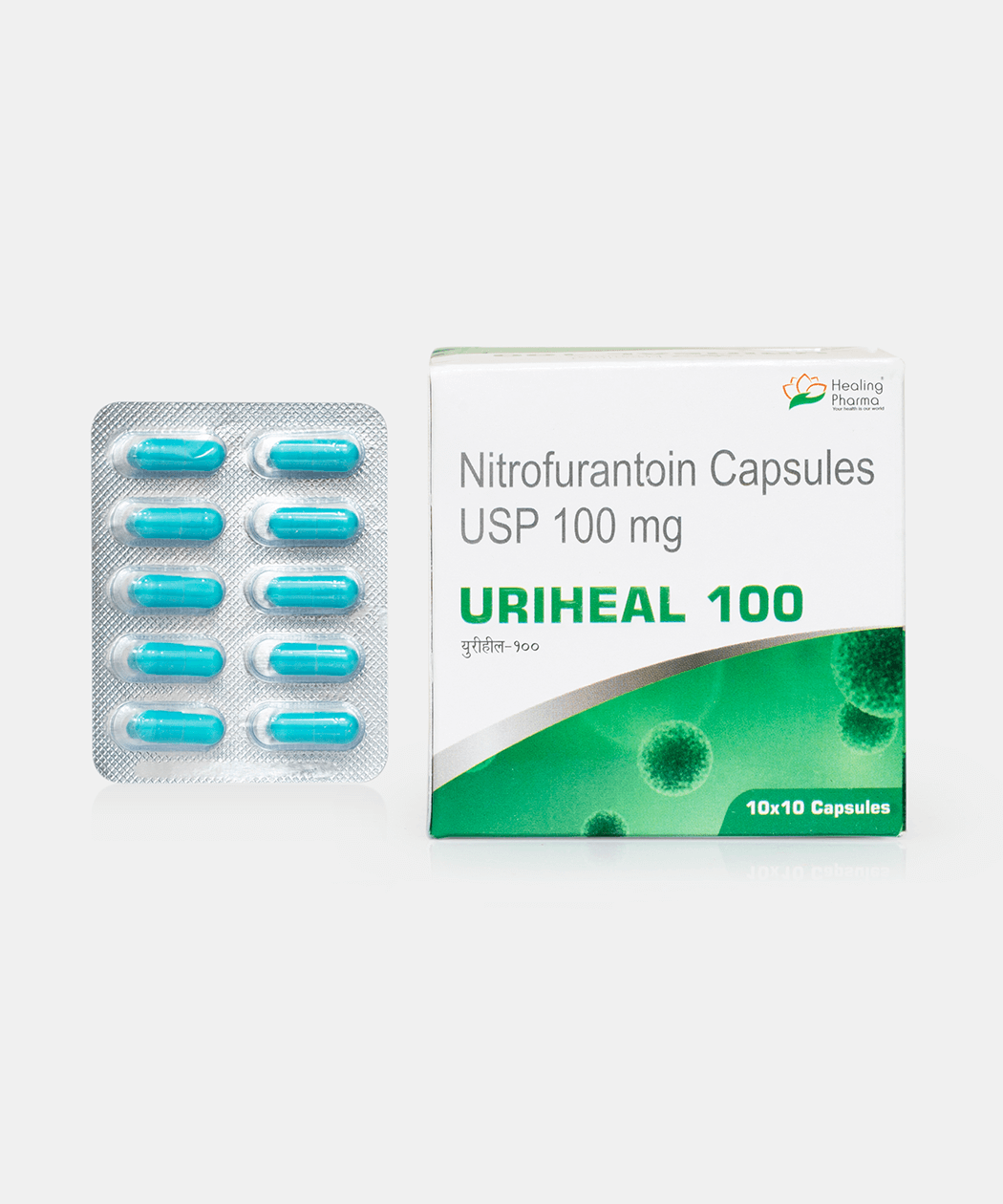
- It is concentrated so heavily in the urine, yet reaches such low blood levels, that it treats bladder infections well but is useless for kidney or bloodstream infections.
- After roughly seventy years of use, resistance among common uropathogens has remained strikingly low.
- It is still used as the comparison antibiotic in modern phase III trials of new drugs for uncomplicated urinary tract infection.
Mechanism
Nitrofurantoin behaves as a that becomes active only after it is chemically altered inside the bacterial cell [1]. Susceptible bacteria take up the drug and use their own flavoprotein enzymes, called nitroreductases, to reduce its nitro group, generating highly reactive intermediates [1]. These reactive molecules then attack many bacterial targets at once, damaging DNA, ribosomal proteins, and enzymes involved in energy metabolism and other essential processes [1].
Because the drug strikes numerous cellular components rather than a single site, bacteria find it difficult to develop resistance through a simple mutation, which helps explain why resistance has remained low despite decades of use [1][3]. The effect is concentration-dependent: at the very high levels reached in urine the drug is bactericidal, whereas at lower concentrations it is bacteriostatic [1]. This same reliance on urinary concentration is why nitrofurantoin works well for bladder infections yet is ineffective against infections in the kidney or bloodstream, where it cannot reach comparable levels [1].
receptor fingerprint
Bacterial ribosomal proteins / protein synthesisinhibits
Bacterial DNA and RNAinhibits
Bacterial nitroreductaseactivates
Bacterial metabolic and energy enzymesinhibits
Aerobic energy metabolism of bacteriainhibits
Dosingtypical ranges, not medical advice
interested in protocols and clinical dosages? make an account to see them! ^_^
Safetyrisks and cautions, not medical advice
Nitrofurantoin is prescription only. Common and usually minor effects include nausea and stomach upset, eased by taking it with food, headache, and a harmless brown tint to the urine. The rare but serious problems are what to watch for: acute and, with long-term use, chronic lung toxicity ranging from pneumonitis to fibrosis, liver injury, nerve damage in the hands and feet, and breakdown of red blood cells in people with G6PD deficiency. It should not be used when kidney function is low, roughly a creatinine clearance under 30 to 45 milliliters per minute, because it will not concentrate in the urine and toxins can build up elsewhere. It is also avoided near the end of pregnancy, about 38 to 42 weeks, and in babies under 1 month old, because of the risk of red cell breakdown.
Interactionsdocumented pairs only, not exhaustive
Nitrofurantoin has few interactions, but the ones it has follow directly from how it works: it is a urinary antibacterial that must reach high concentrations in urine while staying low in blood.
Uricosurics disrupt exactly that. Probenecid and sulfinpyrazone inhibit renal tubular secretion of nitrofurantoin, which raises serum concentrations toward the range where pulmonary and neuropathic toxicity appear, and at the same time lowers urinary concentrations below what is needed to clear the infection. Both ends of the interaction are unfavorable.
Antacids containing magnesium trisilicate reduce both the rate and the extent of nitrofurantoin absorption, apparently by adsorbing the drug onto the antacid surface.
Antagonism with quinolone antibiotics has been shown in laboratory work, since nitrofurantoin suppresses the bacterial protein synthesis that quinolone killing depends on. Otherwise nitrofurantoin is not a significant cytochrome P450 substrate or inhibitor, and drugs causing oxidative stress add to its hemolytic risk in G6PD deficiency.
Checking a whole stack? Run it through interactions + stacks.
History
Nitrofurantoin emerged from mid-twentieth-century research into the antibacterial nitrofurans, a class whose activity was recognized in the 1940s. It was introduced into clinical practice in the United States around 1953 under the brand name Furadantin, developed by Eaton Laboratories, a division of Norwich Pharmacal. Later reformulations improved its tolerability, including the macrocrystalline form marketed as Macrodantin and the sustained-release monohydrate and macrocrystal combination sold as Macrobid.
Despite more than half a century of use, resistance among common uropathogens such as Escherichia coli has remained comparatively low, a durability generally attributed to the drug's action on many bacterial targets at once. Modern guidelines have reaffirmed it as a first-line agent for uncomplicated cystitis, and it appears on the World Health Organization's Model List of Essential Medicines.
Reputation
Nitrofurantoin is something of a quiet success story among antibiotics. Introduced in the 1950s, it has outlasted many newer drugs, and, remarkably, bacterial resistance to it has stayed low even as resistance to other agents has climbed; a resilience credited to its many simultaneous targets inside the bacterial cell. Modern guidelines reward this by naming it a first-line choice for uncomplicated bladder infections, and recent head-to-head trials continue to use it as the benchmark against which new urinary-tract antibiotics are measured. Its limits are well understood and openly acknowledged; it works only in the bladder, not the kidneys or bloodstream, and long-term use can rarely provoke lung or liver reactions. For its defined job, it remains inexpensive, effective, and trusted.
Subjective profileweighing the evidence above
Still one of the best first-line choices for an uncomplicated bladder infection: about five days, resistance still uncommon, and it concentrates exactly where it is needed. Not for kidney infections or poor kidney function, and long-term use is where the lung and nerve toxicity concerns live.
Where to buy

Suppliers
Vendors carrying Nitrofurantoin, with live product details and codes. Links are affiliate links that support the wiki at no cost to you.
PCT.Zone
Nitrofurantoin
Research
- 1988first citedNitrofurantoin: current concepts.
- 2018controlled trialEffect of 5-Day Nitrofurantoin vs Single-Dose Fosfomycin on Clinical Resolution of Uncomplicate…
- 2025most recentPlain language summary: efficacy and safety of gepotidacin, a new oral antibiotic, compared wit…
- 1.Nitrofurantoin: current concepts.
- 2.Effect of 5-Day Nitrofurantoin vs Single-Dose Fosfomycin on Clinical Resolution of Uncomplicated Lower Urinary Tract Infection in Women: A Randomized Clinical Trial.
- 3.Antibiotic Resistance Among Uropathogenic Escherichia coli.
- 4.Design of Two Phase III, Randomized, Multicenter Studies Comparing Gepotidacin with Nitrofurantoin for the Treatment of Uncomplicated Urinary Tract Infection in Female Participants
- 5.Plain language summary: efficacy and safety of gepotidacin, a new oral antibiotic, compared with nitrofurantoin, a commonly used oral antibiotic, for treating uncomplicated urinary tract infection.
5 listed here; entry last updated August 2026
Reviews
My notesprivate to this device
FAQ
Why did my urine turn brown?
That is a harmless, expected color change from the drug itself, and it clears up after you finish the course.
Can it treat a kidney infection?
No; it concentrates in the urine but not in tissue or blood, so it only reaches bladder infections, not kidney or systemic ones.
Why take it with food?
Food eases the nausea and stomach upset and also helps your body absorb more of the drug.
Why does resistance stay low?
It hits several bacterial targets at once, so bacteria rarely find a single change that lets them survive it.
Is it safe in pregnancy?
It is used during much of pregnancy but avoided near term, about 38 to 42 weeks, because of the risk of red cell breakdown in the newborn.
Adverse effects
- Nausea or other digestive upset, usually eased by taking the drug with food
- Uncommon lung reactions, from acute hypersensitivity to chronic inflammation and fibrosis with long-term use
- Rare liver inflammation or peripheral nerve damage (numbness and tingling)
- Can cause breakdown of red blood cells in people with G6PD deficiency; avoided in significant kidney impairment
Notes and cautions
- Harmless brown or dark discoloration of the urine