
spec sheet12 rows
Tetracycline is a broad-spectrum antibiotic and the namesake of the tetracycline class, originally derived from soil bacteria of the genus Streptomyces. It treats a wide range of bacterial infections, including acne, respiratory and urinary infections, and diseases caused by chlamydiae, mycoplasmas, and rickettsiae, by halting bacterial protein synthesis. First introduced in the 1950s, it is a bacteriostatic drug taken by mouth or applied topically and remains on the World Health Organization's list of essential medicines [1].
- Broad spectrum coverage across a huge range of bacteria
- A workhorse for acne with decades of use behind it
- Covers atypical bugs like Chlamydia, Mycoplasma and Rickettsia
- Part of established H. pylori eradication regimens
- Simple oral dosing, cheap generic
- On the World Health Organization list of essential medicines
- Nausea, vomiting, or diarrhea
- Photosensitivity and easy sunburn
- Tooth discoloration in children
Overview
Tetracycline is a polyketide antibiotic with the molecular formula C22H24N2O8, the parent compound of a large family of related drugs that share a four-ring core structure, which gives the class its name. The tetracyclines were discovered as natural products of Streptomyces bacteria in the 1940s; tetracycline itself was later obtained by chemically modifying chlortetracycline and was introduced by Pfizer in the mid-1950s. Because it is inexpensive and active against many organisms, the drug and its relatives have been used widely in both human and veterinary medicine [1].
Tetracycline has a broad spectrum, covering gram-positive and gram-negative bacteria as well as less typical pathogens such as chlamydiae, mycoplasmas, rickettsiae, and some protozoa [1]. It has been used for acne, cholera, brucellosis, plague, respiratory-tract infections, and sexually transmitted infections including those caused by Chlamydia, among many others. It is taken by mouth and is also formulated for topical use, and it appears on the World Health Organization's essential-medicines list. Its absorption is reduced when taken with dairy products, antacids, or iron, because the drug binds calcium and other metal ions.
Widespread use has been followed by growing resistance. The first tetracycline-resistant bacterium was identified in the early 1950s, and resistance is now common across many species [1]. It arises chiefly through acquired genes that pump the drug out of the cell by energy-dependent efflux or that produce proteins shielding the ribosome, often carried on mobile genetic elements such as plasmids and transposons; less often it stems from mutations that alter membrane permeability or the ribosomal target [1]. This spread has narrowed the drug's usefulness and spurred development of newer derivatives designed to evade common resistance mechanisms.
Tetracycline carries several characteristic cautions. It can bind calcium in developing teeth and bone, so it may cause permanent tooth discoloration and is generally avoided in young children and during pregnancy and breastfeeding. It heightens sensitivity to sunlight, raising the risk of exaggerated sunburn, and can occasionally affect the liver or cause stomach upset. Degraded or expired tetracycline has historically been linked to kidney problems. As a prescription antibiotic, it is used according to susceptibility testing and stewardship principles to limit further resistance.
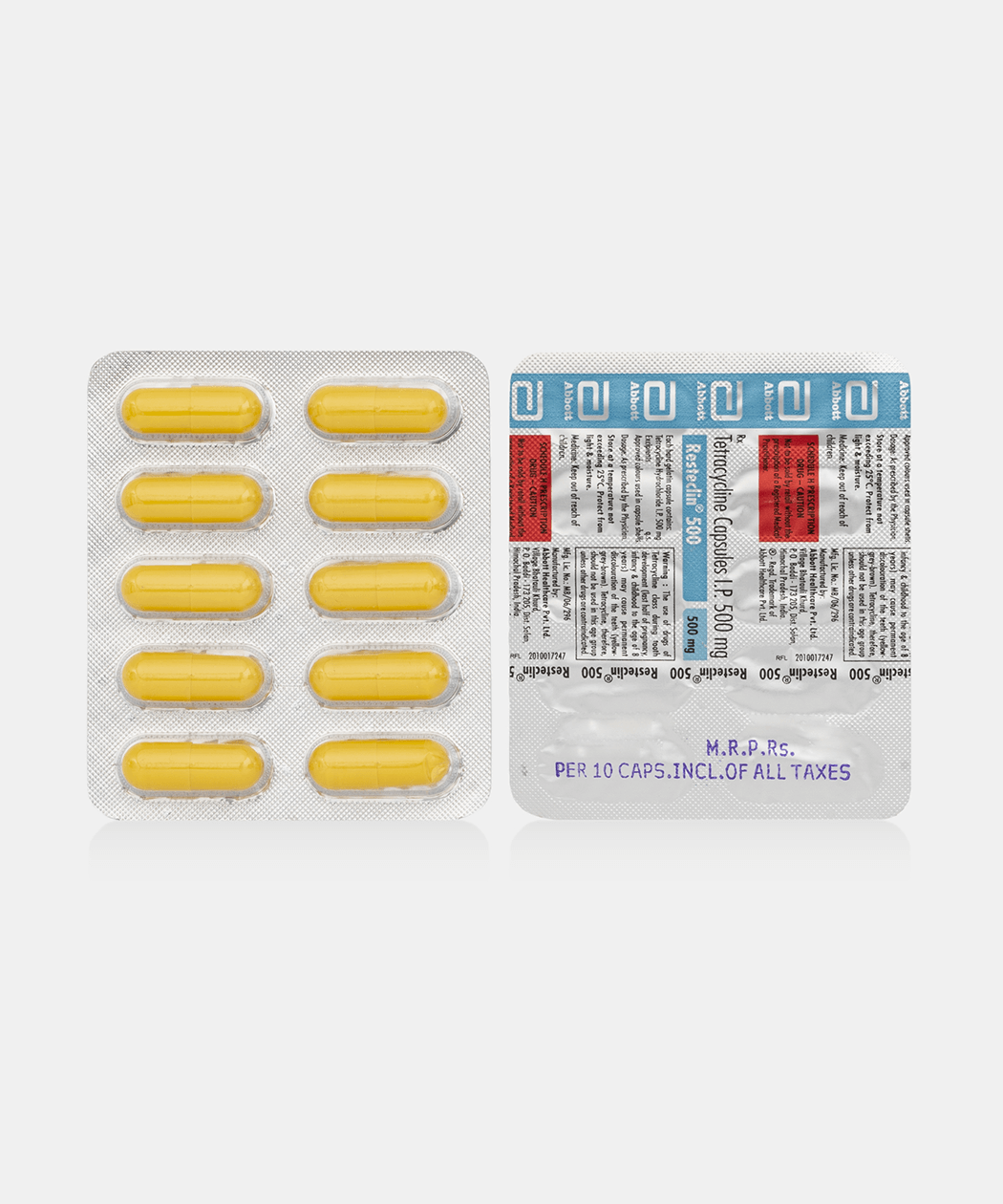
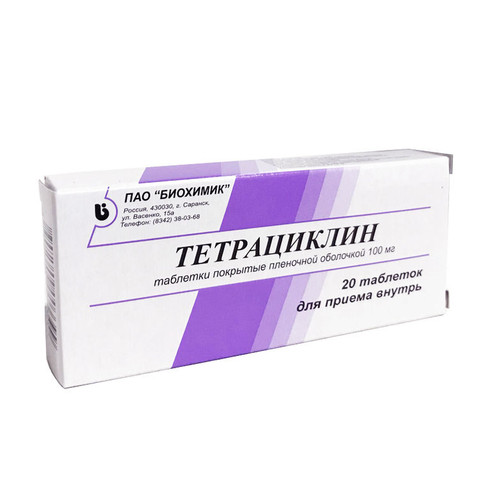
- Tetracyclines bind calcium and other divalent metals, which is why the drug can deposit in developing teeth and bone and why dairy products blunt its absorption.
- Members of the class inhibit matrix metalloproteinases independently of their antibacterial action, a property exploited in sub-antimicrobial doses for gum disease and rosacea.
- The class was born from soil Streptomyces bacteria, and Nobel laureate Robert Burns Woodward helped work out tetracycline's complex four-ring chemical structure.
Mechanism
Tetracycline works by shutting down bacterial protein synthesis. It enters bacterial cells and binds reversibly to the 30S subunit of the ribosome, the cell's protein-making machinery; there it occupies a site that prevents aminoacyl-transfer RNA, the molecule that delivers the next amino acid, from attaching to the ribosome's acceptor site during translation [1]. With charged tRNA blocked from binding, the growing protein chain cannot be extended, and production of the proteins the bacterium needs to grow and divide comes to a halt. This action is bacteriostatic, meaning it stops bacterial multiplication rather than directly killing the organisms, allowing the host's immune defenses to clear the infection.
The effect is selective for bacteria because their ribosomes differ from those of human cells, and because bacterial cells actively concentrate the drug. Beyond the classic block of chain elongation, research indicates that tetracyclines can also interfere with the earlier initiation phase of translation, for instance by perturbing how initiation factors arrange on the 30S subunit, offering a complementary route to inhibiting protein synthesis [2].
Structural studies using cryo-electron microscopy have mapped how tetracycline-class drugs sit on the ribosome, and have also shown how bacterial multidrug efflux pumps recognize and expel them, illustrating one of the main ways resistance develops [3]. Bacteria most often escape the drug by acquiring efflux pumps or ribosome-protection proteins [1][3].
receptor fingerprint
Bacterial 30S ribosomal subunitblocks
Aminoacyl transfer RNA at the A siteblocks
Bacterial protein synthesisinhibits
Divalent metal ions (calcium, iron, magnesium)modulates
Matrix metalloproteinasesinhibits
Dosingtypical ranges, not medical advice
interested in protocols and clinical dosages? make an account to see them! ^_^
Safetyrisks and cautions, not medical advice
Tetracycline is prescription only. It should not be used in pregnancy or in children under eight, because it binds to developing teeth and bone and causes permanent tooth staining and enamel problems. It can make skin very sensitive to sunlight, so sunburn comes easily, and swallowing it without enough water or while lying down can irritate or ulcerate the esophagus. Other effects include stomach upset, rare liver toxicity at high doses and a benign rise in pressure around the brain. It binds calcium, iron, magnesium and aluminum, so dairy, antacids and mineral supplements block its absorption and must be separated from the dose.
Interactionsdocumented pairs only, not exhaustive
Tetracycline chelates divalent and trivalent metal cations, and that dominates its interaction profile. Calcium, magnesium, aluminium, iron, zinc and bismuth all form insoluble complexes in the gut, so antacids, mineral supplements, iron tablets and dairy can cut absorption by half or more and turn an adequate dose into a subtherapeutic one. Tetracycline is considerably more vulnerable to this than doxycycline or minocycline, and food alone reduces its uptake.
Two combinations are dangerous rather than merely ineffective. Tetracyclines depress plasma prothrombin activity and potentiate warfarin, raising INR and bleeding risk. Combined with isotretinoin or high dose vitamin A, they raise the risk of idiopathic intracranial hypertension, which presents as headache and visual disturbance and can threaten sight.
Bacteriostatic tetracyclines can antagonise the bactericidal action of penicillins, and the historical pairing with methoxyflurane anaesthesia produced fatal nephrotoxicity. Reports of reduced oral contraceptive efficacy exist but are inconsistent.
Checking a whole stack? Run it through interactions + stacks.
History
Tetracycline traces to the golden age of antibiotic discovery in the late 1940s and 1950s, when pharmaceutical companies screened soil-dwelling Streptomyces bacteria for antibacterial compounds. The first members of the class, chlortetracycline (Aureomycin) from Lederle Laboratories and oxytetracycline (Terramycin) from Pfizer, were isolated at the end of the 1940s; tetracycline itself was subsequently derived and characterized, with the celebrated chemist Robert Burns Woodward contributing to elucidation of the tetracycline structure.
It entered clinical use in the mid-1950s and quickly became one of the most widely prescribed broad-spectrum antibiotics of its era, effective against organisms ranging from common bacteria to chlamydiae, mycoplasmas, and rickettsiae. Over the following decades the class expanded to include semisynthetic derivatives such as doxycycline and minocycline, and later the glycylcyclines. Tetracycline remains on the World Health Organization's List of Essential Medicines, a testament to its enduring clinical value.
Reputation
Tetracycline holds a respected place in medicine as a versatile, inexpensive, orally active antibiotic that helped define the broad-spectrum era. It is well regarded for treating acne, respiratory and urinary infections, and several atypical pathogens that resist many other drugs, and its low cost keeps it valuable in settings where affordability matters. Beyond infection, the class has attracted interest for non-antibiotic properties, including inhibition of matrix metalloproteinases, which underlies low-dose use in periodontal and inflammatory conditions.
Candor requires acknowledging its drawbacks: it binds calcium and can stain developing teeth, so it is avoided in young children and pregnancy; it must be separated from dairy and mineral supplements that impair its absorption; and decades of heavy use have driven widespread bacterial resistance through efflux pumps and ribosome-protection proteins. Newer derivatives such as doxycycline have supplanted it for many indications, yet the parent compound remains a dependable and historically important agent.
Subjective profileweighing the evidence above
Still works, and still useful for acne and atypical bugs, but four doses a day on an empty stomach is why newer tetracyclines took over. Photosensitivity is significant, and it permanently stains developing teeth, so it stays away from pregnancy and children under eight.
Where to buy
1 other outlet

Suppliers
Vendors carrying Tetracycline, with live product details and codes. Links are affiliate links that support the wiki at no cost to you.
PCT.Zone
Tetracycline
RUPharma🌐
Tetracycline
Research
- 2001first citedTetracycline antibiotics: mode of action, applications, molecular biology, and epidemiology of…
- 2021most recentA Complementary Mechanism of Bacterial mRNA Translation Inhibition by Tetracyclines.
- 1.Tetracycline antibiotics: mode of action, applications, molecular biology, and epidemiology of bacterial resistance.
- 2.A Complementary Mechanism of Bacterial mRNA Translation Inhibition by Tetracyclines.
- 3.Cryo-EM Determination of Eravacycline-Bound Structures of the Ribosome and the Multidrug Efflux Pump AdeJ of Acinetobacter baumannii.
3 listed here; entry last updated August 2026
Reviews
My notesprivate to this device
FAQ
Why can children and pregnant women not take it?
It binds to forming teeth and bone and causes permanent tooth discoloration and enamel defects, so it is avoided under age eight and in pregnancy.
Can I take it with milk or antacids?
No; calcium, iron, magnesium and aluminum bind the drug and block its absorption, so separate them by a couple of hours.
Why do I need to take it with lots of water and stay upright?
Tetracycline can irritate or ulcerate the esophagus if it lodges there, so a full glass of water and staying up help it pass.
Will it make me sunburn more easily?
Yes; it causes photosensitivity, so use sun protection and limit strong sun while taking it.
Is it bacteriostatic or bactericidal?
It is bacteriostatic; it stops bacteria from multiplying and lets your immune system clear them rather than killing them directly.
Adverse effects
- Nausea, vomiting, or diarrhea
- Photosensitivity and easy sunburn
- Tooth discoloration in children
- Yeast overgrowth
- Rare liver effects
Notes and cautions
- Reduced absorption with dairy or antacids