
spec sheet12 rows
Ceftriaxone is a broad-spectrum third-generation cephalosporin antibiotic given by injection to treat many serious bacterial infections [1][2]. It stops bacteria from building their cell walls, and an unusually long half-life allows it to be given just once a day [1][2]. It is used for conditions such as bacterial meningitis, pneumonia, gonorrhea, and bloodstream and bone infections, and it is a first-line treatment for gonorrhea [2][3]. Developed by Roche and approved for medical use in 1982 under the brand name Rocephin, ceftriaxone appears on the World Health Organization Model List of Essential Medicines [1].
- One of the genuinely essential antibiotics worldwide
- Broad spectrum cover for serious bacterial infections
- Reaches the brain; a first line for bacterial meningitis
- Single dose first line treatment for gonorrhea
- Unusually long half life allows once daily dosing
- On the WHO essential medicines list since 1982
- Pain or reaction at the injection site
- Diarrhea, including uncommon Clostridioides difficile colitis
- Reversible gallbladder sludge or pseudo-stones
Overview
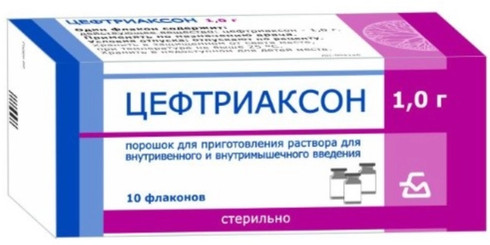
Ceftriaxone is a semisynthetic antibiotic of the beta-lactam family and a member of the third generation of cephalosporins [1][2]. Its molecular formula is C18H18N8O7S3, giving a molar mass of about 555 grams per mole, and unlike several other members of its class it is administered only by injection, either into a vein or into a muscle, because it is poorly absorbed from the gut [1]. It is supplied as a sterile powder that is reconstituted before use [1].
The drug has a wide spectrum of activity that is generally stronger against gram-negative organisms than that of earlier cephalosporins, covering many Enterobacteriaceae along with beta-lactamase-producing strains of Haemophilus and Neisseria [1][2]. It is not a dependable choice against Pseudomonas aeruginosa and lacks useful activity against enterococci and Enterobacter species [1]. Clinically, ceftriaxone treats bacterial meningitis, community-acquired pneumonia, complicated and uncomplicated urinary tract infections, skin, soft-tissue, bone and joint infections, and bloodstream infection, and it is used for surgical prophylaxis and after certain bites [1][2]. A single injected dose is a highly effective treatment for uncomplicated gonorrhea, and current guidance places ceftriaxone at the center of first-line gonorrhea therapy, often paired with a second antibiotic, amid concern over rising resistance in Neisseria gonorrhoeae [2][3].
A defining feature of ceftriaxone is its long elimination half-life, on the order of six to nine hours, which supports once-daily dosing and can bring convenience and cost advantages when treating serious infections [2]. The drug is cleared by a combination of renal and biliary routes, and it binds extensively to plasma proteins [1]. It was patented in 1978 and introduced for medical use in 1982, and although it has traditionally been given by the intravenous and intramuscular routes, subcutaneous administration has also been described as an alternative for selected patients with less severe infection [1][4].
Ceftriaxone is available worldwide as a low-cost generic and is listed on the World Health Organization Model List of Essential Medicines [1]. It is generally well tolerated, but it carries specific cautions: it can form precipitates when mixed with calcium-containing intravenous fluids, a reaction that has caused serious harm in newborns, so it is not given together with intravenous calcium in neonates and is avoided in newborns with jaundice [1]. It can also cause reversible sludge or pseudo-stones in the gallbladder, an effect that typically clears after the drug is stopped [1].

- Ceftriaxone binds so extensively yet reversibly to plasma proteins that its clearance changes with concentration, a saturable-binding quirk that helps explain its remarkably long stay in the body.
- Its long half-life lets a single daily injection treat conditions that once demanded repeated dosing, which made outpatient antibiotic therapy for pneumonia and bone infection far more feasible.
Mechanism
Ceftriaxone works, like other beta-lactam antibiotics, by blocking construction of the bacterial cell wall [1]. It binds selectively and essentially irreversibly to penicillin-binding proteins, the transpeptidase enzymes that stitch together the peptidoglycan mesh of the wall; with cross-linking halted, the wall is weakened and the bacterium bursts under its own internal pressure [1]. Its resistance to breakdown by many beta-lactamase enzymes extends its reach to organisms that defeat older cephalosporins [2]. The prolonged time the drug persists in the body, reflected in a of roughly six to nine hours, underlies its convenient once-daily dosing [2].
receptor fingerprint
Penicillin-binding proteins (PBP1, PBP3)inhibits
Bacterial transpeptidase enzymeblocks
Peptidoglycan cell wall synthesisblocks
Gram-negative and gram-positive bacteriablocks
Bacterial autolysins (downstream)activates
Dosingtypical ranges, not medical advice
interested in protocols and clinical dosages? make an account to see them! ^_^
Safetyrisks and cautions, not medical advice
Ceftriaxone is a prescription antibiotic given by injection. Common effects include pain at the injection site, diarrhea and rash, while less common ones include reversible gallbladder sludge and blood count changes. Serious risks are allergic reactions, which can be severe, and Clostridioides difficile colitis. It must not be mixed with or given close to calcium containing intravenous fluids in newborns because of a risk of fatal precipitates, and it is used cautiously in newborns with jaundice because it can displace bilirubin.
Interactionsdocumented pairs only, not exhaustive
Ceftriaxone precipitates irreversibly when co-infused in the same intravenous line with calcium chloride solutions. Ceftriaxone calcium salt is insoluble and forms microcrystalline and macroscopic precipitates within minutes of mixing; these particles are in the size range (around 25 micrometers) that can occlude capillaries, particularly in neonates, and this incompatibility has led to several documented deaths [6]. This is a physical incompatibility, not a pharmacokinetic or pharmacodynamic interaction; the cephalosporin itself is unchanged, but the combination creates an obstruction hazard.
Infusion of these agents must use separate intravenous lines; even brief co-administration through the same catheter poses risk and is contraindicated in all age groups, with heightened vigilance in neonates and critically ill patients. Ceftriaxone is safe with non-calcium-containing medications and solutions; no pharmacokinetic interactions have been well-characterized with most co-administered drugs. The risk is entirely the physical incompatibility with divalent cations; common pairings with probenecid, anticoagulants, or nephrotoxic agents have not yielded documented interactions, and the drug's primary concern in combination therapy remains the infusion route separation rule.
Checking a whole stack? Run it through interactions + stacks.
History
Ceftriaxone was developed by the Swiss company Roche during the late 1970s drive to create third-generation cephalosporins with wider gram-negative coverage and greater stability against bacterial enzymes. It was approved for medical use in 1982 and marketed under the brand name Rocephin, quickly distinguishing itself through an unusually long plasma half-life of roughly six to nine hours that allowed effective once-daily dosing, a marked practical advantage over agents requiring several injections a day.
This long duration of action arises in part from its saturable binding to plasma proteins, a property carefully characterized in early clinical pharmacokinetic studies. Over subsequent decades ceftriaxone became a mainstay for serious infections including bacterial meningitis, pneumonia, gonorrhea, and bloodstream and bone infections. It is included on the World Health Organization Model List of Essential Medicines and remains one of the most widely used injectable antibiotics worldwide.
Reputation
Ceftriaxone enjoys a strong and enduring reputation as a workhorse of hospital and emergency medicine, prized for the combination of broad potency, reliable tissue penetration, and once-daily convenience. It is a first-line treatment for gonorrhea and a standard empirical choice for suspected bacterial meningitis, reflecting deep clinical trust built over forty years of use. Its ability to reach therapeutic levels in cerebrospinal fluid and its suitability for outpatient intramuscular therapy have made it valuable well beyond the inpatient ward. Physicians remain mindful of specific cautions, such as its interaction with calcium-containing solutions in neonates and its potential to cause biliary sludging, yet these are well understood and manageable. Its continued place on the WHO essential medicines list underscores a standing few antibiotics achieve.
Subjective profileweighing the evidence above
One of the genuinely essential antibiotics, covering everything from meningitis to a single-dose gonorrhea cure, with a half-life long enough for once-daily dosing. Injection and prescription only, with the usual cautions around C. difficile and cephalosporin allergy.
Where to buy

1 other outlet

Suppliers
Vendors carrying Ceftriaxone, with live product details and codes. Links are affiliate links that support the wiki at no cost to you.
PCT.Zone
Ceftriaxone
RUPharma🌐
Ceftriaxone
Research
- 1984first citedCeftriaxone. A review of its antibacterial activity, pharmacological properties and therapeutic…
- 2020meta-analysisSafety of ceftriaxone in paediatrics: a systematic review.
- 2023most recentCo-administration of Intravenous Drugs: Rapidly Troubleshooting the Solid Form Composition of a…
- 1.Safety of ceftriaxone in paediatrics: a systematic review.
- 2.Ceftriaxone. A review of its antibacterial activity, pharmacological properties and therapeutic use.
- 3.Gonorrhoea (Nature Reviews Disease Primers).
- 4.Subcutaneously administered antibiotics: a review.
- 5.Clinical pharmacokinetics of ceftriaxone
- 6.Co-administration of Intravenous Drugs: Rapidly Troubleshooting the Solid Form Composition of a Precipitate in a Multi-drug Mixture Using On-Site Raman Spectroscopy.
6 listed here; entry last updated August 2026
Reviews
My notesprivate to this device
FAQ
Is ceftriaxone safe if I am allergic to penicillin?
It is a cephalosporin, and cross reactivity with penicillin is low but possible; tell your clinician about any severe penicillin allergy.
Why is it given only once a day?
Its long half-life keeps effective levels in the blood for a full day, so a single daily dose usually works.
Can it be given as a shot instead of a drip?
Yes, it can be given into a muscle, often mixed with lidocaine to reduce injection pain, or into a vein.
Does it really cure gonorrhea in one dose?
A single 500 mg intramuscular injection is the standard treatment for uncomplicated gonorrhea.
What is the gallbladder sludge I read about?
Ceftriaxone can form reversible deposits in the gallbladder that usually clear after the drug is stopped.
Adverse effects
- Pain or reaction at the injection site
- Diarrhea, including uncommon Clostridioides difficile colitis
- Reversible gallbladder sludge or pseudo-stones
- Allergic reactions, especially in people with penicillin or cephalosporin allergy
Notes and cautions
- Not combined with intravenous calcium in newborns because of precipitation risk