
spec sheet10 rows
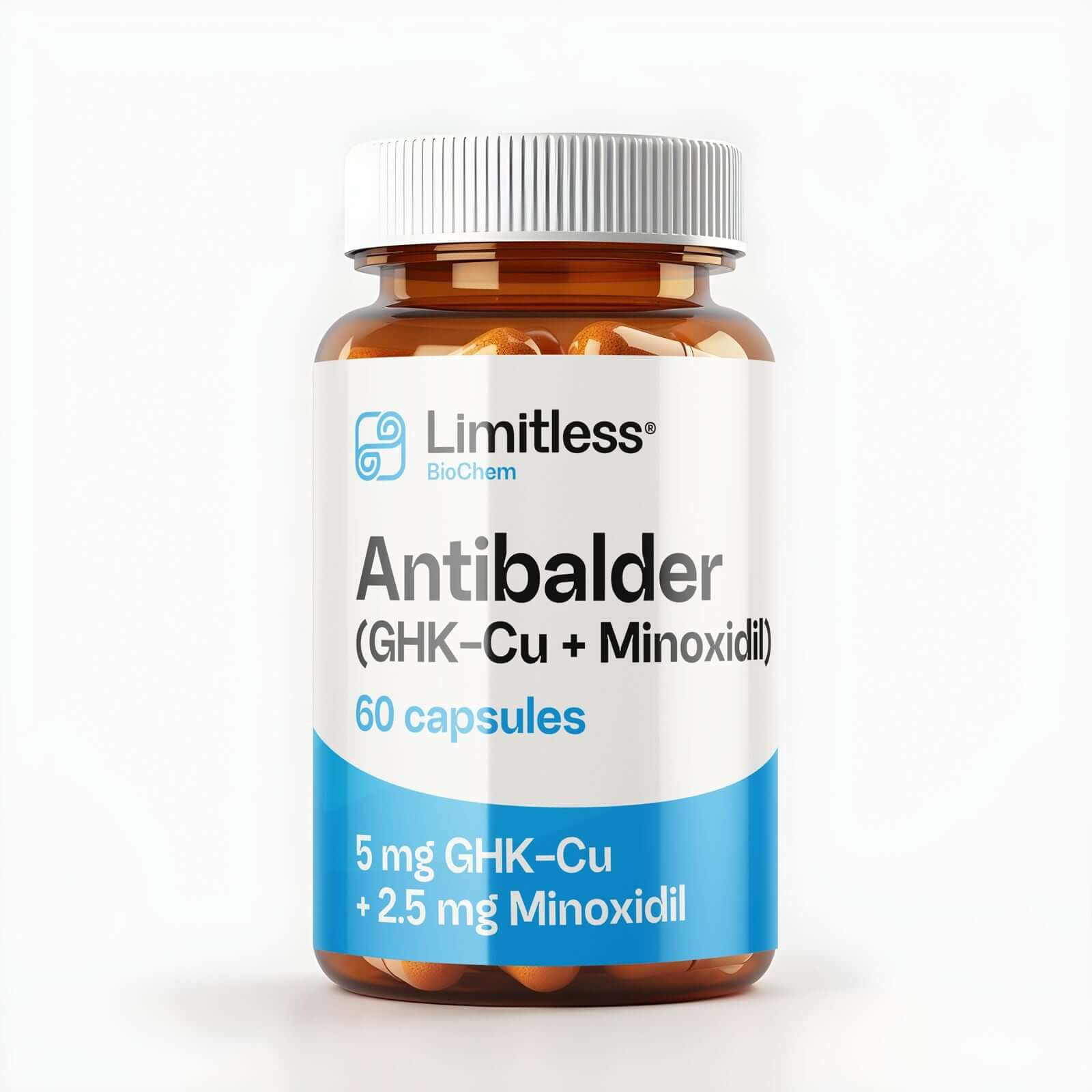
Antibalder is a topical hair-loss formulation concept rather than a single molecule, pairing the copper peptide GHK-Cu with the vasodilator minoxidil. The idea is to combine minoxidil, a well-established stimulator of hair follicles, with GHK-Cu, a copper-binding tripeptide used in skin and scalp care for its role in tissue repair. The evidence relates mainly to the two ingredients individually; there is little published data on this specific combination.
- Pairs minoxidil with the copper peptide GHK-Cu
- Minoxidil is heavily documented for pattern hair loss
- Pushes more follicles into the growth phase
- Boosts blood flow across the scalp
- GHK-Cu backs collagen and tissue repair
- Topical only, so systemic exposure stays low
- Unwanted facial hair growth from minoxidil
Overview
Antibalder is not a single defined compound but a formulation concept for topical scalp use that brings together two separately studied actives: minoxidil and the copper peptide GHK-Cu. It is best understood as a pairing of a proven follicle stimulant with a regenerative peptide rather than as a distinct drug with its own body of evidence.
Minoxidil is a long-established topical treatment for pattern hair loss. Originally an oral blood-pressure medicine, it was found to promote hair growth and was reformulated for the scalp. Analyses of gene activity in treated skin indicate that minoxidil influences pathways governing the hair-growth cycle and follicle blood supply [2], and imaging of treated follicles in men with androgenetic alopecia shows that it can enlarge and reinvigorate miniaturized follicles [3].
GHK-Cu is a naturally occurring tripeptide, glycyl-L-histidyl-L-lysine, that binds copper and is used in cosmetic skin and hair products. Reviews of its biology describe roles in wound healing and tissue remodeling, including stimulation of collagen and other matrix proteins, anti-inflammatory and antioxidant actions, and, in some reports, effects on hair follicle size [1]. In a scalp blend the peptide is intended to support the skin and follicular environment alongside minoxidil's direct follicle stimulation.
Because Antibalder describes a combination rather than a single tested product, most of the supporting science comes from studies of minoxidil or of GHK-Cu on their own [1][2][3]. Rigorous clinical data on this exact pairing are limited, so any expectations rest largely on the established effects of each ingredient.
Minoxidil is a regulated over-the-counter and prescription treatment for hair loss, while GHK-Cu is used mainly as a cosmetic ingredient. A blend of the two would be a compounded or cosmetic topical rather than a standardized approved medicine.
- GHK-Cu, the copper-peptide half of the blend, was first isolated from human blood plasma in 1973, and the body's levels of it decline with age.
- Minoxidil started life as an oral blood-pressure medication; its now-famous hair-growth effect was discovered as an unexpected side effect.
Mechanism
The rationale behind Antibalder rests on the complementary mechanisms of its two ingredients. Minoxidil is converted in the scalp to an active form that opens ATP-sensitive potassium channels and widens small blood vessels, improving blood flow to the follicle; it also shifts hairs from the resting phase of the growth cycle into the active growing phase and appears to modulate growth-factor and cell-cycle pathways in follicle cells [2][3].
GHK-Cu acts as a copper-delivery that takes part in tissue repair, promoting synthesis of collagen and other structural proteins, dampening inflammation and , and attracting repair cells, effects documented in skin and reported to extend to hair follicle size [1]. In principle, combining the two aims to pair direct follicle stimulation from minoxidil with support of the surrounding scalp matrix from GHK-Cu, though the interaction of the two in a single formulation has not been well characterized.
receptor fingerprint
ATP-sensitive potassium channels (minoxidil)Opens channels, causing vasodilation
Hair follicle growth cycleShifts telogen hairs into anagen
Scalp collagen and matrix (GHK-Cu)Supports remodeling and repair
Dosingtypical ranges, not medical advice
interested in protocols and clinical dosages? make an account to see them! ^_^
Safetyrisks and cautions, not medical advice
Antibalder is a topical hair-loss combination of minoxidil and copper peptides. Minoxidil commonly causes scalp irritation, itching, dryness and unwanted facial or body hair, and an initial increase in shedding is typical; systemic absorption can rarely cause palpitations, tachycardia, dizziness, fluid retention or lowered blood pressure. Contact dermatitis, often from the propylene glycol vehicle, and other application-site reactions may occur.
History
Antibalder is a formulation concept rather than a single discovered molecule, and as a named combination it has little formal documentation; its story is really the story of its two ingredients. The copper tripeptide GHK was first isolated from human blood plasma by Loren Pickart in 1973, and its copper complex, GHK-Cu, went on to a long career in tissue-repair and skin research. Minoxidil began as an oral drug for severe high blood pressure, and its striking side effect of hair growth led to the topical solution that the FDA approved for androgenetic alopecia in 1988. Pairing an established follicle stimulant with a copper repair peptide is a rational idea, but the specific blend itself has not been well characterized in published research.
Reputation
Antibalder draws its appeal from the strong individual reputations of its parts rather than from data on the combination. Minoxidil is one of the few topical treatments with solid randomized-trial evidence for regrowing hair, and its 5 percent formulation is a standard against which other therapies are measured. GHK-Cu is well regarded in skin science for supporting collagen synthesis, calming inflammation, and aiding wound healing, with some reports of larger hair follicles. Combining direct follicle stimulation with scalp-matrix support is an appealing rationale, and enthusiasts value the pairing; it is honest to say, however, that evidence for this particular blend is largely inferred from the two ingredients separately rather than tested as a whole.
Subjective profileweighing the evidence above
Minoxidil is doing the work here, and it is one of the few hair treatments with real evidence; GHK-Cu is a plausible but unproven addition. Reasonable if you want both in one bottle, with the usual minoxidil shedding phase and unwanted facial hair to expect.
Where to buy
Suppliers
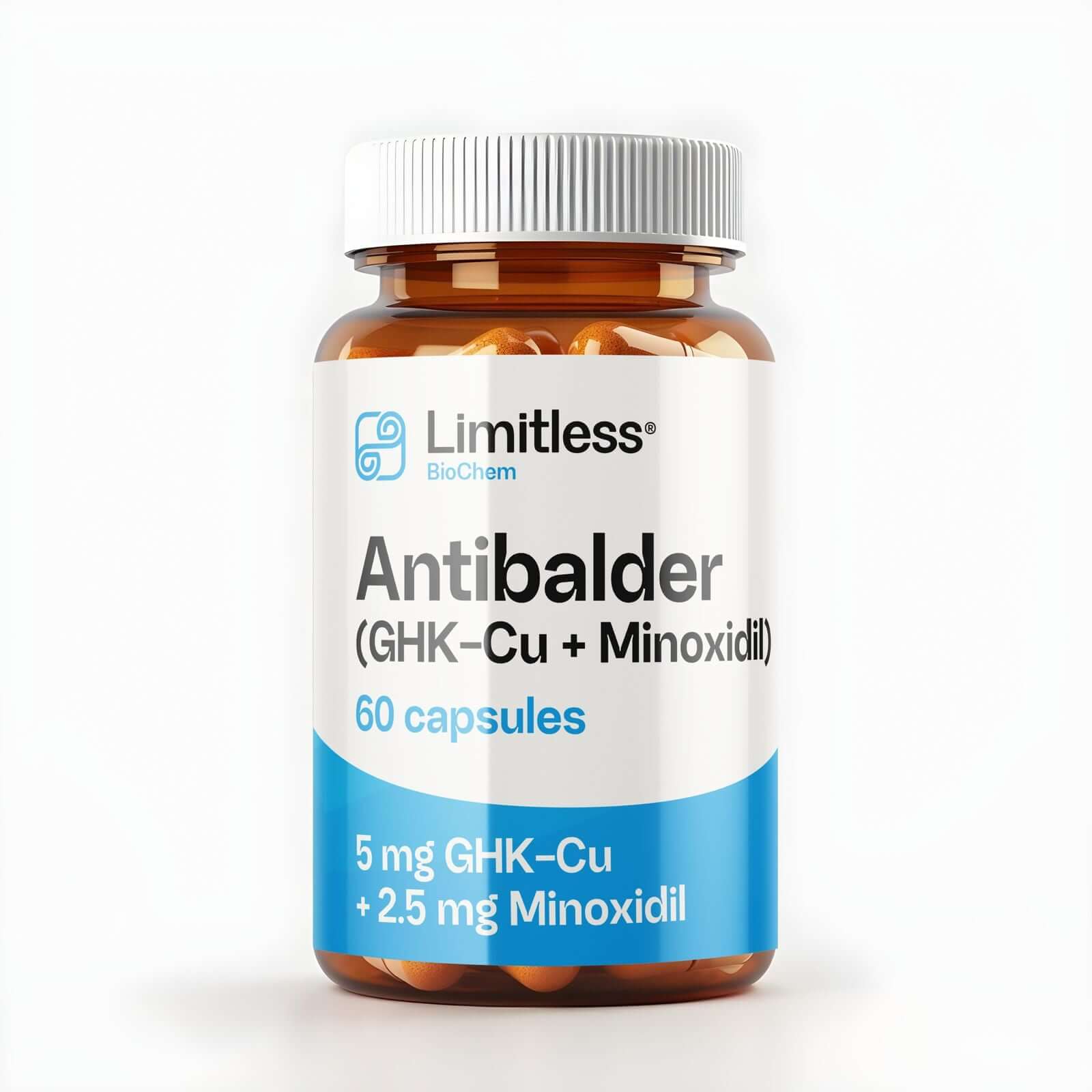
Vendors carrying Antibalder, with live product details and codes. Links are affiliate links that support the wiki at no cost to you.
Limitless Biochem🌐
Antibalder
Research
- 2002first citedA randomized clinical trial of 5% topical minoxidil versus 2% topical minoxidil and placebo in…
- 2024most recentTopical minoxidil rejuvenates hair follicles from men with androgenetic alopecia in vivo
- 1.The human tri-peptide GHK and tissue remodeling
- 2.An analysis of gene expression data involving examination of signaling pathways activation reveals new insights into the mechanism of action of minoxidil topical foam in men with androgenetic alopecia.
- 3.Topical minoxidil rejuvenates hair follicles from men with androgenetic alopecia in vivo
- 4.A randomized clinical trial of 5% topical minoxidil versus 2% topical minoxidil and placebo in the treatment of androgenetic alopecia in men
4 listed here; entry last updated August 2026
Reviews
My notesprivate to this device
FAQ
What is Antibalder?
It is a topical hair blend that combines the copper peptide GHK-Cu with minoxidil for the scalp.
How does the combination work?
Minoxidil stimulates follicles and blood flow while GHK-Cu supports scalp collagen and matrix repair.
Does it work better than minoxidil alone?
Minoxidil and GHK-Cu each have their own evidence, but data on this specific blend is limited, so claims should be modest.
Do I need to keep using it?
Minoxidil-driven gains typically fade after stopping, so continued use is needed to maintain results.
Limitations of the evidence
- Limited data on the specific blend
Adverse effects
- Unwanted facial hair growth from minoxidil
Notes and cautions
- Scalp irritation, dryness, or itching
- Temporary increased shedding when starting minoxidil
- Possible contact sensitivity to the copper peptide