
data + articles · 4 listed
newest 2022spec sheet11 rows
KY-19382 is an experimental small molecule that activates the Wnt/beta-catenin signaling pathway, investigated as a treatment for hair loss. A synthetic analogue of the natural compound indirubin-3'-monoxime, it was developed by researchers at Yonsei University in South Korea, who reported that it promotes hair regrowth and the formation of new hair follicles in laboratory and animal models [1]. It is a preclinical research compound and is not an approved medicine [1].
- Switches on the Wnt hair growth pathway
- Regrew hair in animal models
- Human hair follicles grew longer in the lab
- Sparked brand new follicle formation
- Goes after the root of thinning
- A synthetic take on a natural molecule
Overview
KY-19382 is an experimental compound classed as an activator of the Wnt/beta-catenin signaling pathway, and it is studied chiefly as a candidate treatment for hair loss [1]. It is one of a group of newly synthesized analogues of indirubin-3'-monoxime, a molecule derived from indirubin, and it was designed to switch on a pathway that plays a decisive role in hair follicle growth and regeneration [1].
The compound emerged from research at Yonsei University in Seoul, South Korea, in a line of work on the protein CXXC5 and its role as a brake on Wnt signaling; the group behind this research has also been associated with the biotechnology company CK Regeon [1][2]. Earlier studies from the same laboratory had shown that CXXC5 is a negative regulator of the Wnt/beta-catenin pathway, that it is present at raised levels in the miniaturized follicles and arrector pili muscles of balding human scalp, and that disrupting its interaction with the protein Dishevelled could stimulate hair regrowth [2][3].
KY-19382 raises Wnt activity through a dual action: it blocks the CXXC5-Dishevelled interaction and it inhibits the enzyme glycogen synthase kinase 3-beta, both of which push the pathway toward its active, hair-promoting state [1]. Because the dermal papilla at the base of the follicle depends on Wnt signaling to drive growth, this activation is thought to underlie the compound's effects [1].
In published experiments the molecule increased alkaline phosphatase activity and cell proliferation in human dermal papilla cells, lengthened hair shafts in cultured mouse whisker and human hair follicles, and induced hair regrowth in mice [1]. It also promoted the formation of entirely new follicles in wound-induced hair neogenesis and hair-patch assays, a striking result because adult mammals do not readily grow new follicles [1]. The broader CXXC5-Dishevelled strategy has additionally been explored with related small molecules for conditions such as metabolic disease, illustrating the wider interest in this target [4].
KY-19382 remains a preclinical research compound intended for laboratory study rather than clinical use, and there are no published human trials establishing its efficacy or safety in people [1]. Its promise rests on encouraging results in cells and animals that have yet to be confirmed in humans [1].
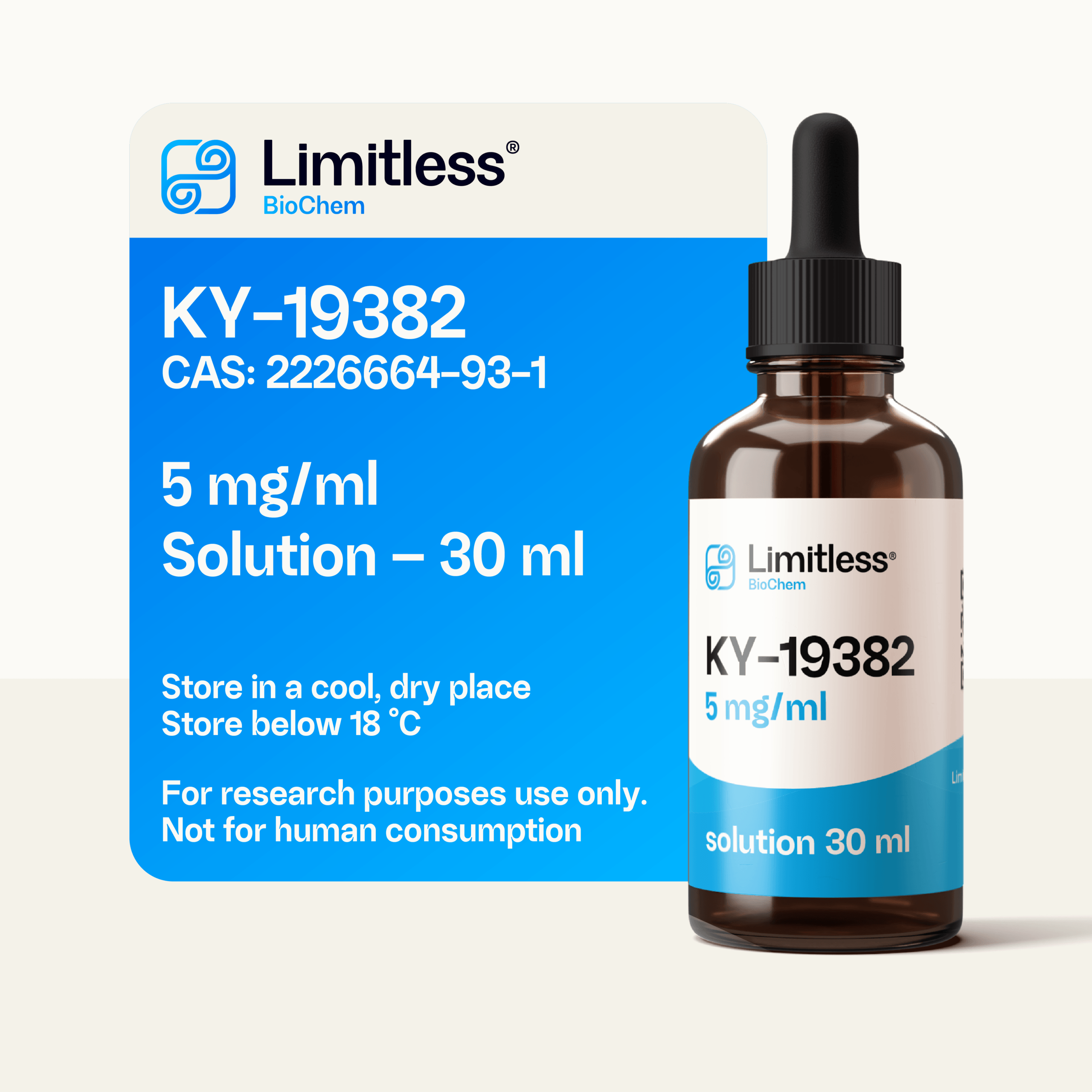
- KY-19382 is a synthetic cousin of indirubin-3'-monoxime, a molecule related to the pigment behind traditional indigo dye.
- In mouse studies it did more than thicken existing hair; it triggered the formation of brand-new follicles, a process called neogenesis.
- Its target, the protein CXXC5, is found at elevated levels in the shrunken follicles of balding human scalp, marking it as a natural brake on hair growth.
Mechanism
KY-19382 works by switching on Wnt/beta-catenin signaling, a pathway central to the development and cyclical regeneration of hair follicles, especially within the dermal papilla that instructs follicle growth [1]. The compound is a synthetic analogue of indirubin-3'-monoxime, and it raises Wnt activity through two linked actions: it blocks the interaction between the protein CXXC5, a natural negative regulator of the pathway, and the signaling protein Dishevelled, and it inhibits the enzyme glycogen synthase kinase 3-beta (GSK-3beta) [1].
Because CXXC5 normally restrains Wnt signaling by binding Dishevelled, and is found at elevated levels in the miniaturized follicles of balding scalp, interrupting that interaction releases the brake on the pathway and favors hair growth [2][3]. In cell studies KY-19382 increased markers of dermal papilla activity such as alkaline phosphatase and the proliferation marker PCNA, and in cultured mouse whisker and human hair follicles it lengthened the growing hair shaft [1].
In mice it induced regrowth of hair and, notably, promoted the generation of entirely new follicles in wound-healing and hair-patch models, a process known as neogenesis [1]. The same CXXC5-Dishevelled target has been pursued with related molecules for other regenerative applications beyond hair [4].
receptor fingerprint
CXXC5-Dishevelled interactionInhibitor
Dermal papilla Wnt/beta-catenin signalingActivation
GSK-3betaInhibitor
Safetyrisks and cautions, not medical advice
KY-19382 is a preclinical Wnt/beta-catenin pathway activator tested only in animal hair-regrowth models, with no human trials, no established safety profile, and no defined dosing. Sustained activation of Wnt signaling is theoretically linked to abnormal cell proliferation and tumor risk, so any systemic absorption from topical use is a legitimate uncertainty. Its risks in people are simply unknown.
History
KY-19382 was developed by researchers at Yonsei University in South Korea, in the laboratory of Kang-Yell Choi, as part of a program exploring the protein CXXC5 as a negative regulator of Wnt/beta-catenin signaling. The scientific groundwork was laid in a 2017 study showing that CXXC5 restrains the pathway by binding the signaling protein Dishevelled, that it is elevated in the miniaturized follicles of balding scalp, and that disrupting the CXXC5-Dishevelled interaction with a competing peptide accelerated hair regrowth and wound-induced follicle neogenesis.
Building on this, the group synthesized KY-19382 as an analogue of the natural compound indirubin-3'-monoxime that activates Wnt signaling through two linked actions: blocking the CXXC5-Dishevelled interaction and inhibiting the enzyme GSK-3beta. In work published in 2021, the compound increased markers of dermal papilla activity, lengthened cultured mouse and human hair follicles, and, strikingly, promoted the formation of entirely new follicles in mouse wound-healing and hair-patch models. Development has been associated with the spin-out company CK Biotech. KY-19382 remains a preclinical research compound and is not an approved medicine.
Reputation
KY-19382 is viewed with optimism among hair-regeneration researchers for targeting Wnt/beta-catenin signaling, a pathway central to how hair follicles form and cycle. Its most exciting reported property is not merely thickening existing hair but promoting neogenesis, the birth of entirely new follicles, in animal models, a capability that would go beyond what current approved treatments offer. The concept rests on well-characterized biology: the protein CXXC5 acts as a brake on hair-promoting Wnt signaling and is elevated in balding scalp, so releasing that brake is a rational strategy.
In laboratory and animal studies the compound increased dermal papilla activity, lengthened cultured human hair follicles, and drove visible regrowth. The honest framing is that all of this evidence is preclinical, and the molecule's efficacy and safety in people have not been established. As a mechanistically novel, well-grounded research candidate for hair loss, however, it is a genuinely interesting compound.
Subjective profileweighing the evidence above
Promising enough to watch and far too early to use. Regrowth in mice and lengthened follicles in cultured human skin is a strong preclinical result, but there are no human trials, no dose, and a legitimate open question about what sustained Wnt activation does to cell growth.
Where to buy
Suppliers
Vendors carrying KY-19382, with live product details and codes. Links are affiliate links that support the wiki at no cost to you.
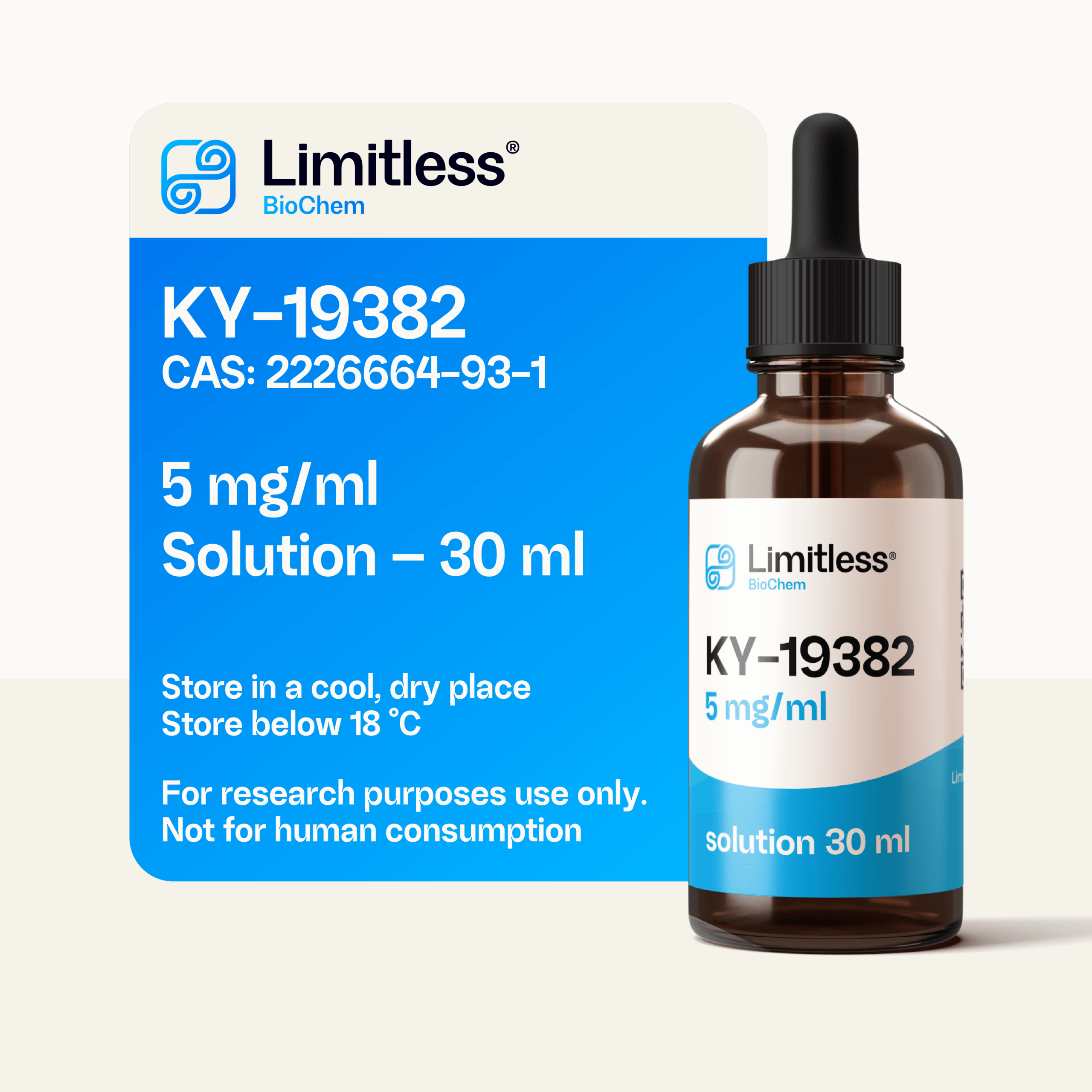
Limitless Biochem🌐
KY-19382
Research
- 2017first citedTargeting of CXXC5 by a Competing Peptide Stimulates Hair Regrowth and Wound-Induced Hair Neoge…
- 2022most recentInhibition of CXXC5 function reverses obesity-related metabolic diseases
- 1.KY19382, a novel activator of Wnt/β-catenin signalling, promotes hair regrowth and hair follicle neogenesis.
- 2.Targeting of CXXC5 by a Competing Peptide Stimulates Hair Regrowth and Wound-Induced Hair Neogenesis
- 3.The Negative Regulator CXXC5: Making WNT Look a Little Less Dishevelled
- 4.Inhibition of CXXC5 function reverses obesity-related metabolic diseases
4 listed here; entry last updated August 2026
Reviews
My notesprivate to this device
FAQ
How does KY-19382 grow hair?
It ramps up Wnt/beta-catenin signaling in the dermal papilla, the pathway follicles depend on, largely by blocking the CXXC5 brake and inhibiting GSK-3beta.
Can it make new follicles?
In preclinical assays it promoted de novo follicle formation, not just regrowth of existing ones.
Is it available as a treatment?
No; it is in formulation development and remains a research and reference compound for now.
Limitations of the evidence
- It is a preclinical research compound, not an approved treatment
- No published human trials have established its safety or effectiveness
- Findings so far come from cell cultures and mouse models
Notes and cautions
- It acts by boosting Wnt/beta-catenin signaling, a pathway broadly involved in cell growth