
data + articles · 1 listed
newest 2021spec sheet10 rows
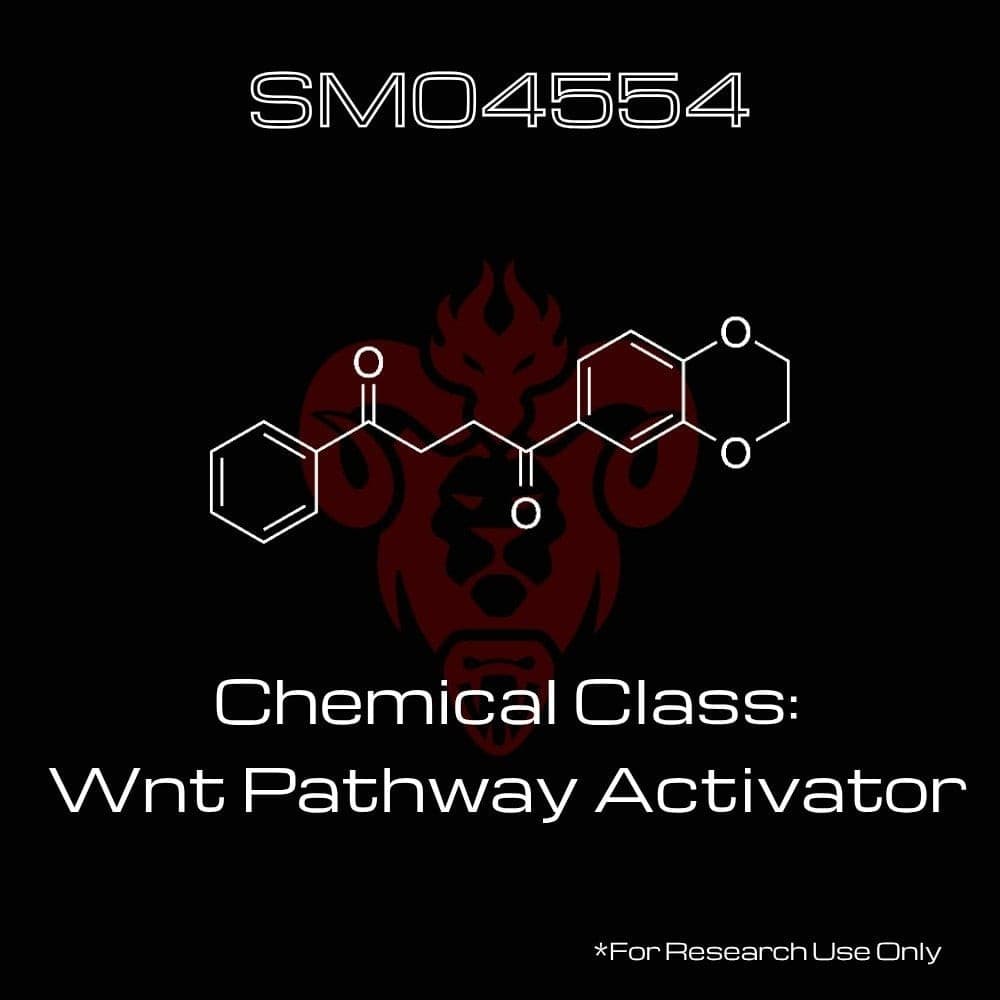
SM-04554 is a topical small molecule that activates Wnt/beta-catenin signaling, developed as a novel treatment for androgenetic alopecia. Rather than blocking androgens, it stimulates the pathway that governs the hair cycle, aiming to push follicle stem cells into the growth phase to regenerate follicles and maintain density. It advanced into late-stage clinical testing for pattern hair loss, making it one of the more prominent Wnt-based approaches to hair regrowth.
- Switches on the Wnt hair growth pathway
- Works without touching androgens at all
- Drives follicles into the growth phase
- Reawakens dormant follicles and holds density
- Simple topical application
- Advanced into late-stage clinical testing
- Mild scalp irritation
- Occasional itching
- Some redness
Overview
SM-04554 is a topically applied small-molecule modulator of the Wnt/beta-catenin signaling pathway, developed by Samumed (later Biosplice) for the treatment of androgenetic alopecia [1]. It belongs to a broader wave of Wnt pathway modulators being pursued across dermatology, oncology, and regenerative medicine, and in that patent and development landscape it is specifically identified as a Wnt activator directed at pattern hair loss [1].
The scientific premise is that Wnt/beta-catenin signaling is a master regulator of the hair follicle cycle and of the stem cells that drive new hair growth. By pharmacologically activating this pathway in the scalp, SM-04554 is intended to increase follicle number and density rather than to interfere with the androgen signaling that most existing hair-loss drugs target [1]. This positions it as a mechanistically distinct option alongside androgen-focused therapies.
According to the reviewed development literature, SM-04554 progressed into advanced clinical evaluation, described as reaching Phase 3 testing for androgenetic alopecia among the leading Wnt-targeting clinical candidates [1]. It is formulated as a topical solution for application to the scalp. As an investigational agent it does not carry marketing approval as a standard hair-loss medicine, and the peer-reviewed indexed record specific to this compound is limited, so its profile is best described from the development and mechanism-of-action literature rather than from a large published trial base [1].
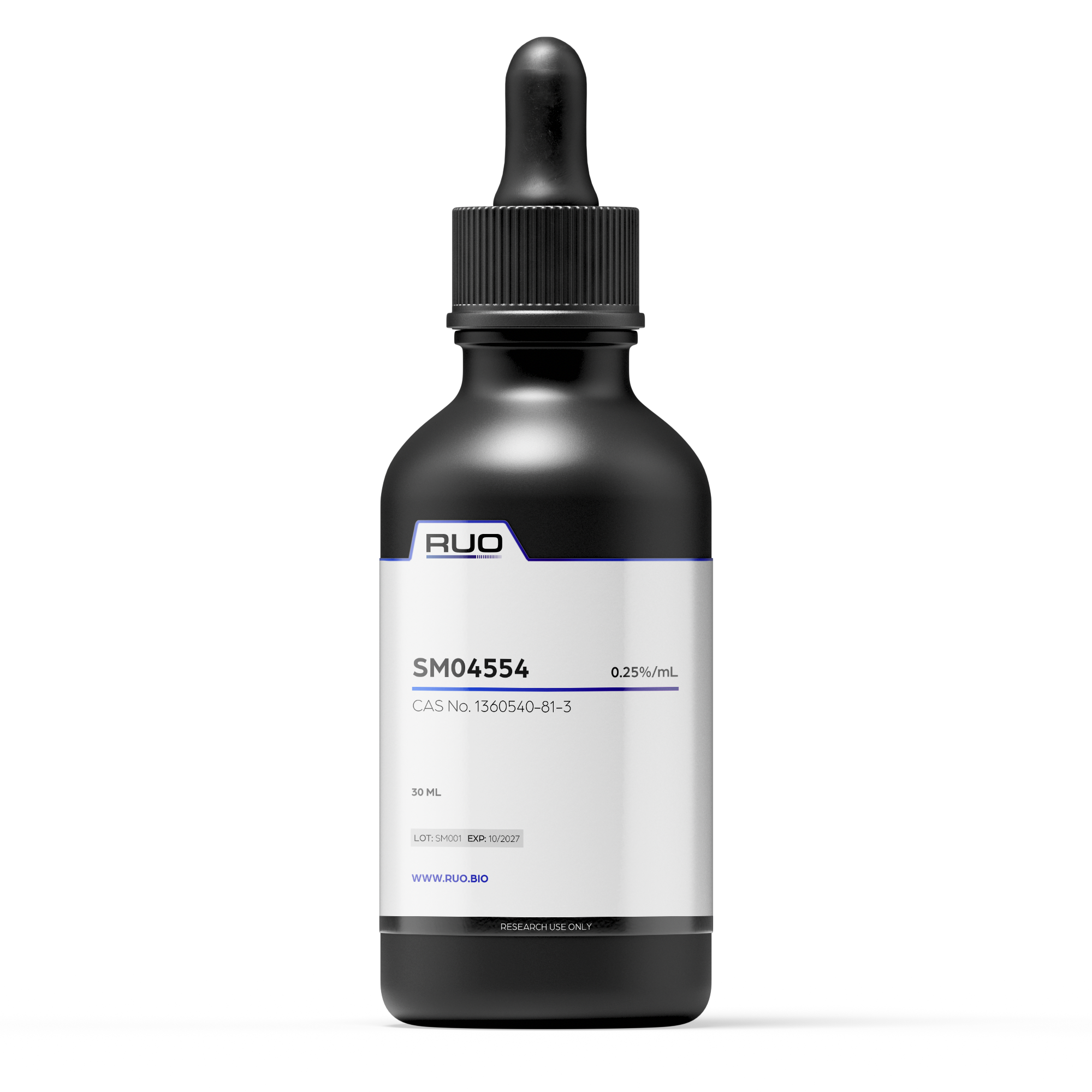
- SM-04554 belongs to a broader class of Wnt/beta-catenin modulators explored not only for hair regrowth but also for tissue regeneration and cancer, reflecting how central the Wnt pathway is to development and repair.
- Unlike finasteride or minoxidil, SM-04554 is designed to act downstream on the follicle's growth program itself, targeting the switch from the resting telogen phase into the active anagen phase.
Mechanism
SM-04554 targets the Wnt/beta-catenin pathway, a signaling cascade that plays a central role in embryonic development, tissue maintenance, and, importantly for hair, the regulation of the follicle growth cycle [1]. In healthy follicles, Wnt signaling helps drive stem cells from the resting telogen phase into the active anagen growth phase; in androgenetic alopecia this regenerative signaling is diminished as follicles miniaturize. By acting as a Wnt activator, SM-04554 is designed to restore or amplify this pathway in the scalp, encouraging follicle stem cells to re-enter the growth phase and thereby increasing follicle density [1].
This mechanism is fundamentally different from the dominant pharmacology of hair-loss treatment. Rather than reducing dihydrotestosterone or blocking the , SM-04554 works downstream on the regenerative program of the follicle itself, which is why it is grouped with regenerative Wnt-based strategies rather than antiandrogens [1]. In principle this allows it to be combined conceptually with androgen-directed approaches, since the two mechanisms address different steps in the disease.
Because the indexed peer-reviewed record specific to SM-04554 is limited to its identification and staging within the Wnt-modulator field, robust quantitative human efficacy figures are not available in that source, and its effects are therefore described qualitatively as activation of Wnt/beta-catenin signaling to promote the anagen growth phase and follicle regeneration [1]. Its advancement into late-stage clinical testing reflects sufficient early signal to justify large trials, and its topical formulation is intended to concentrate Wnt activation at the follicle while limiting systemic pathway engagement [1].
receptor fingerprint
Wnt/beta-catenin signaling pathwayactivator
beta-catenin (canonical Wnt effector)activator
CLK2 / DYRK1A kinasesinhibitor
LEF1/TCF transcription factorsactivator
Safetyrisks and cautions, not medical advice
SM-04554 is an investigational topical Wnt-pathway modulator studied for androgenetic alopecia; it has not been approved and its long-term safety is not established. In clinical trials the reported adverse effects were mainly local and mild, such as application-site reactions. Because Wnt signaling broadly influences cell growth, systemic and long-term safety data are limited, and its efficacy itself remains unproven.
History
SM-04554 was developed by Samumed (later Biosplice Therapeutics), a company known for pursuing Wnt-pathway modulators across regenerative and oncology indications. It was designed as a topical small-molecule activator of Wnt/beta-catenin signaling for androgenetic alopecia and advanced into clinical testing for pattern hair loss, making it one of the more prominent regenerative, non-antiandrogen approaches to hair regrowth. Beyond its identification and staging within the Wnt-modulator field, the indexed peer-reviewed record specific to SM-04554 is limited, and detailed, independently published trial results remain sparse. Much of what is known therefore rests on conference disclosures and company reports rather than a deep primary literature.
Reputation
SM-04554 attracts attention because it approaches hair loss from an angle few other agents do: rather than lowering DHT or blocking the androgen receptor, it aims to switch the follicle's own regenerative program back on by activating Wnt signaling. That mechanistic novelty is genuinely exciting, and in principle it could complement androgen-directed treatments since the two act at different points in the disease. The honest limitation is that robust, independently published human efficacy figures are scarce, so its real-world benefit for pattern hair loss is still not firmly established. It remains a compelling representative of the Wnt-based strategy that continues to draw research interest.
Subjective profileweighing the evidence above
A fresh angle that has not paid off. Waking dormant follicles instead of blocking androgens would be a genuine addition to hair loss care, but the late-stage results were underwhelming, efficacy remains unproven, and it is not available. Stick with what has evidence behind it.
Where to buy

1 other outlet
Suppliers
Vendors carrying SM-04554, with live product details and codes. Links are affiliate links that support the wiki at no cost to you.
RUO
SM-04554
Kimera Chems
SM-04554
Research
1 listed here; entry last updated August 2026
Reviews
My notesprivate to this device
FAQ
What is SM-04554?
It is an experimental topical that activates the Wnt/beta-catenin pathway to push hair follicle stem cells into the growth phase. It has been studied for hair regrowth.
Is it approved?
It is investigational and has been evaluated in clinical trials. It is not an approved treatment.
How is its mechanism different from finasteride?
Rather than affecting hormones, it targets a stem-cell signaling pathway involved in the hair growth cycle. This is a different approach to follicle regeneration.
What side effects are expected?
As a topical, local scalp reactions like irritation are the most likely. Long-term data remains limited.
Adverse effects
- Mild scalp irritation
- Occasional itching
- Some redness
- Some dryness