
spec sheet9 rows
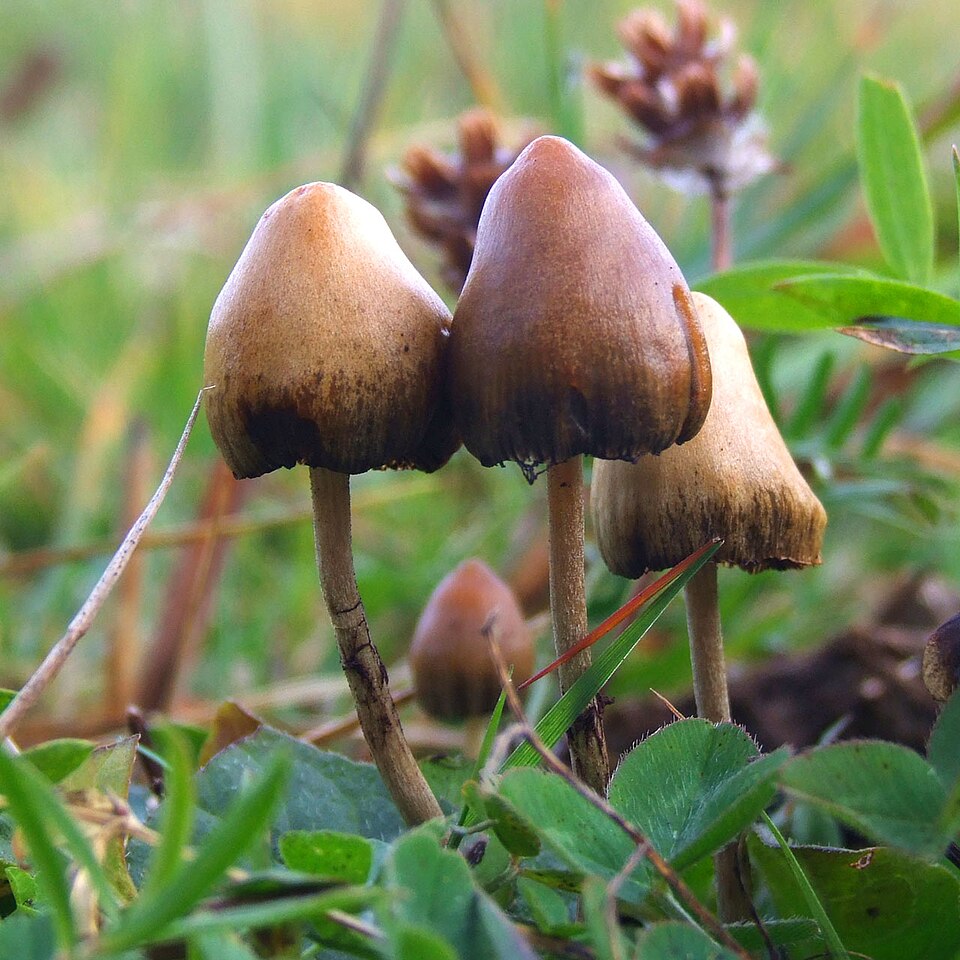
Psilocybin mushrooms are fungi, chiefly of the genus Psilocybe, that contain psilocybin, a phosphorylated tryptamine that the body dephosphorylates into the active metabolite psilocin. Psilocin acts primarily as an agonist at the 5-HT2A serotonin receptor; crystallographic and structure-activity studies show that the 4-position hydroxyl of the indole ring anchors the molecule in the receptor's orthosteric pocket and drives efficacious signaling, producing a several-hour psychedelic experience. Neuroimaging links the acute state to reorganization of large-scale brain network integration and segregation that tracks plasma psilocin levels, and controlled clinical trials have reported rapid antidepressant effects, including in treatment-resistant depression and in head-to-head comparison with escitalopram. The mushrooms carry low physiological toxicity but produce powerful psychological effects and pose a real risk of misidentification with poisonous species.
- Classic serotonergic psychedelic via 5-HT2A
- Very low physiological toxicity
- Actively studied for depression and end-of-life anxiety
- Naturally occurring prodrug converted to psilocin
- Prodrug delivering 5-HT2A-driven network reintegration
- Nausea, especially early in the experience
- Anxiety or confusion at higher amounts
- Difficult experiences ("bad trips")
- Serious danger from misidentifying wild mushrooms
Mechanism
Psilocybin itself is inactive; once eaten it is dephosphorylated in the body into psilocin, which is the working psychedelic. Psilocin acts as an at the receptor, the main driver of the classic psychedelic state, with additional activity at and 5-HT2C receptors that shapes mood and perception. The effect is a functional shift in serotonergic signaling rather than damage to neurons.
receptor fingerprint
receptoragonist (via psilocin)
receptoragonist
5-HT2C receptoragonist
Safetyrisks and cautions, not medical advice
Psilocybin mushrooms have very low physiological toxicity and no established lethal dose in humans; the main risks are psychological (anxiety, confusion, or lasting distress in vulnerable people) and practical (accidents, poor decisions). The single most dangerous error is misidentifying a wild mushroom, since some lookalikes are lethally poisonous. They should be avoided by people with a personal or family history of psychosis or bipolar disorder, and combining them with MAOIs or lithium is risky. Not medical advice.
Subjective profileweighing the evidence above
Physiologically about as gentle as psychedelics get, with no established lethal dose and serious clinical research behind psilocybin for depression and end-of-life anxiety. The real risks are psychological and practical, and with wild mushrooms misidentification is what actually kills people.
Resources
This entry is here for reference.
Research
- 2016first citedReceptor interaction profiles of novel psychoactive tryptamines compared with classic hallucino…
- 2023meta-analysisPsilocybin-assisted therapy for depression: A systematic review and meta-analysis
- 2025most recentPsychedelic-like effects induced by 2,5-dimethoxy-4-iodoamphetamine, lysergic acid diethylamide…
- 1.Psilocybin-assisted therapy for depression: A systematic review and meta-analysis
- 2.Metabolism of psilocybin and psilocin: clinical and forensic toxicological relevance
- 3.Hallucinogens and Serotonin 5-HT2A Receptor-Mediated Signaling Pathways
- 4.Trial of Psilocybin versus Escitalopram for Depression.
- 5.Single-Dose Psilocybin for a Treatment-Resistant Episode of Major Depression.
- 6.Classic psychedelics: An integrative review of epidemiology, therapeutics, mystical experience, and brain network function.
- 7.Psilocybin-induced changes in brain network integrity and segregation correlate with plasma psilocin level and psychedelic experience.
- 8.Structure-based discovery of nonhallucinogenic psychedelic analogs.
- 9.Structural insights into tryptamine psychedelics: The role of hydroxyl indole ring site in 5-HT2A receptor activation and psychedelic-like activity.
- 10.Receptor interaction profiles of novel psychoactive tryptamines compared with classic hallucinogens.
- 11.The polypharmacology of psychedelics reveals multiple targets for potential therapeutics.
- 12.Psychedelic-like effects induced by 2,5-dimethoxy-4-iodoamphetamine, lysergic acid diethylamide, and psilocybin in male and female C57BL/6J mice.
12 listed here; entry last updated August 2026
Reviews
My notesprivate to this device
FAQ
What is the active ingredient?
Psilocybin is a prodrug converted in the body to psilocin, which produces the effects through 5-HT2A serotonin receptor agonism.
Are they toxic to the body?
The psilocybin itself is very low in toxicity, but misidentifying a poisonous lookalike mushroom is a genuine and potentially lethal danger.
Who should avoid them?
Anyone with a personal or family history of psychosis or bipolar disorder, and anyone taking MAOIs or lithium.
Adverse effects
- Nausea, especially early in the experience
- Anxiety or confusion at higher amounts
- Difficult experiences ("bad trips")
- Serious danger from misidentifying wild mushrooms