
spec sheet13 rows
Promethazine is a first-generation antihistamine of the phenothiazine family, used for allergies, nausea and vomiting, motion sickness, and as a sedative. It blocks the histamine H1 receptor and also has anticholinergic and mild antidopaminergic effects, which give it strong sedating and anti-sickness properties. Introduced in the early 1950s and sold under names such as Phenergan, it is a widely used generic, although it carries important safety warnings, including a caution against use in young children.
- Reliably shuts down nausea and vomiting
- Prevents motion sickness before travel
- Eases allergy symptoms with a first generation antihistamine punch
- Sedating enough to be used before procedures
- Tablets, syrup, suppository or injection; many routes available
- Cheap generic with a track record since the 1950s
- Drowsiness
- Dry mouth and blurred vision
- Dizziness
Overview
Promethazine is a first-generation, sedating antihistamine and a derivative of phenothiazine, the same chemical family as several antipsychotic drugs. Rather than being used as an antipsychotic, it is valued for its antihistamine, anti-sickness and sedative actions; pharmacologically it is a strong antagonist of the histamine H1 receptor, with additional blocking effects at muscarinic acetylcholine receptors and weaker activity at dopamine and other receptors [1].
The drug was synthesized in the 1940s by the French company Rhone-Poulenc and was approved for medical use in 1951. Marketed most familiarly as Phenergan, it has long since become a widely available generic medicine.
Promethazine is used across several areas: to relieve allergic conditions such as hay fever, to treat and prevent nausea and vomiting (including after surgery, during pregnancy and with motion sickness), to provide short-term sedation and to calm anxiety before procedures, and to ease some symptoms of the common cold. Its oral absorption is incomplete, at roughly a quarter of the dose, and it undergoes extensive first-pass metabolism in the liver, with an elimination half-life on the order of ten to fourteen hours [1].
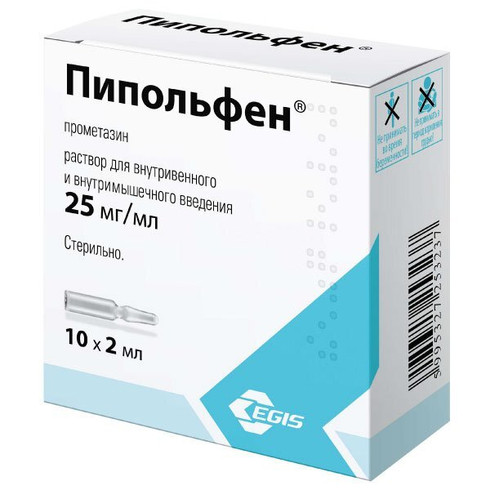
The medicine is supplied as tablets, syrup, rectal suppositories and injectable solution. Several important safety issues shape its use. It is not recommended in children under two years of age because of a risk of severe, potentially fatal breathing problems. Given intravenously it can cause serious tissue damage and even gangrene if it escapes the vein, which led to a boxed warning and a preference for safer routes [3]. In overdose the most characteristic effect is delirium, the likelihood of which rises predictably with the dose taken [2]. Promethazine is also misused recreationally, notably combined with codeine cough syrup in the mixture known as purple drank, a practice that carries a risk of dangerous respiratory depression [4].

- Promethazine came out of the same Rhône-Poulenc phenothiazine research program that soon produced chlorpromazine, the first antipsychotic.
- In a randomized surgical trial, a promethazine and dexamethasone combination cut the incidence of nausea and vomiting in the first 24 hours to about 41 percent, compared with roughly 97 percent in the comparison group.
- It carries a strict warning against use in children younger than two years because of the risk of serious, potentially fatal breathing problems.
Mechanism
Promethazine's main action is to block the H1 receptor, preventing histamine from producing allergic effects such as itching, swelling and a runny nose [1]. Because it readily crosses into the brain, this H1 blockade also causes marked drowsiness, which is why the drug is used as a sedative and sleep aid [1]. In addition it blocks receptors, giving it anticholinergic effects such as dry mouth and a useful action against motion sickness, and it weakly blocks receptors, which contributes to its ability to suppress nausea and vomiting [1]. These combined actions on , and pathways account for both its therapeutic benefits and many of its side effects. In overdose the anticholinergic action becomes prominent, and delirium is the most typical feature, its probability increasing with the dose ingested [2].
receptor fingerprint
H1 receptorantagonist
receptorantagonist
receptorantagonist
Alpha-1 receptorantagonist
Sodium channelsblocks
Dosingtypical ranges, not medical advice
interested in protocols and clinical dosages? make an account to see them! ^_^
Safetyrisks and cautions, not medical advice
Promethazine is prescription and its most prominent effect is sedation, along with dry mouth, blurred vision, dizziness, and constipation from its anticholinergic action. It carries a boxed warning against use in children under two because of the risk of fatal respiratory depression, and another warning about severe tissue injury, including gangrene, if an injection leaks out of the vein or enters an artery, so intramuscular or carefully given deep intravenous routes are preferred. It adds to the effect of alcohol, opioids, and other sedatives, can rarely cause movement disorders or neuroleptic malignant syndrome, and should be used cautiously in older adults.
Interactionsdocumented pairs only, not exhaustive
Promethazine combined with potassium chloride appears in drug interaction databases as a high-risk (class X) pairing, though the underlying mechanism lacks detailed mechanistic study in the published literature [7]. Promethazine's anticholinergic properties and central effects could theoretically potentiate gastrointestinal dysmotility caused by high-dose potassium, increasing ulceration risk, but robust case documentation is sparse.
Promethazine also has pharmacodynamic interactions with other central nervous system depressants (including morphine, benzodiazepines, and alcohol), compounding sedation and respiratory depression risk; however, these interactions are rarely isolated and documented formally as specific promethazine pairings in primary literature. The major gap is that promethazine's role in polydrug toxicity is often masked by the more prominent effects of opioids or benzodiazepines. Specific interactions with most modern antihistamines, atypical antipsychotics, and non-opioid analgesics remain undocumented in controlled studies.
Checking a whole stack? Run it through interactions + stacks.
History
Promethazine was synthesized in the late 1940s by chemists at the French company Rhône-Poulenc as part of the pioneering research into phenothiazine compounds, the same program that shortly afterward produced chlorpromazine and launched the modern era of psychiatric medicine. Introduced into clinical practice in the early 1950s and sold under names such as Phenergan, it was quickly adopted for allergy, nausea, motion sickness and sedation, drawing on its strong blockade of the histamine H1 receptor together with anticholinergic and mild antidopaminergic actions.
Over the following decades it became a familiar and inexpensive generic used across many fields of medicine, from anaesthesia to obstetrics. Its long clinical history has also delineated important safety boundaries; regulators later added strong warnings against its use in very young children because of the risk of severe respiratory depression, and cautions concerning intravenous administration and tissue injury. Promethazine remains a widely prescribed first-generation antihistamine to this day.
Reputation
Promethazine is a familiar and dependable medicine, respected for its versatility across allergy, nausea, motion sickness and sedation. Anaesthesiologists and surgeons value it as an effective agent against postoperative nausea and vomiting; a randomized trial found a promethazine plus dexamethasone combination markedly reduced early nausea and vomiting after bariatric surgery, and large network analyses continue to place antihistamines like it among useful options for this common problem.
Its calming, anti-sickness action and low cost have kept it in steady use for more than seventy years. It is important to be candid about its limits: its strong sedative and anticholinergic effects, the firm warning against use in children under two, and cautions about intravenous injection mean it must be used thoughtfully. Handled with appropriate care, however, it remains a genuinely useful and time-tested drug.
Subjective profileweighing the evidence above
Reliable for nausea, motion sickness and allergy, and the sedation is part of why it works. It carries a boxed warning against use in children under two because of fatal respiratory depression, and injections can cause severe tissue damage if they leak, so it is prescription for good reasons.
Where to buy
2 other outlets

Suppliers
Vendors carrying Promethazine, with live product details and codes. Links are affiliate links that support the wiki at no cost to you.
| supplier | size | price | $/mg |
|---|---|---|---|
| PCT.Zonelowest | 25MG | $2.36 | $0.094/mg |
| PCT.Zone | 5MG | $3.06 | $0.612/mg |
PCT.Zone
Promethazine
PCT.Zone
Promethazine
RUPharma🌐
Promethazine
Research
- 1985first citedClinical pharmacokinetics of H1-receptor antagonists (the antihistamines)
- 2020meta-analysisDrugs for preventing postoperative nausea and vomiting in adults after general anaesthesia: a n…
- 2025most recentPotential inappropriate medications and drug-drug interactions in adverse drug reactions in the…
- 1.Clinical pharmacokinetics of H1-receptor antagonists (the antihistamines)
- 2.Promethazine overdose: clinical effects, predicting delirium and the effect of charcoal
- 3.Preventing serious tissue injury with intravenous promethazine (phenergan)
- 4.Purple drank prevalence and characteristics of misusers of codeine cough syrup mixtures
- 5.Drugs for preventing postoperative nausea and vomiting in adults after general anaesthesia: a network meta-analysis
- 6.Comparison Effect of Promethazine/Dexamethasone and Metoclopramide /Dexamethasone on Postoperative Nausea and Vomiting after Laparascopic Gastric Placation: A Randomized Clinical Trial.
- 7.Potential inappropriate medications and drug-drug interactions in adverse drug reactions in the elderly: a retrospective study in a pharmacovigilance database.
7 listed here; entry last updated August 2026
Reviews
My notesprivate to this device
FAQ
Why does it make me so sleepy?
It strongly blocks histamine in the brain, which is exactly why it doubles as a sedative and why drowsiness is expected.
Can I give it to my young child?
Not under age two, where it carries a boxed warning for fatal breathing problems, and only with medical advice in older children.
Is the injection risky?
If it leaks from the vein or enters an artery it can cause severe tissue damage and even gangrene, so it is injected with great care, often into muscle.
Can I drink alcohol with it?
No; alcohol and other sedatives add to its drowsiness and can dangerously depress breathing.
Does it help motion sickness?
Yes, taken before travel it is effective for motion sickness and the nausea that comes with it.
Adverse effects
- Drowsiness
- Dry mouth and blurred vision
- Dizziness
- Confusion, especially in older people
- Serious tissue damage if injected into a vein and it leaks out
Notes and cautions
- Not for children under two years old