
spec sheet8 rows
Cetirizine is a second generation H1 antihistamine taken once daily for hay fever, hives and other histamine driven allergy symptoms.
- Once daily relief for hay fever and allergy symptoms
- Controls hives and chronic urticaria
- The cheap default newer drugs must earn past
- Works even better taken ahead of exposure
- Months of daily use is an accepted approach
- Second generation H1 blocker, one small tablet

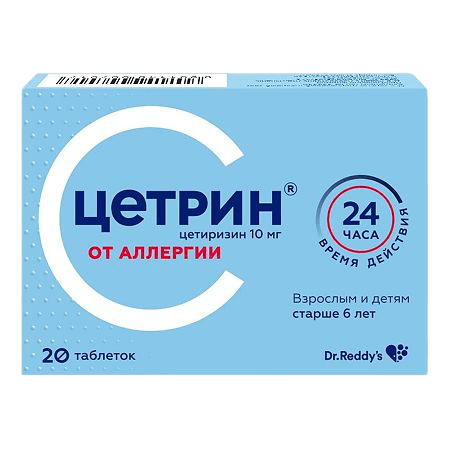
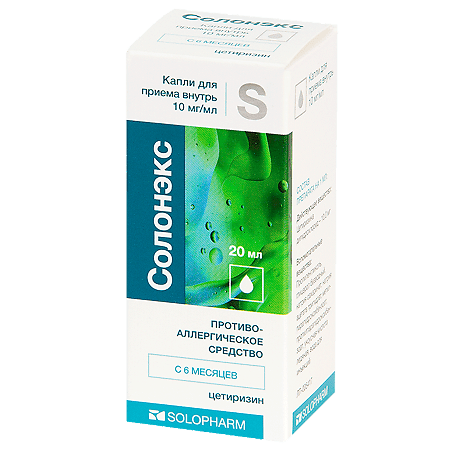
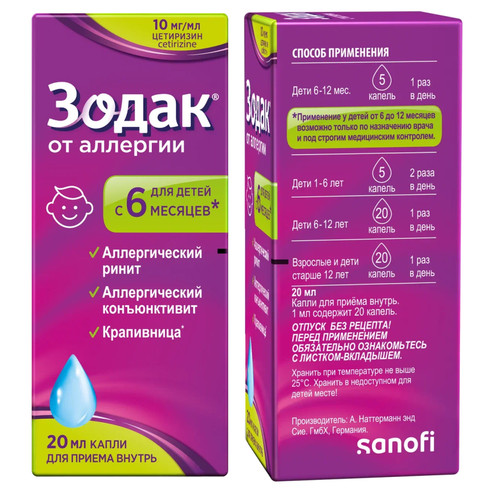
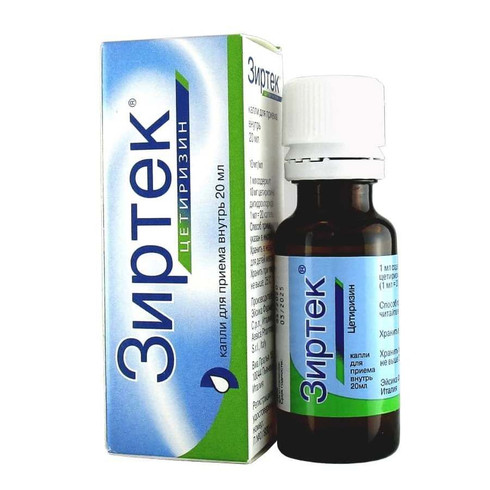
- Cetirizine is the carboxylated metabolite of hydroxyzine, which is why it retains full peripheral H1 potency while losing most of the parent's CNS penetration.
- It is a racemate and levocetirizine is the eutomer: essentially all the antihistaminic activity resides in the R-enantiomer, which does not racemise in vivo and has a smaller volume of distribution and lower non-renal clearance than dextrocetirizine [5].
- ETAC, an 18-month placebo-controlled trial in 817 infants with atopic dermatitis, is the landmark study; it did not prevent asthma overall but showed a reduction in asthma onset in the subgroup sensitised to grass pollen or house dust mite (PMID 9814724, PMID 12390444, PMID 11742270).
- Cetirizine is only minimally metabolised and is largely renally excreted unchanged, so it has few CYP-mediated interactions but does need dose reduction in renal impairment.
- Unlike terfenadine and astemizole, cetirizine has no clinically relevant hERG liability; ChEMBL puts its hERG IC50 around 30 micromolar, roughly a thousandfold above its H1 affinity.
- Abrupt discontinuation after months to years of daily use can trigger severe rebound pruritus, a phenomenon now recognised in the literature and reflected in recent labelling attention [7].
Mechanism
It is a carboxylated of hydroxyzine that acts as an inverse at peripheral H1 receptors and enters the brain far less than its parent does. It still sedates a minority of people, which is the usual reason someone switches to fexofenadine or bilastine.
receptor fingerprint
H1 receptor (HRH1)Inverse agonist / antagonist; cetirizine is the racemate and levocetirizine is the active eutomer
P-glycoprotein (ABCB1) at the Substrate, but a weaker one than fexofenadine or bilastine
hERG potassium channel (KCNH2)Very weak block; no clinically relevant QT effect
Eosinophil chemotaxis and adhesion-molecule (ICAM-1) expressionInhibited at clinically achievable concentrations
Safetyrisks and cautions, not medical advice
Cetirizine is a single molecule in the antihistamine class. A full adverse effect profile has not been compiled for this entry yet, so nothing here should be read as evidence that it is well tolerated; the absence is missing work rather than a finding. What is documented is what the compound is and what it is used for.
Where to buy
Suppliers
Vendors carrying Cetirizine, with live product details and codes. Links are affiliate links that support the wiki at no cost to you.

RUPharma🌐
Cetirizine
RUPharma🌐
Cetirizine
RUPharma🌐
Cetirizine

RUPharma🌐
Cetirizine
RUPharma🌐
Cetirizine
Research
- 1993first citedCetirizine: a new, nonsedating antihistamine.
- 1998controlled trialAllergic factors associated with the development of asthma and the influence of cetirizine in a…
- 2026most recentRebound Pruritus and Urticaria After Discontinuation of Chronic Antihistamine Use-A Scoping Rev…
- 1.Allergic factors associated with the development of asthma and the influence of cetirizine in a double-blind, randomised, placebo-controlled trial: first results of ETAC. Early Treatment of the Atopic Child.
- 2.A double-blinded, randomized, placebo-controlled trial of cetirizine in preventing the onset of asthma in children with atopic dermatitis: 18 months' treatment and 18 months' posttreatment follow-up.
- 3.Long-term treatment with cetirizine of infants with atopic dermatitis: a multi-country, double-blind, randomized, placebo-controlled trial (the ETAC trial) over 18 months.
- 4.Clinical pharmacology of the H1-receptor antagonists cetirizine and loratadine in children.
- 5.Compared pharmacological characteristics in humans of racemic cetirizine and levocetirizine, two histamine H1-receptor antagonists.
- 6.Cetirizine: a new, nonsedating antihistamine.
- 7.Rebound Pruritus and Urticaria After Discontinuation of Chronic Antihistamine Use-A Scoping Review.
- 8.Cetirizine-induce cholestasis.
8 listed here; entry last updated August 2026
Reviews
My notesprivate to this device
Notes and cautions
- Cetirizine has no boxed warning and is one of the safest widely used drugs, but two things are underappreciated.
- First, it is not truly non-sedating: somnolence occurs in roughly one in ten at 10 mg, the effect is dose-dependent and additive with alcohol and other CNS depressants, and it can impair driving in susceptible people.
- Second, stopping long-term daily use can cause severe rebound pruritus lasting days to weeks, which is frequently mistaken for a return of the original allergy and drives people back onto the drug indefinitely; tapering is the sensible approach after prolonged use [7].
- Dose reduction is required in renal impairment and in the elderly because clearance is predominantly renal.
- Rare hepatic injury including cholestasis has been reported [8], and dystonic or oculogyric reactions occur very rarely in children.