
spec sheet6 rows
Bilastine is a newer peripherally selective H1 antihistamine taken once daily for allergic rhinoconjunctivitis and urticaria, and it is one of the few that is essentially non sedating at label dose.
- Genuinely non sedating at the labelled once daily dose
- Cleared unchanged, so cytochrome drug interactions barely arise
- P-glycoprotein actively keeps it out of the brain
- Covers allergic rhinoconjunctivitis and urticaria together
- One of the best picks among second generation antihistamines
- Take it away from food to get the full absorption
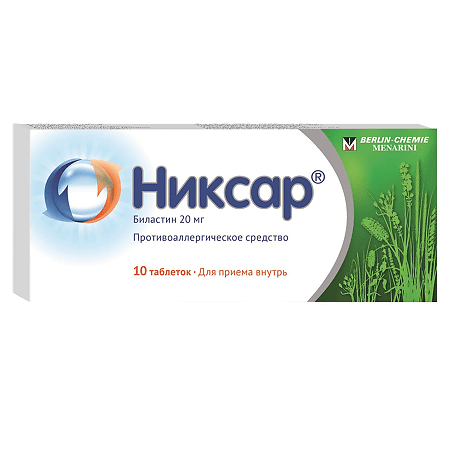
- The non-sedation claim for bilastine is not marketing, it is PET-measured: brain H1 receptor occupancy was -3.92% after bilastine 20 mg versus 53.95% after hydroxyzine 25 mg, with bilastine statistically indistinguishable from placebo [1].
- Bilastine is a P-glycoprotein substrate, which is the mechanistic reason it stays out of the brain; this also means P-gp inhibitors such as ketoconazole, erythromycin and diltiazem raise its plasma exposure substantially.
- Bilastine is essentially not metabolised: around 95% is excreted unchanged in urine and faeces, so it has no meaningful CYP-mediated drug interactions, unlike most antihistamines.
- A 30-receptor binding panel found no significant activity at serotonin, bradykinin, LTD4, calcium, muscarinic M3, alpha-1, beta-2, H2 or H3 receptors, which is why it lacks anticholinergic side effects [2].
- Efficacy is equivalent to comparators rather than superior: meta-analyses in allergic rhinitis and chronic urticaria show bilastine matching cetirizine, levocetirizine and desloratadine, with the advantage being the side-effect profile, not the symptom score (PMID 35082662, PMID 36380619, PMID 38557589).
- Food and fruit juice reduce bilastine absorption by roughly 30%, so it must be taken one hour before or two hours after a meal; this is a real-world adherence trap.
Mechanism
It is a selective H1 inverse that is barely metabolised and is cleared largely unchanged, so it carries very few cytochrome interactions. It is a P-glycoprotein substrate and is actively kept out of the brain, which is the basis for its low sedation; food and fruit juice cut its absorption substantially, so it is taken on an empty stomach.
receptor fingerprint
H1 receptor (HRH1)Selective antagonist / inverse agonist; displaces [3H]-pyrilamine from H1 receptors in guinea-pig cerebellum and human HEK cell lines
P-glycoprotein (ABCB1) at the Substrate; actively effluxed out of the CNS
Off-target receptor panel: , bradykinin, LTD4, calcium, M3, alpha-1, beta-2, H2 and H3 receptorsNo significant antagonism across a 30-receptor binding screen
Brain H1 receptor occupancy (measured in vivo by PET)Essentially none at therapeutic dose
Safetyrisks and cautions, not medical advice
Bilastine is a single molecule in the antihistamine class. A full adverse effect profile has not been compiled for this entry yet, so nothing here should be read as evidence that it is well tolerated; the absence is missing work rather than a finding. What is documented is what the compound is and what it is used for.
Subjective profileweighing the evidence above
Among the second generation antihistamines this is one of the better picks, for a metabolic reason rather than a pharmacodynamic one: it is cleared largely unchanged, so the cytochrome interactions that complicate the alternatives mostly do not arise. Active exclusion from the brain by P-glycoprotein is what keeps it genuinely non sedating at the labelled amount, and that protection is saturable, so going above the label trades away the one advantage worth paying for. The practical catch is food, because a meal or fruit juice cuts absorption substantially; that is the usual explanation when someone reports it stopped working.
Where to buy
Suppliers
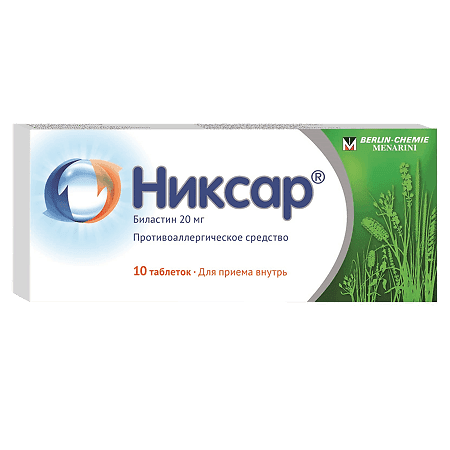
Vendors carrying Bilastine, with live product details and codes. Links are affiliate links that support the wiki at no cost to you.
RUPharma🌐
Bilastine
Research
- 2005first citedPreclinical pharmacology of bilastine, a new selective histamine H1 receptor antagonist: recept…
- 2021meta-analysisEfficacy and Safety of Bilastine in the Treatment of Allergic Rhinitis: A Systematic Review and…
- 2024most recentEfficacy and safety of bilastine vs. levocetirizine for the treatment of chronic idiopathic urt…
- 1.Bilastine vs. hydroxyzine: occupation of brain histamine H1 -receptors evaluated by positron emission tomography in healthy volunteers.
- 2.Preclinical pharmacology of bilastine, a new selective histamine H1 receptor antagonist: receptor selectivity and in vitro antihistaminic activity.
- 3.In vivo pharmacological characterisation of bilastine, a potent and selective histamine H1 receptor antagonist.
- 4.Efficacy and Safety of Bilastine in the Treatment of Allergic Rhinitis: A Systematic Review and Meta-analysis.
- 5.Effect of Bilastine on Chronic Urticaria: A Systematic Review and Meta-Analysis.
- 6.Efficacy and safety of bilastine vs. levocetirizine for the treatment of chronic idiopathic urticaria: A multicenter, double-blind, double-dummy, phase III, non-inferiority, randomized clinical trial.
- 7.Efficacy and safety of switching to bilastine, an H1-antihistamine, in patients with refractory chronic spontaneous urticaria (H1-SWITCH): a multicenter, open-label, randomized, parallel-group comparative study.
- 8.Bilastine and the central nervous system.
8 listed here; entry last updated August 2026
Reviews
My notesprivate to this device
Notes and cautions
- Bilastine has no boxed warning and one of the cleanest profiles among antihistamines: at the licensed 20 mg dose it does not impair driving or psychomotor performance and does not prolong the QT interval at therapeutic exposure.
- The main practical issues are pharmacokinetic rather than toxic.
- Take it on an empty stomach, because food or grapefruit juice cuts absorption by about 30%; and be careful with P-glycoprotein inhibitors (ketoconazole, itraconazole, erythromycin, diltiazem, ciclosporin, ritonavir), which raise plasma levels and can begin to erode the non-sedating advantage.
- Dose reduction is advised in moderate to severe renal impairment when combined with P-gp inhibitors.
- Doubling the dose, a common self-directed move in chronic urticaria, has not been shown to preserve the zero-occupancy CNS profile.