
spec sheet6 rows
Chloropyramine is a first generation ethylenediamine antihistamine used across the former Soviet states for acute allergic reactions, usually as the injection when a fast effect is wanted.
- First generation antihistamine with a fast injectable form
- Competitive H1 blockade for hives and itching
- Long established across the former Soviet states
- Works perfectly well as a sedating antihistamine
- Sedation on hand for anyone who wants it
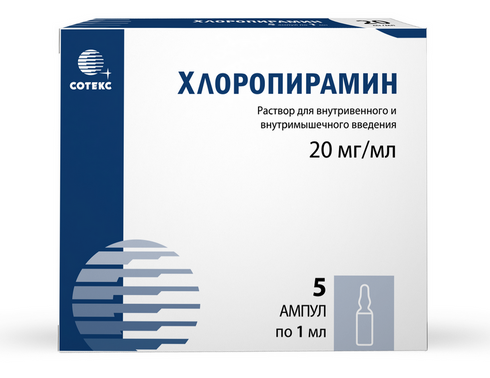
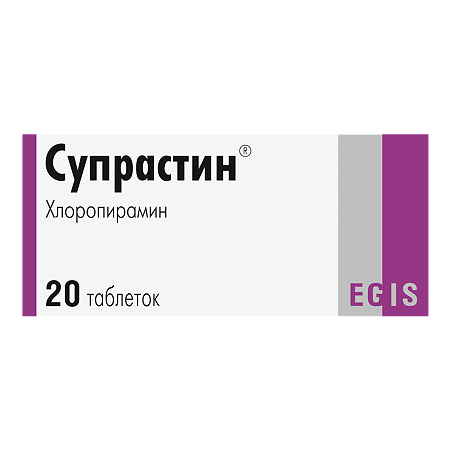
- Chloropyramine (Suprastin) is a first-generation ethylenediamine H1 antihistamine used widely in Russia, eastern Europe and central Asia; it has never been approved in the United States, the EU or the UK.
- There is no indexed randomised controlled trial of chloropyramine for any allergic indication. Its clinical use rests on decades of local practice, not on trial evidence available in PubMed.
- Almost the entire modern indexed literature on chloropyramine is oncology drug-repurposing work, where it appears as 'C4', an inhibitor of the focal adhesion kinase Y397 site and the FAK-VEGFR3 interaction; readers searching PubMed will find breast cancer papers, not allergy papers (PMID 19610651, PMID 27637080, PMID 35569251).
- No H1 binding constant for chloropyramine is curated in ChEMBL, so numeric affinity claims for it should be traced to primary data before being repeated.
- A 2024 electrophysiology study found chloropyramine impairs conduction and depolarisation and potentiates adrenergic automaticity in pulmonary vein myocardium, the tissue that initiates most atrial fibrillation; this is a genuine and under-recognised proarrhythmic signal [1].
- A 1973 Lancet report raised possible teratogenicity for an imipramine-chloropyramine combination; the signal was never resolved either way, and it remains the only human safety report of note in the indexed record [6].
Mechanism
It competitively blocks H1 receptors and, unlike the newer agents, crosses the blood brain barrier freely, so sedation and some antimuscarinic effect come with it. It is not a substitute for adrenaline in anaphylaxis; an antihistamine treats the urticaria and the itch, not the airway or the blood pressure.
receptor fingerprint
H1 receptor (HRH1)First-generation antagonist of the ethylenediamine class (the same class as tripelennamine and mepyramine)
Focal adhesion kinase (PTK2 / FAK) Y397 site and its VEGFR-3 interactionSmall-molecule inhibitor of the FAK-VEGFR3 protein-protein interface; chloropyramine hydrochloride is the compound called 'C4' in this oncology literature
receptorsAntagonist (first-generation antihistamine class effect)
Cardiac conduction in pulmonary vein myocardiumProarrhythmic: slows excitation conduction and depolarisation and potentiates adrenergic automaticity
Safetyrisks and cautions, not medical advice
the listing is the injectable ampoule presentation of a sedating first generation antihistamine, and it is being sold for a use, anaphylaxis, that it cannot treat
Subjective profileweighing the evidence above
An injectable first generation antihistamine sold for anaphylaxis invites exactly the mistake that kills people in anaphylaxis, which is reaching for anything other than adrenaline. Antihistamines treat the hives and the itch and do nothing whatever for the airway or the blood pressure, so the indication on the listing is the dangerous part of this entry rather than the molecule itself. As a sedating antihistamine it works perfectly well, and there is little reason to prefer it to the newer agents unless the sedation is the point. Anyone at genuine risk of anaphylaxis needs an adrenaline autoinjector and a written plan.
Where to buy

1 other outlet
Suppliers
Vendors carrying Chloropyramine, with live product details and codes. Links are affiliate links that support the wiki at no cost to you.

RUPharma🌐
Chloropyramine
RUPharma🌐
Chloropyramine
Research
- 1973first citedPossible teratogenicity of imipramine-chloropyramine.
- 2024most recentSuprastin (Chloropyramine) Causes Proarrhythmic Deterioration of Excitation Conduction, Depolar…
- 1.Suprastin (Chloropyramine) Causes Proarrhythmic Deterioration of Excitation Conduction, Depolarization and Potentiates Adrenergic Automaticity in the Pulmonary Veins Myocardium.
- 2.Small molecule chloropyramine hydrochloride (C4) targets the binding site of focal adhesion kinase and vascular endothelial growth factor receptor 3 and suppresses breast cancer growth in vivo.
- 3.SASH1 mediates sensitivity of breast cancer cells to chloropyramine and is associated with prognosis in breast cancer.
- 4.Discovery of novel chloropyramine-cinnamic acid hybrids as potential FAK inhibitors for intervention of metastatic triple-negative breast cancer.
- 5.Effects of chloropyramine, dimethindene and diphenhydramine on transepithelial ion transport: studies in bovine tracheal epithelium and frog skin.
- 6.Possible teratogenicity of imipramine-chloropyramine.
6 listed here; entry last updated August 2026
Reviews
My notesprivate to this device
Notes and cautions
- Chloropyramine is a sedating first-generation antihistamine with a substantial anticholinergic load, so it causes drowsiness, next-day impairment, dry mouth, blurred vision, urinary retention and confusion, and it is a poor choice in older adults, in glaucoma, in prostatic hypertrophy and in anyone who drives.
- Sedation is additive with alcohol, opioids and benzodiazepines.
- A 2024 preclinical study identified proarrhythmic effects in pulmonary vein myocardium, which should give particular pause in anyone with a history of atrial fibrillation or palpitations [1].
- It is contraindicated in newborns and premature infants, and the only human pregnancy signal in the indexed record is a possible teratogenicity report [6], so it should be avoided in pregnancy in favour of a better-characterised second-generation agent.
- Second-generation antihistamines such as cetirizine or bilastine are better evidenced and better tolerated for the same indications.