
spec sheet12 rows
Hydroxyzine is a first-generation antihistamine of the piperazine class, one of the oldest antihistamines still in wide use. Because it blocks histamine H1 receptors and readily enters the brain, it serves both for allergic itching and hives and as a sedating anti-anxiety medication and pre-procedure premedication. It is sold under brand names such as Atarax and Vistaril, and the body converts part of it into cetirizine, itself a well-known antihistamine.
- Calms anxiety without dependence or withdrawal
- Quiets itching and allergic skin flares
- Sedating enough for short term sleep
- Trusted before procedures as a calming premedication
- Body converts part of it into cetirizine
- Among the oldest antihistamines still in wide use
- Drowsiness or sedation
- Dry mouth
- Headache or dizziness
Overview
Hydroxyzine is a diphenylmethylpiperazine, a first-generation (sedating) antihistamine developed in the 1950s and among the earliest antihistamines brought to market; it was first made by Union Chimique Belge in the mid-1950s and introduced in the United States by Pfizer shortly after. It is available as two salts, the hydrochloride (marketed as Atarax) and the pamoate (marketed as Vistaril), given by mouth or by intramuscular injection. Unlike newer non-sedating antihistamines, hydroxyzine crosses the blood-brain barrier easily, which gives it calming and sleep-inducing properties alongside its antiallergic action [3].
Clinically hydroxyzine is used across several areas. As an antihistamine it relieves itching and the wheals of chronic urticaria and other allergic skin conditions, and it is used for nausea and as a sedative. In psychiatry it is prescribed as an anxiolytic for generalized anxiety disorder and for short-term situational anxiety, valued partly because, unlike benzodiazepines, it is not habit-forming. A Cochrane systematic review found hydroxyzine more effective than placebo for generalized anxiety disorder and broadly comparable to benzodiazepines and buspirone, while cautioning that the supporting trials were small and at risk of bias, so it is not established as a reliable first-line choice [1]. Reviews of anxiety pharmacotherapy accordingly list it among the antihistamine options for the disorder [2]. It is also widely used as a premedication before anesthesia and to strengthen the effect of opioid painkillers.
Hydroxyzine is a prescription medicine available as tablets, capsules, oral syrup and solution for injection. It is generally considered non-addictive, but its sedating nature brings drowsiness, dry mouth and headache, and, like a number of older antihistamines, it can prolong the heart's QT interval, so caution is advised in people with cardiac risk factors and it is often avoided in the elderly. In the body, hydroxyzine is metabolized to cetirizine, its carboxylated derivative, which keeps strong H1-blocking activity but causes much less sedation and is itself marketed as a second-generation antihistamine [3].

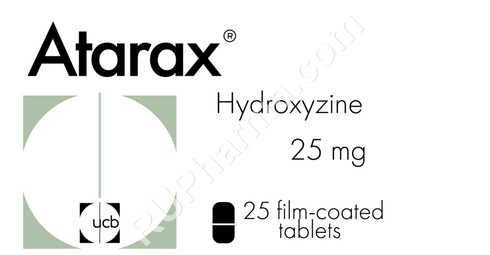
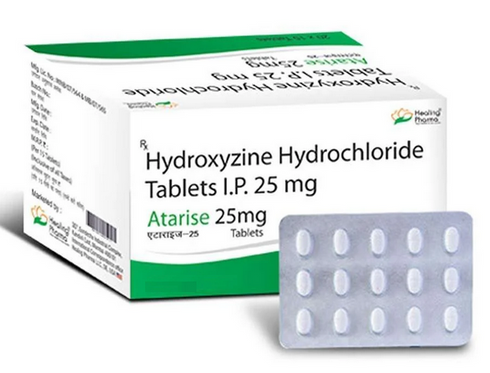
- Your body turns hydroxyzine into cetirizine, the active ingredient in the non-drowsy allergy pill Zyrtec, which the same company later developed.
- Because it does not cause dependence, hydroxyzine is one of the anti-anxiety options that can be used without the withdrawal concerns tied to benzodiazepines.
- The reason cetirizine barely makes you sleepy while hydroxyzine does is simply that cetirizine crosses into the brain far less readily.
Mechanism
Hydroxyzine works chiefly as a potent inverse , or blocker, at the H1 receptor, damping the itching, swelling and vascular leakage that histamine produces during allergic reactions [3]. Because the molecule is and crosses the , it also blocks H1 receptors in the central nervous system, where normally promotes wakefulness; this central action accounts for its pronounced sedative and calming effects and its usefulness in anxiety [1].
Hydroxyzine additionally has weaker actions at other receptors, including antagonism of , and alpha-1 receptors, and these may add to its anxiolytic and antiemetic properties. Its influence on cardiac potassium channels underlies the potential to lengthen the QT interval. After absorption it is converted in the liver to cetirizine, an active that carries much of the peripheral antihistamine effect while penetrating the brain far less, which is why cetirizine is comparatively non-sedating [3]. The calming effect appears relatively quickly, and the drug does not create the dependence seen with sedative-hypnotics.
receptor fingerprint
H1 receptorantagonist
receptorblocks
hERG potassium channel (IKr)blocks
receptorantagonist
receptorantagonist
Dosingtypical ranges, not medical advice
interested in protocols and clinical dosages? make an account to see them! ^_^
Safetyrisks and cautions, not medical advice
Hydroxyzine is prescription only. The most common effects are drowsiness, dry mouth, and a hungover or foggy feeling the next morning; some people feel dizzy or unsteady. Anticholinergic load makes it a poor choice for older adults, who face confusion, urinary retention, and fall risk, and it should be avoided in narrow-angle glaucoma and significant prostate enlargement. Regulators have flagged dose-dependent QT prolongation, so it is used cautiously in people with heart rhythm problems or on other QT-prolonging drugs. It adds to the sedation of alcohol, opioids, benzodiazepines, and other depressants. It is generally avoided in early pregnancy.
History
Hydroxyzine was synthesized in 1956 by the Belgian firm Union Chimique Belge, part of the first generation of piperazine antihistamines developed as the antihistamine field expanded in the postwar years. It was brought to market by Pfizer under the brand names Atarax and, as the pamoate salt, Vistaril, and quickly found a dual role: relieving allergic itching and hives while also serving as a sedating anti-anxiety agent and pre-operative calmative.
Because it reliably produced drowsiness and calm without the dependence of barbiturates or benzodiazepines, it became a durable option in both allergy and psychiatry. Decades later, researchers established that the body metabolizes hydroxyzine into cetirizine, which Union Chimique Belge went on to develop and launch as a leading non-sedating second-generation antihistamine. Hydroxyzine thus occupies an unusual place in pharmacology as both an enduring medicine in its own right and the metabolic parent of a blockbuster successor.
Reputation
Hydroxyzine is well regarded as a dependable, non-addictive option for anxiety and for itching, and its long track record gives prescribers confidence. Many patients and clinicians value that, unlike benzodiazepines, it carries no risk of dependence or withdrawal, which has made it attractive as short-term anxiety relief and as an as-needed calmative. Its calming effect tends to come on relatively quickly, and it doubles usefully as an antihistamine for hives and as a premedication before procedures. The honest trade-off is sedation and dry mouth, and at higher doses attention to the QT interval is warranted because of its effect on cardiac potassium channels. It is generally seen as a solid, versatile workhorse rather than a first-line antidepressant-class treatment for chronic anxiety, but within that role its safety profile is a genuine strength.
Subjective profileweighing the evidence above
A good short-term option for anxiety or sleep precisely because it brings no dependence or withdrawal, which sets it apart from benzodiazepines. The price is next-day grogginess and dry mouth, plus dose-dependent QT prolongation and real caution in older adults.
Where to buy
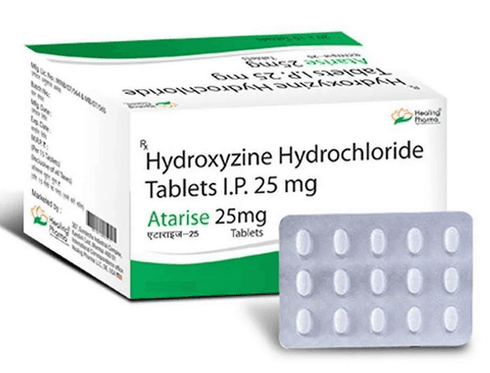

Suppliers
Vendors carrying Hydroxyzine, with live product details and codes. Links are affiliate links that support the wiki at no cost to you.
| supplier | size | price | $/mg |
|---|---|---|---|
| PCT.Zonelowest | 25MG | $2.24 | $0.090/mg |
| PCT.Zone | 10MG | $1.12 | $0.112/mg |
| PCT.Zone | 10MG | $2.42 | $0.242/mg |
PCT.Zone
Hydroxyzine
PCT.Zone
Hydroxyzine
PCT.Zone
Hydroxyzine
RUPharma🌐
Hydroxyzine
RUPharma🌐
Hydroxyzine
Research
- 1987first citedThe metabolism and pharmacokinetics of 14C-cetirizine in humans
- 2010meta-analysisHydroxyzine for generalised anxiety disorder.
- 2022most recentHydroxyzine Initiation Following Drug Safety Advisories on Cardiac Arrhythmias in the UK and Ca…
- 1.Hydroxyzine for generalised anxiety disorder.
- 2.Pharmacotherapy of Anxiety Disorders: Current and Emerging Treatment Options
- 3.Cetirizine/pseudoephedrine.
- 4.Efficacy and safety of hydroxyzine in the treatment of generalized anxiety disorder: a 3-month double-blind study
- 5.A multicentre double-blind comparison of hydroxyzine, buspirone and placebo in patients with generalized anxiety disorder
- 6.An effect-size analysis of pharmacologic treatments for generalized anxiety disorder
- 7.Selecting pharmacotherapy for generalized anxiety disorder
- 8.Treatment of generalized anxiety disorder: a comprehensive review of the literature for psychopharmacologic alternatives to newer antidepressants and benzodiazepines
- 9.The metabolism and pharmacokinetics of 14C-cetirizine in humans
- 10.Risk of QT prolongation and torsade de pointes associated with exposure to hydroxyzine: re-evaluation of an established drug
- 11.Hydroxyzine Initiation Following Drug Safety Advisories on Cardiac Arrhythmias in the UK and Canada: A Longitudinal Cohort Study
- 12.Association of QT-Prolonging Medication Use in CKD with Electrocardiographic Manifestations
17 listed here; entry last updated August 2026
Reviews
My notesprivate to this device
FAQ
Is hydroxyzine addictive?
No. Unlike benzodiazepines it does not cause dependence or withdrawal, which is a big reason doctors favor it for anxiety and itch.
Will it make me sleepy?
Usually yes. It crosses into the brain and blocks central histamine, so drowsiness is expected; many people take it at bedtime for that reason.
How fast does it work?
It typically starts working within 30 to 60 minutes, with peak effect in a couple of hours.
Can I drink alcohol with it?
Better not to. Alcohol stacks with hydroxyzine and deepens sedation, slowed reflexes, and impaired coordination.
Is it safe for older adults?
It is used cautiously; the anticholinergic and sedative effects raise the risk of confusion, urinary retention, and falls in seniors.
Adverse effects
- Drowsiness or sedation
- Dry mouth
- Headache or dizziness
- QT-interval prolongation (a heart-rhythm effect) at higher exposure
- Extra caution in older adults due to sedation and confusion risk