
spec sheet14 rows
Mirtazapine is a tetracyclic antidepressant, often classified as a noradrenergic and specific serotonergic antidepressant (NaSSA), used primarily to treat major depressive disorder. Rather than blocking the reuptake of neurotransmitters like most modern antidepressants, it works by blocking a set of receptors, which increases noradrenaline and serotonin signaling and produces marked sedative and appetite-stimulating effects. Introduced in the 1990s and sold under brand names such as Remeron, it is a prescription medicine available as a generic.
- Mood and sleep lift together
- Sedating by design; nights get deeper
- Appetite comes roaring back
- Anxiety and nausea both ease
- Low sexual side effects for its class
- Blocks receptors instead of blocking reuptake
- Drowsiness or sedation, especially at lower doses
- Increased appetite and weight gain
- Dry mouth
Overview
Mirtazapine is a tetracyclic antidepressant that is usually grouped as a noradrenergic and specific serotonergic antidepressant, abbreviated NaSSA. Unlike the selective serotonin reuptake inhibitors that dominate antidepressant prescribing, it does not block the reuptake of serotonin, norepinephrine or dopamine and does not inhibit monoamine oxidase; instead it produces its effects by antagonizing several neurotransmitter receptors [1].
The drug was synthesized in 1989 by the pharmaceutical company Organon. It was first approved in the Netherlands in 1994 and reached the United States market in 1996 under the brand name Remeron, with generic versions following after its patent expired in the mid-2000s [1]. Mirtazapine is well absorbed when taken by mouth and has a long elimination half-life that supports once-daily dosing, and it is metabolized in the liver by several cytochrome P450 enzymes [2].
Its principal approved use is the treatment of major depressive disorder in adults. Comparative reviews have found its antidepressant efficacy broadly similar to that of tricyclic antidepressants and, in some analyses, faster in onset and at least as effective as the SSRIs, and a large network meta-analysis ranked it among the more effective antidepressants [1][3][4]. Because of its distinctive effects it is also used off-label for several purposes, most commonly as a sleep aid, since it is strongly sedating, and as an appetite stimulant in people who are underweight or troubled by nausea; it has additionally been used for anxiety symptoms [1]. Two features set it apart from the SSRIs: it commonly increases appetite and body weight, and it carries a lower likelihood of sexual dysfunction [1][3].
Mirtazapine is a prescription-only medicine available as conventional tablets and as orally disintegrating tablets. Like other antidepressants it carries warnings about a possible increase in suicidal thoughts in younger patients early in treatment. It is also used in veterinary practice, notably to stimulate appetite in cats [1].

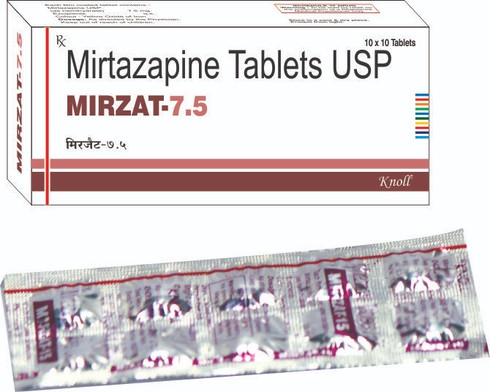
- Mirtazapine is unusual in that lower doses can be more sedating than higher ones, because at higher doses rising noradrenergic activity begins to offset its strong antihistamine effect.
- In a major 2018 network meta-analysis of 21 antidepressants, mirtazapine was ranked among the most effective agents in direct head-to-head trials.
- Unlike the SSRIs, mirtazapine works almost entirely by blocking receptors rather than by blocking neurotransmitter reuptake.
Mechanism
Mirtazapine works by blocking neurotransmitter receptors rather than by inhibiting reuptake. Its central action is antagonism of the alpha-2 receptors, including the autoreceptors and heteroreceptors that normally restrain the release of and ; by removing this brake, mirtazapine enhances the release of both neurotransmitters [1]. At the same time it blocks the 5-HT2 and 5-HT3 subtypes of the receptor, which is thought to channel the increased serotonin activity toward receptors while limiting the nausea and sexual side effects associated with unopposed serotonin stimulation [1].
Mirtazapine is also a very potent of the H1 receptor, and this antihistamine action accounts for its pronounced sedative effect and its tendency to raise appetite and weight, effects that are most evident at lower doses [1]. It does not appreciably inhibit the reuptake of , or , nor does it inhibit monoamine oxidase, which sets it apart from most other antidepressant classes [1].
receptor fingerprint
Alpha-2 autoreceptorantagonist
H1 receptorantagonist
5-HT3 receptorblocks
receptorblocks
5-HT2C receptorblocks
Dosingtypical ranges, not medical advice
interested in protocols and clinical dosages? make an account to see them! ^_^
Safetyrisks and cautions, not medical advice
Mirtazapine is a prescription antidepressant. Common effects include drowsiness, increased appetite and weight gain, dry mouth, dizziness and higher cholesterol or triglycerides. Rare but serious risks include a drop in white blood cells known as agranulocytosis, and serotonin syndrome when combined with other serotonergic drugs. It should not be used with or near a course of MAO inhibitors, and alcohol or other sedatives add to its drowsiness; stopping abruptly can trigger discontinuation symptoms.
Interactionsdocumented pairs only, not exhaustive
Mirtazapine undergoes hepatic metabolism via multiple CYP450 enzymes, and its clearance is substantially reduced by CYP2D6 and CYP3A4 inhibitors. When combined with paroxetine, mirtazapine's apparent clearance drops by approximately 27 percent, requiring dose reduction to avoid accumulation [23]. The interaction is even more pronounced with fluvoxamine, which causes a 51 percent reduction in mirtazapine clearance; this is a pharmacokinetic interaction where the SSRI inhibits the enzyme responsible for mirtazapine's elimination [23]. Body weight also modulates this interaction; obesity further reduces clearance independent of the SSRI effect, suggesting additive metabolic impairment.
The documented interactions are limited to CYP2D6 and CYP3A4 inhibitors, primarily other psychiatric drugs. Alcohol has not been specifically studied in combination with mirtazapine for formal pharmacokinetic interaction. Most other medications lack documented interaction data with mirtazapine, leaving their combinations understudied.
Checking a whole stack? Run it through interactions + stacks.
History
Mirtazapine was developed by the Dutch pharmaceutical company Organon, emerging from a chemical program related to the earlier antidepressant mianserin. Chemists sought a compound that would enhance both noradrenergic and serotonergic transmission through receptor blockade rather than reuptake inhibition, and mirtazapine was the result. It was first introduced in the Netherlands in 1994 and received US FDA approval in 1996, marketed under the brand name Remeron. It was positioned as a noradrenergic and specific serotonergic antidepressant (NaSSA), a novel mechanistic class at the time. An orally disintegrating formulation, Remeron SolTab, later broadened its use, and the drug is now widely available as a low-cost generic.
Reputation
Mirtazapine holds a respected place in psychiatry as an effective antidepressant with a distinctive profile that suits particular patients well. In the landmark 2018 Cipriani network meta-analysis of 21 antidepressants, mirtazapine ranked among the more efficacious agents in head-to-head comparisons. Its sedating and appetite-stimulating effects, arising from potent histamine H1 blockade, are often turned to advantage in depressed patients troubled by insomnia, anxiety, poor appetite, or weight loss. Because it does not inhibit serotonin reuptake, it tends to cause less sexual dysfunction and gastrointestinal upset than SSRIs, a genuine benefit for many. It is honest to acknowledge that weight gain and daytime drowsiness are common and lead some to discontinue it. On balance it remains a valued, well-understood option, especially where its side effects align with a patient's needs.
Subjective profileweighing the evidence above
A strong fit for the specific case where depression has wrecked sleep and appetite, because it restores both quickly and causes fewer sexual side effects than SSRIs. Weight gain and sedation are the trade, the sedation stronger at low doses, and rare agranulocytosis is why an unexplained fever gets checked.
Where to buy
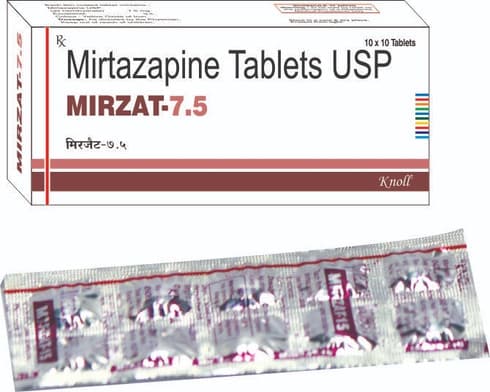
1 other outlet
Suppliers
Vendors carrying Mirtazapine, with live product details and codes. Links are affiliate links that support the wiki at no cost to you.
PCT.Zone
Mirtazapine
RUPharma🌐
Mirtazapine
Research
- 1995first citedSafety of mirtazapine: a review.
- 2011meta-analysisMirtazapine versus other antidepressive agents for depression.
- 2017most active year3 papers
- 2026most recentOptimizing Mirtazapine Initial Dosing: A Population Analysis of the Effects of BMI, Paroxetine…
- 1.A review of the pharmacological and clinical profile of mirtazapine.
- 2.Clinical pharmacokinetics of mirtazapine.
- 3.Mirtazapine versus other antidepressive agents for depression.
- 4.Comparative efficacy and acceptability of 21 antidepressant drugs for the acute treatment of adults with major depressive disorder: a systematic review and network meta-analysis.
- 5.Mirtazapine as Appetite Stimulant in Patients With Non-Small Cell Lung Cancer and Anorexia: A Randomized Clinical Trial.
- 6.Mirtazapine for chronic insomnia in older adults: a randomised double-blind placebo-controlled trial-the MIRAGE study.
- 7.Low doses of mirtazapine or quetiapine for transient insomnia: A randomised, double-blind, cross-over, placebo-controlled trial.
- 8.Pharmacological update of mirtazapine: a narrative literature review.
- 9.The pharmacologic profile of mirtazapine.
- 10.Development of new antidepressants.
- 11.Mirtazapine, an antidepressant.
- 12.Mirtazapine: a newer antidepressant.
23 listed here; entry last updated August 2026
Reviews
My notesprivate to this device
FAQ
Why does mirtazapine make me sleepy and hungry?
At lower doses its strong block of histamine H1 receptors drives both drowsiness and increased appetite. Higher doses recruit more noradrenergic activity, which can offset some of the sedation.
Is a lower dose really more sedating?
Often yes. The antihistamine effect is strongest around 7.5 to 15 mg, so many people feel more sedation on a low dose than a higher one.
How long until it helps my mood?
Sleep and appetite can change within days, but the full antidepressant benefit usually takes one to two weeks or more.
Is mirtazapine addictive?
It is not habit forming, but stopping suddenly can cause discontinuation symptoms, so it is best tapered with your prescriber.
Can I drink alcohol on it?
Alcohol adds to the sedation and impaired coordination, so it is best avoided or kept minimal.
Adverse effects
- Drowsiness or sedation, especially at lower doses
- Increased appetite and weight gain
- Dry mouth
- Dizziness
Notes and cautions
- Vivid dreams
- Rarely, a low white blood cell count