
spec sheet13 rows
Duloxetine is a balanced serotonin-norepinephrine reuptake inhibitor, marketed chiefly as Cymbalta since 2004, approved for major depression and generalized anxiety as well as several chronic pain conditions. Its analgesic action reflects potentiation of descending serotonergic and noradrenergic pathways that dampen pain signaling in the spinal cord, an effect largely separate from its antidepressant activity. Randomized trials support its use in diabetic peripheral neuropathic pain, fibromyalgia, and chronic musculoskeletal pain from osteoarthritis and low back pain, and it is the agent with the strongest randomized evidence recommended by oncology guidelines for chemotherapy-induced peripheral neuropathy. Through the same monoaminergic facilitation of pudendal motor neurons in Onuf's nucleus, duloxetine strengthens urethral sphincter tone and is used in some countries for stress urinary incontinence. It is a prescription-only medicine, available generically, and appears on the World Health Organization list of essential medicines.
- lifts mood and anxiety while genuinely easing nerve pain
- the strongest randomised evidence for chemo-induced neuropathy
- proven in diabetic nerve pain, fibromyalgia, back and joint pain
- one prescription covering both depression and chronic pain
- on the WHO essential medicines list and available generically
- pain relief runs on its own pathways, not just mood lift
- Nausea is common, especially in the first days of treatment
- May cause dry mouth, constipation, dizziness, or sweating
- Can modestly raise blood pressure
Overview
Duloxetine is an antidepressant of the serotonin-norepinephrine reuptake inhibitor class, commonly abbreviated SNRI [3]. It is a fairly balanced inhibitor of the reuptake of both serotonin and norepinephrine and, apart from these actions, has little effect on other receptors or channels [3]. Developed by Eli Lilly and Company, it was approved in the United States in 2004 and is best known under the brand name Cymbalta [1].
The drug is approved for a notably broad set of conditions that span psychiatry and pain medicine [3]. In mental health it is used for major depressive disorder and generalized anxiety disorder, and in pain management it is used for diabetic peripheral neuropathic pain, fibromyalgia, and chronic musculoskeletal pain; in Europe it is also approved for stress urinary incontinence [3]. A large network meta-analysis comparing antidepressants found duloxetine to be more effective than placebo for depression, with efficacy broadly comparable to other commonly used agents, although it was among the drugs with higher rates of discontinuation [1].
Duloxetine's usefulness in pain has been examined in systematic reviews [2]. A Cochrane review concluded that it is effective for the short-term treatment of painful diabetic neuropathy and provides benefit in fibromyalgia and in the physical pain that can accompany depression, though the size of the effect is modest and side effects are common [2]. These pain-relieving effects are thought to reflect the role of serotonin and norepinephrine in the nerve pathways that dampen pain signals [2].
Duloxetine is taken by mouth as a delayed-release capsule and has been available as a generic medicine since 2013 [3]. It is a prescription-only drug and is included on the World Health Organization's list of essential medicines. Common side effects, which follow from its effects on serotonin and norepinephrine, include nausea, dry mouth, constipation, dizziness, difficulty sleeping, and sweating, and it can produce a modest rise in blood pressure [3]. As with other antidepressants of its type, stopping the drug abruptly can cause withdrawal-like discontinuation symptoms, so doses are usually reduced gradually [3].

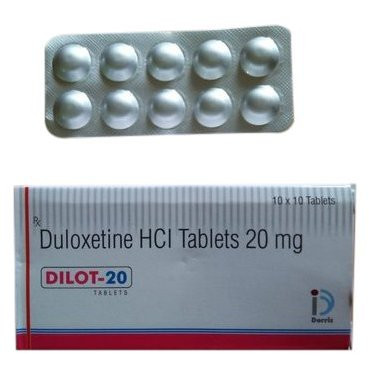
- Duloxetine is the pain agent with the strongest randomized evidence recommended by oncology guidelines for chemotherapy-induced peripheral neuropathy.
- It is a potent, roughly balanced inhibitor of both the serotonin and norepinephrine transporters, with reported serotonin transporter binding in the sub-nanomolar range.
- In some countries a dedicated formulation is used to treat stress urinary incontinence, working through the same monoaminergic pathways.
Mechanism
Duloxetine works by blocking the transporter proteins that normally reabsorb and back into nerve cells after they have been released [3]. By inhibiting this reuptake, it increases the amount of both neurotransmitters available at synapses in the central nervous system, and this enhanced serotonergic and noradrenergic signaling is thought to underlie its antidepressant and anti-anxiety effects [3]. The same two neurotransmitters also carry the brain and spinal cord's descending pathways that suppress pain signals, which is believed to explain why duloxetine relieves several chronic pain conditions in addition to improving mood [2]. Duloxetine is a fairly balanced inhibitor of the two transporters and is also a moderate inhibitor of the liver enzyme CYP2D6, which can affect the handling of certain other drugs [3].
receptor fingerprint
transporter (SERT)inhibits
transporter (NET)inhibits
Descending spinal pain pathwaysmodulates
()inhibits
Safetyrisks and cautions, not medical advice
Duloxetine is a prescription antidepressant. Common side effects include nausea, dry mouth, sleepiness or trouble sleeping, constipation, sweating, dizziness, and reduced appetite, and it can dull sexual function. It can nudge blood pressure up and, rarely, injure the liver, so it is avoided in significant liver disease and heavy alcohol use. Stopping it suddenly can trigger dizziness, irritability, and electric-shock sensations, so it should be tapered. It must not be combined with MAOI antidepressants, and pairing it with other serotonergic drugs raises the risk of serotonin syndrome; like all antidepressants it carries a warning about suicidal thoughts in younger people.
Interactionsdocumented pairs only, not exhaustive
Duloxetine is a moderately potent inhibitor of CYP2D6, which causes it to reduce the metabolism of other drugs metabolized by this enzyme. When combined with aripiprazole, duloxetine increases aripiprazole plasma concentrations by approximately 54 percent and dose-adjusted concentrations by 46 percent [18]; this is a pharmacokinetic interaction in which duloxetine changes aripiprazole levels. Similarly, duloxetine reduces the clearance of citalopram, resulting in a 4-fold increase in citalopram AUC and a 20-fold increase in peak plasma concentration when the two are coadministered [19].
Duloxetine has also been implicated in dangerous serotonergic interactions; a fatal case involved duloxetine combined with amitriptyline and chlorphenamine, all of which inhibit serotonin reuptake, leading to serotonin syndrome and hyponatremia [20]. The major interactions remain poorly mapped for codrugs not yet studied; most CYP2D6 substrate drugs have not been formally tested for interactions with duloxetine.
Checking a whole stack? Run it through interactions + stacks.
History
Duloxetine was developed by Eli Lilly and Company as a balanced serotonin-norepinephrine reuptake inhibitor, growing out of the company's long research program in monoamine pharmacology that had earlier produced fluoxetine. It received United States approval in 2004 and was marketed chiefly under the brand name Cymbalta, first for major depressive disorder and, in the same period, for diabetic peripheral neuropathic pain. Its indications subsequently expanded to generalized anxiety disorder, fibromyalgia, and chronic musculoskeletal pain, reflecting a distinctive dual role as both an antidepressant and an analgesic.
In some countries a separate formulation was marketed for stress urinary incontinence, exploiting the same enhancement of serotonergic and noradrenergic tone at the level of the sphincter-controlling motor neurons. A landmark randomized trial by Smith and colleagues, published in JAMA in 2013, established its benefit for chemotherapy-induced peripheral neuropathy, and it is now the agent with the strongest randomized evidence recommended by oncology guidelines for that condition. Duloxetine is available generically and appears on the World Health Organization's List of Essential Medicines.
Reputation
Duloxetine is well regarded for its dual usefulness, treating mood and anxiety disorders while also relieving several chronic pain conditions through its action on the descending pain-modulating pathways of the spinal cord. This makes it especially valuable when depression or anxiety coexists with painful conditions such as diabetic neuropathy, fibromyalgia, or chronic low back pain, allowing a single medication to address both.
It carries the distinction of being the best-supported drug for chemotherapy-induced peripheral neuropathy, a notoriously difficult problem with few effective options. Prescribers appreciate its once-daily dosing and generic availability. In fairness, it can cause nausea, dry mouth, and drowsiness, requires gradual tapering to avoid discontinuation symptoms, and warrants the same monitoring as other antidepressants. On balance it is a versatile, evidence-backed medicine that occupies a useful niche at the intersection of psychiatry and pain management.
Subjective profileweighing the evidence above
One of the more useful antidepressants precisely because it does two jobs, lifting mood and anxiety while genuinely easing diabetic nerve pain and fibromyalgia. Prescription territory: nausea is common early, blood pressure can drift up, and stopping abruptly is rough, so it needs tapering.
Where to buy
1 other outlet

Suppliers
Vendors carrying Duloxetine, with live product details and codes. Links are affiliate links that support the wiki at no cost to you.
PCT.Zone
Duloxetine
RUPharma🌐
Duloxetine
Research
- 2001first citedComparative affinity of duloxetine and venlafaxine for serotonin and norepinephrine transporter…
- 2013most active year3 papers
- 2018meta-analysisComparative efficacy and acceptability of 21 antidepressant drugs for the acute treatment of ad…
- 2026most recentThe interplay between serotonin syndrome and syndrome of inappropriate antidiuresis: a fatal ca…
- 1.Comparative efficacy and acceptability of 21 antidepressant drugs for the acute treatment of adults with major depressive disorder: a systematic review and network meta-analysis
- 2.Duloxetine for treating painful neuropathy, chronic pain or fibromyalgia.
- 3.Serotonin and Norepinephrine Reuptake Inhibitors.
- 4.Effect of duloxetine on pain, function, and quality of life among patients with chemotherapy-induced painful peripheral neuropathy: a randomized clinical trial.
- 5.A randomized controlled trial of duloxetine in diabetic peripheral neuropathic pain.
- 6.Duloxetine and pregabalin: high-dose monotherapy or their combination? The COMBO-DN study: a multinational, randomized, double-blind, parallel-group study in patients with diabetic peripheral neuropathic pain.
- 7.Comparison of amitriptyline supplemented with pregabalin, pregabalin supplemented with amitriptyline, and duloxetine supplemented with pregabalin for the treatment of diabetic peripheral neuropathic pain (OPTION-DM): a multicentre, double-blind, randomised crossover trial.
- 8.Duloxetine: mechanism of action at the lower urinary tract and Onuf's nucleus.
- 9.Targeting serotonin and norepinephrine receptors in stress urinary incontinence.
- 10.Duloxetine for fibromyalgia syndrome: a systematic review and meta-analysis.
- 11.Antidepressants and gabapentinoids in neuropathic pain: Mechanistic insights.
- 12.Efficacy and safety of duloxetine in osteoarthritis or chronic low back pain: a Systematic review and meta-analysis.
20 listed here; entry last updated August 2026
Reviews
My notesprivate to this device
FAQ
How long before duloxetine helps my mood?
Some people feel a lift in one to two weeks, but the full antidepressant effect can take four to six weeks.
Can I stop taking it suddenly?
No; stopping abruptly can cause dizziness, irritability, and electric-shock sensations, so it should be tapered under guidance.
Does it work for pain even without depression?
Yes; it is approved specifically for diabetic nerve pain, fibromyalgia, and chronic musculoskeletal pain regardless of mood.
Can I drink alcohol on it?
Heavy drinking is discouraged because both can stress the liver, and the combination raises the risk of liver injury.
Why do I take it as an intact capsule?
It is a delayed-release capsule, so swallow it whole; crushing or opening it can change how the drug is absorbed.
Adverse effects
- Nausea is common, especially in the first days of treatment
- May cause dry mouth, constipation, dizziness, or sweating
- Can modestly raise blood pressure
- Should be tapered gradually to avoid discontinuation symptoms