
spec sheet13 rows
Venlafaxine is a serotonin-norepinephrine reuptake inhibitor (SNRI) used for major depressive disorder and several anxiety disorders, and available in immediate-release and extended-release forms. It is distinguished by an ascending dose-response relationship: at low doses it behaves much like a selective serotonin reuptake inhibitor, while progressively higher doses recruit norepinephrine reuptake inhibition, which contributes both to added efficacy and to dose-dependent increases in blood pressure. Beyond monoamine transport, preclinical work implicates sigma-1 receptor modulation in its antidepressant action, and the drug is widely repurposed as an effective nonhormonal treatment for menopausal and cancer-therapy-related hot flashes. Network meta-analyses place it among the more efficacious antidepressants, although tolerability, cardiovascular effects in overdose, and a pronounced discontinuation syndrome temper its use.
- Lifts mood and calms anxiety together
- Cuts panic attacks and relentless worry
- Hits serotonin and norepinephrine both
- A go-to when other antidepressants stall
- Also eases nerve pain and fibromyalgia
- Cools menopausal hot flashes
- Nausea
- Dry mouth and sweating
- Sleep changes or drowsiness
Overview
Venlafaxine is a synthetic antidepressant classified as a serotonin-norepinephrine reuptake inhibitor, a group of drugs that raise levels of two neurotransmitters involved in mood [1]. Chemically it is a phenylethylamine derivative and is usually supplied as its hydrochloride salt [1]. It is notable for a dose-dependent pharmacology: at lower doses it behaves much like a selective serotonin reuptake inhibitor, and its action on norepinephrine grows stronger as the dose is raised [1].
After it is absorbed, venlafaxine is converted by the liver enzyme CYP2D6 into an active metabolite called O-desmethylvenlafaxine, also known as desvenlafaxine, which shares its reuptake-inhibiting activity and is itself marketed as a separate antidepressant [1]. Because CYP2D6 activity varies widely between individuals, blood levels and response can differ considerably from person to person [1]. Both venlafaxine and its metabolite have relatively short half-lives and low protein binding [1].
Venlafaxine is approved for major depressive disorder and for generalized anxiety disorder, social anxiety disorder and panic disorder, and it is used off-label for conditions such as hot flashes and certain chronic pain and neuropathic states [1]. In a large network meta-analysis comparing antidepressants, venlafaxine ranked among the more effective agents, although it also carried a comparatively higher dropout rate than some alternatives [2]. It was approved for medical use in the United States in 1993 and was long sold under the brand name Effexor, with generic and extended-release versions following in later years [1].
Venlafaxine is a prescription-only medicine in the United States, the United Kingdom, Canada, Australia and the European Union [1]. Common side effects include nausea, dry mouth, sweating, sleep changes and sexual dysfunction, and at higher doses it can produce a mild, dose-dependent rise in blood pressure attributed to its effect on norepinephrine [1][3]. Like other antidepressants it carries warnings about a possible increase in suicidal thoughts in younger people, and it is associated with a relatively pronounced discontinuation syndrome, so stopping it suddenly can cause dizziness, irritability, flu-like feelings and sensory disturbances; a gradual taper is generally advised [1]. It should not be combined with monoamine oxidase inhibitors because of the risk of serotonin syndrome [1].
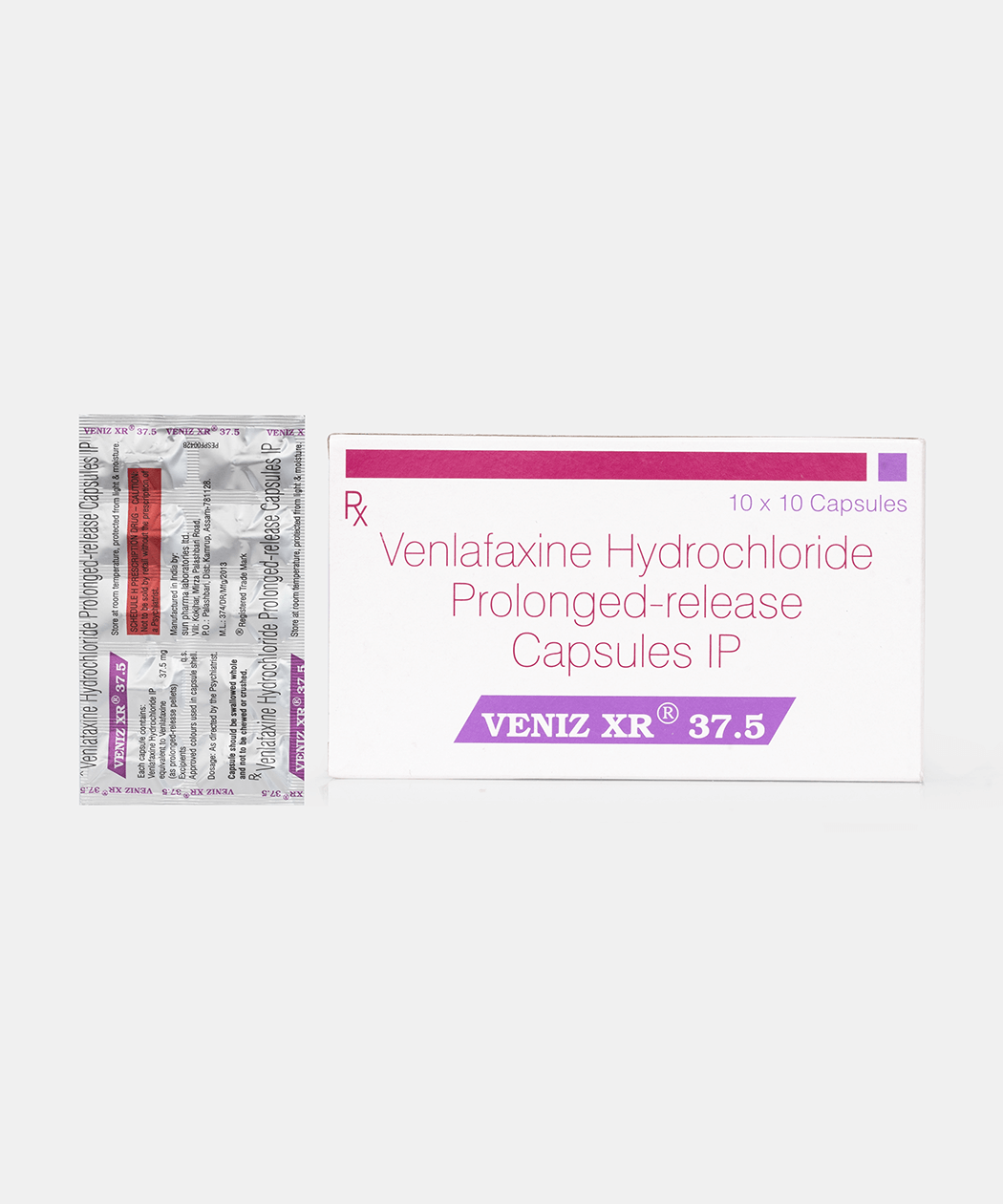
- Venlafaxine was the first serotonin-norepinephrine reuptake inhibitor to reach the market, effectively creating the SNRI drug class.
- It has a genuinely dose-dependent personality: at low doses it behaves much like an SSRI, and only at higher doses does its norepinephrine effect become clinically meaningful.
- Although designed as an antidepressant, it is widely used off-label as one of the most effective nonhormonal treatments for hot flashes.
Mechanism
Venlafaxine relieves symptoms of depression and anxiety by blocking the transporter proteins that normally clear and from the , so more of these neurotransmitters remain available to signal between neurons [1]. Its affinity for the transporter is considerably greater than for the transporter, which gives it a distinctive dose-related profile: at low doses it acts predominantly on serotonin much like an , while inhibition of norepinephrine reuptake becomes clinically meaningful only as the dose is increased [1].
At the highest doses it may also weakly affect reuptake in some brain regions [1]. The added noradrenergic action at higher doses is thought to contribute both to its antidepressant effect and to side effects such as the dose-dependent elevation of blood pressure [1][3]. Much of its overall activity is shared with its active desvenlafaxine, which inhibits the same transporters [1]. Because it strengthens signaling, combining it with other serotonergic drugs can raise the risk of serotonin syndrome [1].
receptor fingerprint
transporter (SERT)inhibits
transporter (NET)inhibits
CYP2D6 enzymemodulates
()inhibits
, H1 and alpha-1 receptorsmodulates
Safetyrisks and cautions, not medical advice
Venlafaxine is prescription only. Common effects include nausea, headache, dry mouth, sweating, insomnia and sexual dysfunction. It can raise blood pressure in a dose-related way, so pressure should be monitored, especially above 150 mg a day. Because it has a short half-life, stopping suddenly often causes a discontinuation syndrome with dizziness, brain zaps and flu-like feelings, so it must be tapered. Like other antidepressants it carries a boxed warning about suicidal thoughts in people under 25, and combining it with MAOIs or other serotonergic drugs can cause serotonin syndrome.
Interactionsdocumented pairs only, not exhaustive
Venlafaxine, a serotonin-norepinephrine reuptake inhibitor, has well-characterized pharmacokinetic interactions via CYP2D6. When combined with potent CYP2D6 inhibitors such as paroxetine, venlafaxine exposure increases substantially, with this interaction being particularly pronounced for the R-enantiomer [14]. CYP2D6 inhibition reduces conversion of venlafaxine to its active metabolite O-desmethylvenlafaxine, altering the overall pharmacodynamic profile.
Clarithromycin, another CYP2D6 inhibitor, produces similar elevated venlafaxine levels in patients with different CYP2D6 genotypes [15]. Pharmacodynamic interactions arise with other serotonergic agents (SSRIs, MAOIs, tramadol); although rare, serotonin syndrome is possible when venlafaxine is combined with these drugs or with linezolid. The interaction between venlafaxine and benzodiazepines or stimulants remains largely unstudied in controlled trials.
Checking a whole stack? Run it through interactions + stacks.
History
Venlafaxine was developed by the American pharmaceutical company Wyeth (then Wyeth-Ayerst, part of American Home Products) during the 1980s as part of an effort to create antidepressants that acted on more than one monoamine system. It received approval from the U.S. Food and Drug Administration in December 1993 under the brand name Effexor, becoming the first widely marketed serotonin-norepinephrine reuptake inhibitor and thereby founding the SNRI class.
An extended-release formulation, Effexor XR, followed in 1997, offering once-daily dosing and improved tolerability, and it went on to secure indications for generalized anxiety disorder, social anxiety disorder, and panic disorder in addition to major depression. The drug's active metabolite, desvenlafaxine, was later developed as a separate medicine in its own right. Over the following decades venlafaxine became one of the most widely prescribed antidepressants worldwide and was extensively studied as a nonhormonal treatment for hot flashes.
Reputation
Venlafaxine enjoys a strong reputation as one of the more efficacious antidepressants; large network meta-analyses have repeatedly ranked it near the top of the class for reducing depressive symptoms. Clinicians particularly value its flexibility, since raising the dose progressively recruits noradrenergic activity and can help patients who respond only partially to serotonergic drugs alone.
Beyond mood and anxiety disorders it has earned a respected second life as an effective, well-tolerated option for menopausal and cancer-therapy-related hot flashes, giving relief to patients who cannot or prefer not to use hormones. Its limitations are honestly acknowledged: higher doses can raise blood pressure, and abrupt cessation is associated with a notably uncomfortable discontinuation syndrome, so gradual tapering is advised. On balance it remains a durable, evidence-backed choice valued for potency and versatility.
Subjective profileweighing the evidence above
Effective across depression, several anxiety disorders and nerve pain, and often the sensible next step when an SSRI is not enough. The short half-life is the catch: missed doses or an abrupt stop bring dizziness and brain zaps, so it needs a slow taper, and blood pressure is worth watching at higher doses.
Where to buy
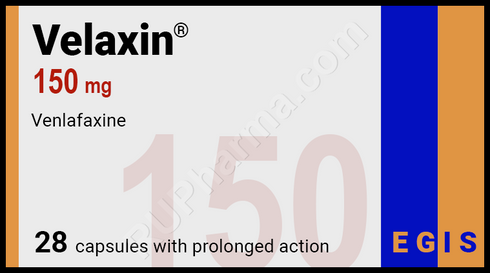
1 other outlet

Suppliers
Vendors carrying Venlafaxine, with live product details and codes. Links are affiliate links that support the wiki at no cost to you.
PCT.Zone
Venlafaxine
RUPharma🌐
Venlafaxine
Research
- 1998first citedEffects of venlafaxine on blood pressure: a meta-analysis of original data from 3744 depressed…
- 2018meta-analysisComparative efficacy and acceptability of 21 antidepressant drugs for the acute treatment of ad…
- 2026most recentEnantioselective Pharmacokinetics of Venlafaxine in the Presence of CYP2D6 Inhibition: A Popula…
- 1.Serotonin and Norepinephrine Reuptake Inhibitors
- 2.Comparative efficacy and acceptability of 21 antidepressant drugs for the acute treatment of adults with major depressive disorder: a systematic review and network meta-analysis
- 3.Effects of venlafaxine on blood pressure: a meta-analysis of original data from 3744 depressed patients
- 4.Pharmacological treatments in panic disorder in adults: a network meta-analysis
- 5.Management of hot flashes in breast cancer survivors and men with prostate cancer
- 6.Desvenlafaxine in major depressive disorder: an evidence-based review of its place in therapy
- 7.Involvement of sigma-1 receptor modulation in the antidepressant action of venlafaxine
- 8.Comparative efficacy and tolerability of antidepressants for major depressive disorder in children and adolescents: a network meta-analysis
- 9.Venlafaxine in management of hot flashes in survivors of breast cancer: a randomised controlled trial
- 10.Attaining remission in generalized anxiety disorder: venlafaxine extended release comparative data
- 11.Venlafaxine: more dangerous than most 'selective' serotonergic antidepressants
- 12.Randomized, double-blind, placebo-controlled crossover trials of venlafaxine for hot flashes after breast cancer
15 listed here; entry last updated August 2026
Reviews
My notesprivate to this device
FAQ
How long until it helps?
Sleep and energy can shift within one to two weeks, but full mood benefit often takes four to six weeks.
Can I stop it suddenly?
No; its short half-life means abrupt stopping causes dizziness, brain zaps and flu-like symptoms, so taper slowly.
Does it raise blood pressure?
It can, especially above 150 mg a day, so blood pressure should be checked periodically.
Why take the extended-release form with food?
Food and once-daily dosing smooth out drug levels and reduce nausea.
Is venlafaxine addictive?
It is not addictive like a controlled substance, but the body adapts, so it needs tapering rather than a sudden stop.
Adverse effects
- Nausea
- Dry mouth and sweating
- Sleep changes or drowsiness
- Sexual dysfunction
- Withdrawal effects if stopped abruptly