
spec sheet10 rows
Clomipramine is a tricyclic antidepressant (TCA), sold chiefly under the brand name Anafranil, best known as one of the most effective drug treatments for obsessive-compulsive disorder [1][2]. It also treats major depression, panic disorder and cataplexy, and is used off-label for conditions such as premature ejaculation and chronic pain [1][2]. Introduced by the Swiss firm Geigy in the 1960s as a chlorinated relative of imipramine, it is the most strongly serotonergic of the older tricyclics and appears on the World Health Organization's list of essential medicines [1][2].
- Still the benchmark drug for obsessive compulsive disorder
- Worth the trouble when SSRIs have not worked
- The most strongly serotonergic of the older tricyclics
- Also treats major depression, panic disorder and cataplexy
- Used off label for premature ejaculation and chronic pain
- On the WHO essential medicines list
- Dry mouth, constipation and blurred vision (anticholinergic effects)
- Drowsiness, dizziness and weight gain
- Tremor and sweating
Overview
Clomipramine is a tricyclic antidepressant, a family of drugs named for the three-ring core of their chemical structure [1]. It was created as a chlorinated derivative of imipramine, and among the tricyclics it stands out for its unusually strong effect on the neurotransmitter serotonin [1][2]. In the body it is broken down in the liver into an active metabolite, desmethylclomipramine, that leans more toward acting on noradrenaline; both the parent drug and this metabolite contribute to its effects, and both persist long enough that steady blood levels take a couple of weeks to establish [3].
The compound was developed by the Swiss company Geigy, was first described in the scientific literature in the early 1960s, and reached the market in Western Europe as an antidepressant, where it became well established, particularly for depression that had resisted other treatments [2][3]. In the United States it followed a different path: rather than being cleared for depression, it was approved in 1989 for obsessive-compulsive disorder and became available the following year, and to this day it carries a US licence for OCD rather than for depression [1][2].
Clomipramine's best-documented strength is in obsessive-compulsive disorder, where controlled trials found it more effective than several other tricyclics at reducing obsessions and compulsions, an anti-obsessional benefit that appears to be separate from its antidepressant action [2]. It is also used to treat major depression and panic disorder, in which it lessens the frequency and severity of panic attacks, and it is prescribed for cataplexy in narcolepsy [2]. Off-label and additional uses include premature ejaculation, chronic pain, trichotillomania and body dysmorphic disorder [1].
Because it blocks several receptor systems beyond its reuptake action, clomipramine produces a broad set of predictable side effects, many of them anticholinergic, such as dry mouth, constipation, blurred vision and drowsiness, along with weight gain, tremor and sexual difficulties [2]. Seizures are a recognised dose-related risk that becomes more frequent at higher doses, and like other tricyclics it can disturb the heart's electrical conduction and is dangerous in overdose [2]. As with other antidepressants, it carries a warning about a possible increase in suicidal thoughts in people under twenty-five, and its behaviour in special situations such as pregnancy has been studied because both it and its active metabolite cross into the circulation [2][4].
Clomipramine is a prescription-only medicine, is available as an inexpensive generic, and is listed on the World Health Organization Model List of Essential Medicines; it is usually taken as oral capsules or tablets [1][2].
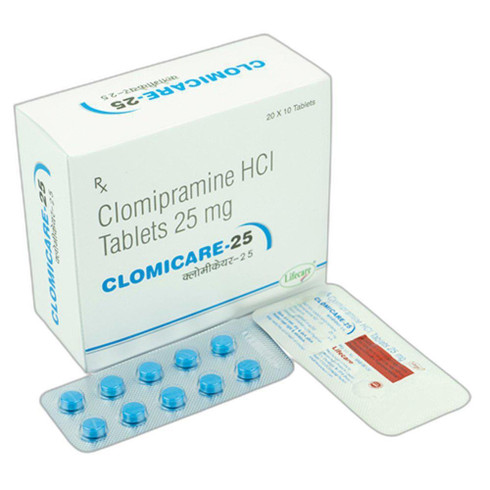
Mechanism
Clomipramine relieves symptoms mainly by increasing the amount of , and to a lesser extent noradrenaline, available in the brain [1][2]. It does this by blocking the transporter proteins that normally pump these neurotransmitters back into nerve cells after they are released, so the chemical signal between neurons is prolonged; clomipramine is the most potent among the classic tricyclics, while its active desmethylclomipramine shifts the balance toward noradrenaline reuptake blockade [1][2][3].
Alongside this therapeutic action it binds and blocks several other receptors, including H1, and alpha-1 receptors, and this off-target activity accounts for much of its sedating, anticholinergic and blood-pressure-related side effects [1]. The delayed benefit seen in obsessive-compulsive disorder and depression is thought to reflect gradual adaptive changes in signalling rather than the immediate rise in neurotransmitter levels [2].
receptor fingerprint
transporter (SERT)Reuptake inhibition
transporter (via )Reuptake inhibition
H1Antagonist
Antagonist
Alpha-1 Antagonist
Dosingtypical ranges, not medical advice
interested in protocols and clinical dosages? make an account to see them! ^_^
Safetyrisks and cautions, not medical advice
Same tricyclic caution as the rest: cardiotoxic in overdose, so a narrow safety margin. It lowers the seizure threshold more than most, so seizures are a real consideration at higher amounts. Common sides are dry mouth, constipation, sweating, weight gain, drowsiness, and sexual dysfunction. Never combine with MAO inhibitors. Prescription only.
Interactionsdocumented pairs only, not exhaustive
Clomipramine is metabolized by the cytochrome P450 enzymes CYP2D6 and CYP2C19, making its exposure sensitive to genetic variation and to drugs that inhibit these enzymes. Patients who are CYP2D6 poor metabolizers need dose reductions to 50% of the normal dose when treated for depression, or when side effects occur at normal doses for other indications; ultra-rapid metabolizers may need dose increases to 1.5 times the normal dose. For clomipramine prescribed for anxiety or obsessive-compulsive disorder in CYP2C19 ultra-rapid metabolizers, alternative medications may be needed [23].
Other SSRIs and tricyclic antidepressants can competitively inhibit these same enzymes, leading to phenoconversion (a change in metabolizer status during treatment). This mechanism is pharmacokinetic; the co-medication reduces clomipramine clearance and raises its levels. The combination of clomipramine with drugs like fluoxetine or paroxetine, which are potent CYP2D6 inhibitors, should be approached with caution, though specific clinical outcomes from this pairing are underreported.
Clomipramine's interactions with most other drug classes remain unstudied. Interactions with non-psychiatric medications, most antibiotics, and antihistamines are not documented in clinical trials.
Checking a whole stack? Run it through interactions + stacks.
Subjective profileweighing the evidence above
Still the benchmark for OCD, and worth the trouble when SSRIs have not worked. It is also a tricyclic: cardiotoxic in overdose, harder on the seizure threshold than most, and the dry mouth, sedation and weight gain are the daily reality rather than the fine print. A prescription decision, managed by someone who will follow it.
Where to buy
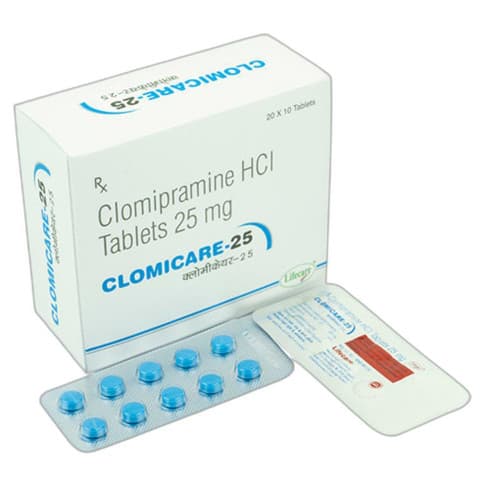
Suppliers
Vendors carrying Clomipramine, with live product details and codes. Links are affiliate links that support the wiki at no cost to you.
RUPharma🌐
Clomipramine
Research
- 1977first citedClomipramine (Anafranil) and behaviour therapy in obsessive-compulsive and phobic disorders.
- 1990most active year5 papers
- 2002meta-analysisMultivariate meta-analysis of controlled drug studies for obsessive-compulsive disorder.
- 2026most recentDutch Pharmacogenetics Working Group (DPWG) guideline for the gene-drug interaction between CYP…
- 1.Comparing the effectiveness of clomipramine and fluoxetine in dogs with anxiety-related behaviours.
- 2.Clomipramine. An overview of its pharmacological properties and a review of its therapeutic use in obsessive compulsive disorder and panic disorder.
- 3.Clinical pharmacokinetics of clomipramine.
- 4.Pharmacokinetics of clomipramine during pregnancy.
- 5.Worldwide use of clomipramine.
- 6.Clomipramine: an antiobsessional tricyclic antidepressant.
- 7.A review of the efficacy of selective serotonin reuptake inhibitors in obsessive-compulsive disorder.
- 8.Multivariate meta-analysis of controlled drug studies for obsessive-compulsive disorder.
- 9.Refining treatment approaches in obsessive-compulsive disorder.
- 10.Clomipramine: an antiobsessive drug.
- 11.Pharmacotherapy of obsessive-compulsive disorder.
- 12.Clomipramine for obsessive-compulsive disorder.
23 listed here; entry last updated August 2026
Reviews
My notesprivate to this device
FAQ
What is Clomipramine used for?
It is the classic OCD medication, and it is also used for depression, panic, and premature ejaculation.
How does Clomipramine work?
The parent drug is a strong serotonin reuptake blocker, while its main metabolite blocks noradrenaline reuptake; together they hit both systems hard.
Is Clomipramine well-researched?
Yes; it is the historical gold standard for OCD and still holds up in head-to-head trials.
What are the main side effects?
Dry mouth, sweating, weight gain, sexual dysfunction, and drowsiness; it lowers the seizure threshold and is cardiotoxic in overdose.
Adverse effects
- Dry mouth, constipation and blurred vision (anticholinergic effects)
- Drowsiness, dizziness and weight gain
- Tremor and sweating
- Sexual difficulties
- A dose-related risk of seizures at higher doses
- Effects on heart rhythm, with danger in overdose