
spec sheet8 rows
Desloratadine is the active metabolite of loratadine, a long acting H1 antihistamine taken once daily for allergic rhinitis and chronic urticaria.
- Once daily dosing for allergic rhinitis
- Long receptor residence at peripheral H1 sites
- Skips the CYP conversion step entirely
- Works for chronic urticaria as well
- Drowsiness is uncommon at the labelled dose
- The active metabolite of loratadine, ready to work

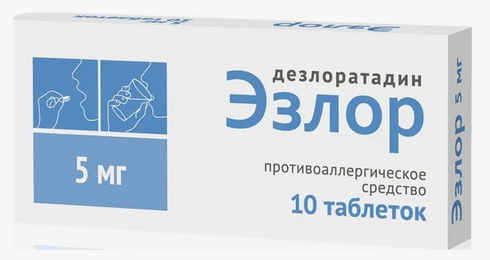
- Desloratadine is the major active metabolite of loratadine and is significantly more potent than the parent drug [3].
- It binds human H1 with Ki 0.9 nM and dissociates so slowly that only 37% reverses over 6 hours, a pseudo-irreversible antagonism explaining 24-hour dosing [1].
- Half-life is 27 hours and bioavailability is unaffected by food or grapefruit juice [3].
- It is not a P-glycoprotein or OATP substrate and is not substantially metabolised by CYP3A4, so ketoconazole, erythromycin, fluoxetine and azithromycin can be co-administered [3].
- One independent review concluded it is a 'me-too' agent with no major clinical difference from other second-generation antihistamines [4].
Mechanism
It is an inverse at peripheral H1 receptors with a long receptor residence time, which is what supports once daily dosing. Because it is already the it does not depend on the CYP3A4 and CYP2D6 conversion that loratadine needs, so in principle exposure varies less between people.
receptor fingerprint
H1 receptorPotent selective antagonist that dissociates so slowly it behaves as a pseudo-irreversible, non-competitive blocker
H1 dissociation kineticsOnly 37% of bound drug dissociates over 6 h in the presence of 5 microM unlabelled competitor
Mast cell and basophil mediator releaseInhibits generation and release of inflammatory mediators and cytokines at physiologically relevant concentrations in vitro
Eosinophil chemotaxis, adhesion and superoxide generation, and ICAM-1 expressionAttenuates eosinophil function and downregulates cell adhesion molecule expression
Safetyrisks and cautions, not medical advice
Desloratadine is a single molecule in the antihistamine class. A full adverse effect profile has not been compiled for this entry yet, so nothing here should be read as evidence that it is well tolerated; the absence is missing work rather than a finding. What is documented is what the compound is and what it is used for.
Subjective profileweighing the evidence above
Desloratadine is loratadine's active metabolite sold as an upgrade, and the upgrade is mostly marketing; skipping the CYP conversion is real pharmacology that almost never matters to how a nose behaves, and it costs more than the parent drug. Anyone already controlled on loratadine or cetirizine gains nothing by switching. Sedation is uncommon rather than absent, and it becomes likelier above labelled amounts, which is where people drift when a nose stays blocked; congestion is a decongestant problem and no antihistamine fixes it. Unremarkable, which is a perfectly respectable thing for an antihistamine to be.
Where to buy
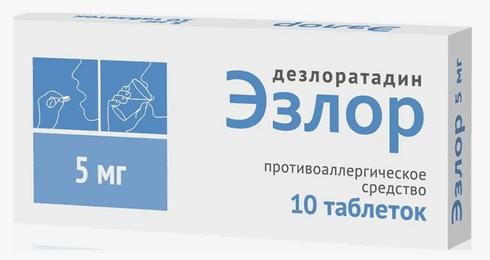
1 other outlet
Suppliers
Vendors carrying Desloratadine, with live product details and codes. Links are affiliate links that support the wiki at no cost to you.

RUPharma🌐
Desloratadine
RUPharma🌐
Desloratadine
Research
- 2001first citedDesloratadine.
- 2013most recentSafety evaluation of desloratadine in allergic rhinitis.
- 1.Biochemical characterization of desloratadine, a potent antagonist of the human histamine H(1) receptor.
- 2.Desloratadine.
- 3.Pharmacology and clinical efficacy of desloratadine as an anti-allergic and anti-inflammatory drug.
- 4.Desloratadine: a nonsedating antihistamine.
- 5.Anti-inflammatory properties of desloratadine.
- 6.Safety evaluation of desloratadine in allergic rhinitis.
6 listed here; entry last updated August 2026
Reviews
My notesprivate to this device
Notes and cautions
- No boxed warning; adverse-event profile matched placebo in seasonal allergic rhinitis and chronic urticaria trials, with no cardiovascular effect even at nine times the adult dose for 10 days in volunteers [2].
- It has no effect on QRS or QTc, does not cross the blood-brain barrier appreciably, and does not impair psychomotor performance or potentiate alcohol [3].
- Residual concerns are rare hypersensitivity including anaphylaxis and dose-interval reduction in hepatic or renal impairment.