
spec sheet12 rows
Quetiapine is an atypical, or second-generation, antipsychotic used to treat schizophrenia, bipolar disorder, and, as an add-on, major depression. Its effects are strongly shaped by dose and by its active metabolite norquetiapine, which inhibits the norepinephrine transporter and modulates several serotonin receptors, giving quetiapine genuine antidepressant activity; at low doses its dominant action is sedating H1-antihistamine blockade with little dopamine occupancy, while antipsychotic dopamine blockade emerges only at higher doses. Marketed originally as Seroquel and now generic, it is on the World Health Organization list of essential medicines and is also widely, though generally discouraged, prescribed off-label as a sedative for insomnia.
- Quiets psychosis and racing manic energy
- Genuine antidepressant activity, not just sedation
- Norquetiapine, its active metabolite, does real work
- Deeply sedating when sleep has collapsed
- Low movement side effects for its class
- Marketed as Seroquel; now widely available generic
- Common effects include drowsiness, dizziness, dry mouth, and a drop in blood pressure on standing
- Weight gain and changes in blood sugar and cholesterol can occur, so metabolic health is usually monitored
- Rare but serious risks include heart rhythm changes, neuroleptic malignant syndrome, and, with long-term use, tardive dyskinesia
Overview
Quetiapine is a second-generation antipsychotic, a class of drugs developed to treat psychosis with a lower tendency to cause the movement side effects associated with the older, first-generation agents [1][2]. Chemically it is a tetracyclic compound related to clozapine and olanzapine, with the molecular formula C21H25N3O2S, and it is usually dispensed as the fumarate salt [1]. It is taken by mouth and, once absorbed, is broken down in the liver, partly into an active metabolite called norquetiapine that contributes to its effects [1].
The drug was developed in the 1980s and first approved by the United States Food and Drug Administration in 1997 under the brand name Seroquel, made by AstraZeneca [1]. An extended-release version followed in the late 2000s, and after patent protection ended the medicine became widely available as a generic [1]. It is listed among the World Health Organization's essential medicines and is one of the most frequently prescribed antipsychotics [2].
Quetiapine is approved for schizophrenia, for the manic, depressive, and maintenance phases of bipolar disorder, and as an add-on treatment for major depressive disorder that has not responded to an antidepressant alone [1]. Reviews of clinical trials support its usefulness across these indications; in bipolar depression, for example, controlled studies found it more effective than placebo at reducing depressive symptoms and at preventing relapse [1]. In a large comparative meta-analysis of antipsychotics for schizophrenia, quetiapine was among the effective agents, occupying a middle position for efficacy while differing from other drugs in its particular pattern of side effects [2]. Beyond its licensed uses, it is very commonly prescribed off-label at low doses for insomnia and anxiety, although clinical guidance generally advises against using it for sleep because the risks are felt to outweigh the modest benefit [1].
Quetiapine is a prescription-only medicine available as immediate-release and extended-release oral tablets [1]. Like other antipsychotics it carries regulatory warnings, including an increased risk of death when used in elderly people with dementia-related psychosis and a caution about suicidal thoughts in younger patients taking antidepressant-class treatments [1]. Its comparatively broad receptor activity gives it a distinctive profile of both benefits, such as a low rate of movement disorders, and drawbacks, such as sedation and weight gain [1][3].
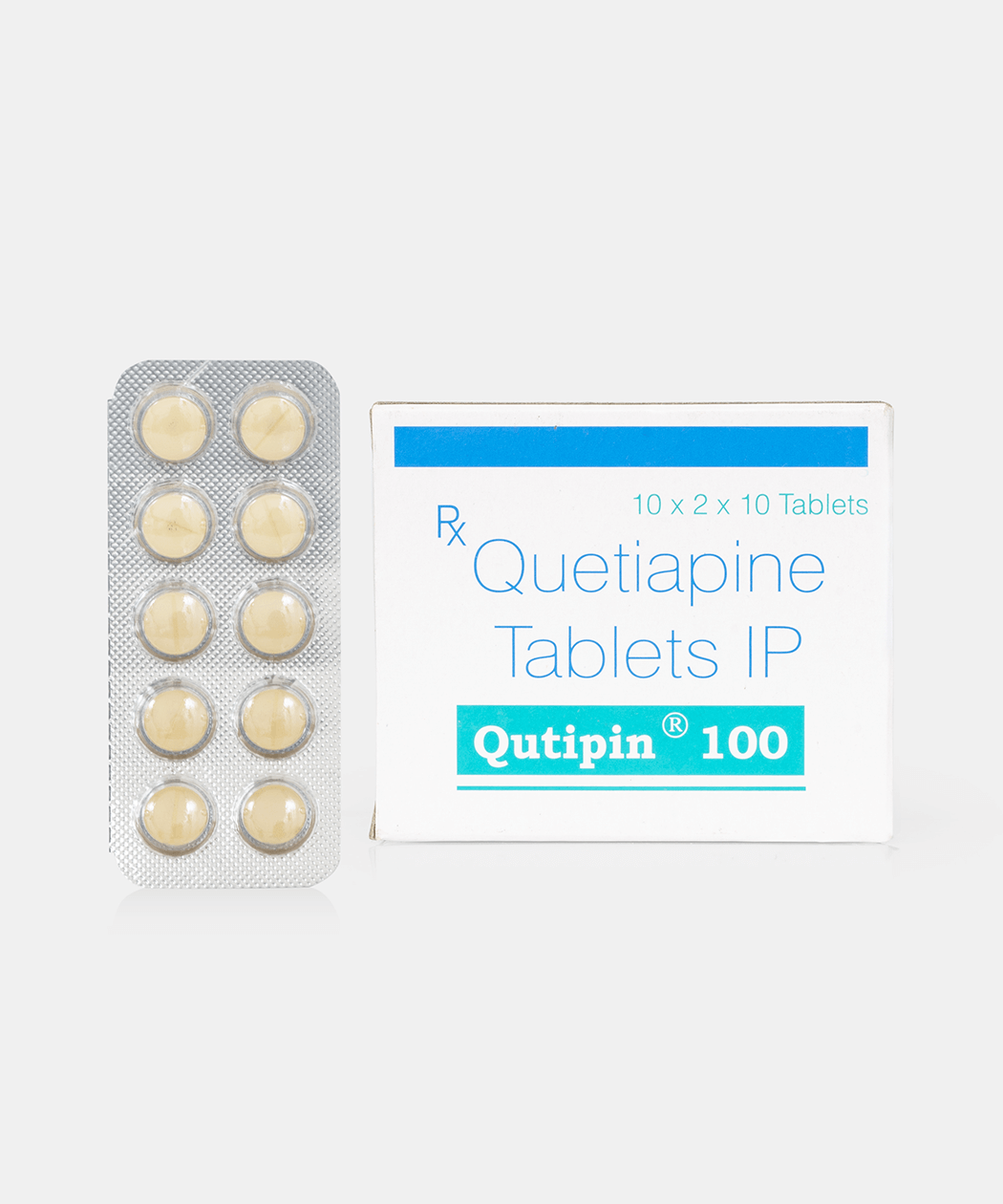
- Quetiapine's antidepressant effect is largely driven by its metabolite norquetiapine, which blocks the norepinephrine transporter, a mechanism it shares with certain antidepressants rather than with other antipsychotics.
- The drug's actions are strikingly dose-dependent: at low doses it behaves mainly as a sedating antihistamine with minimal dopamine blockade, and meaningful antipsychotic dopamine occupancy emerges only at higher doses.
- Quetiapine is included on the World Health Organization Model List of Essential Medicines.
Mechanism
Quetiapine acts by blocking several neurotransmitter receptors in the brain [1]. Its antipsychotic effect is attributed chiefly to antagonism of receptors together with receptors, the combination characteristic of second-generation antipsychotics [1]. Compared with older drugs, quetiapine binds the receptor relatively loosely and transiently, which is thought to explain why it causes few of the movement side effects and little of the prolactin elevation seen with typical antipsychotics [1][3].
Its antidepressant and mood-stabilizing actions are less fully understood but are linked to its active norquetiapine, which blocks the reuptake of noradrenaline and acts as a partial at receptors in the prefrontal , boosting signalling by noradrenaline and there [1]. Quetiapine also blocks H1 receptors, producing its marked sedative effect, alpha-1 receptors, which can lower blood pressure on standing, and receptors, causing dry mouth; this same wide receptor activity underlies much of its side-effect profile [1].
receptor fingerprint
H1 receptorantagonist
receptorantagonist
receptorantagonist
Alpha-1 receptorantagonist
transporter (via norquetiapine)inhibits
receptoractivates
Safetyrisks and cautions, not medical advice
Quetiapine is prescription only and carries a boxed warning about increased death rates when used for dementia-related psychosis in the elderly, plus the class warning about suicidal thoughts in younger people with depression. The most common effects are strong sedation, dizziness on standing from the blood pressure drop, dry mouth, and constipation. Over time it can cause weight gain, higher blood sugar, and raised cholesterol, though generally less than olanzapine, so metabolic monitoring is advised. It can prolong the heart's QT interval, and rare but serious risks include neuroleptic malignant syndrome, tardive dyskinesia, and cataracts with long use. Doses should be tapered rather than stopped abruptly to avoid rebound insomnia and nausea.
Interactionsdocumented pairs only, not exhaustive
Quetiapine is cleared almost entirely by CYP3A4, and that single route explains most of its interactions. Strong inhibitors such as ketoconazole, itraconazole, clarithromycin and ritonavir cut its clearance sharply and can raise plasma levels several-fold, bringing out sedation, orthostatic hypotension and QT effects. Inducers push the other way: phenytoin raised quetiapine clearance about fivefold in pharmacokinetic study, and carbamazepine, rifampin and St John's wort act similarly, which can leave the antipsychotic effect gone with no obvious cause.
Quetiapine modestly prolongs the QT interval, so pairing it with class IA or class III antiarrhythmics, methadone, or other QT-prolonging antipsychotics compounds torsades risk, particularly when potassium or magnesium is low.
The pharmacodynamic overlaps are the quiet ones. Alcohol, benzodiazepines and opioids add to its sedation and respiratory depression, and its alpha-1 blockade stacks with antihypertensives to produce fainting on standing. Quetiapine itself inhibits no major cytochrome at clinical concentrations, so it rarely disturbs other drugs.
Checking a whole stack? Run it through interactions + stacks.
History
Quetiapine was developed by the pharmaceutical company Zeneca, later part of AstraZeneca, with the core molecule first synthesized in the mid 1980s as part of a search for antipsychotics that would spare patients the movement side effects of the older typical agents. It received approval from the United States Food and Drug Administration in 1997 and was marketed as Seroquel, with an extended-release formulation, Seroquel XR, following in 2007.
Its therapeutic profile was progressively expanded from schizophrenia to acute bipolar mania and depression and, later, to adjunctive treatment of major depressive disorder, reflecting the discovery that its active metabolite norquetiapine contributes distinct antidepressant activity. Once its patents expired the drug became widely available as an inexpensive generic and was added to the World Health Organization Model List of Essential Medicines. Today quetiapine is one of the most prescribed second-generation antipsychotics worldwide, though its heavy off-label use for insomnia has drawn cautionary commentary from clinicians.
Reputation
Quetiapine enjoys a reputation as one of the most versatile agents in psychiatry, valued for a genuinely broad evidence base spanning schizophrenia, both poles of bipolar disorder, and treatment-resistant depression. It is well regarded for causing little of the prolactin elevation and few of the movement disturbances associated with older antipsychotics, a consequence of its characteristically loose and transient binding to the dopamine D2 receptor.
Large network meta-analyses consistently place quetiapine among the effective and reasonably tolerated options for acute mania, reinforcing its standing as a dependable mood stabilizer. Its marked sedative quality, from strong histamine H1 blockade, is prized by many patients who struggle with agitation and sleep, even as clinicians caution against using it purely as a sleep aid. Honestly, its main limitations are metabolic: weight gain, sedation, and orthostatic effects mean it is a drug to be dosed thoughtfully rather than casually.
Subjective profileweighing the evidence above
A workhorse psychiatric medicine that genuinely helps in schizophrenia, bipolar mania and bipolar depression. It is not a sleep supplement, whatever its off-label use suggests: weight gain and metabolic drift are common, long-term use risks tardive dyskinesia, and it carries a boxed warning about deaths in elderly dementia patients.
Where to buy
1 other outlet

Suppliers
Vendors carrying Quetiapine, with live product details and codes. Links are affiliate links that support the wiki at no cost to you.
PCT.Zone
Quetiapine
RUPharma🌐
Quetiapine
Research
- 2005first citedAtypicality of atypical antipsychotics.
- 2010most active year3 papers
- 2013meta-analysisComparative efficacy and tolerability of 15 antipsychotic drugs in schizophrenia: a multiple-tr…
- 2023most recentComparative efficacy and tolerability of pharmacological interventions for acute bipolar depres…
- 1.Quetiapine: a review of its use in the management of bipolar depression.
- 2.Comparative efficacy and tolerability of 15 antipsychotic drugs in schizophrenia: a multiple-treatments meta-analysis.
- 3.Efficacy and safety of second-generation antipsychotics in children and adolescents with psychotic and bipolar spectrum disorders: comprehensive review of prospective head-to-head and placebo-controlled comparisons.
- 4.Active metabolites as antidepressant drugs: the role of norquetiapine in the mechanism of action of quetiapine in the treatment of mood disorders.
- 5.Quetiapine and its metabolite norquetiapine: translation from in vitro pharmacology to in vivo efficacy in rodent models.
- 6.Atypicality of atypical antipsychotics.
- 7.Dopamine D2/3 receptor occupancy by quetiapine in striatal and extrastriatal areas.
- 8.Antipsychotics, dopamine D₂ receptor occupancy and clinical improvement in schizophrenia: a meta-analysis.
- 9.Efficacy of quetiapine monotherapy in bipolar I and II depression: a double-blind, placebo-controlled study (the BOLDER II study).
- 10.Quetiapine in the treatment of anxiety in patients with bipolar I or II depression: a secondary analysis from a randomized, double-blind, placebo-controlled study.
- 11.Quetiapine monotherapy in the treatment of patients with bipolar I or II depression and a rapid-cycling disease course: a randomized, double-blind, placebo-controlled study.
- 12.Extended-release quetiapine fumarate in the treatment of patients with major depressive disorder: adjunct therapy.
19 listed here; entry last updated August 2026
Reviews
My notesprivate to this device
FAQ
Why is quetiapine used for sleep?
At low doses its main effect is blocking histamine, which is strongly sedating; still, its side effects make it a debated choice for simple insomnia.
Does the dose change what it does?
Yes; low doses act mainly as a sedating antihistamine, while higher doses add the dopamine blockade needed for antipsychotic and mood effects.
Is it as likely as olanzapine to cause weight gain?
It can raise weight and blood sugar, but generally somewhat less than olanzapine; metabolic monitoring is still recommended.
Can I stop it suddenly?
Better not; stopping abruptly can cause rebound insomnia, nausea, and irritability, so it is tapered down.
What is Seroquel XR versus regular Seroquel?
XR is the extended-release version taken once daily for steadier levels, while immediate-release is often split through the day.
Adverse effects
- Common effects include drowsiness, dizziness, dry mouth, and a drop in blood pressure on standing
- Weight gain and changes in blood sugar and cholesterol can occur, so metabolic health is usually monitored
- Rare but serious risks include heart rhythm changes, neuroleptic malignant syndrome, and, with long-term use, tardive dyskinesia
- Regulators warn of increased mortality when it is used in elderly people with dementia-related psychosis
Notes and cautions
- It tends to cause fewer movement side effects and less prolactin elevation than older antipsychotics