
spec sheet13 rows
Aripiprazole is a second-generation (atypical) antipsychotic used in schizophrenia, bipolar disorder and as an adjunct in major depression. Rather than fully blocking dopamine D2 receptors like older agents, it acts as a high-affinity partial agonist, combined with partial agonism at serotonin 5-HT1A and antagonism at 5-HT2A receptors, so that it behaves as a dopamine system stabilizer that dampens signaling where dopamine is excessive and supports it where dopamine is deficient. This mechanism gives it antipsychotic efficacy comparable to other agents with relatively little sedation, weight gain, movement disorder or prolactin elevation, and it is also formulated as a long-acting monthly injection to support adherence. The same partial-agonist pharmacology, however, can occasionally provoke impulse-control problems such as pathological gambling, an effect it shares with dopamine agonists.
- Stabilizes dopamine instead of blunting it
- Dials dopamine down where loud, up where quiet
- Less weight gain than many antipsychotics
- Little sedation compared with older agents
- Barely moves prolactin
- Comes as a daily tablet or monthly injection
- Restlessness or urge to move (akathisia)
- Insomnia
- Headache or nausea
Overview
Aripiprazole is an atypical, or second-generation, antipsychotic developed by Otsuka Pharmaceutical and first approved in 2002. Chemically it belongs to the phenylpiperazine class. It stands out among antipsychotics for its distinctive receptor pharmacology: rather than fully blocking dopamine receptors, it partially activates them, a property that led to its being called a dopamine system stabilizer [2].
The drug is used to treat schizophrenia and the manic and mixed episodes of bipolar disorder, and as an add-on to antidepressants in major depressive disorder that responds only partially to those drugs. It is also approved for irritability associated with autism in children and for tic disorders such as Tourette syndrome. Its efficacy in schizophrenia was established in randomized, placebo-controlled trials; a pivotal four-week study found aripiprazole improved both positive and negative symptoms compared with placebo, with fewer movement side effects and less prolactin elevation than the older drug haloperidol [1]. Pooled analyses supported its usefulness in related conditions such as schizoaffective disorder [3].
Aripiprazole's balanced action tends to produce less of the heavy sedation, movement disorders, and prolactin elevation associated with older antipsychotics, though it is not free of side effects [1]. It is generally regarded as having a comparatively modest effect on body weight relative to some other atypical agents.
Common side effects include restlessness or an inner urge to move (akathisia), insomnia, headache, and nausea. A notable and less obvious risk, highlighted by drug regulators, is the emergence of impulse-control problems such as compulsive gambling, shopping, or eating in a minority of users, thought to relate to the drug's dopamine-activating action. Serious but rare reactions include neuroleptic malignant syndrome and tardive dyskinesia.
Aripiprazole is a prescription medicine available as ordinary and orally disintegrating tablets, an oral solution, short-acting injections, and long-acting injectable forms given every few weeks to support consistent treatment. A version with an embedded ingestible sensor was also developed to track whether doses were taken.
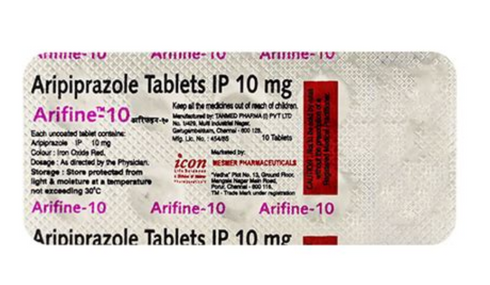


- Aripiprazole was the first antipsychotic to reach the market acting as a dopamine D2 partial agonist, activating the receptor weakly where dopamine is low while competing with excess dopamine where it is high.
- The same partial-agonist property that makes aripiprazole gentle on movement and prolactin can, in a minority of patients, trigger impulse-control disorders like pathological gambling, a warning it shares with dopamine agonist drugs used in Parkinson disease.
Mechanism
Aripiprazole works chiefly as a partial at (and D3) receptors. A partial agonist binds the receptor but activates it only weakly, so in brain regions where dopamine is excessive, as in the psychosis of schizophrenia, aripiprazole competes with dopamine and dampens signaling, while in regions where dopamine tone is low it provides a modest baseline activation; this dual behavior is the basis for calling it a dopamine system stabilizer [2].
It is additionally a partial at receptors and an at receptors, a serotonergic profile shared with other atypical antipsychotics that is thought to broaden its effects and improve tolerability [2]. By stabilizing rather than fully blocking transmission, aripiprazole tends to cause less of the movement stiffness and prolactin elevation seen with pure dopamine antagonists [1]. The same -activating property is the leading explanation for the impulse-control side effects reported in some patients.
receptor fingerprint
receptormodulates
receptorantagonist
D3 receptormodulates
receptoractivates
H1 and alpha-1 receptorsantagonist
Safetyrisks and cautions, not medical advice
Aripiprazole is a prescription medicine. The most characteristic side effect is akathisia, an inner restlessness, along with insomnia or drowsiness, anxiety, nausea, and headache; weight gain and metabolic changes occur but tend to be milder than with some other antipsychotics, though glucose and lipids are still monitored. A notable and sometimes overlooked risk is impulse-control problems such as compulsive gambling, shopping, or hypersexuality, which usually ease when the dose is lowered or stopped. Rare serious effects include neuroleptic malignant syndrome and tardive dyskinesia. It carries boxed warnings for increased death in elderly patients with dementia-related psychosis and for suicidal thinking in young people, and its dose is adjusted when combined with drugs that block the CYP2D6 or CYP3A4 enzymes.
Interactionsdocumented pairs only, not exhaustive
Aripiprazole is metabolized by CYP2D6 and CYP3A4. When combined with CYP3A4 inhibitors like ketoconazole, itraconazole, or clarithromycin, the dose should be reduced to approximately one-quarter of the normal dose [31]. In patients who are CYP2D6 poor metabolizers, dose reduction is also recommended [32]. These are pharmacokinetic interactions; the inhibitors reduce aripiprazole's metabolism, causing its blood levels to increase substantially. What remains unexplored is the effect of CYP2D6 inducers, and interactions with drugs that depend on aripiprazole's inhibition of their own metabolism are underdocumented.
Checking a whole stack? Run it through interactions + stacks.
History
Aripiprazole was discovered by the Japanese company Otsuka Pharmaceutical, whose chemists set out to design an antipsychotic that would stabilize rather than simply block dopamine transmission. The result was a novel dopamine D2 partial agonist, a mechanism distinct from the full receptor blockade of earlier drugs. The United States Food and Drug Administration approved aripiprazole, sold as Abilify, in November 2002 for schizophrenia, and its indications later expanded to bipolar disorder, adjunctive treatment of major depression, and irritability in autism. To improve adherence, long-acting injectable formulations such as Aristada were subsequently developed, allowing dosing on a monthly or longer schedule.
Reputation
Aripiprazole is often chosen for its relatively favorable metabolic and sedation profile compared with several other atypical antipsychotics, making it attractive for long-term treatment. Its partial-agonist mechanism, sometimes described as dopamine system stabilization, tends to produce less prolactin elevation and fewer movement side effects, which many patients and prescribers value. It is used across schizophrenia, bipolar disorder, and as an add-on in depression, and the availability of long-acting injections supports adherence for those who struggle with daily pills. Balanced against these strengths is the recognized, if uncommon, risk of impulse-control problems such as compulsive gambling, an effect linked to the same dopamine-activating pharmacology.
Subjective profileweighing the evidence above
A genuinely good choice when an antipsychotic is needed, with less weight gain and less prolactin rise than older agents, and useful as an antidepressant add-on. Prescription territory only; akathisia is common, and the compulsive gambling and spending it can trigger are easy to miss and worth watching for.
Where to buy


Suppliers
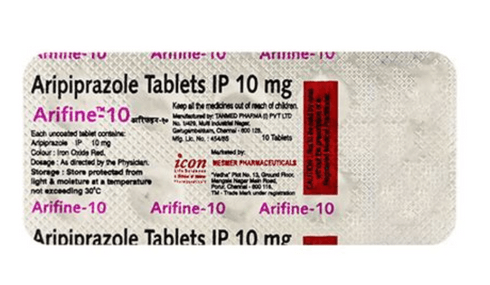
Vendors carrying Aripiprazole, with live product details and codes. Links are affiliate links that support the wiki at no cost to you.
RUPharma🌐
Aripiprazole
RUPharma🌐
Aripiprazole
PCT.Zone
Aripiprazole
Research
- 2002first citedEfficacy and safety of aripiprazole and haloperidol versus placebo in patients with schizophren…
- 2021most active year6 papers
- 2022meta-analysisAugmentation strategies for treatment resistant major depression: A systematic review and netwo…
- 2025most recentAripiprazole Is Not Effective for Abstinence or Decreased Use in Alcohol and Stimulant Use Diso…
- 1.Efficacy and safety of aripiprazole and haloperidol versus placebo in patients with schizophrenia and schizoaffective disorder
- 2.Aripiprazole, a novel antipsychotic agent: dopamine D2 receptor partial agonist
- 3.The efficacy, safety, and tolerability of aripiprazole for the treatment of schizoaffective disorder: results from a pooled analysis of a sub-population of subjects from two randomized, double-blind, placebo-controlled, pivotal trials.
- 4.Aripiprazole (ABILIFY MAINTENA®): a review of its use as maintenance treatment for adult patients with schizophrenia.
- 5.Population Pharmacokinetics and Dosing Simulations for Aripiprazole 2-Month Ready-to-Use Long-Acting Injectable in Adult Patients With Schizophrenia or Bipolar I Disorder.
- 6.Digital aripiprazole or digital evergreening? A systematic review of the evidence and its dissemination in the scientific literature and in the media.
- 7.Classics in Chemical Neuroscience: Aripiprazole.
- 8.Aripiprazole in Children and Adolescents.
- 9.Aripiprazole Is Not Effective for Abstinence or Decreased Use in Alcohol and Stimulant Use Disorders in Patients Without Psychiatric Comorbidities: A Systematic Review.
- 10.Structural insights into the lipid and ligand regulation of serotonin receptors.
- 11.A safety evaluation of aripiprazole in the treatment of schizophrenia.
- 12.A Review of Differences in Clinical Characteristics between Tardive Syndrome Induced or Improved by Aripiprazole Treatment.
32 listed here; entry last updated August 2026
Reviews
My notesprivate to this device
FAQ
How is aripiprazole different from other antipsychotics?
It partly activates dopamine receptors instead of fully blocking them, acting as a stabilizer, which usually means fewer movement side effects and less prolactin rise.
Does aripiprazole cause weight gain?
It can, but generally less than several other antipsychotics; doctors still monitor weight, blood sugar, and cholesterol during treatment.
What is akathisia?
It is a feeling of inner restlessness and an urge to keep moving; it is the most common side effect and often improves with a dose change.
Can aripiprazole cause gambling or impulse problems?
Yes; compulsive gambling, shopping, or sexual urges are a recognized if uncommon effect that usually fades when the dose is lowered or stopped.
How long does aripiprazole take to work?
Some effects appear within days, but the full benefit for psychosis or mood usually builds over a couple of weeks.
Adverse effects
- Restlessness or urge to move (akathisia)
- Insomnia
- Headache or nausea
- Impulse-control problems in some users (gambling, shopping, eating)
- Rarely, involuntary movements (tardive dyskinesia)