
data + articles · 4 listed
newest 2024spec sheet11 rows
Nobiletin is a polymethoxylated flavone, a type of plant flavonoid distinguished by several methoxy groups attached to its ring structure. It occurs naturally in the peels of citrus fruits, being especially abundant in tangerines and related species. Laboratory and animal research has examined it for anti-inflammatory, metabolic, and neuroprotective activity, and more recently for its ability to influence the body's circadian clock. It is a dietary constituent and research compound rather than an approved medicine.
- A citrus peel flavone with unusually good absorption
- Animal work shows striking circadian clock support
- Metabolic and lipid effects look strong in models
- Neuroprotective and memory signals in rodent studies
- Calms inflammation and adds antioxidant activity
- Rodent data is striking; human trials are still to come
Overview
Nobiletin is a naturally occurring flavonoid, more precisely an O-methylated flavone belonging to the group known as polymethoxylated flavones [1][3]. The many methoxy groups on its skeleton set it apart from more familiar flavonoids and are thought to give it greater stability and better passage across cell membranes, features that have made it attractive to researchers [3].
Its principal natural source is citrus peel, where it is found in comparatively high amounts in tangerine and other members of the citrus genus [1][3]. Because it is concentrated in the rind rather than the juice, it is associated in particular with whole-peel citrus preparations, including some used in traditional East Asian medicine, and it has become a marker compound for the health interest surrounding citrus polymethoxyflavones [1].
A broad range of biological activities has been described for nobiletin in preclinical work [3]. Studies in cell and animal models have reported anti-inflammatory and antioxidant effects and have explored possible benefits for brain health, with citrus polymethoxyflavones investigated as candidates for supporting cognition and countering the changes seen in models of Alzheimer's disease [1]. Metabolic effects, including influences on obesity and lipid handling, have been examined, and the compound has also been studied for its actions on cartilage in the context of osteoarthritis and for antitumor activity in laboratory cancer models [2][3].
A more recent and distinctive line of research concerns the circadian clock, the internal timing system that coordinates daily rhythms in metabolism and physiology [3][4]. Chemical screening identified nobiletin as an agonist of the retinoic acid-related orphan receptors, through which it strengthens the core clock component BMAL1 and enhances the amplitude of circadian oscillations [4]. In animal models of disease and aging, this clock-modulating action has been linked to improved cellular energy metabolism, prompting interest in nobiletin as a possible chronotherapeutic and healthy-aging agent [3].
Despite this wide-ranging preclinical evidence, nobiletin is not an approved pharmaceutical [3]. It is encountered mainly as a dietary component of citrus and as an ingredient in citrus extracts and supplements. Reviewers generally note a favorable safety profile in experimental studies while emphasizing that rigorous human clinical data remain limited, so its therapeutic value in people is still being established [1][3].

Mechanism
Nobiletin does not appear to act through a single target but rather influences several signaling pathways at once [3]. In neurons, it has been reported to boost signaling through the cyclic AMP and protein kinase A pathway and downstream transcription factors, actions linked in laboratory studies to enhanced receptor responses and to effects on learning and memory [1]. Its anti-inflammatory and protective effects are attributed in part to suppression of nuclear factor-kappa B signaling and to a reduction in , mechanisms invoked to explain its activity in models of inflammation, cartilage degradation, and cancer [2][3].
The most sharply defined mechanism to emerge concerns the circadian system: nobiletin behaves as an at the retinoic acid-related orphan receptors, which drives expression of the master clock protein BMAL1 and amplifies the daily oscillation of clock genes such as PER2 [4]. By reinforcing this timing machinery, nobiletin has been shown in animal studies to improve function and cellular energetics, tying its clock activity to its reported metabolic and healthy-aging benefits [3][4]. Because much of this evidence comes from cell and animal systems, the extent to which these mechanisms operate at dietary intakes in humans is not yet settled [1][3].
receptor fingerprint
ROR nuclear receptorsagonist
NF-kB / MAPK signalinginhibits
and lipid metabolismimproves
/ signalingsupports
Dosingtypical ranges, not medical advice
interested in protocols and clinical dosages? make an account to see them! ^_^
Safetyrisks and cautions, not medical advice
Dietary nobiletin from citrus is safe. Concentrated supplement doses are less studied in humans; it is generally considered low-risk, but possible interactions with drug-metabolizing enzymes and limited long-term data warrant some caution.
Where to buy
Suppliers
Vendors carrying Nobiletin, with live product details and codes. Links are affiliate links that support the wiki at no cost to you.
Amazon
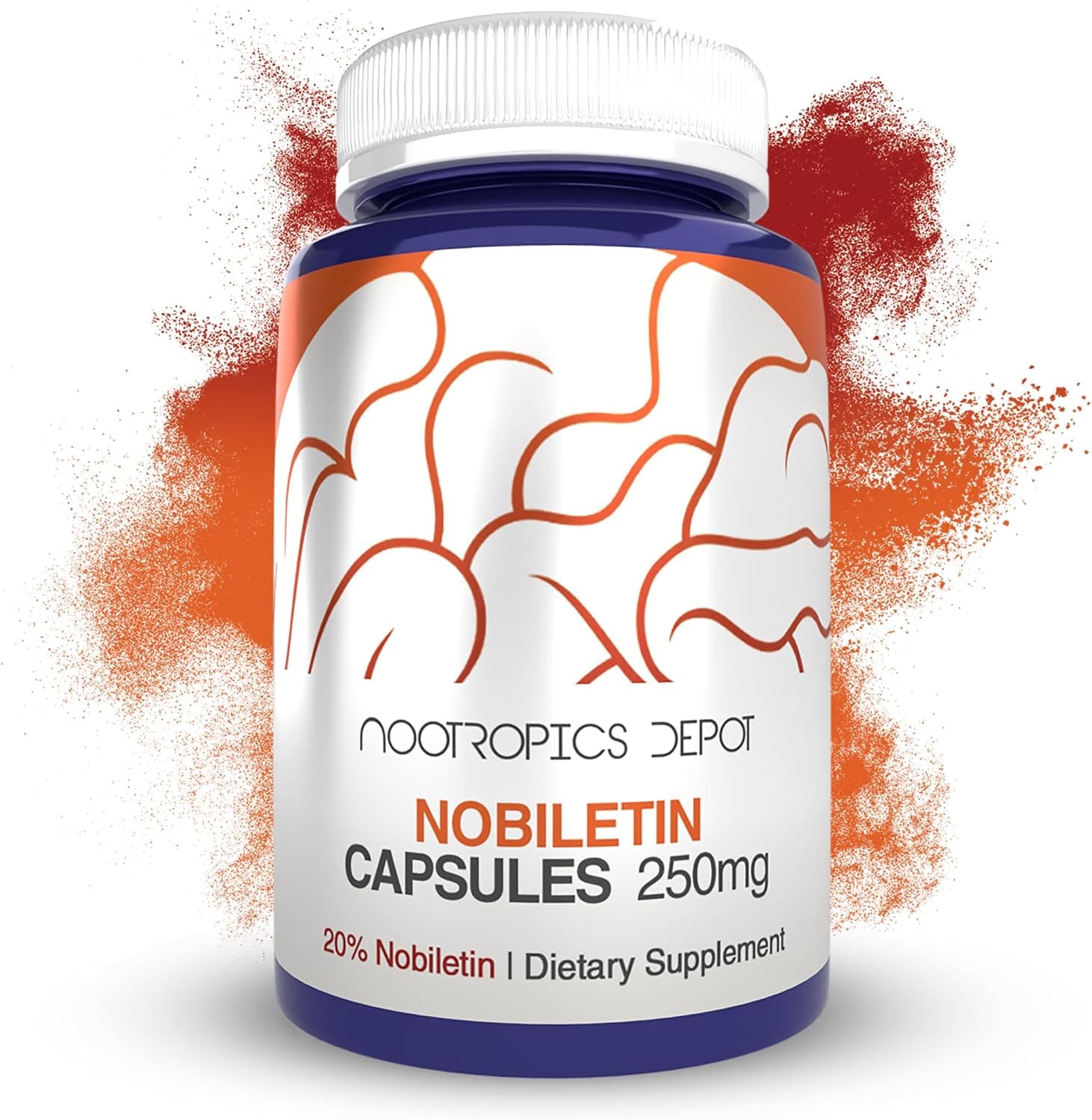
Nobiletin
Research
- 2012first citedDietary polyphenols and mechanisms of osteoarthritis.
- 2024most recentEffects of (Poly)phenols on Circadian Clock Gene-Mediated Metabolic Homeostasis in Cultured Mam…
- 1.A Narrative Review of the Effects of Citrus Peels and Extracts on Human Brain Health and Metabolism.
- 2.Nobiletin: Targeting the Circadian Network to Promote Bioenergetics and Healthy Aging.
- 3.Effects of (Poly)phenols on Circadian Clock Gene-Mediated Metabolic Homeostasis in Cultured Mammalian Cells: A Scoping Review.
- 4.Dietary polyphenols and mechanisms of osteoarthritis.
4 listed here; entry last updated August 2026
Reviews
My notesprivate to this device
FAQ
Where does nobiletin come from?
Mostly citrus peel, especially tangerines and bitter oranges.
What's special about it?
It acts on the circadian clock through ROR receptors and is better absorbed than many flavonoids thanks to its methoxy groups.
Is it proven in humans?
No. The metabolic, circadian, and cognitive effects come mainly from animal and cell studies.
Can it help memory?
Animal work supports CREB-linked memory benefits, but this hasn't been confirmed in people.
Any interaction concerns?
Like other citrus compounds, it may affect drug-metabolizing enzymes, so be cautious with medications.
Limitations of the evidence
- Human safety at concentrated supplemental intakes has not been well characterized
- As a citrus flavonoid, potential interactions with drug metabolism have not been fully studied
- Most evidence remains preclinical, so effects and tolerability in people are still being defined
Notes and cautions
- Encountered mainly as a natural component of citrus, where it has a long history of dietary consumption
- Experimental studies generally describe a favorable safety profile