
spec sheet13 rows
Leucovorin calcium, also called folinic acid, is the calcium salt of a reduced, biologically active form of folate (vitamin B9). Unlike ordinary folic acid, it does not need to be activated by the enzyme dihydrofolate reductase before cells can use it. In medicine it is given mainly to counter the toxicity of the chemotherapy drug methotrexate and to strengthen the effect of fluorouracil in treating certain cancers.
- The time critical rescue after high dose methotrexate
- Standard oncology practice alongside 5-fluorouracil
- Active folate that skips the activation step entirely
- Works even when the folate enzyme is blocked
- A hospital drug doing an important job
- Allergic or hypersensitivity reactions in rare cases
- Greater fluorouracil toxicity, such as diarrhea, when combined
Overview
Leucovorin calcium is the calcium salt of folinic acid, a reduced form of folate known chemically as 5-formyltetrahydrofolate. It belongs to the class of agents used to protect healthy tissue during chemotherapy and to correct folate deficiency. Its defining feature is that it is already a usable, active folate; whereas synthetic folic acid must be converted by dihydrofolate reductase before the body can employ it, leucovorin bypasses that step, which makes it effective even when that enzyme is blocked by antifolate drugs. It was first recognized in the 1940s as the bacterial growth factor then called citrovorum factor.
The best-known role of leucovorin is rescue after high-dose methotrexate. Methotrexate works by inhibiting dihydrofolate reductase and starving cells of the reduced folate they need to make DNA; giving leucovorin afterward restores folate to normal tissues such as bone marrow and the lining of the gut, limiting toxicity while allowing the anticancer effect to proceed [1]. The timing and amount of rescue are guided by blood levels of the drug. Leucovorin does not by itself reverse methotrexate-induced kidney injury, and in cases of severe renal impairment additional measures may be needed to clear the drug from the body [2].
A second major use pairs leucovorin with the chemotherapy drug fluorouracil, chiefly for colorectal cancer. Here it acts not as an antidote but as an enhancer, stabilizing the binding of fluorouracil's active metabolite to the enzyme thymidylate synthase and so deepening the drug's effect. A meta-analysis of randomized trials found that adding leucovorin to fluorouracil roughly doubled tumor response rates in advanced colorectal cancer compared with fluorouracil alone [3].
Leucovorin is also used to treat megaloblastic anemia caused by folate deficiency, to reduce the gastrointestinal and liver side effects of low-dose methotrexate in rheumatoid arthritis [4], and as part of the treatment of toxoplasmosis, where it offsets the folate-blocking action of pyrimethamine. It is a recognized therapy for cerebral folate deficiency, a neurological disorder in which folate fails to reach the brain despite normal levels elsewhere, and in which folinic acid can improve symptoms when treatment begins early [5]. It has additionally been used in the emergency management of methanol poisoning.
The compound is a prescription medicine and appears on the World Health Organization's Model List of Essential Medicines. It is supplied as tablets and as solutions for injection into a vein or muscle, but it must never be given into the spinal fluid. Commercial folinic acid is a racemic mixture of two mirror-image forms, only one of which is active; the purified active form is marketed separately as levoleucovorin, also called levofolinic acid. It is sold under names including leucovorin calcium and calcium folinate.
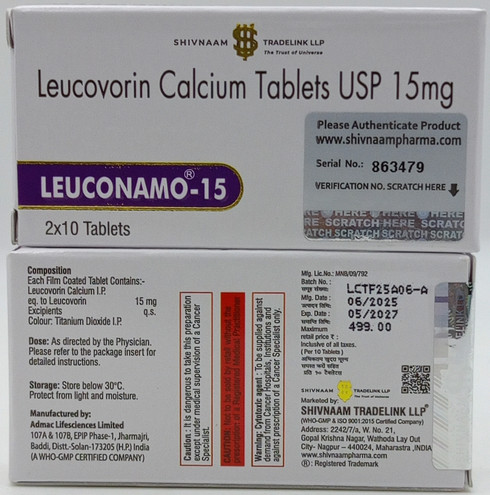

- Unlike ordinary folic acid, leucovorin is already in an active form, so cells can use it without the enzyme dihydrofolate reductase.
- In chemotherapy it performs a rescue act, restoring folate to healthy cells after high-dose methotrexate has shut the enzyme down.
- Controlled studies have explored it for autism linked to folate receptor autoantibodies, reporting gains in communication and core symptoms.
Mechanism
Folate in its reduced forms is essential for building the nucleotides that make up DNA and for one-carbon transfer reactions throughout the body. Leucovorin is 5-formyltetrahydrofolate, an already-reduced folate that cells readily convert into the other active folate cofactors without needing dihydrofolate reductase [1]. This property underlies its two main mechanisms. As a rescue agent it replenishes reduced folate in normal cells after methotrexate has shut down dihydrofolate reductase, allowing DNA synthesis to resume in healthy tissue while tumor cells remain affected [1]. As a modulator of fluorouracil, its polyglutamated metabolites help lock the drug's active form onto thymidylate synthase, strengthening the block on DNA synthesis in cancer cells [3]. In folate-deficiency states, including cerebral folate deficiency, it simply supplies the active vitamin that is missing [5].
receptor fingerprint
Reduced folate poolactivates
Dihydrofolate reductase blockademodulates
Thymidylate synthase (with 5-fluorouracil)inhibits
Purine and pyrimidine synthesisactivates
Folate-dependent one-carbon metabolismmodulates
Dosingtypical ranges, not medical advice
interested in protocols and clinical dosages? make an account to see them! ^_^
Safetyrisks and cautions, not medical advice
Leucovorin is a prescription medicine and is generally well tolerated on its own, with occasional nausea or, rarely, allergic reactions. Its most important safety issue is that it intensifies the toxicity of 5-fluorouracil, so pairing the two can worsen diarrhea, mouth sores, and low blood counts. Timing and dose after methotrexate are critical; giving too little or starting too late can leave normal cells unprotected, so rescue is guided by measured methotrexate blood levels. It must not be injected into the spinal fluid, and it should not be confused with plain folic acid, which cannot rescue cells from methotrexate. The active single isomer is sold separately as levoleucovorin.
Interactionsdocumented pairs only, not exhaustive
Leucovorin's interactions are its mechanism, which makes them unusually consequential.
With fluorouracil the interaction is deliberate: leucovorin stabilizes the ternary complex fluorouracil forms with thymidylate synthase, increasing both efficacy and toxicity. Severe stomatitis, diarrhea and enterocolitis are more frequent and more severe on the combination, and deaths from enterocolitis and dehydration have occurred, particularly in elderly patients. The same amplification applies to capecitabine.
With methotrexate, leucovorin is the rescue agent, entering downstream of the blocked dihydrofolate reductase step; given too early or at too high an exposure it rescues the tumor along with the host.
Leucovorin also antagonizes antifolate antimicrobials. Higher rates of treatment failure and mortality were seen when it was added to trimethoprim-sulfamethoxazole for Pneumocystis pneumonia in patients with HIV. High folate exposure can additionally lower phenytoin, phenobarbital and primidone levels, and breakthrough seizures have been reported.
Checking a whole stack? Run it through interactions + stacks.
History
Leucovorin, the calcium salt of folinic acid, traces its origins to the folate research of the 1940s, when the compound then called citrovorum factor was identified as a reduced, biologically active form of the vitamin. Because it is already reduced, it bypasses the enzyme dihydrofolate reductase that ordinary folic acid requires for activation, a property that shaped its two principal medical roles. As antifolate chemotherapy with methotrexate developed in the mid-twentieth century, clinicians adopted leucovorin as a rescue agent to replenish folate in healthy tissue and limit toxicity.
Later it was found to potentiate the anticancer drug fluorouracil by stabilizing its binding to thymidylate synthase, and it also serves simply as an active folate in deficiency states, including cerebral folate deficiency. More recently, researchers such as Frye and Rossignol have investigated it in autism spectrum disorder linked to folate receptor autoantibodies. Leucovorin is included on the World Health Organization's List of Essential Medicines.
Reputation
Leucovorin is a well established and trusted medicine, indispensable in modern oncology for making high-dose methotrexate survivable and for strengthening fluorouracil-based cancer regimens. Its reliability as a source of ready-to-use folate also gives it value in genuine folate deficiency, where it works without needing enzymatic activation.
A particularly compelling and actively studied application is in autism spectrum disorder associated with folate receptor autoantibodies; a systematic review of controlled studies reported improvements in communication and core symptoms, with an encouraging safety profile. It is fair to note that this autism evidence, while promising, comes from relatively small trials and warrants larger confirmation. Backed by decades of clinical use and a place on the WHO essential medicines list, leucovorin is regarded as a safe, versatile, and well characterized form of active folate.
Subjective profileweighing the evidence above
A hospital drug doing an important job. The methotrexate rescue is time-critical and the 5-fluorouracil pairing is standard oncology practice, but the same property that boosts 5-FU also amplifies its toxicity. There is nothing here for self-directed use.
Where to buy
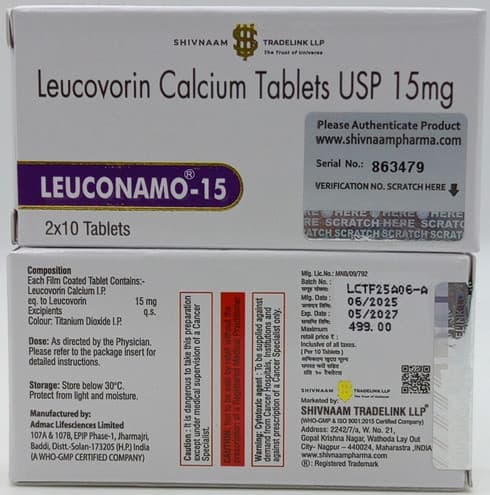
1 other outlet

Suppliers
Vendors carrying Leucovorin Calcium, with live product details and codes. Links are affiliate links that support the wiki at no cost to you.
RUPharma🌐
Leucovorin Calcium
PCT.Zone
Leucovorin Calcium
Research
- 1990first citedLeucovorin rescue revisited.
- 1992meta-analysisModulation of fluorouracil by leucovorin in patients with advanced colorectal cancer: evidence…
- 2021most recentCerebral Folate Deficiency, Folate Receptor Alpha Autoantibodies and Leucovorin (Folinic Acid)…
- 1.Leucovorin rescue revisited.
- 2.Understanding and managing methotrexate nephrotoxicity.
- 3.Modulation of fluorouracil by leucovorin in patients with advanced colorectal cancer: evidence in terms of response rate. Advanced Colorectal Cancer Meta-Analysis Project.
- 4.Folic acid and folinic acid for reducing side effects in patients receiving methotrexate for rheumatoid arthritis.
- 5.Cerebral folate deficiency.
- 6.Cerebral Folate Deficiency, Folate Receptor Alpha Autoantibodies and Leucovorin (Folinic Acid) Treatment in Autism Spectrum Disorders: A Systematic Review and Meta-Analysis
- 7.Cerebral folate receptor autoantibodies in autism spectrum disorder
7 listed here; entry last updated August 2026
Reviews
My notesprivate to this device
FAQ
Is leucovorin the same as folic acid?
No; leucovorin is an already-active reduced folate that can bypass the enzyme methotrexate blocks, while ordinary folic acid cannot and will not rescue cells.
Why is leucovorin given after methotrexate?
It refills the folate supply in normal cells so they recover, while the cancer cells that soaked up more methotrexate stay suppressed.
When does methotrexate rescue start?
Usually about 24 hours after the methotrexate dose, then repeated every 6 hours and guided by blood methotrexate levels.
Can leucovorin be used with 5-fluorouracil?
Yes; here it is added on purpose because it strengthens and prolongs the anticancer action of 5-fluorouracil.
Is leucovorin the same as levoleucovorin?
Levoleucovorin is the active single isomer of leucovorin and is dosed at about half the amount for the same effect.
Adverse effects
- Allergic or hypersensitivity reactions in rare cases
- Greater fluorouracil toxicity, such as diarrhea, when combined
Notes and cautions
- Generally well tolerated
- Trouble sleeping
- Must never be given into the spinal fluid