
spec sheet11 rows
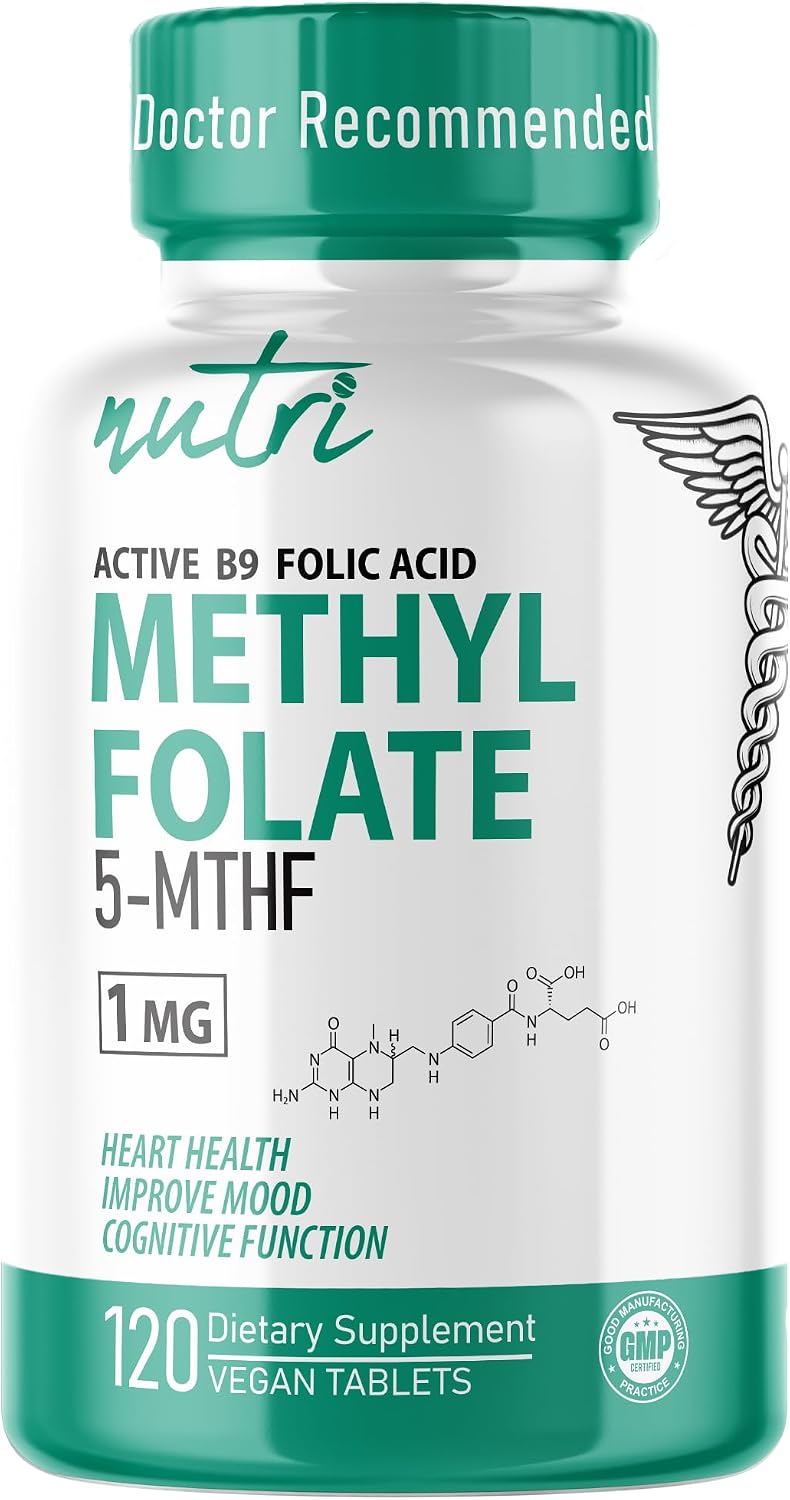
L-methylfolate is (6S)-5-methyltetrahydrofolate, the form of vitamin B9 that human blood actually carries and that cells actually use. It is distinguished from folic acid, the synthetic fully oxidised form found in supplements and fortified flour, by already being reduced and methylated, so it does not need dihydrofolate reductase, an enzyme humans run remarkably slowly, and it does not leave unmetabolised synthetic folate circulating in plasma. It is distinguished from leucovorin, also called folinic acid, by being methylated: leucovorin is reduced but not yet methylated, so it can be converted into whatever folate cofactor a cell needs including the ones for DNA synthesis, whereas L-methylfolate is committed to a single reaction, handing its methyl group to homocysteine by way of methionine synthase, which requires vitamin B12. That commitment is why leucovorin rescues methotrexate and L-methylfolate does not. The reason this compound has its own following is the MTHFR bypass: it is the product of the enzyme whose common C677T variant reduces conversion, so supplying it directly takes that enzyme out of the path. At doses many times nutritional it is also sold as a prescription medical food to be added to an antidepressant, on evidence that is real but considerably thinner than the marketing implies.
- The exact form of vitamin B9 that human blood carries
- Skips the conversion step that MTHFR variants slow down
- No unmetabolised folic acid left circulating in plasma
- Already reduced and methylated, ready for cells to use
- Sold as a prescription medical food alongside an antidepressant
- The premium is small with no evident downside
- Correction of the anaemia of vitamin B12 deficiency while neurological damage continues; the single most consequential harm associated with any folate, and the reason B12 status must be established first [27].
- In observational data from older adults, low B12 status combined with serum folate above the eightieth percentile was associated with markedly higher odds of anaemia and of cognitive impairment than low B12 with normal folate [25][26].
- Adverse event rates in the pivotal depression trials did not differ from placebo, and the twelve month extension produced no new signal [1][4].

Mechanism
Folate is not one molecule. It is a family of pterin compounds that shuttle single carbon units between reactions, each member carrying its carbon at a different oxidation state and on a different position of the ring. Dietary folates arrive as polyglutamates, are trimmed to monoglutamates at the intestinal brush border, and are absorbed and converted such that what leaves the gut into the portal vein and circulates in plasma is almost entirely one species: (6S)-5-methyltetrahydrofolate. L-methylfolate is that species, supplied directly. Folic acid, by contrast, is a synthetic fully oxidised form that occurs in no fresh food, has no coenzyme activity of its own, and must be reduced twice by dihydrofolate reductase and then methylated before a cell can do anything with it [13].
That conversion is where folic acid runs into trouble in humans specifically. Dihydrofolate reductase activity measured directly in human liver averaged less than two percent of rat liver activity per gram at physiological pH, and varied roughly fivefold across the six human samples tested [19]. The intestine does not pick up the slack. When labelled folic acid was given orally to subjects with a portal vein shunt in place, eighty percent of the labelled folate sampled from the portal vein fifteen minutes later was still unmodified folic acid, whereas the same experiment with the reduced folate 5-formyltetrahydrofolate left only four percent unmodified [20]. Humans therefore depend on a slow and highly variable hepatic step to make folic acid usable, and L-methylfolate does not use that step at all.
Inside the cell, tetrahydrofolate picks up a carbon from serine to become 5,10-methylenetetrahydrofolate, which sits at a branch point. One branch feeds thymidylate synthase and DNA synthesis. The other branch is methylenetetrahydrofolate reductase, which reduces that carbon to a methyl group and produces 5-methyltetrahydrofolate. MTHFR is the enzyme the C677T variant affects: the substitution produces a thermolabile enzyme with reduced activity, and homozygotes have significantly elevated plasma homocysteine [9]. A second common variant, A1298C, also lowers activity; homozygotes showed roughly sixty percent of control activity in lymphocytes, and people heterozygous for both variants at once showed fifty to sixty percent, lower than heterozygotes for C677T alone [10]. Supplying 5-methyltetrahydrofolate is downstream of MTHFR, and that is the whole of the bypass claim.
The MTHFR reaction is physiologically irreversible, which has a consequence that is easy to miss. Once folate has been converted to 5-methyltetrahydrofolate there is exactly one way back into the general folate pool: methionine synthase, which transfers the methyl group to homocysteine to make methionine and regenerates tetrahydrofolate. Methionine synthase requires methylcobalamin, so it requires vitamin B12. If B12 is short, that single exit closes and cellular folate piles up as 5-methyltetrahydrofolate that cannot be used for anything else. This is the methyl trap: a cell can be swimming in total folate and still be functionally folate deficient for DNA synthesis, which is why B12 deficiency produces a megaloblastic anaemia indistinguishable from folate deficiency.
The trap is also why folate corrects the wrong half of B12 deficiency. Folate in any form refills the pool enough for DNA synthesis to restart and the anaemia to resolve, while the separate B12 dependent reaction, methylmalonyl-CoA mutase, and the damage that follows from B12 deficiency, carry on untouched. There is a theoretical argument that supplying already-methylated folate should be worse at correcting that anaemia, since 5-methyltetrahydrofolate is precisely the form that cannot escape the trap without B12, and this has been offered as a safety advantage for L-methylfolate [13]. It is a hypothesis. It has not been tested in people who are B12 deficient, and treating it as settled is the most dangerous thing a reader could take from this page.
Methionine made by methionine synthase becomes S-adenosylmethionine, the methyl donor for most methylation in the body, including DNA methylation, phospholipid methylation, and catechol-O-methyltransferase acting on catecholamines. S-adenosylmethionine also feeds back onto MTHFR itself. This is the arm of the cycle the psychiatric rationale hangs on, and it is not purely theoretical within that programme: a low S-adenosylmethionine to S-adenosylhomocysteine ratio at baseline was one of the markers that predicted greater response to adjunctive L-methylfolate in the depression trial [2].
Getting folate into the brain is a separate problem from getting it into blood. The choroid plexus expresses folate receptor alpha on its basolateral surface, binds 5-methyltetrahydrofolate, and moves it into cerebrospinal fluid by transcytosis and by shedding folate receptor alpha positive exosomes; loss of those exosomes tracks with severely reduced cerebrospinal fluid 5-methyltetrahydrofolate [32]. Children with cerebral folate deficiency have normal serum and red cell folate and normal homocysteine alongside very low cerebrospinal fluid 5-methyltetrahydrofolate, and the condition responds to oral folinic acid [33]. Note which molecule that was: folinic acid, not L-methylfolate.
What has never been shown is that oral L-methylfolate raises brain folate in the population it is marketed to. The schizophrenia trial that measured a folate endpoint measured plasma methylfolate, not cerebrospinal fluid [7]. The further link from folate to monoamine synthesis by way of tetrahydrobiopterin, the cofactor for tyrosine and tryptophan hydroxylase, is asserted constantly in promotional material; the cleanest human demonstration that folate status changes tetrahydrobiopterin handling was made in vascular tissue after folic acid dosing, not in brain [36]. The brain step is inference, and should be read as inference.
receptor fingerprint
Methylenetetrahydrofolate reductase (MTHFR)bypassed rather than bound; this compound is the product of the reaction MTHFR catalyses
Methionine synthase (MTR)substrate; donates its methyl group to homocysteine, obligatorily requiring methylcobalamin
Dihydrofolate reductase (DHFR)not a substrate; already fully reduced, unlike folic acid which needs two passes
Folate receptor alpha (FOLR1)high-affinity ligand at the choroid plexus; carried into cerebrospinal fluid by transcytosis and exosomes
Reduced folate carrier (SLC19A1)transported into cells at physiological plasma concentrations
Proton-coupled folate transporter (SLC46A1)absorbed across the proximal small intestine by the low-pH folate transporter
S-adenosylmethionine and cellular methylationindirect; downstream methionine becomes the principal methyl donor, which feeds back onto MTHFR
Safetyrisks and cautions, not medical advice
The most important fact on this page is that folate in any form, including L-methylfolate, can correct the anaemia of vitamin B12 deficiency while the neurological damage of that deficiency continues. This was documented repeatedly between 1945 and 1959 and has been steadily understated since, usually compressed into the single word masking, which is too soft: high folate exposure has been described as precipitating or aggravating the neurological consequences of B12 deficiency, not merely concealing the blood picture [27]. In American survey data after fortification, older adults with low B12 status and serum folate above the eightieth percentile had markedly higher odds of anaemia and of cognitive impairment than those with low B12 and normal folate, and the same interaction appeared in circulating homocysteine and methylmalonic acid [25][26]. Those findings are observational and cannot establish causation. The practical rule does not depend on settling that argument: establish B12 status before starting folate at any dose, and recheck it if the folate is going to be long term.
The masking picture is not unanimous, and honesty requires saying so. A review of 63,472 community laboratory samples found no evidence that high serum folate blunted the macrocytosis of cobalamin deficiency, with similar rises in mean cell volume whether serum folate was low, normal or high [28]. Separately, the claim that L-methylfolate specifically is less likely to mask B12 deficiency, because the methylated form cannot leave the methyl trap without B12, remains a mechanistic argument and not a tested one [13]. Nobody should buy the methylated form as a way to avoid checking B12.
Tolerability in the controlled trials was unremarkable. In the two pivotal depression trials, adverse event rates with adjunctive L-methylfolate were no different from placebo [1], and the twelve month open label extension reported no new safety signal across a year of continued dosing [4]. There is a persistent folk account of overmethylation on this compound, with irritability, insomnia and anxiety appearing within days at higher doses; the controlled data do not corroborate it, so it should be treated as anecdote rather than as a documented effect. There is no tolerable upper intake level set for L-5-MTHF specifically. The commonly quoted upper limit belongs to folic acid, and even that limit has been argued to be unsound in the presence of B12 deficiency [27].
On cancer, the evidence that matters concerns folate supply rather than chemical form, and none of it used L-methylfolate. The largest analysis pooled individual participant data from thirteen randomised trials covering 49,621 people; folic acid quadrupled plasma folate and produced no significant effect on overall cancer incidence, relative risk 1.06 with a confidence interval of 0.99 to 1.13, and no significant effect at any specific site, over a weighted average of just over five years of treatment [22]. Individual trials are less comfortable. In Norway, which does not fortify, patients with ischaemic heart disease given folic acid plus B12 had higher cancer incidence, higher cancer mortality and higher all-cause mortality, driven mainly by lung cancer [23]. In a colorectal adenoma prevention trial, folic acid did not reduce adenoma risk and was associated with more advanced lesions at the second surveillance round and with higher risks of three or more adenomas and of non-colorectal cancers [24]. The correct strength of the statement is therefore narrow: a real signal exists in specific high-dose folic acid trials in populations with existing lesions or established disease, the pooled randomised evidence across about five years is null, nothing much longer has been tested, and no trial has ever used L-methylfolate with a cancer endpoint.
Methotrexate deserves the most care, and the reason is pharmacological rather than statistical. Methotrexate works by inhibiting dihydrofolate reductase. L-methylfolate sits downstream of that enzyme, so it is not blocked the way folic acid is, and that is a reason for caution rather than reassurance. It is also not a rescue agent. Leucovorin rescues methotrexate because 5-formyltetrahydrofolate enters the reduced folate pool upstream of the methyl branch and can be interconverted into the forms thymidylate synthesis needs, whereas 5-methyltetrahydrofolate is committed to the methionine synthase reaction and cannot re-enter that pool without B12. The trial evidence for routine supplementation alongside low dose methotrexate is for folic acid, which cut mucosal and gastrointestinal side effects by 79 percent, and for folinic acid, which produced a smaller and non-significant reduction and at high dose was associated with more tender and swollen joints [30]. There is no equivalent trial for L-methylfolate. On methotrexate the prescriber picks the folate, not a supplement label.
Enzyme-inducing antiepileptic drugs lower folate. Patients on stable antiepileptic treatment had significantly lower plasma folate and vitamin B6 than matched controls and significantly higher homocysteine [31]. That makes folate repletion reasonable in this group; it does not make L-methylfolate the required form. The older neurology literature also reports the opposite interaction, folate supplementation lowering phenytoin concentrations; that direction should be raised with the prescriber rather than assumed either way. In pregnancy, the established preventive evidence for neural tube defects is for folic acid, at doses and inside a public health programme built entirely around folic acid [29]. Substituting the methylated form is common practice and biochemically defensible, but it has never been tested against neural tube defect outcomes.
History
Folate entered medicine through anaemia. The compound that became folic acid was isolated and synthesised in the 1940s, and because the fully oxidised synthetic form is stable, cheap and crystalline, it became the form used in every supplement, every trial, and eventually every fortification programme in the world. The reduced folates that actually do the work inside cells, 5-methyltetrahydrofolate among them, are unstable to oxygen and light, which is why for decades there was no practical way to supplement the natural circulating form at all.
That changed with the crystalline calcium salt of (6S)-5-methyltetrahydrofolate, marketed as Metafolin, which gave the molecule enough stability to be formulated as a supplement [13]. A sodium salt and a glucosamine salt followed. The salts matter more commercially than pharmacologically; the pharmacokinetic work suggests the sodium and calcium forms behave alike [18].
The psychiatric product, Deplin, reached the United States market not as a drug but as a prescription medical food, a regulatory category intended for the dietary management of a condition with distinctive nutritional requirements. That category is the reason the compound gets written on a prescription pad without having passed the efficacy review a drug passes, and it is the reason its evidence base is two company-sponsored trials rather than a full development programme. Those trials were published in the mainstream literature and told an awkward story: the first and larger one missed, and the second and smaller one hit [1].
In parallel, the fortification story shaped everything about how folate is now discussed. The United States mandated folic acid in enriched cereal grains from 1998. Neural tube defect birth prevalence dropped immediately and then held steady, with roughly 1,326 affected pregnancies averted each year, confidence interval 1,122 to 1,531 [29]. That is a folic acid success, entirely. It also created the conditions for the present argument, because it placed a synthetic folate that humans reduce slowly into the food supply of an entire population, and unmetabolised folic acid duly appeared in circulation, detectable in more than ninety percent of maternal and cord plasma samples in one Canadian pregnancy cohort [21].
The MTHFR variant had its own arc. It was described in 1995 as a candidate genetic risk factor for vascular disease [9], accumulated an enormous association literature, and then largely deflated: by 2013 the American College of Medical Genetics was advising that MTHFR polymorphism testing has minimal clinical utility and should not form part of a routine thrombophilia evaluation [11]. Direct to consumer genotyping arrived after that verdict and mostly ignored it. Much of the current retail demand for L-methylfolate traces back to a variant result that the relevant professional body had already said not to order.
Reputation
It is regarded very differently depending on who is asked. Among psychiatrists it occupies a small but real niche: a low-risk augmentation worth trying in a partial responder, cheap in side effects, modest in expectation, and usually reached for ahead of anything carrying a metabolic or movement cost. The schizophrenia literature shows the same shape as the depression literature; a single 55 patient trial of l-methylfolate improved total and negative symptom scores alongside convergent imaging changes [7], while the meta-analysis pooling ten folate trials, seven of which used folic acid, found no benefit on total symptoms and only a small benefit on negative symptoms [8]. Among nutrition researchers the compound is regarded mainly as a better-behaved folate for people who reduce folic acid inefficiently, with the caveat that the outcome data supporting that preference are thinner than the mechanism suggests. In the direct to consumer wellness market it is regarded as the fix for a genetic defect, and that is where the story detaches from the evidence.
Three overreaches recur. The first is treating a C677T result as a diagnosis. The variant is common, its effect on homocysteine is real but small, its effect on hard outcomes in a low-folate population amounted to about thirteen percent higher stroke risk for TT versus CC with no relation at all to ischaemic heart disease or to any non-vascular disease [12], and the professional guidance is not to order the test [11]. The second is treating higher blood folate as a benefit in itself. L-methylfolate does raise plasma and red cell folate more than folic acid at matched doses [14][17], but in that same head to head trial homocysteine fell by the same amount in both arms and a global DNA methylation marker did not move [17], and in one genotype-stratified trial folic acid lowered homocysteine more reliably than the methylfolate arm in CC and CT women [16]. The third is citing folate depression meta-analyses that pooled L-methylfolate and folic acid trials together as though they were evidence for the methylated form [5].
What survives all of that is still worth something. The molecule is what the body circulates, it does not depend on an enzyme humans are demonstrably slow at, it leaves no unmetabolised synthetic folate in plasma, and it is well tolerated at doses many times nutritional. That is a reasonable thing to prefer. It is not a reason to expect it to do anything folate cannot do.
Where to buy
2 other outlets

Suppliers
Vendors carrying L-Methylfolate, with live product details and codes. Links are affiliate links that support the wiki at no cost to you.
Amazon
5-MTHF
Amazon
L-Methylfolate
iHerb
L-Methylfolate
Research
- 1995first citedA candidate genetic risk factor for vascular disease: a common mutation in methylenetetrahydrof…
- 2009most active year4 papers
- 2021meta-analysisFolate as adjunct therapy to SSRI/SNRI for major depressive disorder: Systematic review & meta-…
- 2023most recentMTHFR and risk of stroke and heart disease in a low-folate population: a prospective study of 1…
- 1.L-methylfolate as adjunctive therapy for SSRI-resistant major depression: results of two randomized, double-blind, parallel-sequential trials.
- 2.Effect of adjunctive L-methylfolate 15 mg among inadequate responders to SSRIs in depressed patients who were stratified by biomarker levels and genotype: results from a randomized clinical trial.
- 3.Association of obesity and inflammatory marker levels on treatment outcome: results from a double-blind, randomized study of adjunctive L-methylfolate calcium in patients with MDD who are inadequate responders to SSRIs.
- 4.Long-term efficacy, safety, and tolerability of L-methylfolate calcium 15 mg as adjunctive therapy with selective serotonin reuptake inhibitors: a 12-month, open-label study following a placebo-controlled acute study.
- 5.Folate as adjunct therapy to SSRI/SNRI for major depressive disorder: Systematic review & meta-analysis.
- 6.L-Methylfolate in Antidepressant Non-responders: The Impact of Body Weight and Inflammation.
- 7.Biochemical, physiological and clinical effects of l-methylfolate in schizophrenia: a randomized controlled trial.
- 8.Folic acid/methylfolate for the treatment of psychopathology in schizophrenia: a systematic review and meta-analysis.
- 9.A candidate genetic risk factor for vascular disease: a common mutation in methylenetetrahydrofolate reductase.
- 10.A second genetic polymorphism in methylenetetrahydrofolate reductase (MTHFR) associated with decreased enzyme activity.
- 11.ACMG Practice Guideline: lack of evidence for MTHFR polymorphism testing.
- 12.MTHFR and risk of stroke and heart disease in a low-folate population: a prospective study of 156 000 Chinese adults.
36 listed here; entry last updated August 2026
Reviews
My notesprivate to this device
FAQ
What is the actual difference between L-methylfolate, folic acid and folinic acid?
Three different molecules sitting at three different points of the same cycle. Folic acid is fully oxidised and synthetic; it must be reduced twice by dihydrofolate reductase and then methylated before a cell can use it. Folinic acid, also called 5-formyltetrahydrofolate or leucovorin, is already reduced but not yet methylated, so it can enter the general folate pool and be converted into whatever the cell needs, including the forms used for DNA synthesis; that flexibility is exactly why it, and not L-methylfolate, is the methotrexate rescue agent. L-methylfolate is already reduced and already methylated, so it skips the entire conversion sequence, but it is also committed to a single reaction: handing its methyl group to homocysteine by way of methionine synthase, which requires vitamin B12 [13].
I have an MTHFR C677T result. Do I need this?
Probably not in the way the result was presented. The variant produces a thermolabile enzyme with reduced activity and raises plasma homocysteine, particularly when folate intake is low [9], but the downstream consequences are modest. In a large low-folate population, TT homozygotes had about thirteen percent higher stroke risk than CC, with the effect concentrated in intracerebral haemorrhage, and no increase at all in ischaemic heart disease or in any non-vascular disease [12]. The American College of Medical Genetics advises against ordering the test in a routine workup because its clinical utility is minimal [11]. For someone who already has the result, taking the methylated form is a reasonable and harmless preference; treating it as a medical necessity is not supported.
Is it really better absorbed than folic acid if I do not have the variant?
On blood folate, yes, and the advantage is not genotype-specific. In a crossover study in women with the TT and CC genotypes, [6S]-5-MTHF produced higher area under the curve, higher peak plasma folate and a shorter time to peak than an equimolar dose of folic acid in both genotypes [14]. Over twelve weeks, l-5-MTHF produced higher red cell and plasma folate than folic acid [17]. On function the picture flattens out.
In that same twelve week trial, homocysteine fell by the same amount in both arms and a global DNA methylation marker did not differ [17]. In a twenty-four week trial the homocysteine reduction did not differ significantly between folic acid and either dose of [6S]-5-MTHF [15]. And in one genotype-stratified trial folic acid lowered homocysteine more consistently than the methylfolate arm in CC and CT women, although that trial used a racemic mixture in which half the material was the inactive diastereomer [16].
Can this hide a B12 deficiency?
Assume yes. Folate in any form can restore the DNA synthesis that a B12 deficiency has stalled, correcting the anaemia while the separate B12 dependent damage to the nervous system carries on, and the historical literature describes folic acid precipitating and aggravating that damage rather than merely concealing it [27]. There is a mechanistic argument that the methylated form should be worse at correcting that anaemia and therefore less likely to hide the deficiency, because 5-methyltetrahydrofolate is the one form that cannot escape the methyl trap without B12 [13]. That argument has never been tested in people who are actually B12 deficient. Check B12 first, and recheck it on long-term use.
Will it help my depression?
It might help a specific person, and the evidence for that is thinner than the marketing implies. Two trials were run in SSRI-resistant major depression. The first, with 148 patients, found no difference between the treatment groups. The second, with 75 patients, found significant benefit at the higher dose on both primary outcomes and on two secondary severity measures, with a number needed to treat for response of about six [1]. That is one small positive trial and one larger negative trial, with the dose difference offered afterwards as the explanation. A pooled figure often quoted, response in 32.3 percent versus 14.6 percent, comes from a narrative review rather than a prespecified pooled analysis [6]. Post hoc work suggested the benefit concentrates in people with obesity or raised inflammatory markers [3]. None of those subgroup findings has been confirmed prospectively.
Is it safe to take with methotrexate?
Not a question to answer from a supplement label. Methotrexate works by inhibiting dihydrofolate reductase, and L-methylfolate sits downstream of that enzyme, so it is not blocked the way folic acid is; that is a reason for caution rather than reassurance. It is also not a rescue agent. Leucovorin rescues methotrexate because folinic acid can be converted into the folate forms DNA synthesis requires, whereas 5-methyltetrahydrofolate is committed to the methionine synthase reaction and cannot re-enter the pool without B12. The supplementation evidence alongside low dose methotrexate is for folic acid, which cut mucosal and gastrointestinal toxicity by 79 percent, and for folinic acid, which produced a smaller non-significant reduction and at high dose was associated with more tender and swollen joints [30]. There is no equivalent trial for L-methylfolate. The prescriber decides this one.
Does the calcium salt or the glucosamine salt matter?
Very little on the available evidence. The calcium salt is the original crystalline form, chosen because the free acid is too unstable to formulate [13]. A pharmacokinetic study of the sodium salt, with an indirect comparison against the calcium salt, found no reason to expect the two to differ [18]. The glucosamine salt has been compared against the calcium salt only in rats, where it gave a higher peak and a slightly larger area under the curve [35], and no human head to head exists. The more consequential difference between products is whether the label states the weight of the salt or of the free acid equivalent, because those two numbers are not the same.
Should I worry about unmetabolised folic acid?
What is established and what is feared are different things. Established: humans reduce folic acid slowly, with human liver dihydrofolate reductase running at under two percent of rat activity per gram and varying about fivefold between individuals [19]; most of an oral folic acid dose reaches the portal vein still unmodified [20]; and unmetabolised folic acid consequently circulates, appearing in over ninety percent of maternal and cord plasma samples in one pregnancy cohort [21]. Supplementing with 5-MTHF instead largely avoids it [14][18]. Not established: that circulating unmetabolised folic acid causes any specific harm. No trial has attributed a clinical outcome to it. Avoiding it is a reasonable precaution against an unquantified risk, not the correction of a known one.
Is there a cancer risk?
None has been demonstrated for this compound, and the general folate question is more equivocal than either side of the argument presents it. Pooled individual participant data from thirteen randomised trials in 49,621 people found no significant effect of folic acid on overall cancer incidence, relative risk 1.06 with a confidence interval crossing one, and no significant effect at any specific site over about five years [22].
Individual trials in higher-risk groups are less comfortable: folic acid plus B12 in Norwegian cardiac patients was associated with higher cancer incidence and mortality, mainly lung cancer [23], and folic acid in people with a history of colorectal adenomas was associated with more advanced lesions at later surveillance and with more non-colorectal cancers [24]. All of that used folic acid. No trial has used L-methylfolate with a cancer endpoint, and almost nothing has been followed beyond five years.
Limitations of the evidence
- The positive depression evidence rests on a single trial of 75 patients; the larger of the two pivotal trials, with 148 patients, found no difference between groups, and the dose explanation was offered after the fact [1].
- The pivotal trials were company-sponsored, and the pooled response figures most often quoted come from a narrative review rather than a prespecified pooled analysis [6].
- The inflammation and obesity subgroups that respond best were identified post hoc and have never been tested prospectively [3][2].
- Meta-analyses that appear to support this compound in depression and in schizophrenia pooled it with folic acid trials, so their effect estimates cannot be attributed to the methylated form [5][8].
- No study has measured cerebrospinal fluid folate after oral L-methylfolate in a psychiatric population; the schizophrenia trial measured plasma methylfolate only [7].
- Superior blood folate has not translated into superior function: homocysteine lowering was equivalent to folic acid in direct comparisons [17][15], and in one genotype-stratified trial folic acid outperformed the methylfolate arm in CC and CT women [16].
- The claim that this form is less likely to mask B12 deficiency is mechanistic and has never been tested in B12-deficient humans [13].
- The glucosamine salt has been compared against the calcium salt only in rats, whose dihydrofolate reductase is far more active than the human enzyme, so the folic acid arm of that comparison does not transfer [35][19].
- No trial has used L-methylfolate with a cancer endpoint or a neural tube defect endpoint; the entire outcome literature for both is folic acid [22][29].
- There is no tolerable upper intake level established for L-5-MTHF specifically, and the longest reported exposure is a twelve month open label extension with no control group [4].
Adverse effects
- Correction of the anaemia of vitamin B12 deficiency while neurological damage continues; the single most consequential harm associated with any folate, and the reason B12 status must be established first [27].
- In observational data from older adults, low B12 status combined with serum folate above the eightieth percentile was associated with markedly higher odds of anaemia and of cognitive impairment than low B12 with normal folate [25][26].
- Adverse event rates in the pivotal depression trials did not differ from placebo, and the twelve month extension produced no new signal [1][4].
- Reports of irritability, overstimulation, insomnia and anxiety within days at higher doses are common in user accounts but were not corroborated by the controlled trial safety data; treat as anecdote.
- High-dose folic acid, not this compound, has been associated with more advanced colorectal adenomas at repeat surveillance and with increased cancer incidence and mortality in one non-fortified population [24][23].
Notes and cautions
- Only the (6S) diastereomer is biologically active; the (6R) form is not. A racemic product delivers half the labelled amount as inactive material, which is a genuine confound in some older trials [16].
- The C677T variant is common enough that a positive result is close to unremarkable; the original description found the substitution on roughly 38 percent of unselected chromosomes [9].
- A1298C also lowers activity, with homozygotes at about sixty percent of control in lymphocytes, and compound heterozygotes for both variants sat lower than C677T heterozygotes alone [10].
- A severe, rare, biallelic MTHFR deficiency exists and is a different disease from carrying a common polymorphism; it presents with markedly elevated homocysteine and low methionine and is managed with betaine [34].
- Red cell folate reflects folate incorporated during erythropoiesis, so it needs on the order of three to four months to equilibrate after an intake change; any short trial of any folate will show a plasma response long before a red cell response.
- This compound is not the treatment for cerebral folate deficiency; that condition responds to oral folinic acid, and the two molecules should not be substituted for each other [33].
- Deplin is regulated in the United States as a prescription medical food rather than as a drug, which is why it appears on prescriptions without a drug efficacy review behind it.
- Folate and B12 are two halves of one reaction. Supplying the folate half alone is the exact configuration that produced the historical harm, so B12 belongs in the conversation every time.