
data + articles · 4 listed
newest 2011spec sheet12 rows
Calcitriol is the biologically active hormonal form of vitamin D, known chemically as 1,25-dihydroxyvitamin D3 (also called 1,25-dihydroxycholecalciferol). The body normally produces it in the kidney by adding a hydroxyl group to the circulating vitamin D metabolite calcifediol, a step tightly regulated by parathyroid hormone. Acting through the vitamin D receptor, calcitriol is the principal hormone governing calcium and phosphate balance, and a manufactured version is used as a prescription medicine, most notably to manage the bone and mineral disturbances of chronic kidney disease.
- The biologically active hormonal form of vitamin D itself
- Skips the kidney step, so it works when kidneys fail
- Manages the bone and mineral disturbances of chronic kidney disease
- Prescribed for low blood calcium and parathyroid disease
- The principal hormone governing calcium and phosphate balance
- Acts directly through the vitamin D receptor
- Its main risk is hypercalcemia, too much calcium in the blood, which can cause nausea, vomiting, constipation, weakness, and thirst
- High calcium and phosphate together can, over time, contribute to deposits in soft tissues and blood vessels
- Doses generally require monitoring with blood tests for calcium, phosphate, and parathyroid hormone
Overview
Calcitriol is a secosteroid hormone and the fully activated form of vitamin D, known chemically as 1,25-dihydroxyvitamin D3 or 1,25-dihydroxycholecalciferol [1]. Vitamin D obtained from sunlight or the diet is biologically inert until the body modifies it, and calcitriol is the end product of that activation, the form that actually carries out most of vitamin D's hormonal functions [1][4].
The molecule is generated through a sequence of enzymatic changes. Vitamin D3 made in the skin, or taken in through food, is first converted in the liver to calcifediol (25-hydroxyvitamin D), the main circulating storage form; the kidney then adds a second hydroxyl group using the enzyme 1-alpha-hydroxylase to produce calcitriol [1][2]. This final renal step is a key control point in calcium regulation and is stimulated by parathyroid hormone and low phosphate while being held in check by other signals, so that calcitriol production rises and falls with the body's need for calcium [1][2]. The active hormone was first identified in the early 1970s, and its central role in mineral metabolism was worked out over the following decade.
Calcitriol acts by binding the vitamin D receptor, a nuclear receptor present in most tissues that, once activated, switches target genes on or off [3]. Its best-known action is to raise blood calcium, chiefly by increasing the absorption of calcium and phosphate from the intestine and by mobilizing these minerals from bone, thereby supporting skeletal mineralization and preventing overactivity of the parathyroid glands [1][3]. Because the vitamin D receptor is so widely distributed, calcitriol also influences the immune system, cell growth, and the cardiovascular system, and a substantial fraction of the human genome is thought to be regulated by vitamin D signaling [3][4].
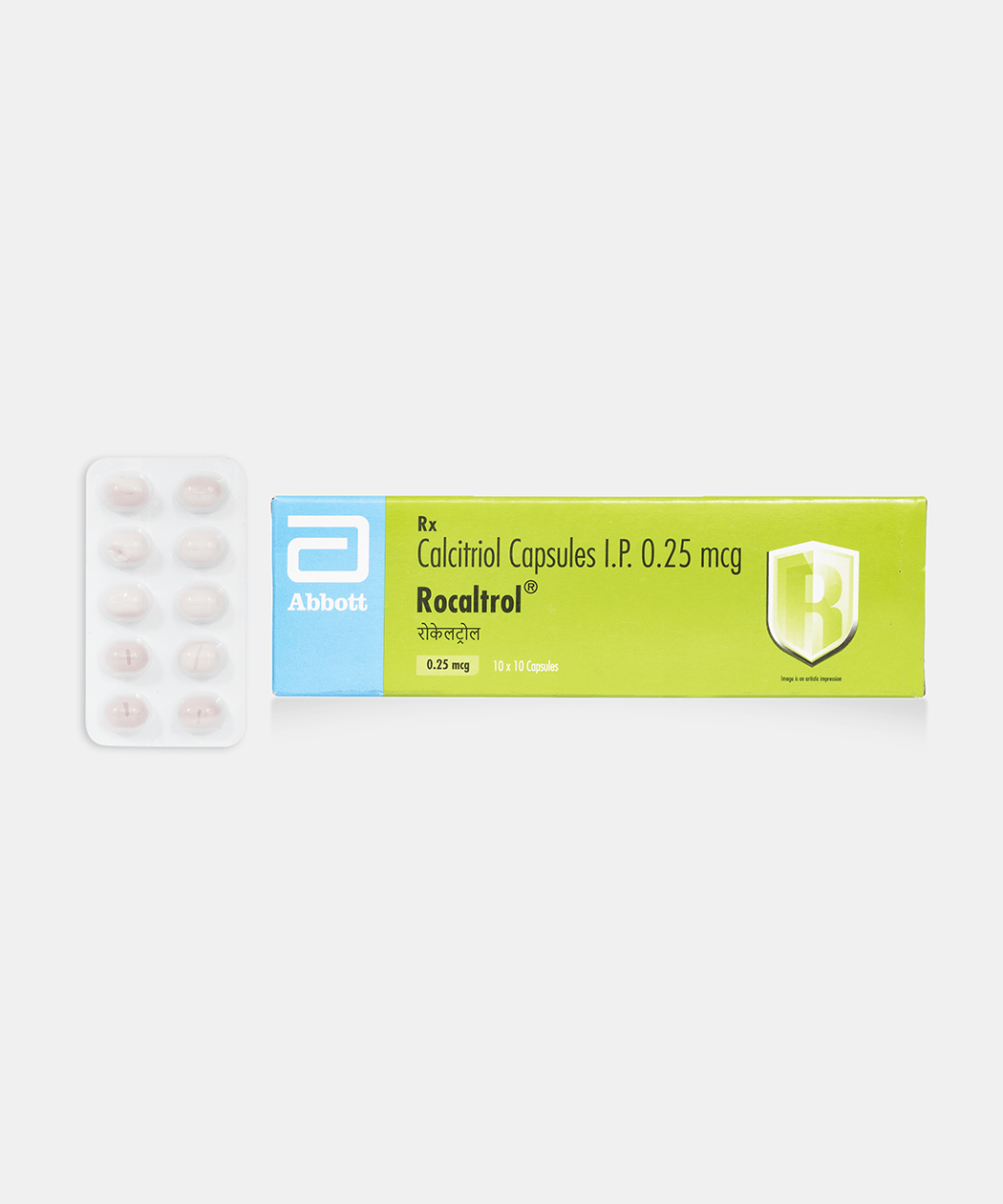
As a medicine, synthetic calcitriol is used where the body cannot make enough of the active hormone or needs its effects directly. Its main applications are the low calcium and secondary hyperparathyroidism that accompany chronic kidney disease, in which failing kidneys lose the ability to complete the final activation step, along with hypoparathyroidism, certain forms of rickets and osteomalacia, and renal bone disease [1][2]. Topical and oral preparations have also been studied for the skin condition psoriasis. Calcitriol is sold under brand names such as Rocaltrol and Calcijex and is available as capsules, an oral solution, and an injectable form.
The principal hazard of calcitriol therapy is hypercalcemia, an excess of calcium in the blood that can cause nausea, vomiting, constipation, and, if severe, kidney and heart problems [2]. Because the hormone is potent and acts on many tissues, evidence suggests it has a therapeutic window in which both too little and too much can be harmful, so treatment is usually monitored with blood calcium, phosphate, and parathyroid hormone measurements [4].
- Circulating calcitriol is measured in picograms per milliliter, roughly a thousandfold lower than its own precursor, reflecting how tightly the kidney rations its production.
- The vitamin D receptor that calcitriol switches on is found in almost every tissue of the body, not just bone and gut, which is why the hormone touches immunity and cell growth.
- Because it is the finished hormone, calcitriol works even in people whose kidneys can no longer activate ordinary vitamin D.
Mechanism
Calcitriol acts as a hormone through the vitamin D receptor (VDR), a member of the nuclear receptor family found in the intestine, bone, kidney, parathyroid glands, and many other tissues [3]. When calcitriol binds the receptor, the complex pairs with the retinoid X receptor and attaches to specific vitamin D response elements in the DNA, recruiting cofactors that turn target genes up or down [3].
In the gut this raises the production of calcium-transport proteins, boosting the absorption of dietary calcium and phosphate; in bone it works alongside parathyroid hormone to release calcium into the blood; and in the parathyroid glands it suppresses the secretion of parathyroid hormone, closing a feedback loop that keeps mineral levels in balance [1][3]. The net effect is a rise in circulating calcium and phosphate sufficient for healthy bone mineralization [1]. Beyond mineral handling, activation of the widely distributed vitamin D receptor modulates immune cells, cell proliferation and differentiation, and cardiovascular tissue, which underlies the broader biological effects attributed to vitamin D [3][4].
receptor fingerprint
Vitamin D receptor (VDR)activates
Intestinal calcium transport proteins (TRPV6, calbindin)activates
Parathyroid hormone gene expressioninhibits
Osteoblast and osteoclast RANKL signalingmodulates
Renal calcium reabsorptionmodulates
Dosingtypical ranges, not medical advice
interested in protocols and clinical dosages? make an account to see them! ^_^
Safetyrisks and cautions, not medical advice
Calcitriol is prescription only and needs monitoring because its main risk is too much calcium. Signs of high calcium include nausea, constipation, excessive thirst, frequent urination, weakness and confusion, and over time it can harm the kidneys and calcify soft tissue. It interacts with calcium supplements, thiazide diuretics and magnesium containing antacids, all of which can push levels too high, and with digoxin, where high calcium raises the risk of dangerous heart rhythms. Clinicians check blood calcium and phosphate regularly during treatment.
Interactionsdocumented pairs only, not exhaustive
Calcitriol is the active hormone rather than a precursor, so anything raising calcium alongside it does so without the feedback brake that limits ordinary vitamin D. Hypercalcemia is therefore the common endpoint of most of its interactions.
Thiazide diuretics reduce urinary calcium excretion, and combined with calcitriol they have produced frank hypercalcemia. Calcium supplements and other vitamin D analogues are additive for the same reason. The consequence matters most alongside digoxin, because raised serum calcium sensitises the myocardium to digitalis and can precipitate arrhythmia. Magnesium-containing antacids are a separate hazard in kidney disease, where calcitriol increases magnesium absorption and clearance is already impaired.
Absorption and clearance interactions are less dramatic. Cholestyramine, orlistat and mineral oil bind it in the gut; phenytoin, phenobarbital and carbamazepine accelerate its breakdown; and corticosteroids directly counteract its effect on calcium absorption.
Checking a whole stack? Run it through interactions + stacks.
History
Calcitriol is the hormonally active form of vitamin D, and its identification was one of the major achievements of endocrinology in the early 1970s. Working at the University of Wisconsin, Hector F. DeLuca and his colleagues, including Michael F. Holick, isolated and chemically characterized 1,25-dihydroxyvitamin D3 around 1971, showing that vitamin D is not itself active but must first be processed by the liver and then hydroxylated in the kidney to this final hormone.
Chemists at Hoffmann-La Roche, led by Milan Uskokovic, achieved a total synthesis shortly afterward, which made the scarce hormone available in quantity for study and eventual therapeutic use. Roche introduced it as a prescription medicine under the name Rocaltrol, and it received United States approval in 1978, principally to correct the low blood calcium and bone disease of patients on dialysis. Its discovery reframed vitamin D as a true steroid hormone with its own receptor and feedback loop, rather than a simple dietary vitamin.
Reputation
Calcitriol is regarded as the reference standard of vitamin D biology, the actual hormone that every other form of vitamin D is measured against. In clinical practice it is prized for its potency and speed, because it bypasses the body's own regulatory conversion steps and acts directly at the vitamin D receptor, which makes it invaluable when the kidneys can no longer manufacture the hormone themselves.
It remains a mainstay for the mineral and bone disorders of chronic kidney disease and for certain forms of hypoparathyroidism and rickets, and its role in suppressing overactive parathyroid glands is well documented. Researchers continue to find the compound fascinating because its receptor is present in nearly every tissue, hinting at roles far beyond calcium in immunity, cell growth, and cardiovascular health. Honestly, its very potency is also its main caution: it has a narrow margin of safety and can push blood calcium too high, so it calls for careful dosing and monitoring rather than casual use.
Subjective profileweighing the evidence above
This is the active vitamin D hormone, prescribed for specific problems such as low blood calcium or kidney-related parathyroid disease, and it needs regular calcium and phosphate blood tests. Anyone simply topping up vitamin D status has no business taking it; hypercalcemia is a real and avoidable harm.
Where to buy

Suppliers
Vendors carrying Calcitriol, with live product details and codes. Links are affiliate links that support the wiki at no cost to you.
PCT.Zone
Calcitriol
Research
- 2006first citedVitamin D in chronic kidney disease: a systemic role for selective vitamin D receptor activation
- 2011most recentKidney disease and vitamin D levels: 25-hydroxyvitamin D, 1,25-dihydroxyvitamin D, and VDR acti…
- 1.Kidney disease and vitamin D levels: 25-hydroxyvitamin D, 1,25-dihydroxyvitamin D, and VDR activation
- 2.Vitamin D in chronic kidney disease: a systemic role for selective vitamin D receptor activation
- 3.Potential for vitamin D receptor agonists in the treatment of cardiovascular disease
- 4.The virtues of vitamin D: but how much is too much?
4 listed here; entry last updated August 2026
Reviews
My notesprivate to this device
FAQ
How is calcitriol different from regular vitamin D?
Regular vitamin D has to be activated by the liver and kidney; calcitriol is already the active hormone, so it works even when the kidneys cannot do that job.
What is the main danger?
Too much calcium in the blood; that is why clinicians check calcium levels regularly while you take it.
Why do kidney patients take it?
Failing kidneys stop making active vitamin D and let parathyroid hormone climb; calcitriol replaces the hormone and brings that hormone back down.
Can I take calcium supplements with it?
Only as your clinician directs, because combining them can push blood calcium too high.
Does it need refrigeration?
The capsules are fine at room temperature; the injectable form is handled by your clinic or pharmacy.
Adverse effects
- Its main risk is hypercalcemia, too much calcium in the blood, which can cause nausea, vomiting, constipation, weakness, and thirst
- High calcium and phosphate together can, over time, contribute to deposits in soft tissues and blood vessels
- Doses generally require monitoring with blood tests for calcium, phosphate, and parathyroid hormone
- Excess intake may strain the kidneys and, in severe cases, affect heart rhythm
Notes and cautions
- As a potent prescription hormone, it is taken under medical supervision rather than as a casual supplement