
spec sheet13 rows
L-Tyrosine is an aromatic amino acid used to build proteins and to make several important signaling molecules. Because the body can produce it from the essential amino acid phenylalanine, it is usually classed as non-essential, or conditionally essential when phenylalanine is scarce. It is the raw material for the catecholamine neurotransmitters dopamine, norepinephrine, and epinephrine, as well as for thyroid hormones and the pigment melanin, and it is sold as a supplement studied mainly for mental performance under stress.
- Raw material for dopamine, noradrenaline and adrenaline
- Shines exactly where it counts, under acute stress
- Refills catecholamines faster than hard days drain them
- Helps hold cognition together after a bad night of sleep
- Cheap, safe and easy to tolerate
- Nausea or stomach upset
- Headache in some people
Overview
L-Tyrosine is one of the twenty amino acids that make up proteins and belongs to the aromatic group because of the phenol ring in its side chain [1]. In mammals it is produced from the essential amino acid phenylalanine in a reaction catalyzed by phenylalanine hydroxylase, so it is generally regarded as non-essential; when the supply of phenylalanine is limited, however, it becomes conditionally essential [1]. It takes its name from the Greek word for cheese, reflecting its first isolation from the milk protein casein in the nineteenth century [1].
The amino acid is best known as a precursor. The enzyme tyrosine hydroxylase converts it to L-DOPA in the rate-limiting step of catecholamine synthesis, leading in turn to dopamine, norepinephrine, and epinephrine; tyrosine is also the backbone from which thyroid hormones are assembled and a starting point for the skin pigment melanin [1][3]. Because these products influence alertness, mood, and the stress response, supplemental tyrosine has been studied as a way to bolster catecholamine availability when the body is under load [1][3]. Controlled studies in people find that taking tyrosine can raise circulating catecholamines and that it may protect working memory and information processing during demanding conditions such as cold, noise, or heavy cognitive load, while showing little effect on mood in unstressed individuals or on physical exercise [2][3].
Reviewers conclude that tyrosine tends to help most when the demands on the catecholamine system are high and its stores are temporarily depleted, and less so otherwise [1][2]. Dietary tyrosine is plentiful in high-protein foods such as meat, fish, dairy, eggs, nuts, and soy, and the purified amino acid is manufactured on a large scale, increasingly by fermentation with engineered bacteria [1]. It is sold as a dietary supplement and is also relevant to the management of phenylketonuria, an inherited disorder in which phenylalanine cannot be properly converted to tyrosine [1].

Mechanism
Tyrosine exerts its effects chiefly as a substrate that feeds the synthesis of catecholamines [1]. Inside catecholamine-producing neurons and the adrenal medulla, the enzyme adds a hydroxyl group to tyrosine to form L-DOPA, the rate-limiting step of the pathway, after which L-DOPA is decarboxylated to , and dopamine can be further converted to and epinephrine [1][3].
Supplying extra tyrosine can increase the amount of these neurotransmitters that is made and released, an effect most apparent when neuronal firing is high and existing stores are being drawn down, as happens under stress or intense mental effort [1][3]. This substrate-driven mechanism is thought to explain why tyrosine loading has measurable benefits for working memory and processing under demanding conditions but generally does not alter mood or performance when the catecholamine system is not taxed [1][2]. Beyond the nervous system, tyrosine also serves as the chemical scaffold for thyroid hormone production and for melanin synthesis [1].
receptor fingerprint
/ synthesisprecursor
Catecholamine depletionreplenishes
Working memory (stress / cold)protects
Dosingtypical ranges, not medical advice
interested in protocols and clinical dosages? make an account to see them! ^_^
Safetyrisks and cautions, not medical advice
Tyrosine is generally very safe, being a normal dietary amino acid. At higher doses some people get a headache, mild nausea, or feel a little overstimulated, and taking it late can disturb sleep. The interactions worth knowing: it can affect thyroid hormone levels, so people with hyperthyroidism or on thyroid medication should be cautious, and it should not be combined with MAOIs. Those with melanoma are often advised to be careful given tyrosine's role in melanin. Otherwise it is low-risk for short, situational use.
History
L-Tyrosine is a non-essential amino acid first isolated in 1846 by the German chemist Justus von Liebig from the milk protein casein, from which its name derives, the Greek word tyros meaning cheese. Recognized during the early development of protein chemistry as one of the standard building blocks of proteins, tyrosine was later identified as the direct metabolic precursor to the catecholamine neurotransmitters dopamine, norepinephrine, and epinephrine, as well as to thyroid hormones and melanin.
This precursor role prompted mid twentieth century interest in whether dietary or supplemental tyrosine could influence catecholamine synthesis, and from the 1980s onward researchers, including groups associated with military and aerospace programs, investigated its use as a means of sustaining cognitive performance under acute stress. It is now widely available as an inexpensive dietary supplement.
Reputation
L-Tyrosine is generally regarded as a safe, inexpensive, and mechanistically plausible supplement whose benefits are narrower than popular marketing sometimes implies. The prevailing view among researchers is that it does little for cognition under ordinary rested conditions but can help preserve working memory and mental flexibility during acute stressors that deplete catecholamines, such as cold exposure, sleep deprivation, or high cognitive load. Users often take it for focus, stress resilience, and as an addition to stimulant or pre-workout regimens, and it enjoys a favorable tolerability reputation with few adverse effects at typical doses. Skeptics note that evidence for everyday cognitive enhancement is weak and that effect sizes are modest and situation dependent, so it is best regarded as a targeted aid for demanding conditions rather than a general nootropic.
Subjective profileweighing the evidence above
Cheap, safe and genuinely useful in the narrow case it is good at: acute stress and sleep loss, the situations that drain catecholamines faster than you rebuild them. As an everyday focus or mood supplement it does very little. Be careful with thyroid medication and do not take it with MAOIs.
Where to buy
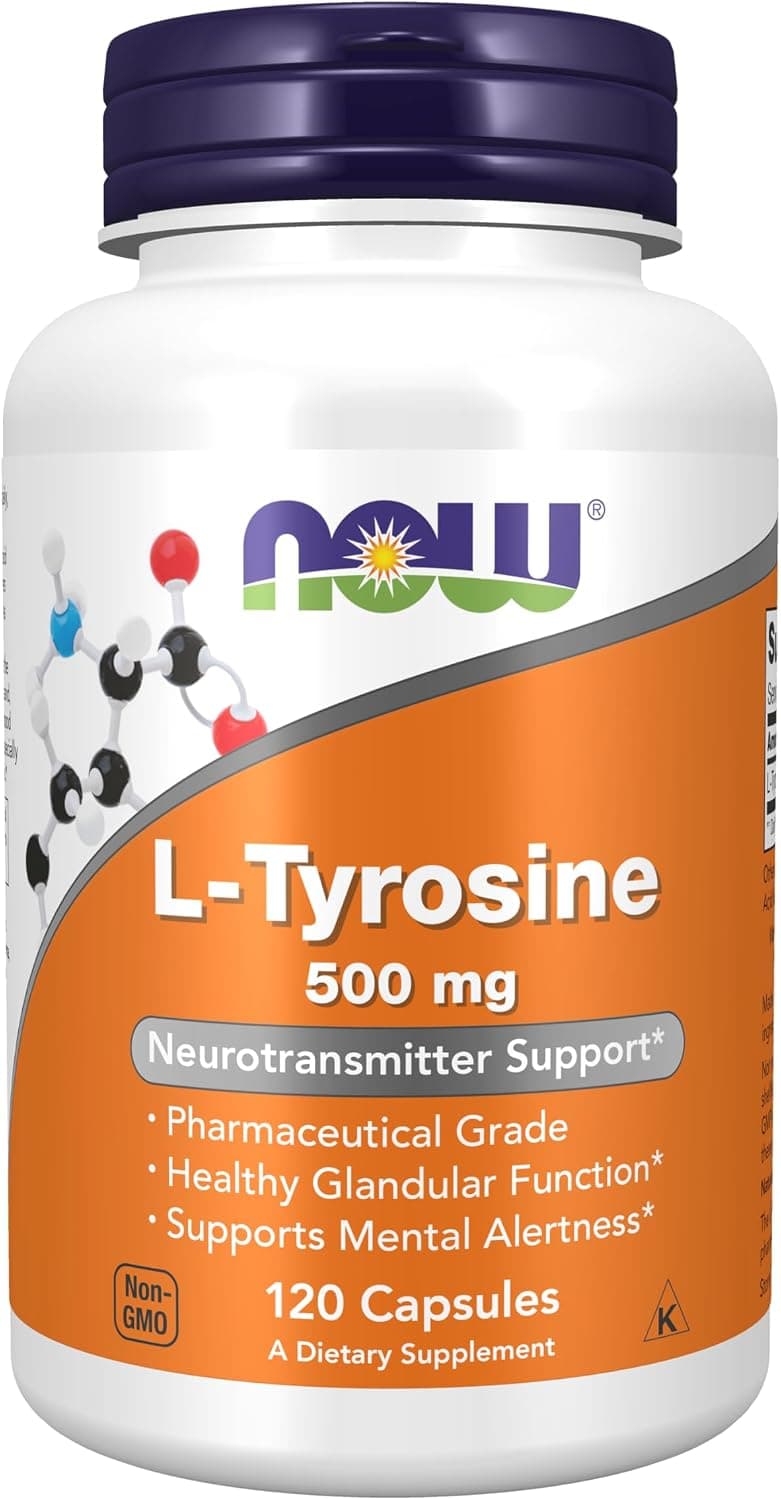
1 other outlet

Suppliers
Vendors carrying L-Tyrosine, with live product details and codes. Links are affiliate links that support the wiki at no cost to you.
Amazon
L-Tyrosine
iHerb
L-Tyrosine
Research
- 1983first citedEffects of tyrosine and tryptophan ingestion on plasma catecholamine and 3,4-dihydroxyphenylace…
- 2015most active year3 papers
- 2016controlled trialEffects of l-Tyrosine on working memory and inhibitory control are determined by DRD2 genotypes…
- 2025most recentExploring the role of nutritional strategies to influence physiological and cognitive mechanism…
- 1.Effect of tyrosine supplementation on clinical and healthy populations under stress or cognitive demands: A review.
- 2.Behavioral and cognitive effects of tyrosine intake in healthy human adults.
- 3.Effects of tyrosine and tryptophan ingestion on plasma catecholamine and 3,4-dihydroxyphenylacetic acid concentrations.
- 4.Mesoprefrontal dopaminergic neurons: can tyrosine availability influence their functions?
- 5.Effect of catecholamine precursors on stress-induced changes in motor activity, exploration, and brain monoamines in young and aged mice
- 6.Treatment with tyrosine, a neurotransmitter precursor, reduces environmental stress in humans
- 7.Tyrosine improves working memory in a multitasking environment
- 8.Tyrosine improves cognitive performance and reduces blood pressure in cadets after one week of a combat training course
- 9.Tyrosine supplementation mitigates working memory decrements during cold exposure
- 10.Tyrosine promotes cognitive flexibility: evidence from proactive vs. reactive control during task switching performance
- 11.Effects of l-Tyrosine on working memory and inhibitory control are determined by DRD2 genotypes: A randomized controlled trial
- 12.The Impact of Different Environmental Conditions on Cognitive Function: A Focused Review
17 listed here; entry last updated August 2026
Reviews
My notesprivate to this device
FAQ
Why take it on an empty stomach?
Tyrosine competes with other amino acids for absorption and brain transport, so taking it away from protein meals is thought to improve uptake.
Does it work if I'm well-rested and unstressed?
Research suggests the benefits are most noticeable when catecholamines are depleted, such as under stress, cold, or sleep loss. Effects are subtler at baseline.
Is it a stimulant?
No. It's an amino acid precursor rather than a stimulant, so it doesn't directly activate the nervous system the way caffeine does.
How is it different from L-DOPA?
Tyrosine is several steps upstream of dopamine and is converted only as needed, whereas L-DOPA is a more direct precursor. Tyrosine's effect is gentler.
Adverse effects
- Nausea or stomach upset
- Headache in some people
Notes and cautions
- Generally well tolerated
- May affect thyroid function
- May interact with MAO-inhibitor medications