
spec sheet12 rows
Flibanserin is a serotonergic medication approved to treat hypoactive sexual desire disorder (HSDD) in premenopausal women, sold under the brand name Addyi. It was first developed as an antidepressant but was repurposed after it appeared to influence sexual desire. Unlike drugs for erectile dysfunction, it is taken daily and acts on the brain rather than on blood flow. Its 2015 approval by the United States Food and Drug Administration was controversial, following two earlier rejections and a debate over whether its modest benefits justified its risks.
- Turns desire back up at the source
- Brain chemistry, not blood flow
- Non-hormonal option for premenopausal women
- Eases the distress low libido brings
- Nothing to time before the moment
- FDA approved and sold as Addyi
- Low blood pressure and fainting, especially when combined with alcohol
- Dizziness, drowsiness, nausea, and fatigue are common
- Interacts with alcohol and drugs that affect its liver metabolism
Overview
Flibanserin is a centrally acting drug that alters signalling by the neurotransmitter serotonin, and it is the active ingredient of the branded product Addyi [1][4]. It was originally investigated by the German company Boehringer Ingelheim as a possible antidepressant; although it did not succeed in that role, observations that it seemed to affect sexual desire led to its being repositioned as a treatment for low libido [1][2]. Chemically it is a benzimidazole derivative with the molecular formula C20H21F3N4O [1].
The drug is approved specifically for hypoactive sexual desire disorder, a diagnosis of persistently low sexual desire that causes personal distress and is not explained by another medical or psychiatric condition, a relationship difficulty, or the effect of another medication, in premenopausal women [1]. Its path to market was unusually contentious. An advisory panel to the United States Food and Drug Administration voted against approval in 2010, and the agency declined the application; after the smaller company Sprout Pharmaceuticals took over development and submitted additional data, a later panel recommended approval, and the FDA cleared flibanserin in August 2015 [1][4]. Unlike medicines for erectile dysfunction, which are used as needed, flibanserin is taken every day [1].
How much flibanserin helps has been debated from the start [1][4]. A systematic review and meta-analysis pooling several thousand women found that, compared with placebo, treatment produced on average roughly one additional satisfying sexual event per month and small improvements in measured desire, while the overall quality of the evidence was rated as very low [4]. The same analysis reported that the drug meaningfully increased the risk of dizziness, drowsiness, nausea, and fatigue [4]. Critics and supporters have argued over whether its approval reflected sound evidence or effective advocacy and marketing, and claims of gender bias in how the FDA handled it featured prominently in the discussion [1].
Flibanserin carries a boxed warning, the strongest form of caution used by United States regulators, because it can cause dangerously low blood pressure and fainting, a risk that rises sharply when it is combined with alcohol or certain drugs that slow its breakdown in the liver [1]. It is dispensed as an oral tablet and, at least initially, could only be prescribed by clinicians who had completed a short certification, part of a risk-management program tied to its approval [1]. Marketed by successive owners after Sprout was itself acquired, it remains a prescription-only product [1].
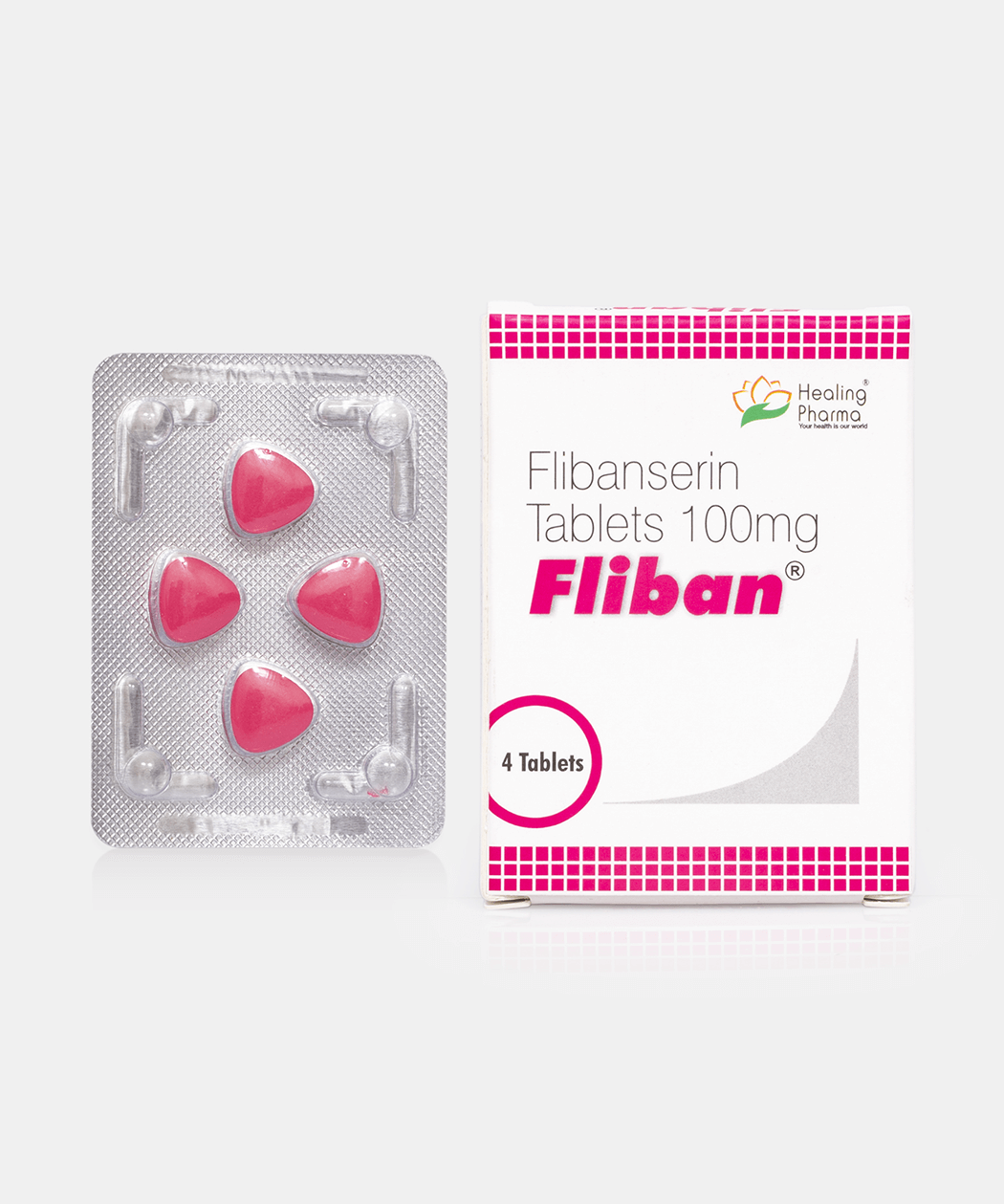
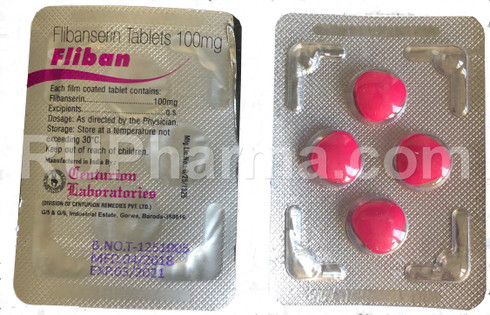
- Flibanserin was the first medication ever approved in the United States for hypoactive sexual desire disorder in women, reaching the market in 2015.
- It began life as a failed antidepressant; its effect on sexual desire was noticed only after it disappointed in that original role.
- Unlike on-demand erectile-dysfunction drugs, it is taken every night and acts on brain chemistry, so benefits may take several weeks to appear.
Mechanism
Flibanserin acts chiefly on two receptor subtypes; at clinically relevant levels it behaves as an at the receptor and as an at the receptor, with weaker activity at D4 and other serotonin receptors [2][4]. Its effects are seen mainly at postsynaptic receptors, particularly on pyramidal neurons of the prefrontal , which sets it apart from drugs such as buspirone that act more at presynaptic sites [2][4]. Through this regional pattern of receptor activity, flibanserin raises the local levels of and noradrenaline while transiently lowering in the prefrontal and some related areas [3][4].
Because and noradrenaline tend to promote sexual desire while tends to dampen it, this shift in the balance of brain chemicals is the proposed basis for its effect on libido [4]. Unlike treatments for erectile dysfunction, which act on blood flow in the genitals, flibanserin works entirely within the central nervous system and shifts this neurochemical balance only gradually, which is why it is taken every day rather than shortly before sexual activity and why several weeks may pass before any benefit becomes apparent [1][4].
receptor fingerprint
receptoragonist
receptorantagonist
D4 receptoragonist
Prefrontal and activates
5-HT2C receptorantagonist
Dosingtypical ranges, not medical advice
interested in protocols and clinical dosages? make an account to see them! ^_^
Safetyrisks and cautions, not medical advice
Flibanserin is prescription only and carries specific warnings. The most important is alcohol, which sharply raises the risk of fainting and dangerously low blood pressure, so heavy or close-in-time drinking should be avoided. Common effects are dizziness, sleepiness, nausea, tiredness, and dry mouth, and taking it at bedtime helps. It should not be combined with strong CYP3A4 inhibitors or used in liver impairment, since both push its levels up and worsen the risk of fainting. It is only meant for premenopausal women with acquired desire loss, not for boosting performance or for men, and it is stopped if there is no benefit after about eight weeks.
Interactionsdocumented pairs only, not exhaustive
Flibanserin interacts with alcohol; a controlled study found dizziness occurred in roughly one-third of women regardless of alcohol dose, with no statistically significant additive effect on hypotension or other cardiovascular adverse events at doses of 0.2 to 0.6 g/kg ethanol [6]. This is a pharmacodynamic interaction where both drugs lower blood pressure through different mechanisms. The FDA label warning about alcohol is based on early clinical data showing potential additive hypotensive effects, though the evidence for clinically significant worsening is mixed.
Flibanserin also has interactions with strong CYP3A4 inhibitors (such as ketoconazole and ritonavir); these are pharmacokinetic interactions where the inhibitor reduces metabolism of flibanserin and raises its plasma levels, increasing risk of hypotension and syncope. Antidepressants, particularly serotonergic ones, can interact via pharmacodynamic pathways involving serotonin receptor activity, though this has not been extensively quantified in clinical trials. Studies have not systematically evaluated flibanserin with common pairings such as many other antihypertensive agents, mild CYP3A4 inhibitors, or most other CNS-active drugs.
Checking a whole stack? Run it through interactions + stacks.
History
Flibanserin was originally developed by the German pharmaceutical company Boehringer Ingelheim as a candidate antidepressant, built around agonism at the serotonin 5-HT1A receptor and antagonism at 5-HT2A. It failed to prove itself as an antidepressant, but during its study researchers noticed effects on sexual desire and repurposed it toward hypoactive sexual desire disorder. The Food and Drug Administration twice declined to approve it, in 2010, citing modest benefits weighed against its side effects.
The rights were acquired by Sprout Pharmaceuticals, which resubmitted the drug, and in August 2015 it was approved under the brand name Addyi for premenopausal women with hypoactive sexual desire disorder. It thereby became the first drug approved in the United States for female HSDD, though its approval remained controversial amid debate over its efficacy and its interaction with alcohol.
Reputation
Flibanserin occupies a genuinely pioneering place in medicine as the first drug approved in the United States to treat hypoactive sexual desire disorder in women, addressing a condition that had long lacked pharmacological options. Its mechanism is scientifically distinctive; rather than acting on genital blood flow like the erectile-dysfunction drugs, it works centrally to shift the balance of dopamine, noradrenaline, and serotonin in the prefrontal cortex toward desire.
For the women who respond, it offers a non-hormonal, centrally acting approach that fits into daily life. Its very existence helped legitimize female sexual desire as a valid target of medical treatment and spurred further research in the field. It is important to be candid that its average benefit over placebo is modest, that it must be taken daily for weeks before any effect emerges, and that it carries meaningful cautions around alcohol and sedation.
Subjective profileweighing the evidence above
Worth a supervised eight-week trial if low desire is genuinely distressing and other causes have been ruled out, because the alternatives are few; go in knowing the average effect is small. The alcohol interaction and fainting risk are real and set the terms of use, and it is stopped if nothing changes.
Where to buy
1 other outlet
Suppliers
Vendors carrying Flibanserin, with live product details and codes. Links are affiliate links that support the wiki at no cost to you.
PCT.Zone
Flibanserin
RUPharma🌐
Flibanserin
Research
- 2002first citedPharmacology of flibanserin
- 2026most recentFemale Sexual Desire, Arousal, and Orgasmic Dysfunctions: A Systematic Review and Meta-Analysis…
- 1.Female Sexual Desire, Arousal, and Orgasmic Dysfunctions: A Systematic Review and Meta-Analysis of Treatment Options.
- 2.Pharmacology of flibanserin
- 3.Multifunctional pharmacology of flibanserin: possible mechanism of therapeutic action in hypoactive sexual desire disorder
- 4.Efficacy and Safety of Flibanserin for the Treatment of Hypoactive Sexual Desire Disorder in Women: A Systematic Review and Meta-analysis
- 5.Hypoactive Sexual Desire Disorder: International Society for the Study of Women's Sexual Health (ISSWSH) Expert Consensus Panel Review
- 6.Effects of Alcohol Administered With Flibanserin in Healthy Premenopausal Women: A Randomized, Double-Blind, Single-Dose Crossover Study.
6 listed here; entry last updated August 2026
Reviews
My notesprivate to this device
FAQ
Is it like a female Viagra?
No; it works on brain chemistry over weeks of daily use, not on blood flow before sex, so the comparison is misleading.
Why the strict alcohol warning?
Alcohol plus flibanserin can drop blood pressure and cause fainting, so avoid drinking close to your dose.
When will I notice a difference?
Give it up to about 8 weeks; if there is no meaningful improvement by then, it is usually stopped.
Why take it at bedtime?
Bedtime dosing reduces the daytime sleepiness, dizziness, and fainting risk that come with it.
Can postmenopausal women or men use it?
It is approved only for premenopausal women with acquired, generalized low desire; other uses are not established.
Limitations of the evidence
- Effect on sexual desire is modest on average
Adverse effects
- Low blood pressure and fainting, especially when combined with alcohol
- Dizziness, drowsiness, nausea, and fatigue are common
- Interacts with alcohol and drugs that affect its liver metabolism