
spec sheet12 rows
Hopantenic acid, best known by the Russian brand Pantogam and as its calcium salt calcium hopantenate, is a naturally occurring homologue of pantothenic acid in which the beta-alanine unit is replaced by GABA [1]. It is used in Russia and formerly in Japan as a gentle nootropic and mild anxiolytic-anticonvulsant, particularly in children with cognitive, behavioral and hyperkinetic problems [1][2]. Its effects are attributed to weak GABA-B-like modulation combined with support of neuronal metabolism, and the bulk of its clinical evidence is Russian rather than from large Western trials [1].
- Gentle daytime calm without the fog of a sedative
- A GABA derivative of pantothenic acid; nootropic and anxiolytic at once
- Decades of Russian clinical use, including in children
- Supports attention, behavior and memory with easy tolerability
- Mild anticonvulsant and neuroprotective properties reported
- Supports neuronal metabolism rather than forcing a stimulant push
- Can cause mild insomnia, agitation or headache, especially if dosed late.
- Allergic skin reactions are occasionally reported.
- Most safety and efficacy data are older Russian studies rather than large modern trials.
Overview
Hopantenic acid (N-pantoyl-GABA, homopantothenic acid) is structurally the GABA analogue of the vitamin pantothenic acid; conceptually it is GABA carried on a pantoyl group that improves passage into the brain. The calcium salt, calcium hopantenate, is the pharmaceutical form marketed as Pantogam. It is positioned as a nootropic with a mild, non-sedating activating profile that also carries anticonvulsant and anxiolytic properties without the tolerance, hyperstimulation or withdrawal typical of stronger GABAergic drugs [1].
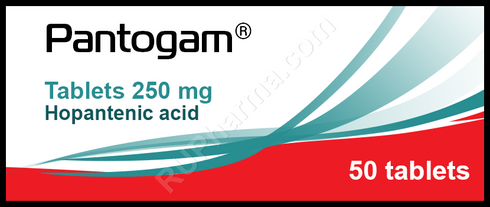
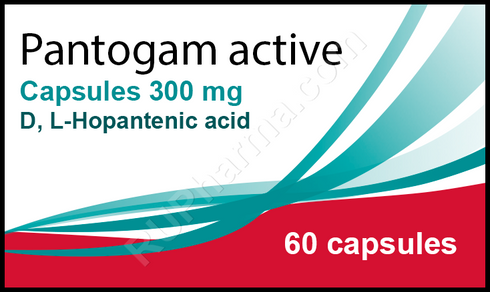
Clinically it has been used across a broad range of indications in Russian and Eastern European practice, including cognitive impairment of vascular origin, the aftermath of head trauma, epilepsy, extrapyramidal and hyperkinetic syndromes, and developmental, attentional and behavioral disorders in children [1][2]. A racemic active form (Pantogam active, containing D- and L-hopantenic acid) is described as having additional anxiolytic and mood-improving actions [1]. Preclinical work also links the pantogam scaffold to antioxidant and antihypoxic protection of brain tissue during ischemia and reperfusion, consistent with a metabolic component to its neuroprotection [3].
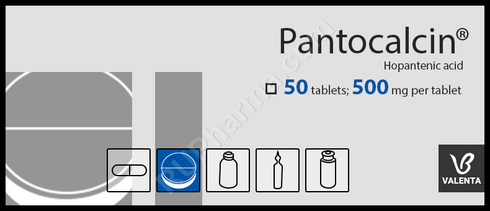
It is supplied as tablets and syrups. Important to note is that the calcium hopantenate form was withdrawn in Japan after reports of a rare but serious delayed encephalopathy with lactic acidosis, a safety signal that shapes how the compound should be used [1].
- Hopantenic acid is essentially vitamin B5 with GABA swapped in for beta-alanine, making it a hybrid of a vitamin and an inhibitory neurotransmitter [1].
- Its calcium salt was pulled from the Japanese market after rare cases of a delayed encephalopathy with lactic acidosis, a reminder that even gentle nootropics carry real risks [1].
Mechanism
Hopantenic acid is thought to act mainly through the system, behaving as a weak or modulator with -B-like character that produces mild inhibitory, anxiolytic and anticonvulsant tone without strong sedation [1]. Because it is built on the pantothenic acid (vitamin B5) skeleton, it is also proposed to feed into coenzyme A-dependent metabolism and to support cholinergic transmission and neuronal energy handling, which may contribute to its cognitive effects [1].
A second strand of activity is metabolic and antioxidant. In and reperfusion models, pantogam-containing preparations normalize glutathione status and the activity of NADPH-generating enzymes, pointing to suppression of free-radical damage as part of its neuroprotective profile [3]. The combination of gentle modulation with and antioxidant support is the usual explanation for its balance of calming and mildly activating effects.
receptor fingerprint
Brain antioxidant defensesEnhances
systemModulates
Cholinergic transmissionSupports
Safetyrisks and cautions, not medical advice
Hopantenic acid has a long track record of use in children and adults in Russia and is generally regarded as well tolerated, with the most common issues being mild insomnia or agitation, headache, or allergic skin reactions. The serious caveat is historical: the calcium hopantenate form was withdrawn in Japan after rare cases of a delayed-onset encephalopathy accompanied by lactic acidosis, sometimes weeks into treatment, so prolonged high-dose use deserves caution and it is best avoided in anyone with mitochondrial or metabolic vulnerability. It is not an approved drug in the United States or most of Western Europe and should be treated as a research or investigational nootropic. As with any GABAergic agent, combining it with alcohol or sedatives is unwise.
History
Hopantenic acid was developed as part of Soviet and Japanese nootropic research; the calcium salt was marketed in Japan and became a mainstay of Russian neuropharmacology under the Pantogam brand from the Zakusov (formerly USSR) Institute of Pharmacology in Moscow, which continues to publish on it [1]. It reflects a distinctly Eastern European tradition of gentle, metabolically oriented nootropics used widely in pediatric neurology, a tradition never mirrored by large Western regulatory trials.
Reputation
Within Russian clinical practice hopantenic acid enjoys a solid reputation as a safe, mild nootropic for children and older adults, praised for improving attention and behavior without strong side effects [1][2]. Western observers are more reserved, noting that most trials are small, older and published in Russian, and that the Japanese calcium hopantenate encephalopathy reports temper enthusiasm. In the nootropic community it is seen as a low-key, low-risk GABA derivative rather than a dramatic cognitive enhancer.
Subjective profileweighing the evidence above
The activating claim is marketing. This is the same hopantenic acid as standard Pantogam supplied as the free racemate, and the extra quality attributed to the L isomer has no independent pharmacology behind it, so the premium buys a stereochemical story. The reason for caution is older and more serious than the branding: calcium hopantenate was withdrawn in Japan after cases of a Reye-like encephalopathy with lactic acidosis, rare but severe, and it is the one fact about this molecule worth carrying.
Where to buy

Suppliers
Vendors carrying Hopantenic Acid, with live product details and codes. Links are affiliate links that support the wiki at no cost to you.

RUPharma🌐
Pantogam
RUPharma🌐
Pantocalcin
RUPharma🌐
Pantogam Active
Research
- 2009first cited[The use of pantogam in patients with moderate cognitive disorders of vascular genesis].
- 2017most recent[Pharmacological effects and clinical application of pantogam and pantogam active].
- 1.[Pharmacological effects and clinical application of pantogam and pantogam active].
- 2.[The use of pantogam in patients with moderate cognitive disorders of vascular genesis].
- 3.Effects of a Preparation Containing Pantogam, Succinic Acid, and Chitosan on Activities of the Glutathione System and NADPH-Generating Enzymes in Rat Tissues under Conditions of Cerebral Ischemia/Reperfusion.
3 listed here; entry last updated August 2026
Reviews
My notesprivate to this device
FAQ
Is hopantenic acid the same as pantothenic acid?
No. It is the GABA homologue of pantothenic acid, meaning GABA is substituted for the beta-alanine part of the vitamin, giving it neurotransmitter-like activity.
Why is it popular for children?
In Russian practice it is valued as a mild nootropic for developmental, attention and behavioral problems because it improves function without strong sedation or dependence.
Is it approved in the West?
No. It is a mainstay in Russia under the Pantogam brand but is not an approved drug in the United States or most of Western Europe.
What is the main safety concern?
The calcium hopantenate form was linked to a rare delayed encephalopathy with lactic acidosis in Japan, so prolonged high-dose use should be approached cautiously.
Limitations of the evidence
- The calcium salt was withdrawn in Japan over rare delayed encephalopathy with lactic acidosis.
Adverse effects
- Can cause mild insomnia, agitation or headache, especially if dosed late.
- Allergic skin reactions are occasionally reported.
- Most safety and efficacy data are older Russian studies rather than large modern trials.