
spec sheet13 rows
Fluconazole is a triazole antifungal medicine used to treat and prevent a range of fungal and yeast infections. Sold under the brand name Diflucan and now widely available as a generic, it can be taken by mouth or given intravenously and is valued for its good absorption and long duration of action. Common uses include vaginal and oral thrush, invasive Candida infections, and cryptococcal meningitis. It appears on the World Health Organization's List of Essential Medicines.
- One dose often clears vaginal thrush
- Used to treat and prevent fungal and yeast infections
- Handles invasive Candida and cryptococcal meningitis
- Excellent absorption by mouth or by vein
- Convenient once daily dosing with long duration
- Good penetration into body fluids, including spinal fluid
- Headache, nausea, and abdominal discomfort are common
- Rash and mild elevations in liver enzymes may occur
- Rarely serious liver injury, severe skin reactions, or heart rhythm changes
Overview
Fluconazole is a member of the triazole class of antifungal drugs, part of the wider azole family [1]. It is distinguished from earlier azoles such as ketoconazole by carrying two triazole rings in place of an imidazole ring, a change that improved its water solubility and its behaviour in the body; its full chemical name is 2-(2,4-difluorophenyl)-1,3-bis(1H-1,2,4-triazol-1-yl)propan-2-ol, with the formula C13H12F2N6O [1]. The drug is well absorbed when swallowed, reaching the bloodstream almost as completely as when injected, is only lightly processed by the liver, and is cleared mostly unchanged by the kidneys; its long half-life allows once-daily dosing [1][4].
Fluconazole was discovered by scientists at the pharmaceutical company Pfizer and was patented in the early 1980s [1]. It reached the market later that decade under the brand name Diflucan, and after its patents expired in the mid-2000s it became available as an inexpensive generic [1]. It is now one of the most widely used antifungal agents and is included on the World Health Organization's List of Essential Medicines [1].
The drug is used against yeasts and some other fungi rather than against bacteria [1]. Common indications include candidiasis in its various forms, from vaginal and oral thrush to infections of the oesophagus and bloodstream, and it is a mainstay of maintenance therapy for cryptococcal meningitis, a serious infection seen especially in people with weakened immune systems [1]. It is also used to prevent fungal infection in patients whose immunity is compromised, for example during chemotherapy or after transplantation, and it has a role in several other systemic mycoses [1]. Available as tablets, an oral suspension, and an intravenous solution, it can be matched to the severity of the infection [1].
Fluconazole is generally well tolerated, with headache, nausea, abdominal discomfort, rash, and mild rises in liver enzymes among the more frequent complaints; uncommon but serious problems include marked liver injury, severe skin reactions, and a lengthening of the heart's QT interval that can predispose to arrhythmia [1][4]. Because it inhibits several drug-metabolising liver enzymes, chiefly CYP2C19 along with CYP3A4 and CYP2C9, it can raise blood levels of many other medications and must be prescribed with attention to interactions [1]. Its use in pregnancy is cautioned; a large Danish cohort study linked oral fluconazole taken during pregnancy with a modestly increased risk of miscarriage [2]. As with other azoles, fungi can become resistant to fluconazole, commonly through mutations in the target enzyme gene ERG11 or by pumping the drug out of the cell, which is a growing clinical concern [3].
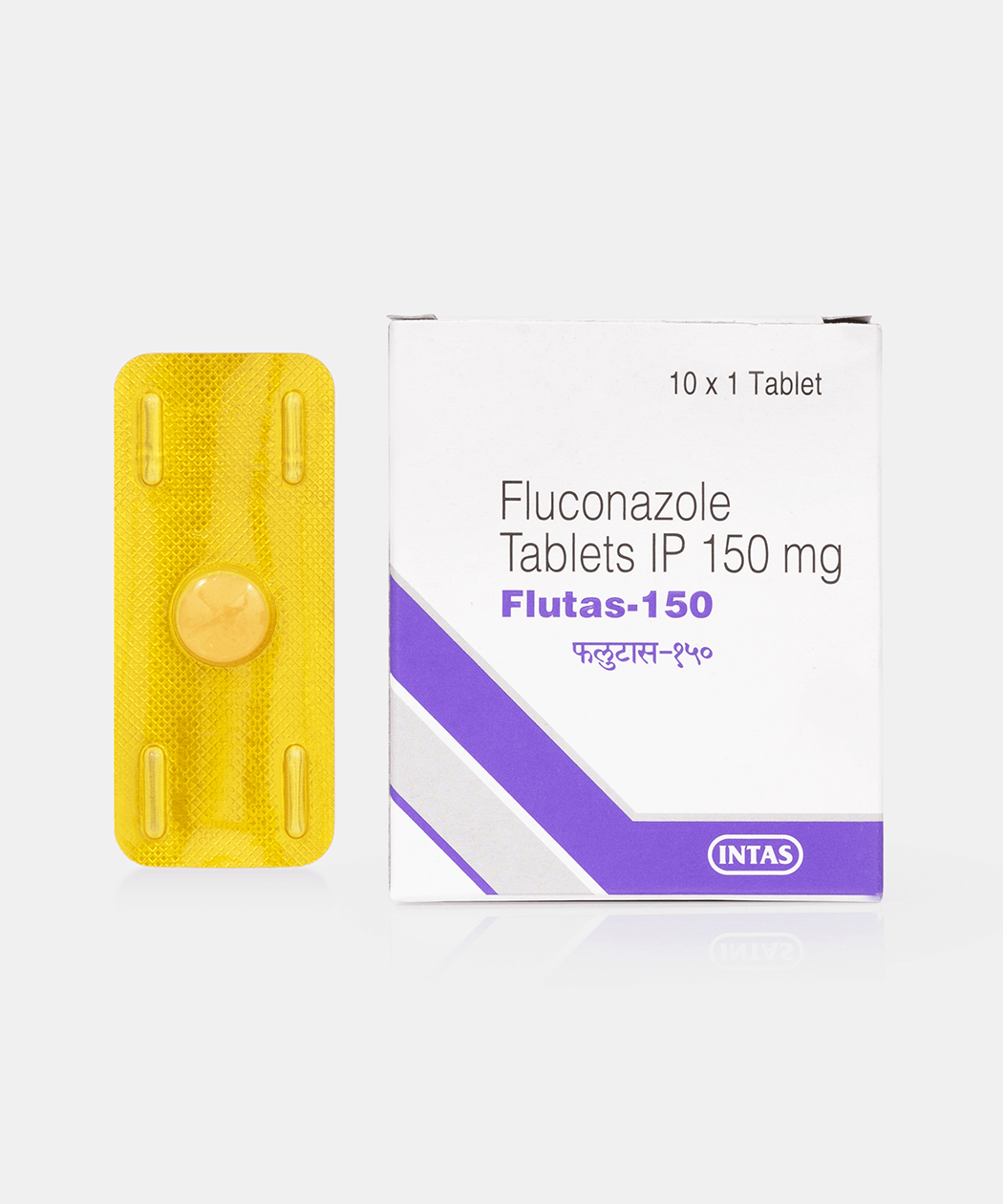

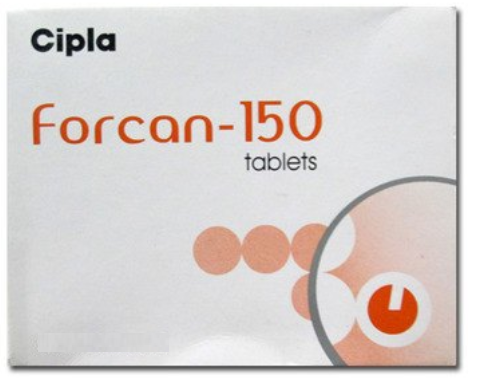
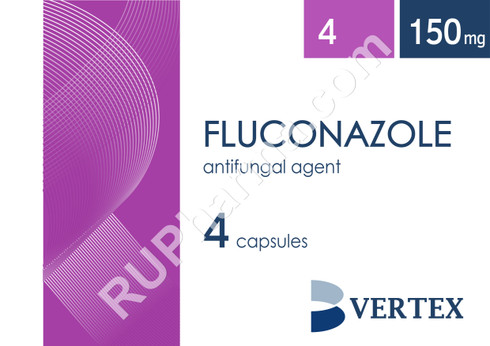
- Fluconazole is so completely absorbed from the gut that an oral tablet and an intravenous dose deliver essentially the same exposure.
- It became a lifeline during the HIV/AIDS epidemic for treating and preventing Candida and cryptococcal infections.
- It penetrates the cerebrospinal fluid well, which is why it is a mainstay in treating cryptococcal meningitis.
Mechanism
Fluconazole works by interfering with the manufacture of ergosterol, the sterol that fungi use to build and maintain their cell membranes in the way that animals use cholesterol [1][3]. It does this by inhibiting a fungal cytochrome P450 enzyme, lanosterol 14-alpha-demethylase, which normally carries out a key step in converting lanosterol into ergosterol [1]. With the enzyme blocked, ergosterol runs short while abnormal methylated sterols build up, leaving the fungal membrane damaged and leaky and halting fungal growth [1]. The drug is usually fungistatic, meaning it stops fungi from multiplying rather than killing them outright, although against some organisms such as Cryptococcus it can be fungicidal at higher exposures [1].
Because the target enzyme is far more sensitive in fungi than the related enzymes in humans, the drug harms fungal cells much more than the host's own [1]. Its activity is aimed mainly at yeasts such as Candida and Cryptococcus and at some dimorphic fungi, whereas moulds like Aspergillus are largely unaffected, because fluconazole binds their version of the target enzyme too weakly to halt them; this narrower reach sets it apart from several later triazoles [1][3]. Resistance emerges when fungi alter or overproduce the target enzyme or pump the drug back out of the cell, slowly eroding its effectiveness [3].
receptor fingerprint
Lanosterol 14-alpha-demethylase (CYP51)inhibits
Fungal cell membraneblocks
Candida speciesblocks
Cryptococcus neoformansblocks
Human CYP2C9 and CYP3A4inhibits
Dosingtypical ranges, not medical advice
interested in protocols and clinical dosages? make an account to see them! ^_^
Safetyrisks and cautions, not medical advice
Fluconazole is prescription only, though single dose packs are sometimes available for vaginal thrush. Common effects are nausea, headache, abdominal pain, and rash. Less often it can strain the liver, and at higher or prolonged doses it can prolong the QT interval of the heartbeat, which matters in people on other QT prolonging drugs. High doses in pregnancy have been linked to birth defects, so it is used cautiously there. It is a notable enzyme inhibitor, blocking CYP2C9, CYP3A4, and CYP2C19, so it can raise the levels of drugs such as warfarin, phenytoin, certain statins, and some diabetes medicines. Liver checks are wise with long courses.
Interactionsdocumented pairs only, not exhaustive
Fluconazole is a strong CYP2C9 inhibitor and a moderate CYP3A4 and CYP2C19 inhibitor, and the CYP2C9 effect drives the most serious interactions. Warfarin exposure rises and the INR can climb sharply within days, with bleeding reported even after one standard single dose. Phenytoin concentrations rise into the toxic range, and sulfonylureas such as glipizide and glyburide accumulate and cause hypoglycemia.
Through CYP3A4 it raises exposure to tacrolimus, ciclosporin, sirolimus and midazolam, and to the statins cleared by that enzyme.
Fluconazole prolongs the QT interval on its own, so pairing it with amiodarone, sotalol, methadone or ondansetron compounds the torsades risk; co-administration with cisapride and with quinidine is contraindicated for that reason. In the other direction, rifampicin induces fluconazole metabolism and lowers its concentrations enough to risk treatment failure.
Checking a whole stack? Run it through interactions + stacks.
History
Fluconazole was discovered by scientists at Pfizer, including Kenneth Richardson and colleagues, in the early 1980s during a search for antifungals with better solubility and oral absorption than existing agents. Its distinctive bis-triazole structure, incorporating two fluorine atoms, was designed to make the molecule highly water-soluble and well absorbed when taken by mouth. It was first introduced in 1988 and received Food and Drug Administration approval in 1990 under the brand name Diflucan. The drug arrived at a pivotal moment, becoming a cornerstone therapy for the Candida and cryptococcal infections that afflicted patients during the HIV/AIDS epidemic. Over the following decades it became one of the most widely prescribed antifungals in the world, and it is now available as an inexpensive generic. It appears on the World Health Organization's List of Essential Medicines.
Reputation
Fluconazole holds an outstanding reputation as one of the most dependable and convenient antifungal medicines ever developed, a true workhorse of infectious disease care. Physicians value its excellent oral absorption, which is so complete that oral and intravenous doses are essentially interchangeable, along with its long duration of action and good penetration into tissues including the cerebrospinal fluid.
This combination makes it a first-line choice for common yeast infections and a critical agent for serious conditions such as cryptococcal meningitis. Its wide availability and low cost as a generic give it enormous global public-health value, reflected in its place on the WHO Essential Medicines List. In fairness, its spectrum is deliberately narrow; molds such as Aspergillus lie beyond its reach, and overuse can drive resistance in Candida, so it is best deployed thoughtfully rather than reflexively.
Subjective profileweighing the evidence above
Reliable and convenient, with a single dose often enough for vaginal thrush and real weight behind it in serious systemic infection. The thing to know is that it inhibits several liver enzymes and can push up levels of other drugs, so warfarin or a QT-prolonging drug is worth flagging.
Where to buy


Suppliers
Vendors carrying Fluconazole, with live product details and codes. Links are affiliate links that support the wiki at no cost to you.
| supplier | size | price | $/mg |
|---|---|---|---|
| PCT.Zonelowest | 150MG | $0.54 | $0.004/mg |
| PCT.Zone | 150MG | $2.04 | $0.014/mg |
| PCT.Zone | 200MG | $2.90 | $0.014/mg |
| PCT.Zone | 50MG | $1.25 | $0.025/mg |

PCT.Zone
Fluconazole
PCT.Zone
Fluconazole
PCT.Zone
Fluconazole
PCT.Zone
Fluconazole
RUPharma🌐
Fluconazole

RUPharma🌐
Fluconazole
Research
- 2011first citedThe role of fluconazole in the treatment of Candida endocarditis: a meta-analysis.
- 2022most recentSingle-Dose Liposomal Amphotericin B Treatment for Cryptococcal Meningitis.
- 1.The role of fluconazole in the treatment of Candida endocarditis: a meta-analysis.
- 2.Association Between Use of Oral Fluconazole During Pregnancy and Risk of Spontaneous Abortion and Stillbirth
- 3.Antifungal resistance: current trends and future strategies to combat
- 4.Antifungal agents and the kidney: pharmacokinetics, clinical nephrotoxicity, and interactions
- 5.Single-Dose Liposomal Amphotericin B Treatment for Cryptococcal Meningitis.
5 listed here; entry last updated August 2026
Reviews
My notesprivate to this device
FAQ
Does one tablet really cure a yeast infection?
For a simple vaginal yeast infection, a single 150 mg dose clears it in most people, though stubborn or recurrent cases need a longer course.
Can I take it with my other medicines?
Check first; fluconazole raises the levels of several drugs including warfarin, phenytoin, and some statins, so interactions are common.
Is fluconazole safe in pregnancy?
A single low dose is often considered acceptable, but repeated high doses have been linked to birth defects and are avoided.
How long does it stay in my system?
It has a long half life of around 30 hours, which is why once daily or even single dosing works.
Why did my infection come back?
Some yeasts, especially non albicans species, resist fluconazole; recurrent infections may need a different or longer antifungal course.
Adverse effects
- Headache, nausea, and abdominal discomfort are common
- Rash and mild elevations in liver enzymes may occur
- Rarely serious liver injury, severe skin reactions, or heart rhythm changes
- Interacts with many other drugs through liver enzyme inhibition
Notes and cautions
- Linked to increased miscarriage risk when taken orally during pregnancy