
data + articles · 4 listed
newest 2024spec sheet12 rows
Terbinafine is an antifungal drug of the allylamine class, used to treat fungal infections of the skin, hair, and nails, most notably onychomycosis of the nails and dermatophyte infections such as ringworm and athlete's foot. It works by blocking squalene epoxidase, an enzyme fungi need to build their cell membranes, which makes it fungicidal rather than merely slowing growth. Terbinafine is available as oral tablets for deeper or nail infections and as topical creams for superficial skin conditions [2].
- Actually cures nail fungus rather than holding it off
- Fungicidal against dermatophytes, not merely slowing them down
- Athlete's foot and ringworm clear in a week or two
- Concentrates right where it is needed, in nail and skin
- Blocks squalene epoxidase, an enzyme fungi cannot do without
- Cream for the surface, tablets for the deeper infections
- Nausea or stomach upset
- Diarrhea
- Headache
Overview
Terbinafine is a synthetic allylamine antifungal with the molecular formula C21H25N, a white crystalline solid that dissolves readily in organic solvents but only sparingly in water. It was developed in the late 1980s and reached the market around 1991 in Europe, gaining approval in the United States in 1996; after patents expired it became a widely used generic. The drug is given both by mouth, where it concentrates in skin, nails, and fatty tissue, and applied to the skin as a cream, gel, or spray.
Its main use is against dermatophytes, the mold-like fungi that infect keratin-rich tissue. Oral terbinafine is a first-line treatment for onychomycosis, fungal infection of the nails, and for widespread or stubborn ringworm, the tinea infections of the body, groin, feet, and scalp; topical forms treat more limited athlete's foot, jock itch, and related skin infections, and the drug also has activity in pityriasis versicolor [2]. Correct identification of the infecting organism matters, because some non-dermatophyte molds respond poorly to terbinafine and call for different agents [2].
Although terbinafine is highly active against typical dermatophytes, resistance is an emerging concern. The first confirmed case of resistant Trichophyton rubrum was reported in a nail-infection patient who failed oral therapy, and the resistant isolates were cross-resistant to other squalene epoxidase inhibitors, pointing to a target-specific mechanism [3]. Later work traced such resistance to point mutations in the fungal squalene epoxidase gene, including amino-acid substitutions that weaken drug binding, and treatment guidance now suggests switching to azole antifungals when terbinafine fails [1][2].
Terbinafine is generally well tolerated but calls for attention to the liver: rare but serious hepatotoxicity has been reported, so clinicians typically avoid it in active liver disease and may check liver enzymes during longer oral courses. A distinctive adverse effect is disturbance or temporary loss of taste and smell, which usually resolves after the drug is stopped but can rarely persist. Other reported effects include gastrointestinal upset, headache, and skin reactions. The drug is an established prescription and, for some topical products, over-the-counter medicine used under the usual antifungal precautions.
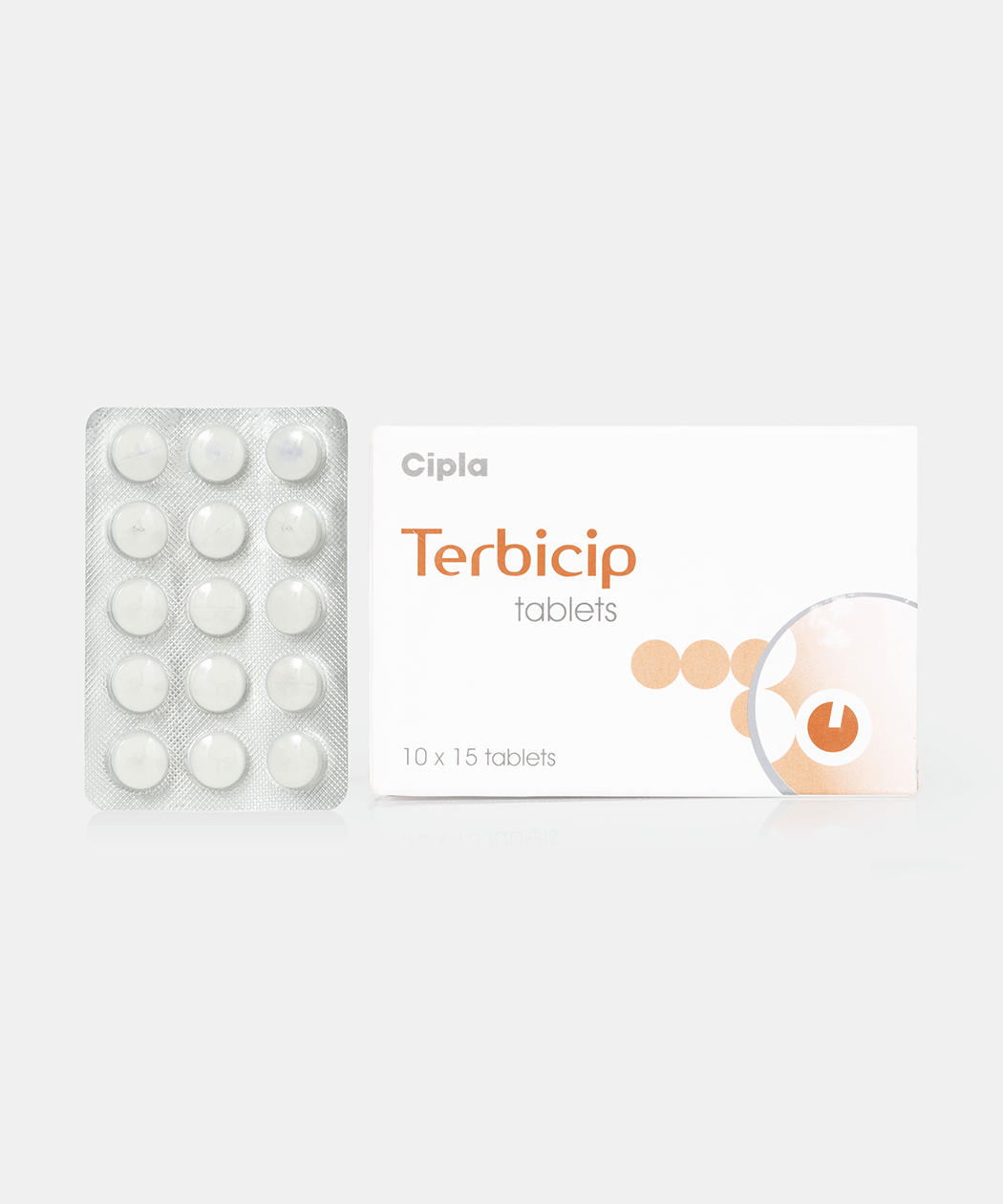
- Terbinafine is fungicidal partly through self-poisoning of the fungus; blocking squalene epoxidase not only starves the cell of ergosterol but also causes toxic squalene to accumulate inside it.
- Because it binds tightly to keratin, terbinafine remains active in the nail plate for weeks to months after the last dose, allowing relatively short treatment courses for a slow-growing infection.
- It belongs to the allylamine class and, unlike azole antifungals, does not act on fungal cytochrome P450 enzymes, giving it a distinct mechanism and interaction profile.
Mechanism
Terbinafine acts on the biosynthesis of ergosterol, the sterol that fungal cells use, much as human cells use cholesterol, to build and maintain their cell membrane. It inhibits squalene epoxidase, also called squalene monooxygenase, an early enzyme in the ergosterol pathway that converts squalene into its epoxide [1][2]. Blocking this step has two consequences that together kill the fungus: the cell is starved of ergosterol, which weakens the membrane, and squalene builds up to toxic levels inside the cell. This dual effect makes terbinafine fungicidal, destroying the organism rather than simply halting its division, which helps explain its usefulness in slow-to-clear sites such as nails.
Because the enzyme it targets sits earlier in the pathway than the step blocked by azole antifungals, terbinafine does not rely on the fungal cytochrome P450 enzymes that azoles inhibit, giving it a distinct profile. Its selectivity for the fungal enzyme over the mammalian equivalent underlies its relatively favorable tolerability. Resistance arises chiefly through changes to squalene epoxidase itself: point mutations in the gene produce amino-acid substitutions in the enzyme that lower terbinafine's affinity, and such strains are typically cross-resistant to other squalene epoxidase inhibitors while remaining sensitive to unrelated antifungals [1][3].
receptor fingerprint
Fungal squalene epoxidaseinhibits
Ergosterol biosynthesisblocks
Squalene handling in the fungusmodulates
Fungal cell membrane integrityblocks
Human CYP2D6 enzymeinhibits
Dosingtypical ranges, not medical advice
interested in protocols and clinical dosages? make an account to see them! ^_^
Safetyrisks and cautions, not medical advice
Terbinafine tablets are prescription only, while the cream is often available over the counter. The tablets are generally well tolerated but can cause stomach upset, headache, rash and a change or loss of taste that can linger. Rarely they cause liver injury, so liver enzymes are often checked, and very rarely serious skin reactions or a lupus like flare can occur. Because it inhibits the CYP2D6 enzyme, it can raise levels of certain antidepressants, some beta blockers and other drugs. It is avoided in active or chronic liver disease.
Interactionsdocumented pairs only, not exhaustive
Terbinafine is a potent inhibitor of CYP2D6, and this is the interaction worth knowing. In healthy volunteers with normal CYP2D6 activity it raised desipramine peak concentrations twofold and total exposure fivefold, effectively converting extensive metabolizers into poor metabolizers. The same applies to other CYP2D6 substrates: nortriptyline and related tricyclics, metoprolol, propafenone, flecainide, perphenazine and risperidone. Terbinafine concentrates in skin and fat with a terminal half-life measured in weeks, so the inhibition outlasts the course; the desipramine effect was still measurable four weeks after stopping. Tamoxifen depends on CYP2D6 to form its active metabolite endoxifen, so reduced activation follows on mechanism, though direct clinical data are thin.
Terbinafine's own levels move as well. Rifampin roughly doubles its clearance and cimetidine reduces clearance by about a third. Effects on caffeine metabolism through CYP1A2 exist but are modest.
Checking a whole stack? Run it through interactions + stacks.
History
Terbinafine was discovered by the Swiss pharmaceutical company Sandoz (now part of Novartis) in the early 1980s, emerging from a research program on the allylamine class of antifungals that had begun with the related compound naftifine. Chemists optimized the allylamine scaffold to improve potency and oral bioavailability, arriving at terbinafine as the lead candidate. It first reached the market in the early 1990s, initially as a topical cream and subsequently as the oral tablet marketed under the brand name Lamisil.
The oral formulation proved a milestone for dermatology because it accumulated in nail and skin keratin and offered high cure rates for onychomycosis, a notoriously difficult infection, with treatment courses far shorter than the older agent griseofulvin. Terbinafine has since become a first-line therapy for dermatophyte infections worldwide and appears in standard treatment guidelines. Its patents have long expired, and it is now widely available as an inexpensive generic.
Reputation
Terbinafine enjoys a strong reputation as one of the most effective oral treatments for fungal nail and skin infections, frequently cited as the benchmark against which newer antifungals are measured. Clinicians value its fungicidal action, which destroys the organism rather than merely halting its growth, and its ability to concentrate in keratin means the drug keeps working in the nail for weeks after a course ends.
It is generally well tolerated, and because it does not depend on the fungal cytochrome enzymes that azoles inhibit, it carries a somewhat different and often more favorable interaction profile. Honesty requires noting its limits: rare cases of liver injury and taste disturbance are recognized, periodic monitoring is advised for longer oral courses, and reinfection or resistance can occur, particularly with certain dermatophyte strains now spreading in some regions. Even so, its combination of high efficacy, low cost, and decades of clinical experience keeps it a trusted mainstay.
Subjective profileweighing the evidence above
The one that actually cures nail fungus rather than holding it off, which is why the long course is worth finishing; skin infections clear in a week or two with the cream. Rare liver injury is why tablets get liver monitoring, and it raises levels of some antidepressants through CYP2D6.
Where to buy
Suppliers
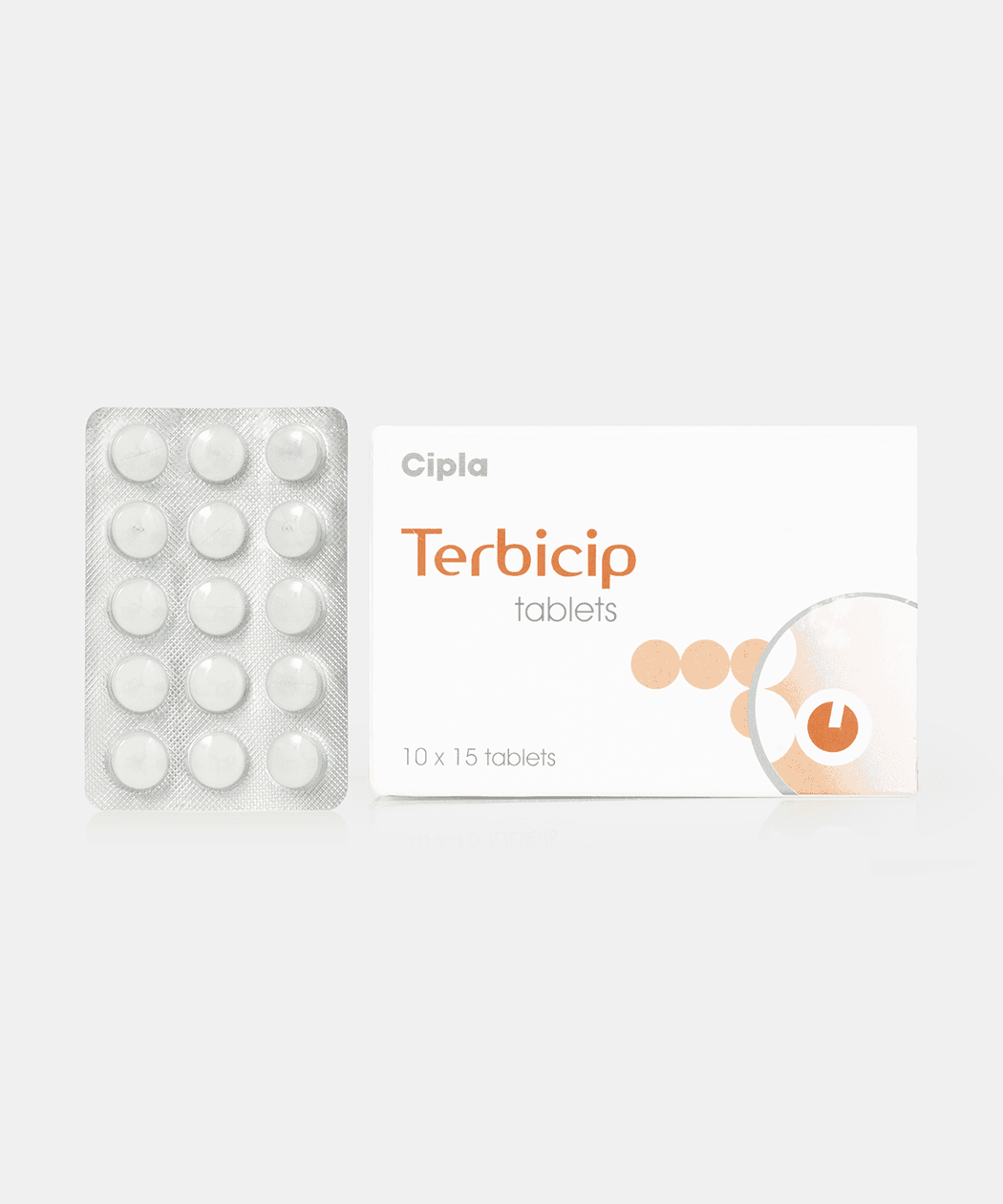
Vendors carrying Terbinafine, with live product details and codes. Links are affiliate links that support the wiki at no cost to you.
PCT.Zone
Terbinafine
Research
- 2003first citedClinical Trichophyton rubrum strain exhibiting primary resistance to terbinafine.
- 2024most recentTreatment Options for Onychomycosis: Efficacy, Side Effects, Adherence, Financial Consideration…
- 1.Drug Sensitivity Profile of Fungi Isolated from Onychomycosis Patients and Evaluation of Squalene Epoxidase Mutation in One Terbinafine-Resistant Trichophyton mentagrophytes Species.
- 2.Recent Findings in Onychomycosis and Their Application for Appropriate Treatment.
- 3.Clinical Trichophyton rubrum strain exhibiting primary resistance to terbinafine.
- 4.Treatment Options for Onychomycosis: Efficacy, Side Effects, Adherence, Financial Considerations, and Ethics
4 listed here; entry last updated August 2026
Reviews
My notesprivate to this device
FAQ
How long until my nail looks normal?
The medicine course is a few weeks, but the nail can take 9 to 12 months to fully grow out clear.
Do I need liver tests?
For the oral course doctors often check liver enzymes, since rare liver problems can occur.
Why did my sense of taste change?
Terbinafine can alter or dull taste; this usually returns after stopping, though it may take weeks.
Is the cream as strong as the tablets?
The cream treats skin infections well, but nail and scalp infections usually need the tablets.
Can I drink alcohol on it?
It is best to limit alcohol because both can stress the liver.
Adverse effects
- Nausea or stomach upset
- Diarrhea
- Headache
- Altered or lost sense of taste
- Skin rash
- Rare liver injury