
spec sheet6 rows
Voriconazole is a triazole antifungal used for invasive aspergillosis, candidaemia and mould infections such as Scedosporium and Fusarium, usually in people whose immune system is already compromised.
- Treatment for invasive aspergillosis and mould infection
- Activity against Scedosporium and Fusarium
- Toxic sterol precursors building in the membrane
- Hospital drug needing measured blood levels
- Nonlinear kinetics that make exposure unpredictable
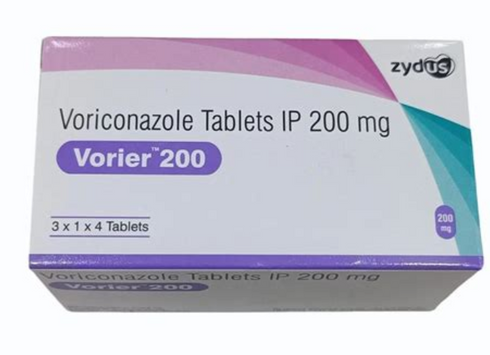
- Voriconazole displaced amphotericin B as first-line therapy for invasive aspergillosis on the strength of a single randomised trial in 277 patients: 12-week success 52.8% versus 31.6% (absolute difference 21.2 percentage points, 95% CI 10.4-32.9) and 12-week survival 70.8% versus 57.9% [1].
- It did NOT beat liposomal amphotericin B for empirical therapy in febrile neutropenia; overall success was 26.0% versus 30.6% and the trial failed its non-inferiority margin; though it produced fewer breakthrough fungal infections (1.9% vs 5.0%, p=0.02) and less nephrotoxicity [2]. Both facts should be stated together.
- Exposure is highly variable and non-linear, driven by CYP2C19 polymorphism, and both hepatotoxicity and neurotoxicity track trough concentration; a trough above 3.61 mg/L was associated with increased hepatotoxicity, and 66.7% of hepatotoxicity events occurred within 7 days of the first dose [3].
- Transient visual disturbance; altered light perception, blurred vision, photopsia; affects 22-45% of patients and is the drug's signature adverse effect; hallucinations occurred in 4.3% versus 0.5% for liposomal amphotericin B (PMID 12167683, PMID 11807146).
- Prolonged voriconazole causes severe photosensitivity and is linked to cutaneous squamous cell carcinoma in transplant recipients, including in children after three or more years of therapy, which is why dermatological surveillance and strict photoprotection are recommended for long-term users [4].
Mechanism
It inhibits fungal lanosterol 14 alpha demethylase, a CYP51 enzyme, so ergosterol synthesis stops and toxic sterol precursors accumulate in the fungal membrane. The same affinity for cytochrome P450 enzymes is why it interferes so heavily with human drug metabolism.
receptor fingerprint
Fungal lanosterol 14-alpha-demethylase (CYP51 / ERG11)Inhibitor
Human CYP2C19Substrate (primary metabolic route) and inhibitor
Human CYP3A4 and CYP2C9Substrate and inhibitor
Retinal function (transient visual disturbance; mechanism not fully defined)Reversible functional disturbance
Safetyrisks and cautions, not medical advice
a hospital antifungal with nonlinear kinetics that make blood levels unpredictable; it causes reversible visual disturbance, hepatotoxicity, severe phototoxicity with later skin cancer risk, and it interacts with a long list of drugs through CYP2C19, CYP2C9 and CYP3A4
Where to buy
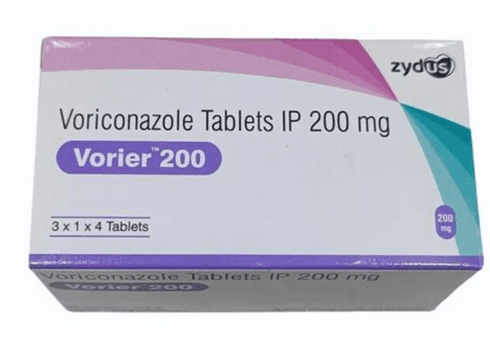
Suppliers
Vendors carrying Voriconazole, with live product details and codes. Links are affiliate links that support the wiki at no cost to you.
RUPharma🌐
Voriconazole
Research
- 2002first citedVoriconazole versus amphotericin B for primary therapy of invasive aspergillosis
- 2022most recentTherapeutic drug monitoring and safety evaluation of voriconazole in the treatment of pulmonary…
- 1.Voriconazole versus amphotericin B for primary therapy of invasive aspergillosis
- 2.Voriconazole compared with liposomal amphotericin B for empirical antifungal therapy in patients with neutropenia and persistent fever
- 3.Therapeutic drug monitoring and safety evaluation of voriconazole in the treatment of pulmonary fungal diseases
- 4.Cutaneous squamous cell carcinoma in two pediatric lung transplant patients on prolonged voriconazole treatment
4 listed here; entry last updated August 2026
Reviews
My notesprivate to this device
Notes and cautions
- Voriconazole has no boxed warning, but it has one of the most demanding safety profiles among modern antifungals.
- Hepatotoxicity and neurotoxicity are concentration-dependent, so therapeutic drug monitoring is standard practice and dose reduction on a raised trough measurably prevents liver injury [3].
- Long-term use causes severe phototoxicity and is associated with cutaneous squamous cell carcinoma, which warrants dermatological surveillance and rigorous sun protection in anyone on extended therapy, including children [4].
- The drug is a substrate and inhibitor of CYP2C19, CYP2C9 and CYP3A4, making its interaction list unusually dangerous: co-administration with pimozide, quinidine, ivabradine, sirolimus, rifampicin, carbamazepine, long-acting barbiturates, high-dose ritonavir and St John's wort is contraindicated.
- It is teratogenic and contraindicated in pregnancy, and the intravenous formulation's SBECD vehicle accumulates in renal impairment.